Key Takeaways:
- Papua New Guinea is wet. You can expect downpours even in the driest months.
- The best time to visit Papua New Guinea is April to October. The southeast trades bring less rain, lower humidity, and domestic flights that actually run.
- For the Kokoda Track, October is our pick. It sits at the end of the dry, so the ground is at its firmest.
- Avoid December to March unless you’re here for the surf. The monsoon brings sustained rain, deep mud, swollen river crossings, and canceled flights.
- The climate in PNG varies greatly. Port Moresby sits in a rain shadow, the highlands stay cool and cloudy year-round, and the north coast can be getting soaked while the south dries out.
Papua New Guinea is one of the wildest countries we run expeditions to. It’s the second-largest island on earth, home to more than 800 living languages, and covered by the third-biggest stretch of intact rainforest on the planet behind the Amazon and the Congo.
The problem with asking about the “best time to visit Papua New Guinea” is that the question assumes the country has one climate. A country this large and this broken up gets its rain in pieces. The coast, the highlands, and the island provinces are all on different cycles, and the Owen Stanley Range that the Kokoda Track crosses makes its own weather regardless of what the rest of the country is doing.
Below we break down the climate of Papua New Guinea and how it varies by region, what the wet and dry seasons really mean, and some advice on when to do the Kokoda Track.
The Climate of Papua New Guinea
Papua New Guinea sits just a few degrees below the equator, which means the climate is tropical everywhere outside the highest mountains. Coastal temperatures hover in the high 20s Celsius (low 80s Fahrenheit) all year.
PNG also has a reputation for being wet, and it’s true. Even in the driest month, much of the country averages close to 200mm of rain, roughly three times what London gets in its wettest!
So the PNG climate in short is that there is no dry, only less wet. We’ll touch on the seasons below to help you better understand the Papua New Guinea weather by month, and by region.
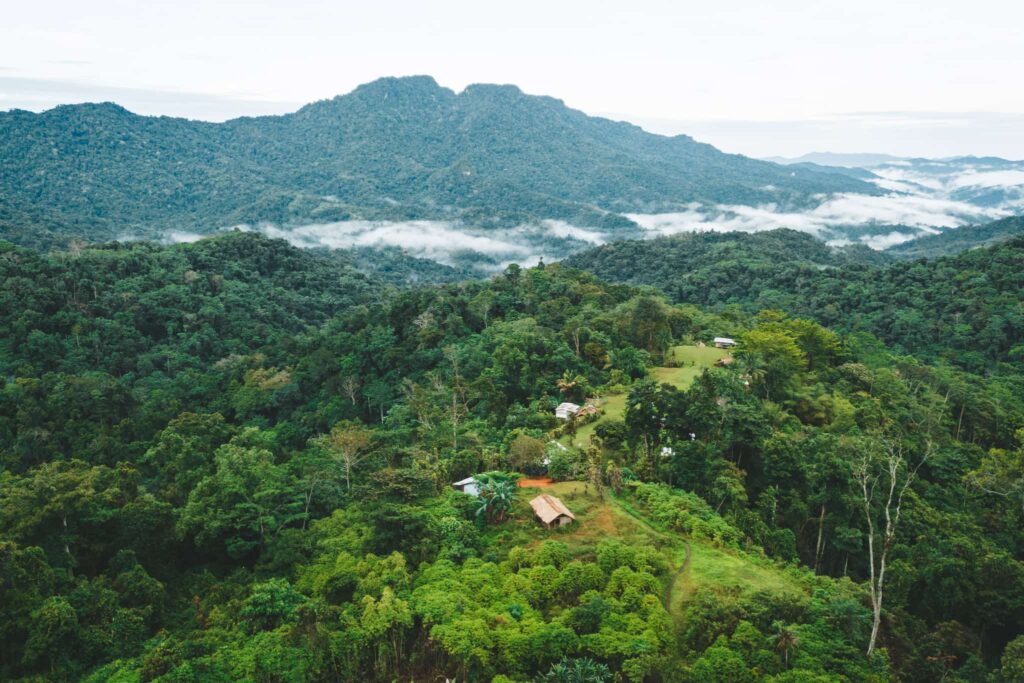
Microclimates and the Owen Stanley Range
With all this in mind, altitude and region tend to have a bigger impact on the weather in PNG than the season does. The country climbs from sea level to 4,509 meters at Mount Wilhelm, so whatever month you show up, pack for rain and pack for sweat.
The Owen Stanley Range is the clearest example of this – moist air blows in off the north coast, hits the mountain wall, and has nowhere to go but up. It cools as it climbs and dumps its water on the northern slopes, which is why that side of the range is soaked for most of the year.
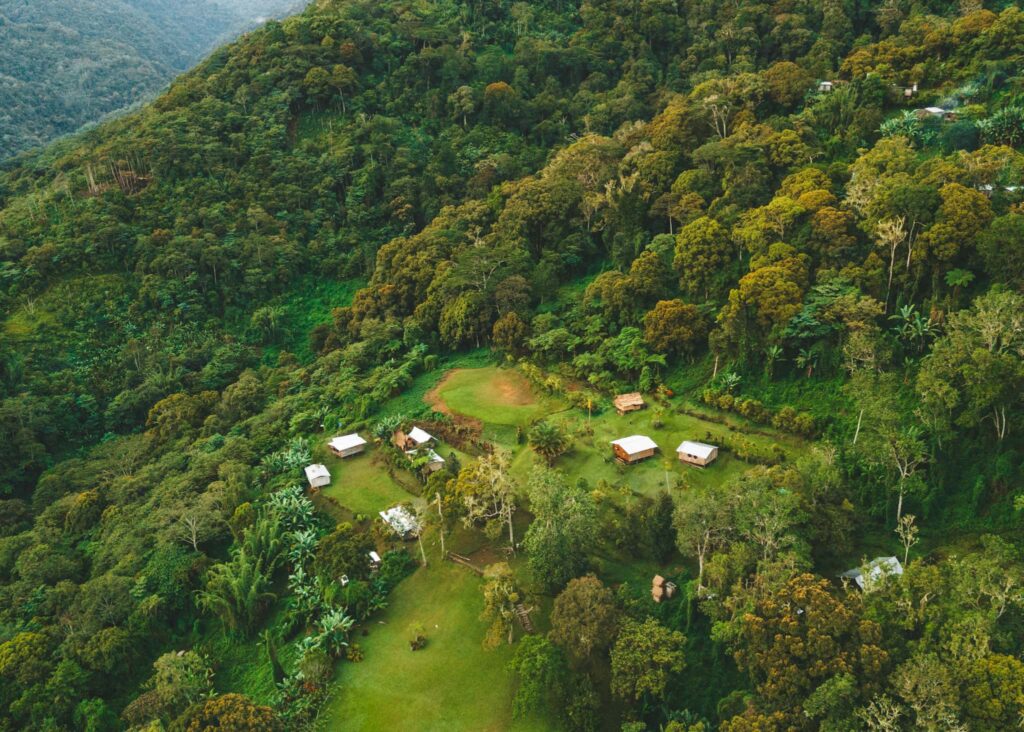
By the time the air spills over the top, at around 2,190 meters where the Kokoda Track crosses, and drops down toward Port Moresby, there’s not much left in it. The capital sits in a rain shadow of sorts with dry, grassy hills around it.
The highlands stay cool and cloudy most of the year, with mild days and cold nights at altitude. The north coast and the island provinces are the wettest part of the country, and it can be pouring there in the same months the south is drying out.
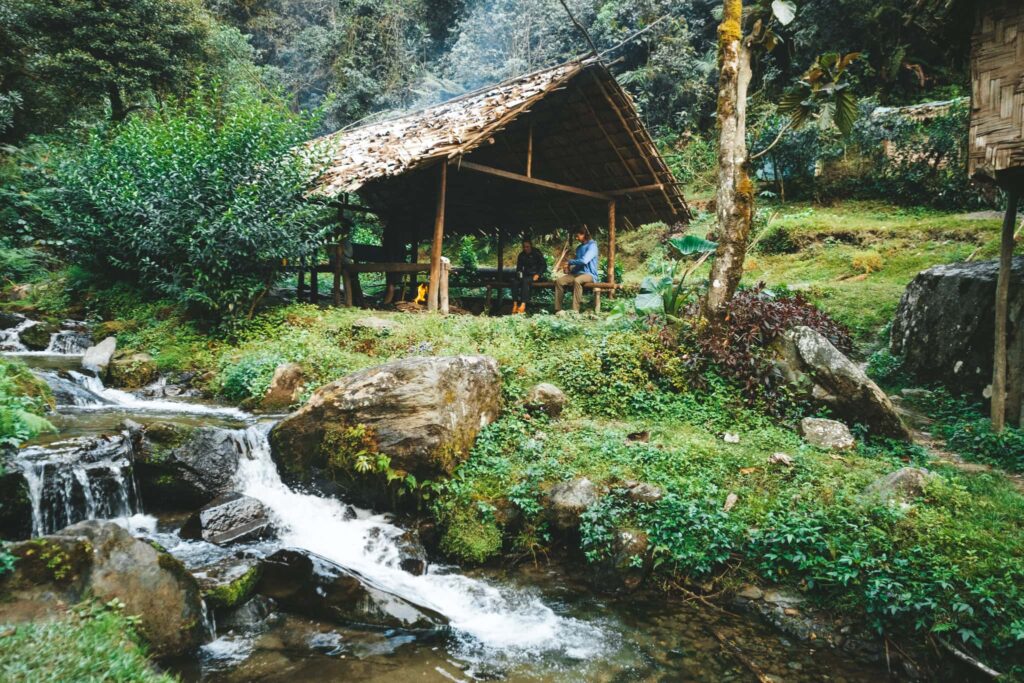
Up on the range itself, the weather runs on a daily cycle more than a yearly one. Mornings are often clear, cloud builds through the middle of the day, and rain arrives in the afternoon. This is the pattern you can largely expect if you come to PNG for the trekking and is why most itineraries start at first light and end at camp by mid-afternoon. Our guide to hiking in the rain covers how to manage when the inevitable downpours come.
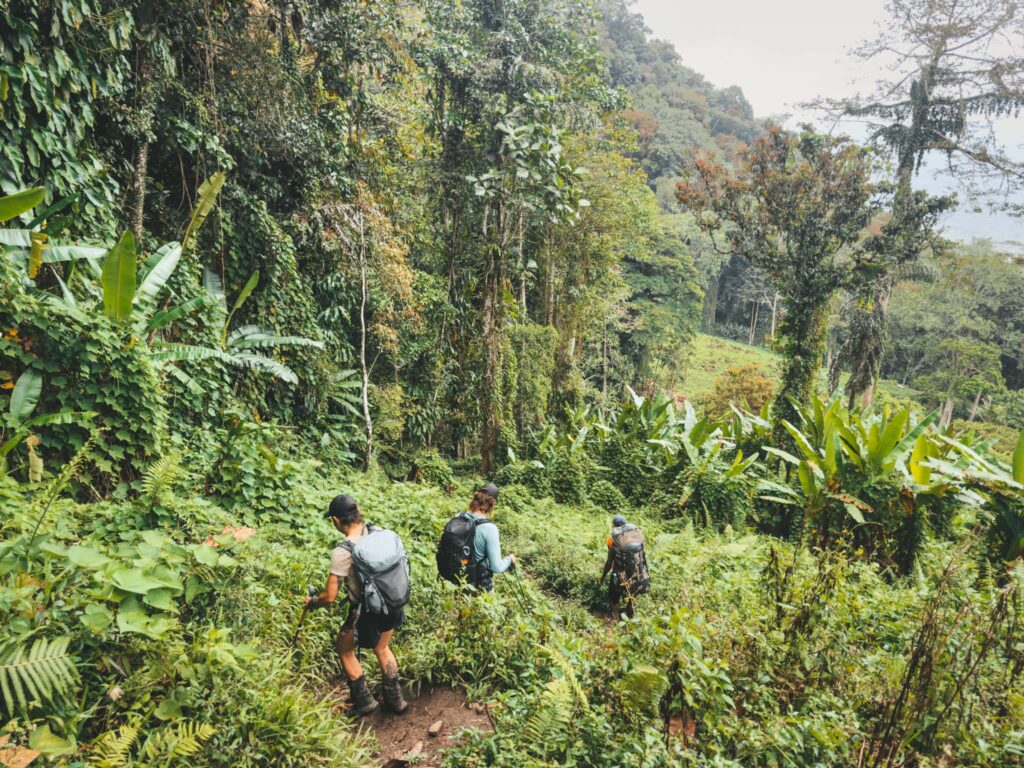
The Seasons: Visiting in the Big Wet vs the Big Dry
Papua New Guinea is tropical and equatorial, so the seasons don’t typically change how hot it is month to month. Coastal temperatures tend to only shift a couple of degrees across the whole year, and the humidity stays high all year round, though you can expect slightly more humidity in the wet season.
The main changes in the seasons are the amount of rainfall. Though don’t let “The Big Dry” fool you; this is still a tropical country, and depending on where you are, you can still expect a lot of rain, though just less frequently.
| Season | Months | Temperature | Rainfall | On the track |
|---|---|---|---|---|
| The Big Wet | December to March | Hot, high 20s on the coast | Heaviest of the year | Deep mud, swollen river crossings |
| Changeover | April | Hot & humid | Easing, but unpredictable | Doable, though conditions vary a lot year to year |
| The Big Dry | May to October | Slightly cooler, lower humidity | Lowest of the year | Firmest ground, most reliable flying weather, peak trekking season |
| Changeover | November | Hot & humid | Building again | Doable, with rising odds of heavy rain |
The Dry Season
May through October is the trekking season. Dry here simply implies less rain, slightly cooler, lower humidity. You still get rained on, but mostly in the afternoon, and mornings are usually clear. Rivers sit at normal levels, the mud is manageable, and domestic flights run close to schedule.
The Wet Season
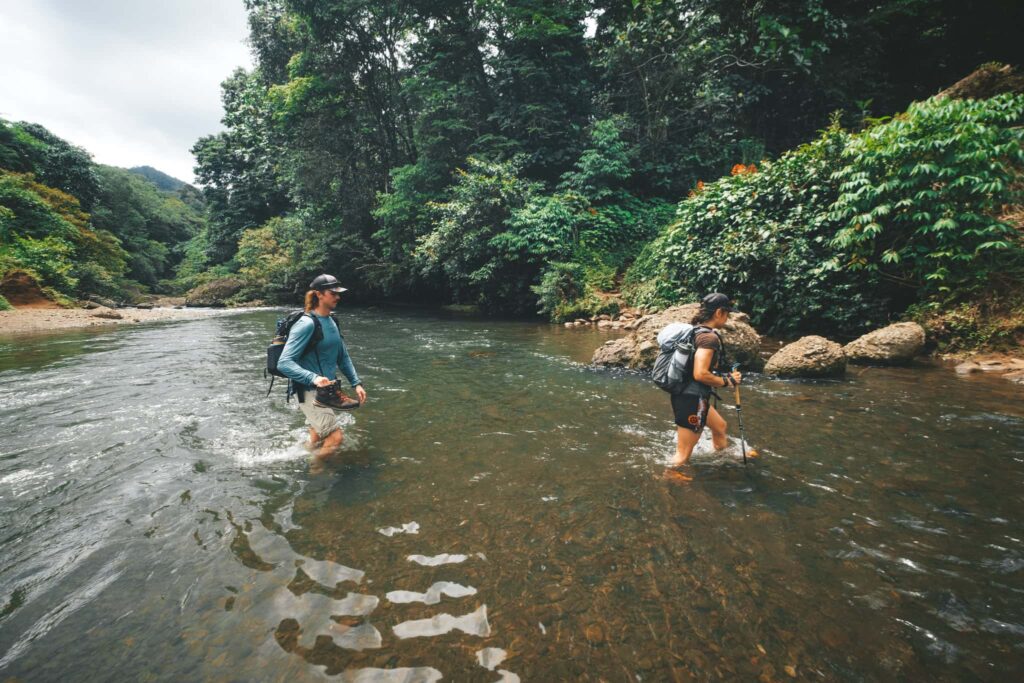
December to March, the rain comes at any hour. This is the proper wet season where you can expect sustained heavy rain and thick humidity. On the trail, mud gets deep enough to slow a day right down, and a creek you crossed at knee height in the morning can be chest-deep by the afternoon. Additionally, flights out of places like Popondetta get canceled for days, and there’s no road to fall back on.
These are the reasons why most travelers, especially trekkers, tend to skip the wet season altogether. If you’re visiting PNG to hike the Kokoda Track, we recommend visiting in the dry.
That said, if you’re diving or surfing, the season matters far less. Visibility is good year-round, and the north coast surf is at its best between October and April.
The Changeover Months
April and November sit either side of the primary trekking season and are also a decent time to visit Papua New Guinea.
April is the wet tapering off. During this time the rain eases through the month, but the ground has had four months of monsoon on it and stays saturated long after the rain stops. Rivers can still run high early on. April is also when ANZAC Day falls, and the week either side of the 25th is the busiest the Kokoda Track gets all year.
November is when the rain begins building back up and can arrive without much warning. However, the ground underneath still carries months of dry. That trade can work in your favor, though you are gambling on how early the monsoon turns up.

When is the Best Time for Hiking and the Kokoda Track
Almost every operator on the Kokoda Track runs treks between April and October. The trail doesn’t officially close in the wet, but the weather makes the logistics and overall experience much too difficult to plan around.
But even within that core season, conditions can vary from month to month.
June and July are the coolest months and see the least rain. October sits at the end of the dry, when the ground has had months to firm up. April and November can go either way depending on the year.
While anecdotal, on our very first scout trip on the Kokoda Track, our team walked it in October and didn’t get rained on once while moving. In fact, they only experienced one night of rain at camp across the whole trek. What did catch them out is that the jungle stays wet regardless. Shaded sections of trail hold moisture for weeks, and the clay on the steep descents is constantly slick.
April also brings ANZAC Day, and with it the busiest week on the track all year. There are ceremonies at Isurava and Kokoda, and for a lot of Australians this is the time to walk it.
For the trekking itself, we schedule our departures for October and believe that this is the best time to visit Papua New Guinea for trekking. October gives you months of accumulated dry underfoot, and it’s well clear of the ANZAC crowds.
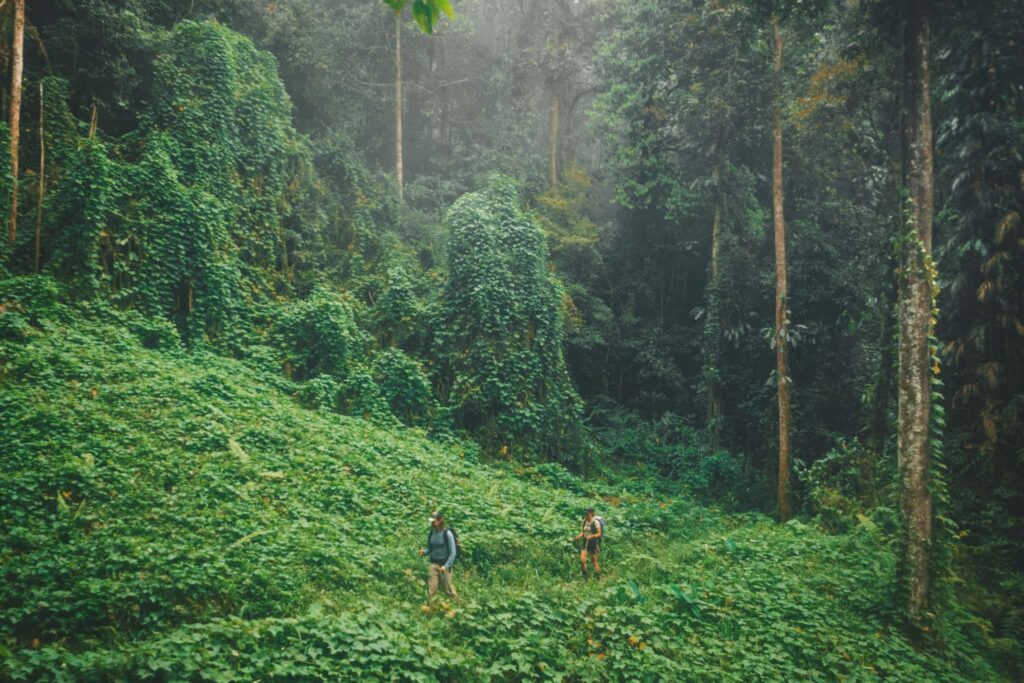
Tips for Staying Comfortable While Visiting PNG
Whether you’re trekking, diving, or heading into the highlands, a comfortable and enjoyable trip to PNG comes down to managing heat, managing water, and surrendering to the fact that logistics need a degree of flexibility.
- Use dry bags or garbage sacks – Once your gear gets wet, it’s hard to dry out in the tropics. Keep your sleeping bag, spare clothes, electronics, and documents dry in your packs.
- Pack a warm layer for altitude – If you’re trekking, you’ll need to pack warm clothes as nights above 2,000 meters can get cold – low-teens Celsius is possible and can drop much further with altitude.
- Don’t wing it – PNG has no reliable public transport and no established tourist trail, and 97% of the land is customarily owned. Pre-arranged transport and a local team are somewhat essential here. Our guide to visiting Papua New Guinea safely covers this in detail.
- Filter all water – Tap water isn’t safe to drink, including in the cities. Sealed bottles in town, and a filter bottle like the Grayl GeoPress everywhere else.
- Use repellent all year – Broadly speaking, PNG is a malaria risk country in every month of the year. While the risk is lower in the dry season, it still exists.
- Buffer your domestic flights – Weather grounds small planes regularly, and far more often in the wet. Never book a domestic flight on the same day as your international one.
For the full rundown on what to pack for Papua New Guinea and how to get your body ready for the terrain, our guide to preparing for the Kokoda Trail covers training, gear, and health prep in detail.
Wrap Up: The Best Time to Visit Papua New Guinea
If you’re coming to PNG to trek, come between April and October. If you want our pick inside that window, make it October. The ground has had months to firm up, the ANZAC crowds are long gone, and the daily weather is about as settled as this country gets. That said, if the Port Moresby Dawn Service is important to you, you’ll want to arrive a day or two before ANZAC Day (25th of April every year).
If you’re here for the diving, the surf, or the highlands, the season matters less than the region. Whichever month you travel in, the weather is going to have an opinion about your plans, but what we love about PNG is that nobody who has been here seems to mind.
This is a country where you walk because there are no roads, where birds of paradise start up in the canopy at first light and the jungle closes over the trail behind you. Around 3,000 people a year cross the Owen Stanley Range on foot, and almost nobody outside Australia has heard of it. That’s exactly why we keep going back.
If you’re thinking about taking on the Kokoda Track with us, our Kokoda Track Expedition page has the full itinerary and everything that’s included. Happy trekking, and we’ll see you out there!