
Key Takeaways:
- Winter is a great time for hiking on Madeira, especially on the coast where daytime temperatures are more enjoyable than summer.
- Generally speaking, Madeiran winters are more akin to European springtimes when it comes to daily temperatures.
- Does it snow? A few times each winter on the peaks above 1,500 m, but it usually melts within a few days.
- Winter typically sees more rain which means waterfalls and levadas run at full force but more frequent downpours means storm-damaged trails can close for a few days unexpectedly.
Madeira’s temperate climate was one of its biggest draws when the Epic team was looking for its home-away-from-home. We loved how comfortable it was year-round, yet still experiencing four distinct seasons (sometimes all in one day!)
Such lovely weather obviously led us to ask whether winter hiking in Madeira was practical or even possible. The island does get winter storms and is lush for good reason i.e. it rains here consistently!
Having spent plenty of time on the island by now and organized tours in nearly every month of the year, we can confidently say that hiking in Madeira during the winter is very doable.
But there are a few things you should know. This includes what the weather does, what to pack, and how the trails change in the winter season. We’re going to get into that now.
What are winters in Madeira like?
Madeira is a remote island in the middle of the Atlantic. It’s also a very steep one, climbing from sea level to 1,862 meters in under 20 kilometers. So there is no surprise that Madeira has a very unique climate, to say the least.
The main microclimate difference is between north and south.
The north coast faces the Atlantic trade winds and catches most of the rain, while the south coast sits in the rain shadow. This is why Funchal, Calheta, and Ponta do Sol stay sunny most of the year, including winter, while the north side is getting soaked.
In our experience, these contrasts sharpen in winter. Therefore, you should be location-specific and use local forecasts if you plan on doing any sort of hiking in a specific place. In other words, don’t rely on any forecast claiming island-wide weather predictions; they are too broad.
It would also pay to gather a little local intel from the locals about these microclimates. Someone, particularly someone who hikes often, will know if that particular valley, trail, or mountain-top suffers from more or less foul weather.
So is Madeira cold in winter or not? Temperature-wise, Madeiran winters are typically nowhere near as cold as you may expect them to be. This is especially the case on the coast. Here’s a typical breakdown of winter temperatures on Madeira.
| December | January | February | |
|---|---|---|---|
| Daytime high (coast) | 21°C / 70°F | 20°C / 68°F | 20°C / 68°F |
| Night low (coast) | 16°C / 61°F | 15°C / 59°F | 14°C / 57°F |
| Sea temperature | 19.5°C / 67°F | 18.5°C / 65°F | 18°C / 64°F |
| Rainfall | 100 mm | 105 mm | 85 mm |
| Rainy days | 13 | 12 | 11 |
| Sunshine per day | ~4.5 hrs | ~4.5 hrs | ~5.5 hrs |
| Daylight | ~10 hrs | ~10.5 hrs | ~11 hrs |
Data: Climates to Travel, based on long-term climate averages in Madeira.
That would pass for spring in most of Europe and is why we consider hiking Madeira in winter as a good alternative to the summer peak season. Though winter’s real trade-offs are more rainy days (especially in the north), more wind up high, and shorter daylight overall at just around ten hours in December compared to about fourteen in June.
Does it snow on Madeira?
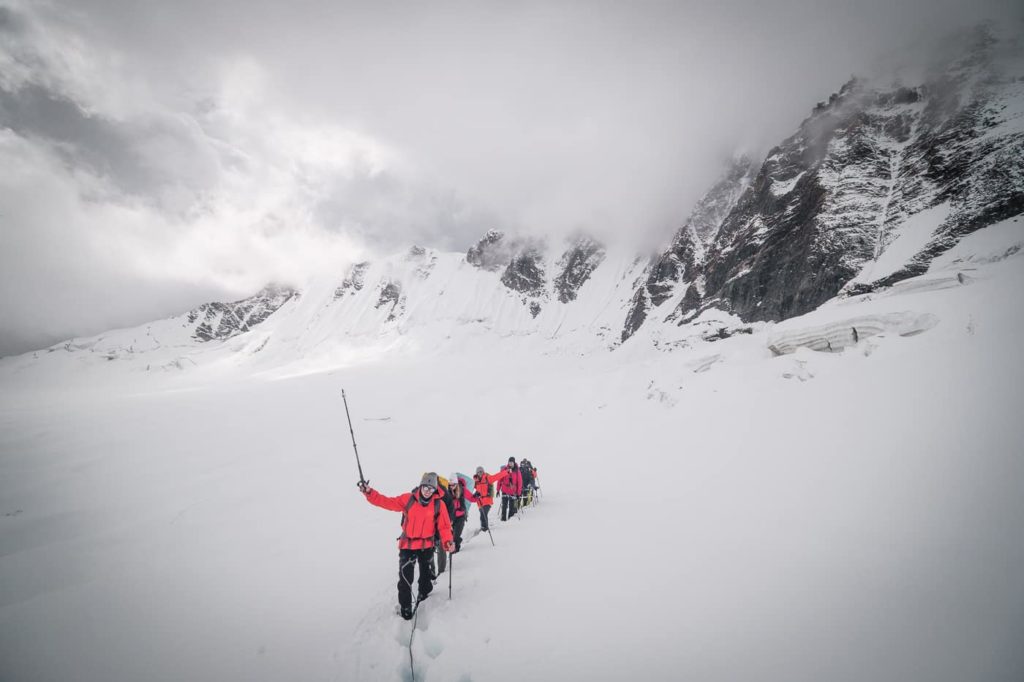
Yes, it does sometimes snow in Madeira. This usually happens a few times each winter when a cold front dusts Pico Ruivo and Pico do Arieiro, two of the island’s highest points. In a proper cold snap, Pico Grande and the Paul da Serra plateau can also see snow – though this is rare enough that it makes the local news.
The access road to Arieiro sometimes closes for a day or two when it happens. That’s Madeiran winter at its coldest: a photogenic dusting above 1,500 meters, but it’s usually gone within days. If you run into snow while visiting Madeira, chalk it up more to bad luck than bad planning.

Typical Winter Trail Conditions on Madeira
Most of Madeira’s best hikes stay open and walkable right through winter. However, like anywhere, trail conditions can change in the colder season. The good news is, hiking is one of the best things to do on Madeira year-round.
The Central Mountain Range
Trails can change dramatically during winter on the high ridges. Hikes like the PR1 from Pico do Arieiro to Pico Ruivo are the most exposed trails on the island, and cloud, wind, and the occasional icy morning can make them very cold during certain days in Winter.
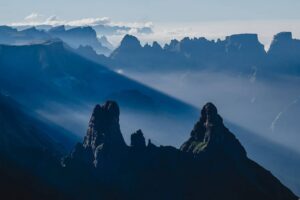
However, with cold comes some of the most epic moments up there: clear days after a front passes are the sharpest of the year, and cloud inversions put the whole ridge above a white sea. As we mentioned above, if you’re lucky, you may also get to see some mid-Atlantic snow on these peaks if you choose to hike Madeira in winter.
IMPORTANT: Rockfall is very common on the island given its crumbly geology and frequent weather changes. This is a serious hazard that should be kept in mind at all times, not just in winter. Stay alert and avoid steeper, more exposed trails after heavy rainfall. If you expect these sorts of conditions, consider wearing a helmet and do not hike alone.

The Levadas
The historical irrigation-channel paths of Madeira change the least in the winter seasons. They follow gentle gradients through sheltered valleys, so wind is rarely a factor here.
However, the amount of water can change dramatically. For example, Levada das 25 Fontes (PR6) is a completely different hike in January than in August: the falls at Risco and the 25 Fontes lagoon run at full force, and the crowds that you can typically see in Summer are usually all gone.
This could also be said about the Levada do Caldeirão Verde (PR9), though expect mud, dripping tunnel ceilings, and slick stone underfoot. Bring a headlamp for the tunnels either way!
IMPORTANT: We must stress as well that many levadas will also flood, even with moderate amounts of rain. In the case of those cut into tunnels, this can be especially dangerous. Do not proceed in situations like this if there has been a significant amount of rain.

The Coast
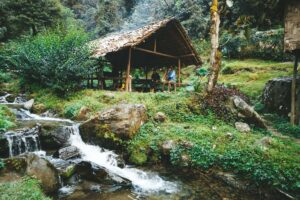
Ponta de São Lourenço (PR8) is the clearest winter trail of the popular PR routes. The eastern peninsula has no shade and no water sources, and in July it can bake. In January at 19°C, this is arguably the best time to visit Madeira for hiking the coast. Additionally, during this season the rains rejuvenate the usually arid peninsula and make it green again, which results in the spectacular “Hawaii-like” scene of São Lourenço that most summer visitors never get to experience.
The sea also sits around 18°C, so a post-hike swim at Prainha’s black-sand beach within a short drive of the trailhead is still a possibility, if you’re game.
The same logic applies along most of the coastal veredas: routes that can be quite hot in summer become much more comfortable day hikes at winter temperatures.
IMPORTANT: Do not underestimate the condition of the trails — not every one is maintained. Rougher, “shepherd’s” trails often feature more exposure and less in the way of safety measures. For that matter, there are often fewer people around these to help should you find yourself in a difficult situation. People have perished because they slipped and fell into a ravine or canyon, and were so far removed that by the time someone found them it was too late.
Winter Trail Closures
After heavy rain, the IFCN (Madeira’s forestry institute) closes affected trails until they’ve been checked for rockfall and landslips. This tends to happen more often during winter in Madeira. The good news is that closures are usually short, typically reopening again within a few days (though they can drag out on occasion).
Check the official trail status on the morning you hike and keep a sheltered south-side levada as your backup if the weather isn’t cooperating. Do that, and a closure will rarely cost you more than a change of plans. On an island with as many epic trails as Madeira, this is hardly an inconvenience.

Hiking on Madeira in Winter: Pros & Cons
In short, winter hiking on Madeira rewards those who are flexible. The season takes away some degree of certainty but offers quiet trails, full waterfalls, and comfortable temperatures in return.
We think that’s a good trade, but here are the pros and cons to help paint a better picture:
The pros:
- The island’s most popular trails are at their quietest. Walking the PR1 or 25 Fontes without the summer foot traffic changes the whole experience.
- Waterfalls, levadas, and hillsides are at their fullest and greenest.
- Hiking temperatures are comfortable. Exposed routes that are very hot in July sit at a perfect hiking temperature of 18-20°C.
- Post-frontal days bring the clearest visibility of the year, and your odds of catching a cloud inversion from the high ridge go up.
- It’s low season, so flights and accommodation cost less, and trailhead parking stops being so competitive.
- The ocean is still warm enough to swim – just.
The cons:
- More rainy days, especially on the north coast and the high ground.
- Trails can close for a few days after storms, so your itinerary needs some flexibility built in.
- Daylight runs to about ten hours, which means earlier starts and earlier turnarounds on the long routes.
- Wind and cloud can take the ridge off your itinerary for a day or two at a time, sometimes longer.
- Rockfall, slipperiness, and other trail hazards are more common, so you will need to be more attentive.

Is there any additional equipment needed?
As we mentioned earlier, unless you’re taking a crack at some of the higher peaks, Madeiran winters aren’t cold enough to justify microspikes, insulated winter boots, or a serious expedition jacket. Madeira in winter is just not that kind of cold.
Beyond that, your standard three-season hiking setup covers the majority of the trails on the island. We’d only add a few winter-specific items, most of which are useful in all seasons:
- A proper waterproof shell. Rain can arrive fast, and walking through a passing one is often part of the deal in winter. A rain cover for your pack is also useful for the same reason.
- A warm mid-layer, like a fleece or light down jacket, for ridge days. Wind chill near Pico do Arieiro can get close to freezing.
- A light hat and gloves. You won’t wear them often, but you’ll be glad to have them on the Central Mountain range.
- Footwear with solid grip. Look after your feet and avoid slips – wet levada stone and muddy steps are the real winter hazard on Madeira; actually, we’d say ahead of the cold.
That’s it! For the full breakdown of what we bring for every season, including the small stuff people forget, see our complete Madeira packing list.
Is Winter a Good Time to Visit Madeira? Our Take
Winter in Madeira is a milder, greener, quieter version of the island we love, with a few more rainy days thrown in. If you come with flexible plans, a rain shell, and a backup levada in mind, then winter is a great time to visit Madeira for hiking.
If you want to see the best of Madeira’s trails, culture, and food, check out our Madeira expedition page for inspiration.