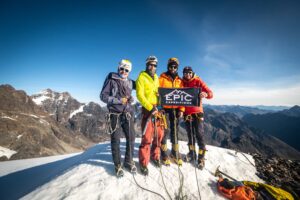
Take a look at our newest adventure: hiking in Cape Verde!
DIFFICULTY: Moderate
TOTAL TREKKING DISTANCE: 44 km approx (27 miles)
MAX ALTITUDE: 1,400 meters (4593 ft)
TRIP DURATION: 8 days
LODGING: Mix of local guesthouses and small hotels
GROUP SIZE: 12 people Max
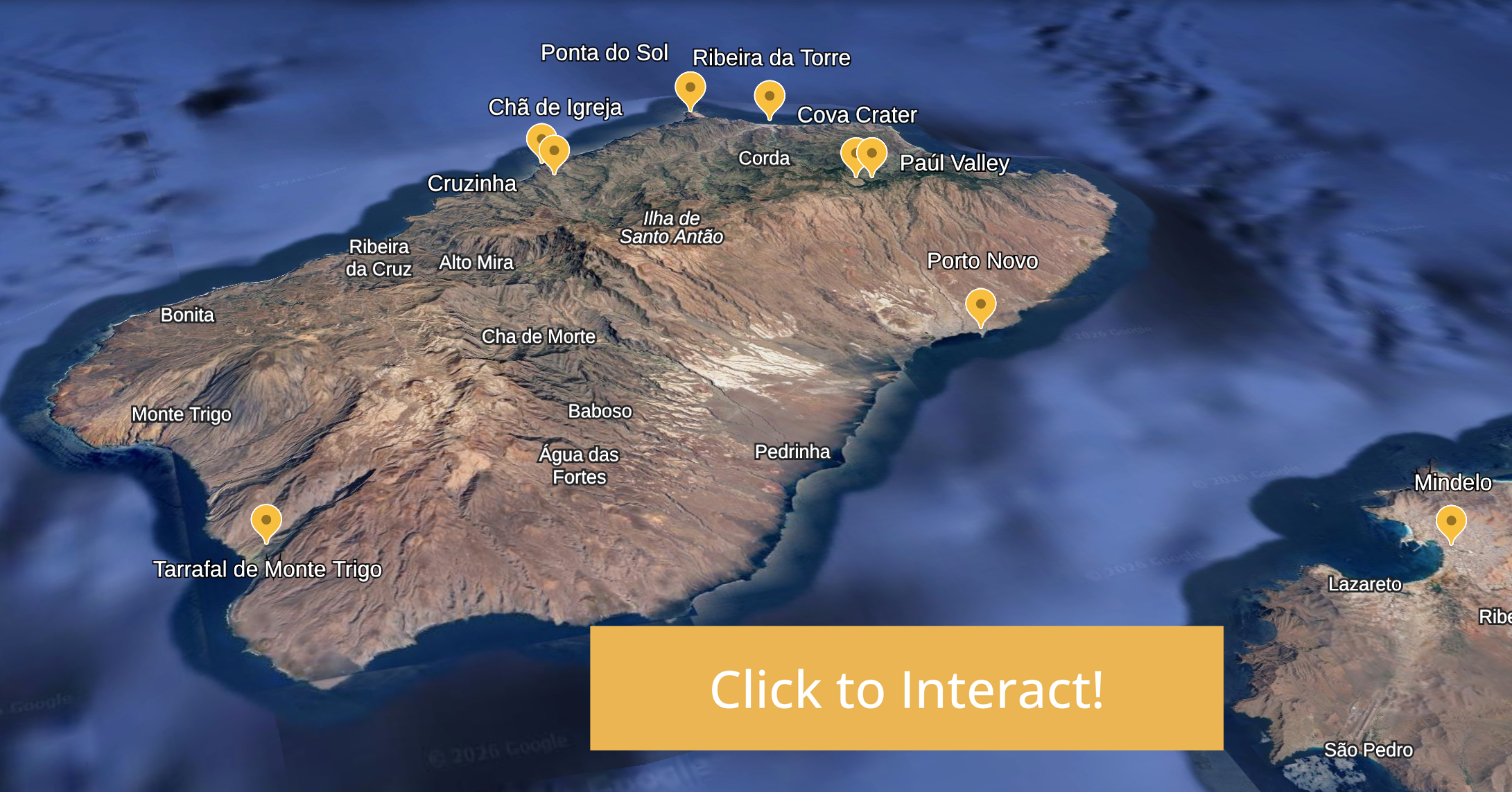
Rising from the Atlantic Ocean off the west coast of Africa, Cape Verde is an archipelago of volcanic islands shaped by the ocean, migration and centuries of cultural exchange.
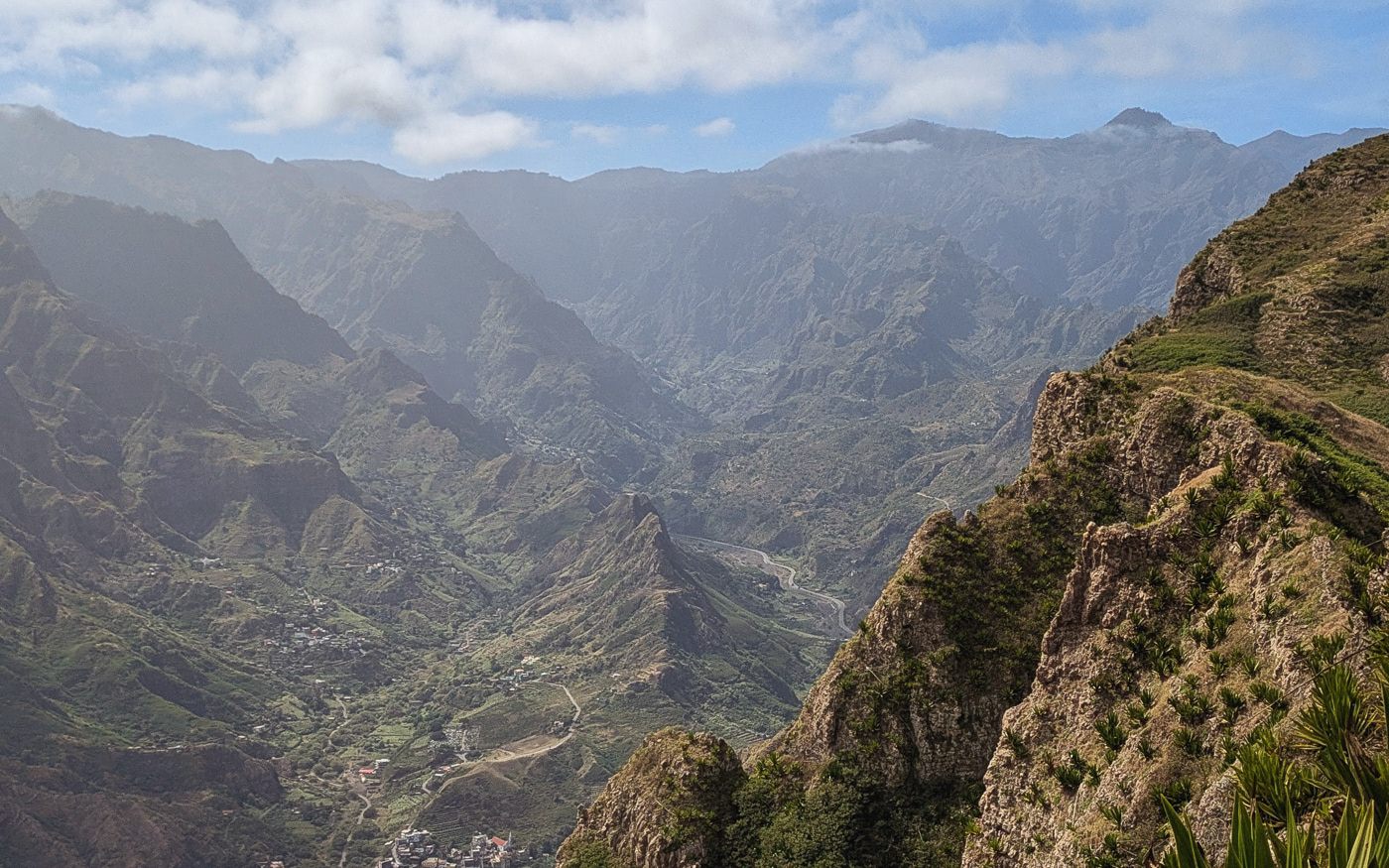
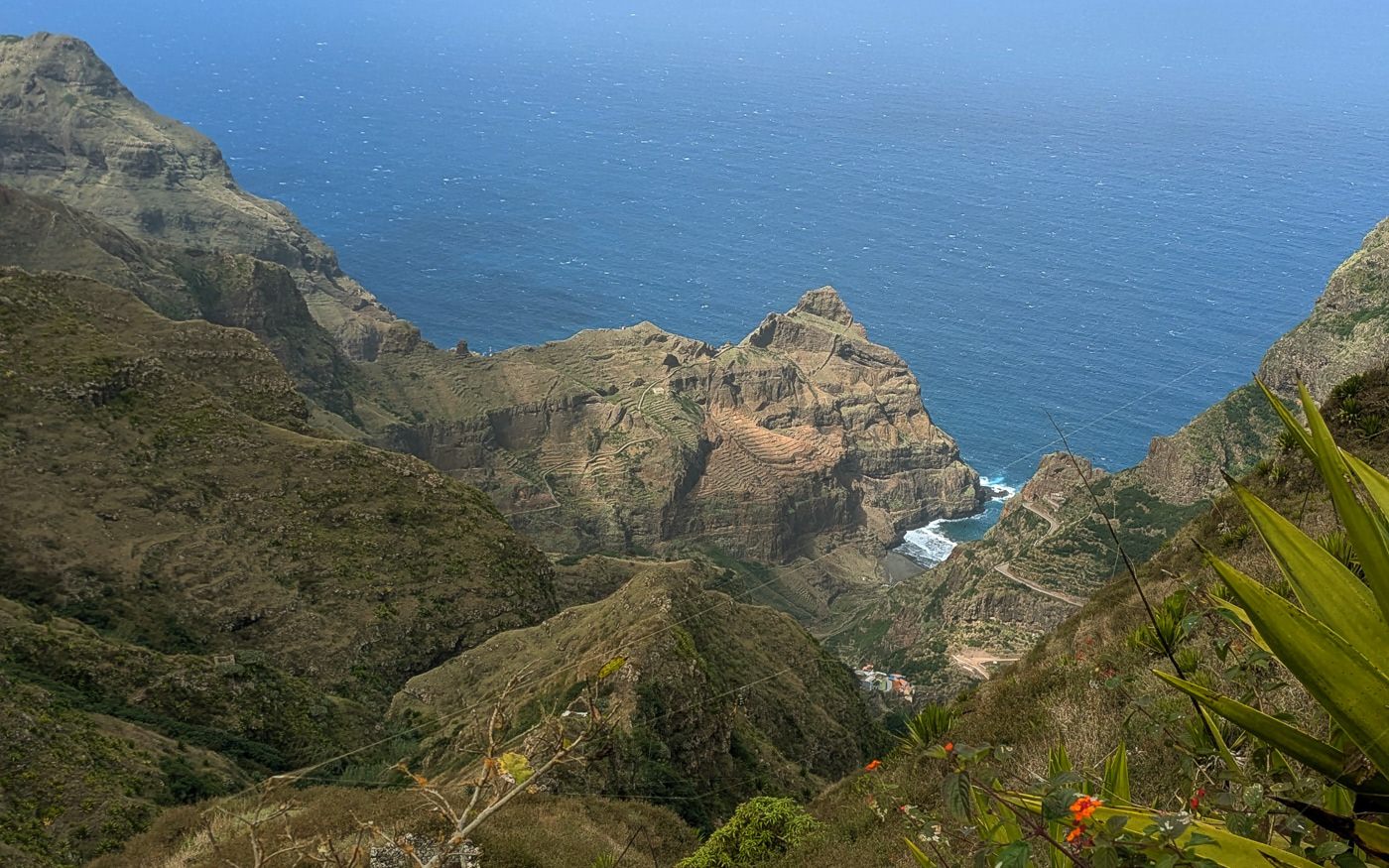
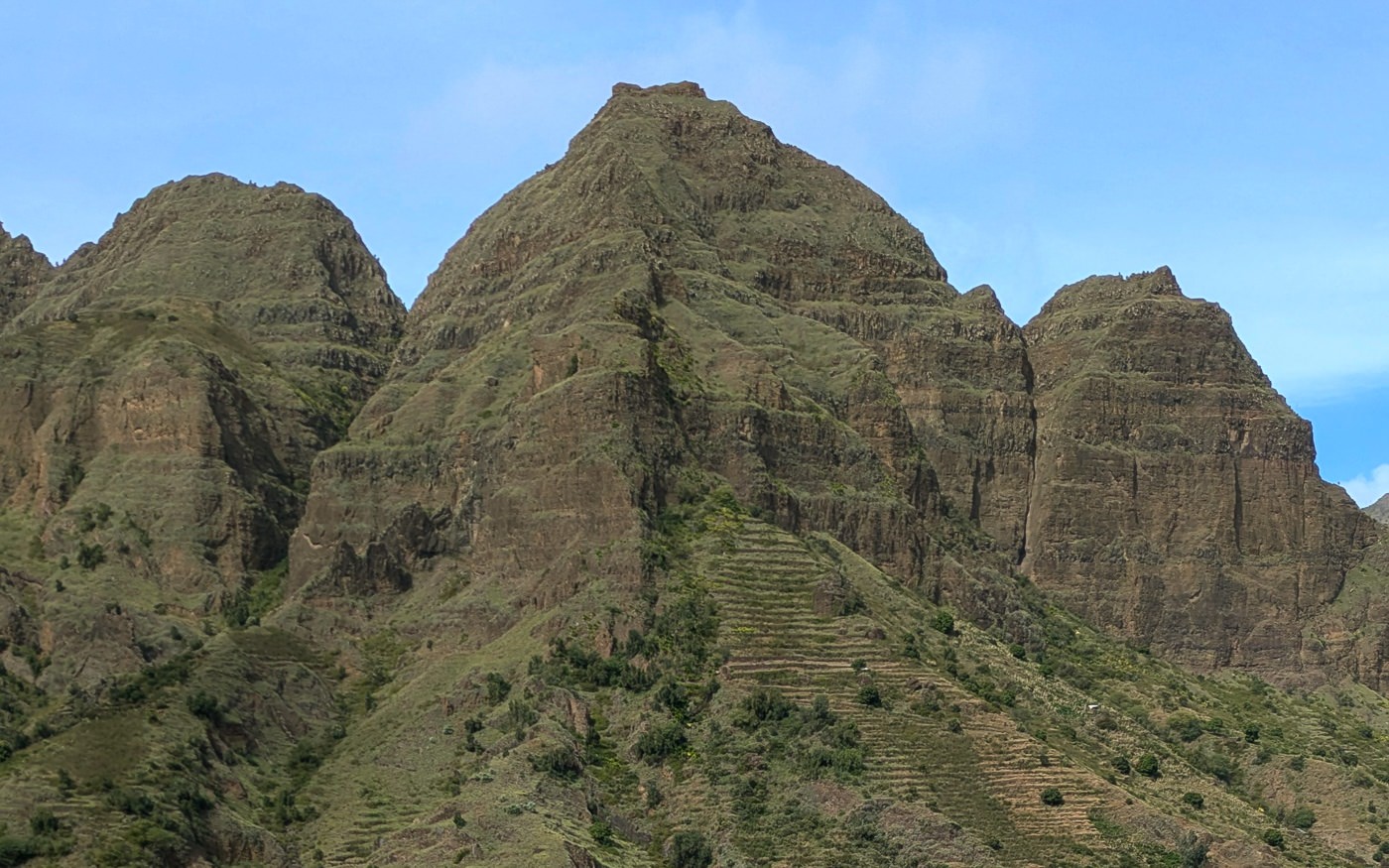
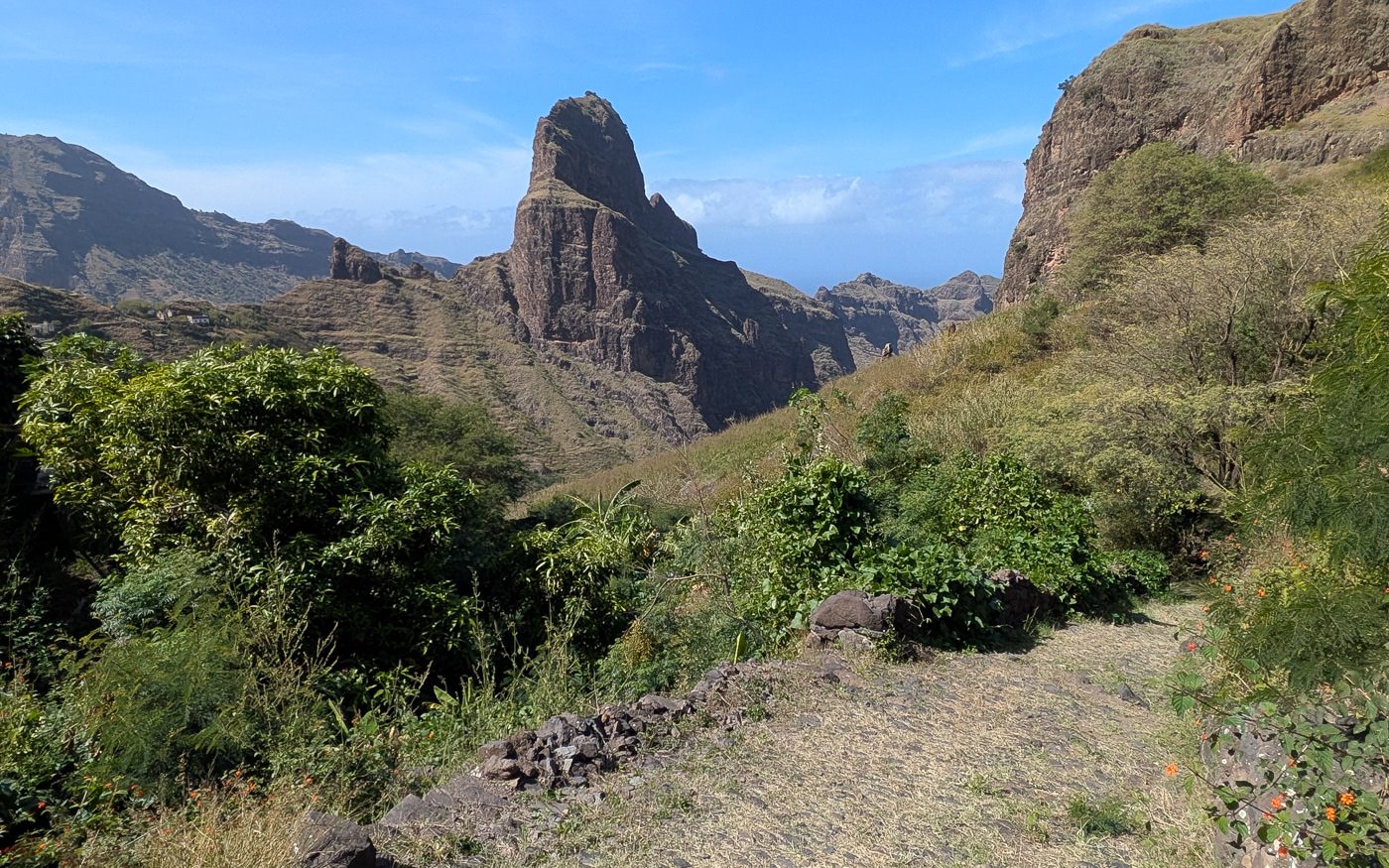
Our Cape Verde hiking tour features two contrasting islands. São Vicente, with Mindelo at its heart, is known for its music, maritime history and lively cultural character. Across the sea, Santo Antão is a mountainous island of deep valleys, steep volcanic slopes, terraced fields and a dramatic Atlantic coastline.
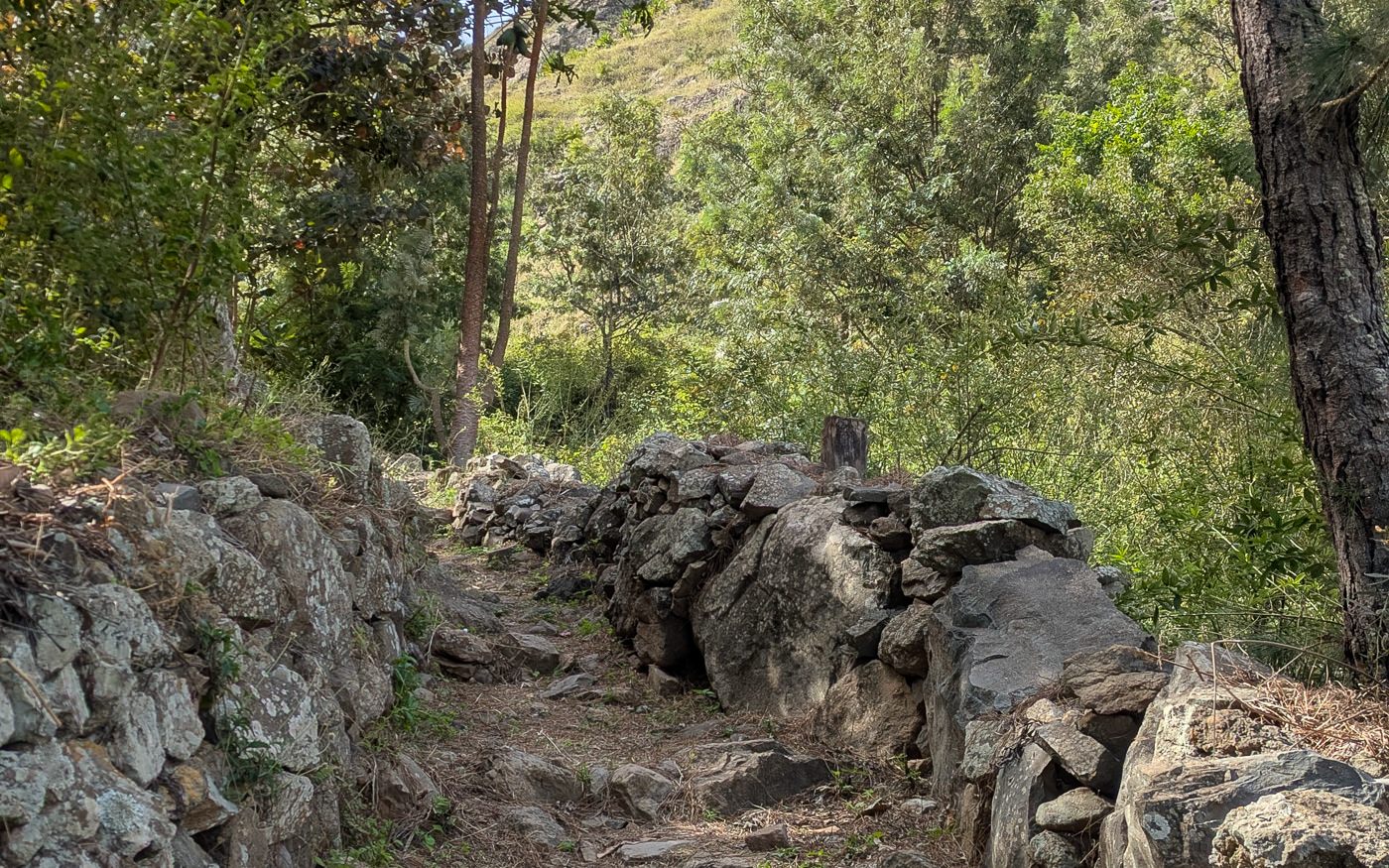
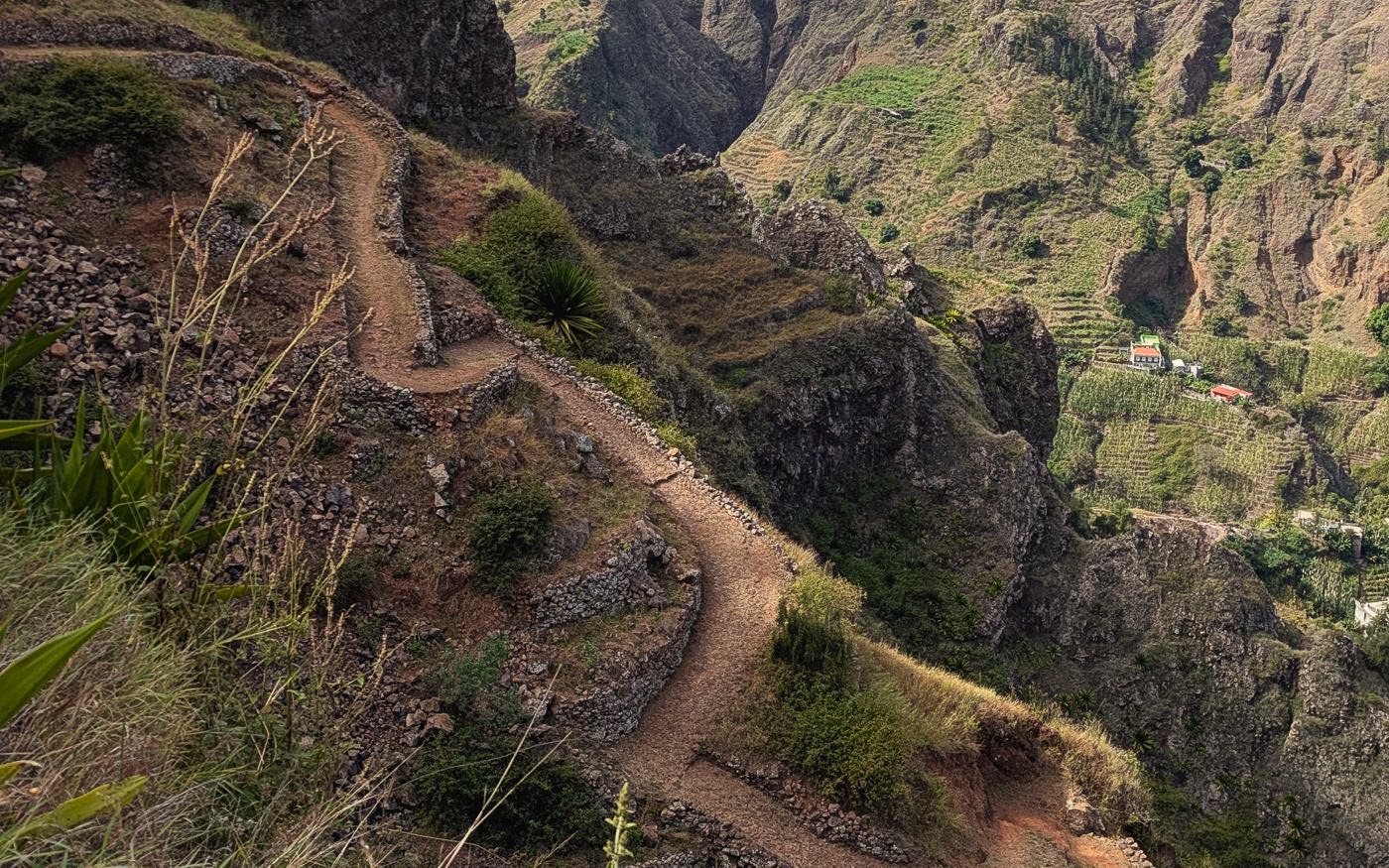
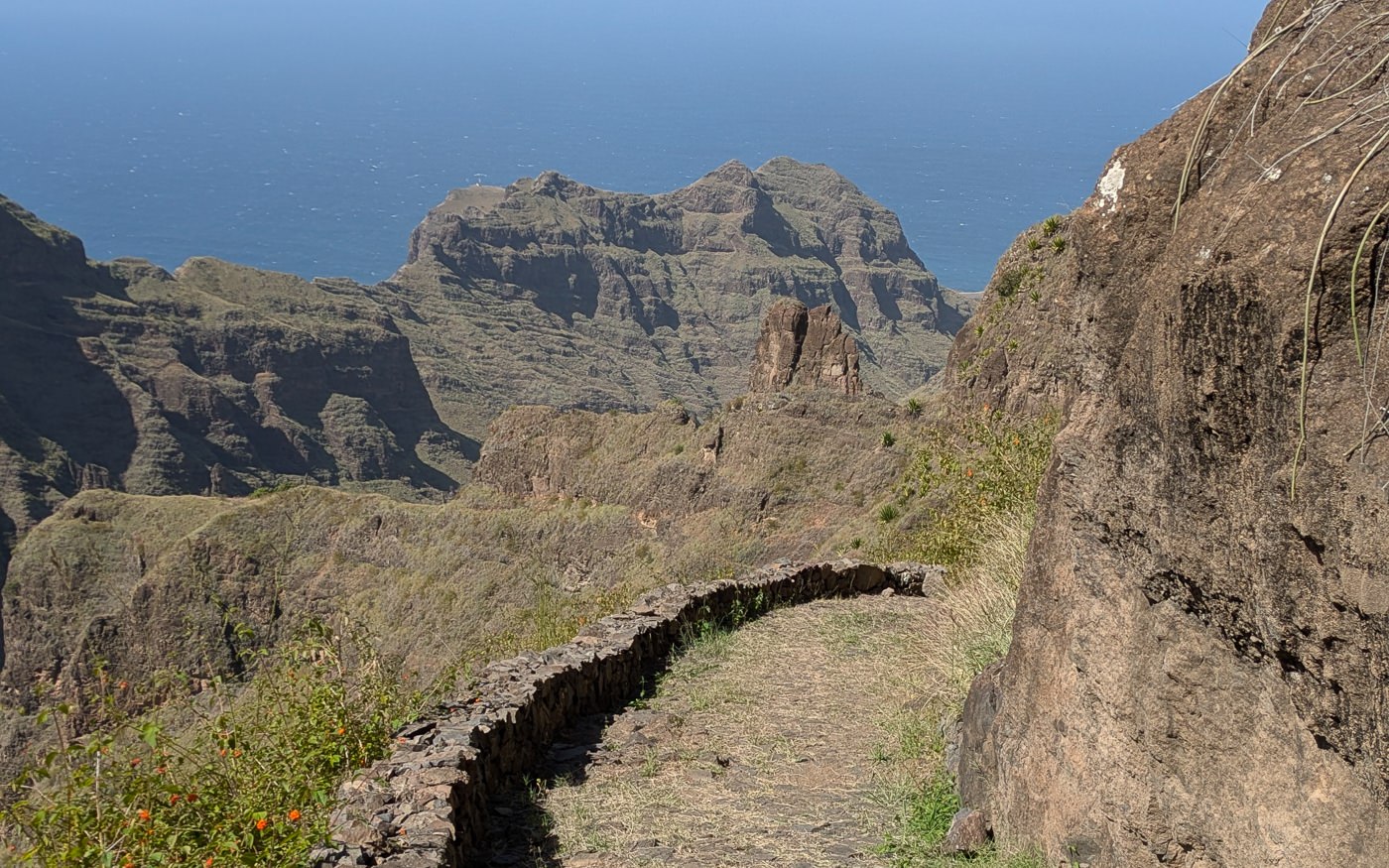
One of the most remarkable features of Santo Antão is its network of old stone paths, built across mountains and valleys to connect communities. These caminhos de pedra are an essential part of the island’s history and remain an integral part of its landscape and daily life. Together, São Vicente and Santo Antão offer two contrasting faces of Cape Verde: one maritime and cultural, the other mountainous and rural.
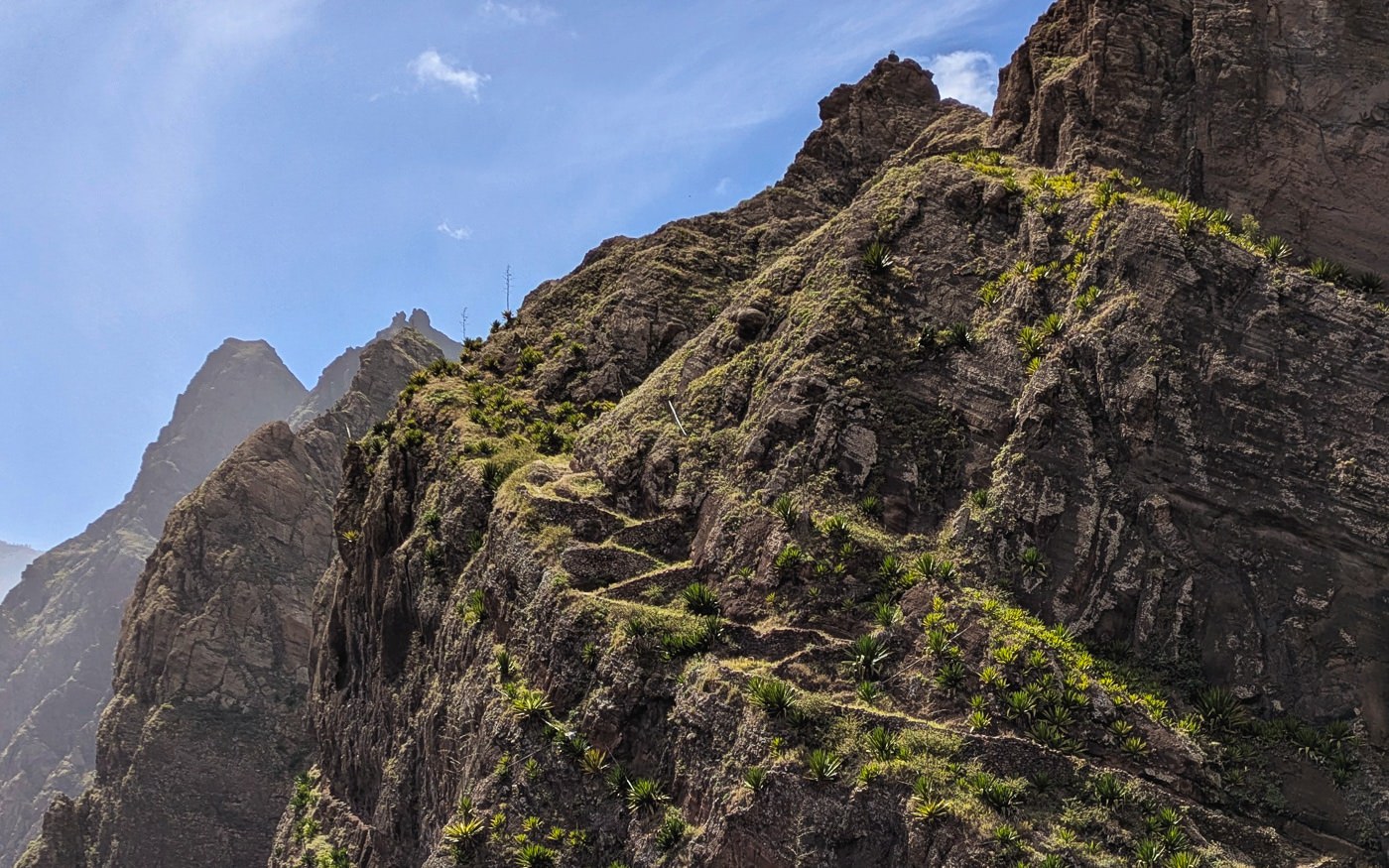
We will use these ancient arteries as our means of exploring and hiking in Cape Verde. All in all, you can expect plenty of undulating terrain, epic views, anachronistic villages, and relatively quiet paths, at least paths devoid of other hikers. In true Epic fashion, we will aim to show you parts of the island that few others know about.
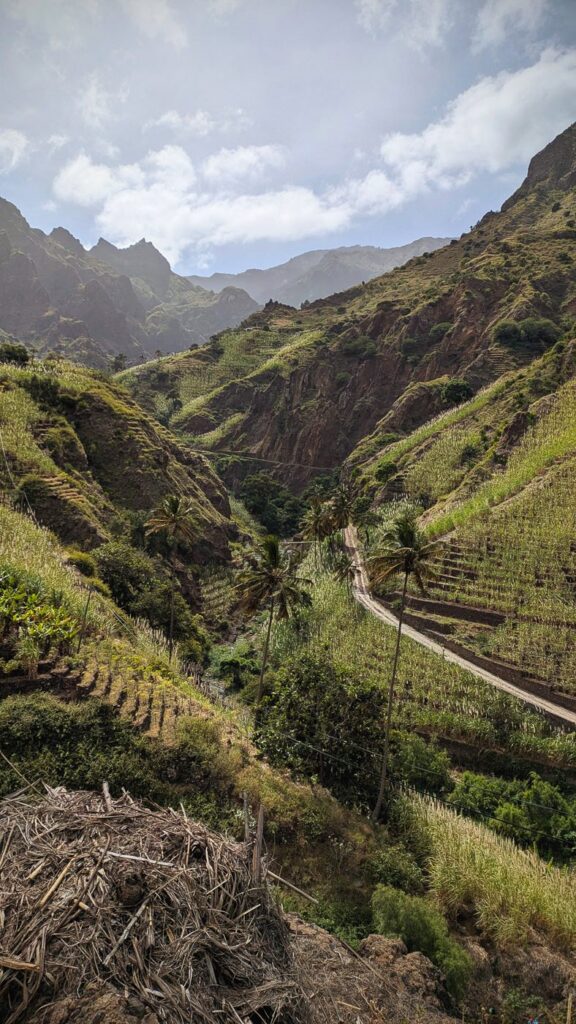
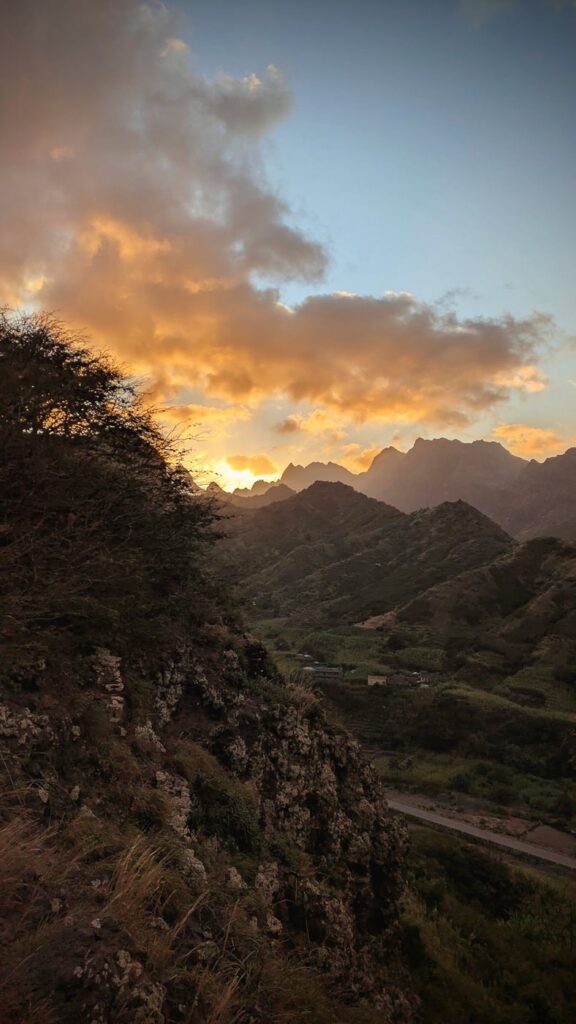
Santo Antão is for hikers who want big hiking days on historic stone paths, ending in remote villages reachable only on foot or by donkey.
2027 Dates | Places | Deposit | Full |
|---|---|---|---|
| January 10th - 17th, 2027 | $600 | $3250 |
Whether you’re just curious about hiking in Cape Verde or are ready to make a deposit, we’re here for you.
To submit an inquiry or make a trip deposit, please fill out and submit the form below.

João was born in the mountains of Madeira Island and can trace his family heritage back to the first settlers of Madeira in the 15th century. As a man of many talents and a keen sense of humor, he is also a nature lover, writer, musician, history, and all things Madeiran culture.
With a degree in Cultural Studies in Portugal and a Master of Arts in Global Cultures and Creativity in the U.K. João found out what really matters in life can be found on the trails, and in the contact with people from different backgrounds and cultures.
João is a leading expert when it comes to exploring Madeira Islands trails – discovering some of the hidden treasures on his native Portuguese Island.
This is the day when everything begins, with the arrival and reception of the group in Mindelo, on the scenic northern coast of São Vicente Island.
We will have our first briefing at the hotel, at a time to be confirmed. Afterwards, we will wander through the streets of Mindelo, surrounded by Cape Verdean art and the sea, with views towards the island of Santo Antão and the Ilhéu dos Pombos.
After some time walking through the streets of Mindelo and taking in the beauty of this picturesque Cape Verdean city, we will have our first group dinner. This will be an opportunity for everyone to get to know each other and to exchange some first impressions about the days that lie ahead.
Note: We strongly recommend that participants arrange to arrive in São Vicente one or two days before the official start of the tour (Day 1). International flights can occasionally face unexpected delays or cancellations. Arriving early ensures you will not miss the group’s departure, the initial briefings, or the scheduled ferry crossing to Santo Antão.
Accommodation: Guesthouse / Hotel in Mindelo
We will have breakfast at the hotel, followed by some free time. This is an opportunity to do some shopping, visit the local market, take a final walk through the streets of Mindelo, exchange money, and make sure that all the equipment is ready.
After our free time, we will have a quick lunch before taking the ferry from Mindelo on São Vicente Island to Porto Novo on Santo Antão Island, a crossing that takes approximately 1 hour.
Once we arrive in Santo Antão, we will meet the local team, including our drivers and local guides, and travel to Ponta do Sol in the northeast, where we will spend our first night on the island.
This day is mainly about traveling and crossing to Santo Antão. Later, we may take a short walk around Ponta do Sol, allowing us to settle in, get a feel for the local atmosphere, and have dinner at a local restaurant.
Accommodation: Guesthouse / Hotel in Ponta do Sol
On this day, the hiking adventure begins with a demanding but equally scenic and truly iconic hike, starting at Xoxo in Ribeira da Torre, ascending towards the spectacular Cova Crater before descending through the lush Paul Valley in northeast Santo Antão.
After breakfast at the hotel, we will get ready, pack our picnic lunch for the hike, and set off along the trails and traditional paths of Santo Antão.
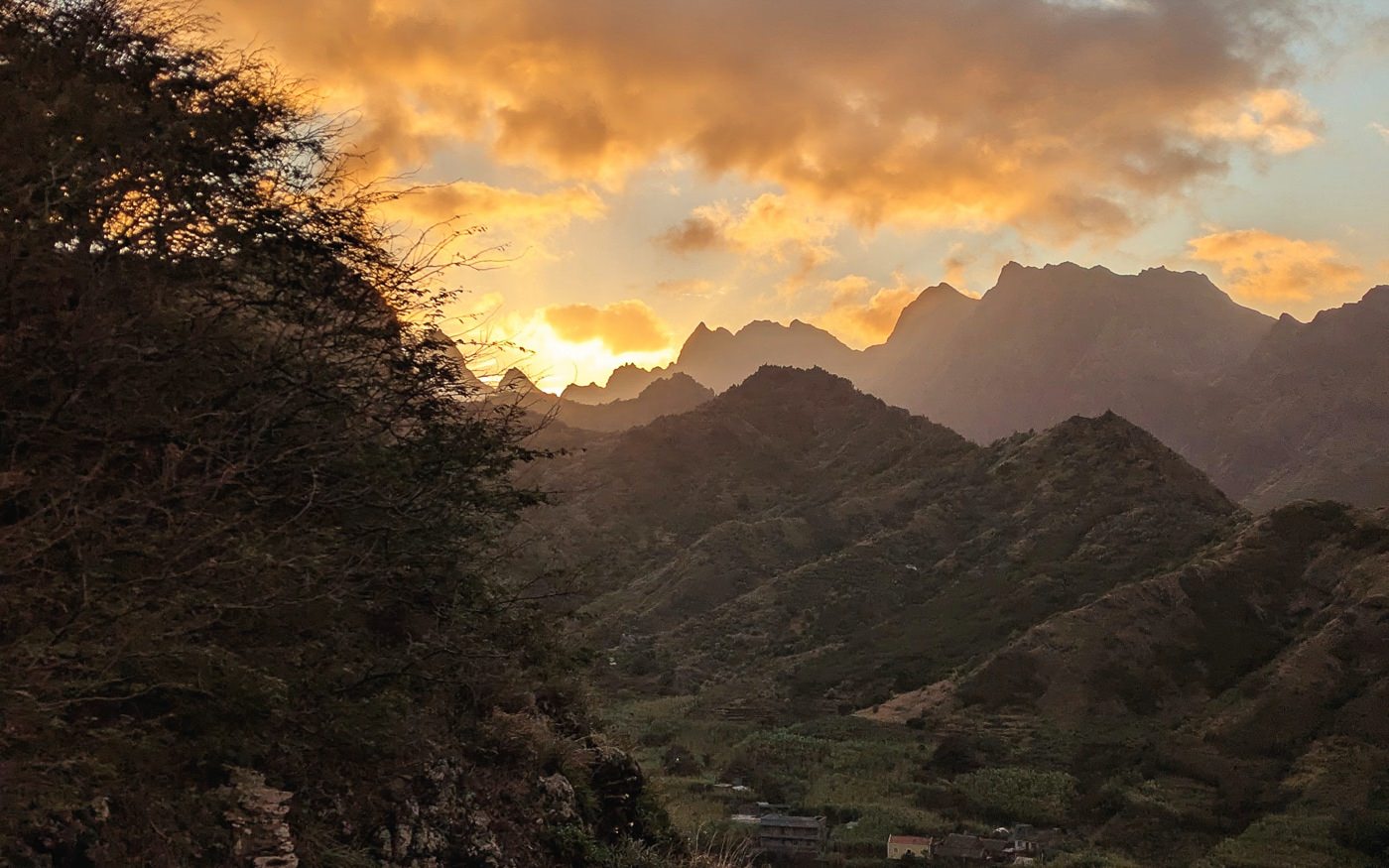
At the end of the hike in Paul, we will return to our accommodation to rest and take a shower before heading out for dinner and to watch the sunset in Ponta do Sol.
Accommodation: Guesthouse / Hotel in Ponta do Sol
We will leave our accommodation in Ponta do Sol and have a relaxed morning, breakfasting and having a coffee before preparing our luggage.
Our driver and his vans will transport the luggage we do not need for the hike to our next accommodation, allowing us to hit the trail with only what we need for the day.
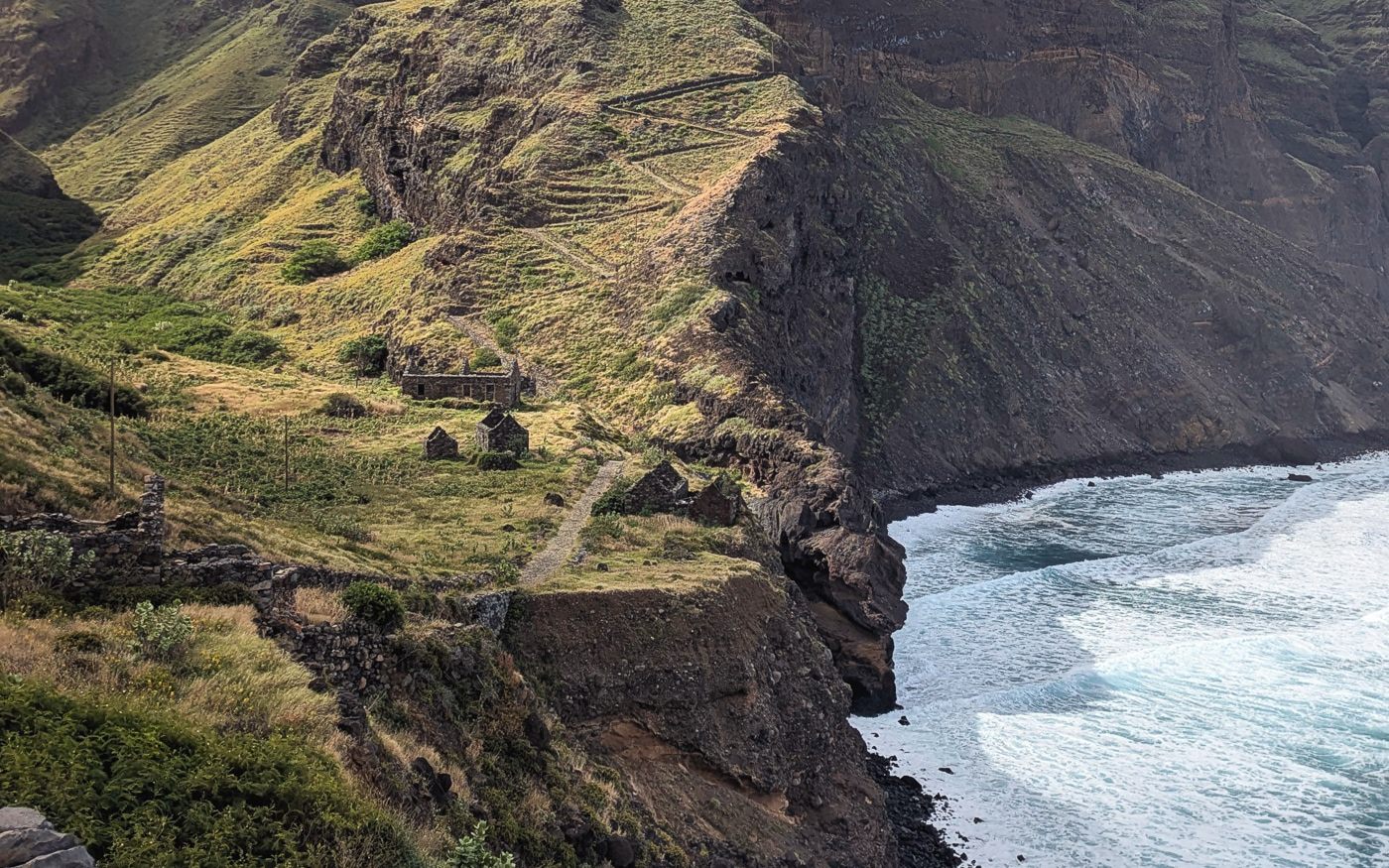
Today we will take one of the most iconic hikes along the dramatic northern coast of Santo Antão, walking from Ponta do Sol to Cruzinha.
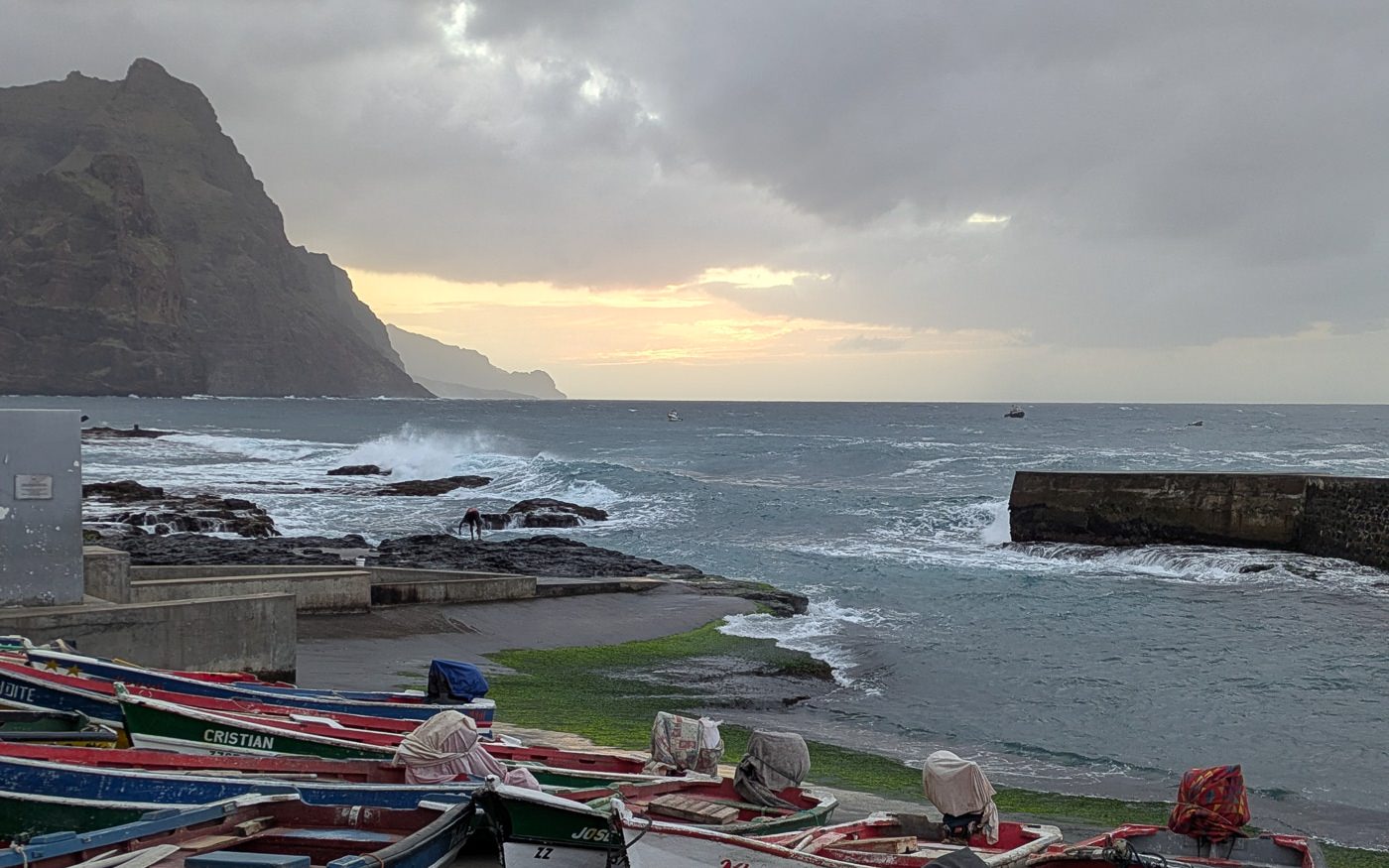
After exploring the valleys on the previous day, today we will experience the spectacular coastline of Santo Antão, following the trails between the mountains and the Atlantic Ocean before arriving at our seaside stay in Cruzinha, where we will also have dinner.
Accommodation: Guesthouse / Hotel in Cruzinha
After a night in Cruzinha, we will set off again for a surprise hike exploring the quiet, hidden valleys around Chã da Igreja on the rural northwest coast of Santo Antão.
Following our trek, we will gather for a charming and authentic lunch hosted at a simple local farm or traditional rural estate. This special meal highlights the warm Cape Verdean hospitality and features genuine locally harvested flavors, before we return to the same accommodation in Cruzinha for another night.
Accommodation: Guesthouse / Hotel in Cruzinha
We will leave our accommodation in Cruzinha and head back to Ponta do Sol first to leave our main luggage and belongings safely behind.
From there, we will travel across the island to the remote southwest coast to Tarrafal de Monte Trigo. This is a longer travel day, including a scenic drive along the old, traditional mountain roads of Santo Antão, allowing us to absorb the island’s grand scale.
Once in Tarrafal, we will set out for a hike towards the isolated village of Monte Trigo along the wild coastline. There will be time to swim in the sea (weather permitting) and sample a local lunch. Afterward, we return by boat to the trailhead, giving us a completely different perspective of this incredible coastline, before driving back to Ponta do Sol.
Accommodation: Guesthouse / Hotel in Ponta do Sol
We will gather our belongings from Ponta do Sol, leave Santo Antão, and make our way back to Mindelo on São Vicente Island by ferry.
Back in Mindelo, we will have our final dinner together as a group. It will be a chance to say our goodbyes, share our favorite memories, and reflect on the experiences we have had together over these unforgettable days in Santo Antão.
Accommodation: Guesthouse / Hotel in Mindelo
We say a final round of goodbyes in Mindelo as the group goes its separate ways for flights home from São Vicente International Airport (VXE).
A final breakfast is included at our accommodation.
If you are not flying out straight away, you can stay on in Mindelo or head back across to Santo Antão on your own, though any additional nights are not covered by Epic. Check-out at the accommodation is late morning.
Cape Verde is an archipelago of ten volcanic islands 600 to 850 kilometers off the westernmost point of Africa.
The most straightforward way to reach the beginning of the journey is to fly from Lisbon to São Vicente International Airport (VXE), arriving on the island of São Vicente. Direct flights from Lisbon to São Vicente are available, with schedules and frequencies varying according to the season. From São Vicente, we will cross to Santo Antão by ferry.
By ferry. Santo Antão has no working airport, so the crossing from Mindelo to Porto Novo is the only way in. It takes 50 to 60 minutes depending on the boat and the sea state, and two operators run morning and afternoon sailings every day.
The crossing is included in your trip, and so is the return leg on Day 7.
Santo Antão. The island climbs to 1,979 meters at Tope de Coroa and its valleys are stitched together by stone paths that predate the roads, which is why the hiking here has no equivalent on the flat, sandy resort islands of Sal and Boa Vista.
Fogo has its volcano and Santiago has its interior, but for four consecutive days of walking on real mountain terrain, Santo Antão is the one.
This is a challenging hiking tour in Cape Verde. The difficulty does not come from technical mountaineering or difficult scrambling, but from the terrain itself. Santo Antão is a mountainous volcanic island, and the routes involve considerable amounts of both ascent and descent, often on steep and uneven stone paths.
Several days combine long distances with significant elevation gain and loss. Some sections are exposed and the terrain can be demanding, particularly in warm conditions. Participants should therefore be comfortable hiking for several hours at a time on mountainous terrain and should have a good general level of fitness. This is not a technical mountaineering expedition, but it is considerably more demanding than a standard recreational walking holiday.
In January, Cape Verde offers excellent hiking conditions. Temperatures are pleasantly warm, typically ranging from lows of 20°C to highs around 27°C. The weather is generally dry and breezy, making it the perfect time to explore the trails comfortably.
November through June, when the islands are dry and the trade winds are steady. We run hiking trips in Cape Verde in January because the temperatures are comfortable for long climbs and rain is close to absent.
August to October is the wet season, when rain can make the stone paths slick and wash out sections of track on occasion.
Citizens of the US, UK, Canada and the EU do not need a visa and can stay up to 90 days. Everyone, regardless of nationality, must complete EASE pre-registration online and pay the Airport Security Tax of 3,400 CVE, which is about €31.
Register at least five days before you fly and use only the official government portal, which ends in .gov.cv. Arriving without it costs 6,800 CVE at the airport. Your passport needs at least six months of validity from the date of entry.
The official currency is the Cape Verdean Escudo (CVE). It is advisable to exchange some money into Cape Verdean escudos during the trip, particularly for smaller purchases, markets, local restaurants and places away from the main tourist centres. Euros may be accepted in some places, but the exchange rate offered locally may be less favourable.
Credit and debit cards are accepted in many hotels, larger restaurants and businesses, and ATMs are available on the main islands. However, Santo Antão is more rural and cash remains important. Participants should therefore not rely exclusively on cards and should carry a reasonable amount of Cape Verdean escudos. A Visa or Mastercard is recommended as a backup.
For ease of transport across uneven terrain, rural roads, and local transfers, we strongly suggest that participants bring a flexible duffle bag or a soft backpack rather than a rigid suitcase with wheels. A comfortable daypack (20–30L) is also required for carrying your daily essentials during the hikes.
Nobody lived on Santo Antão until the Portuguese arrived in the fifteenth century. The island appears on a royal map dated 29 September 1462, as one of five western Cape Verde islands credited to the navigator Diogo Afonso, and settlement followed from there.
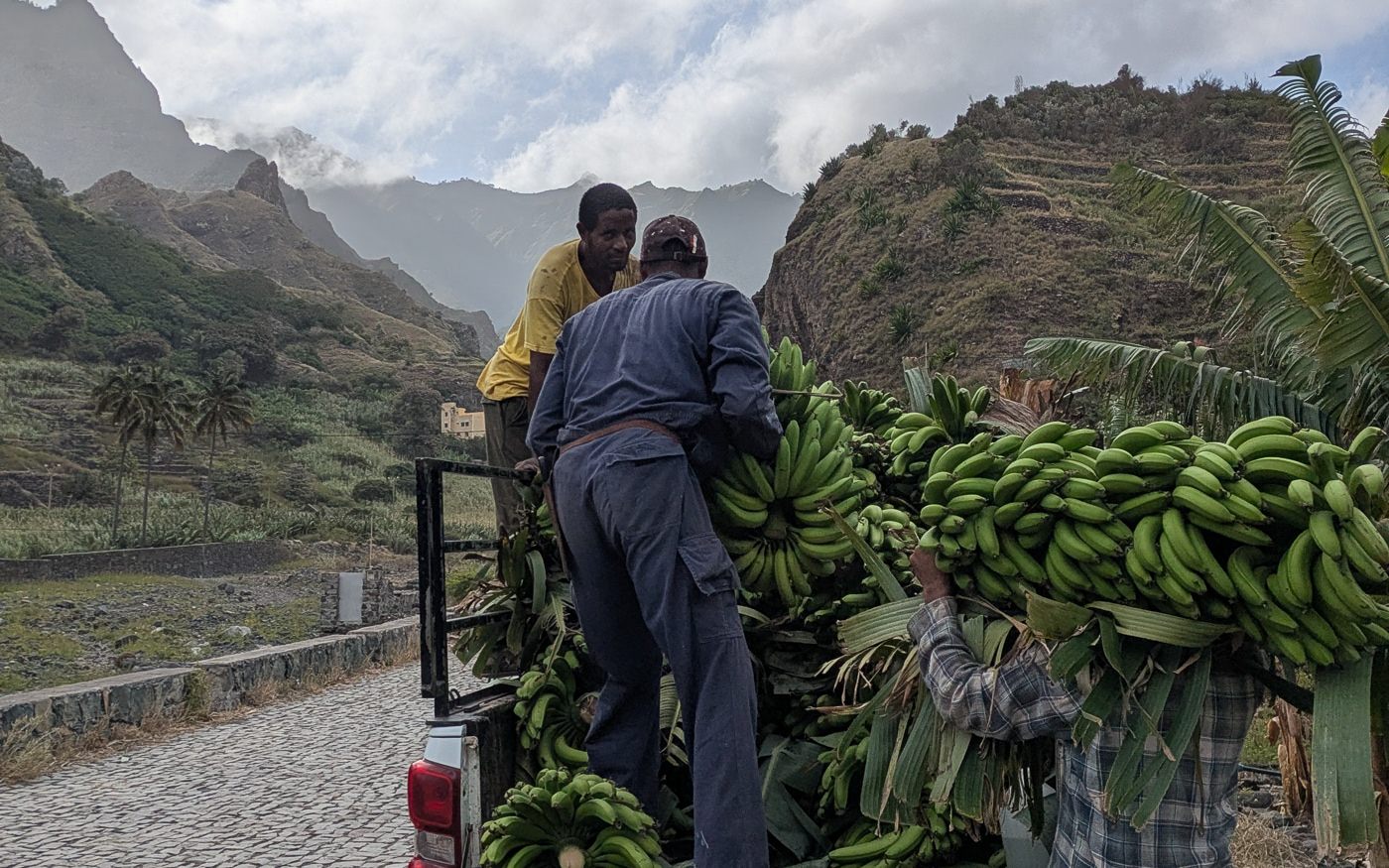
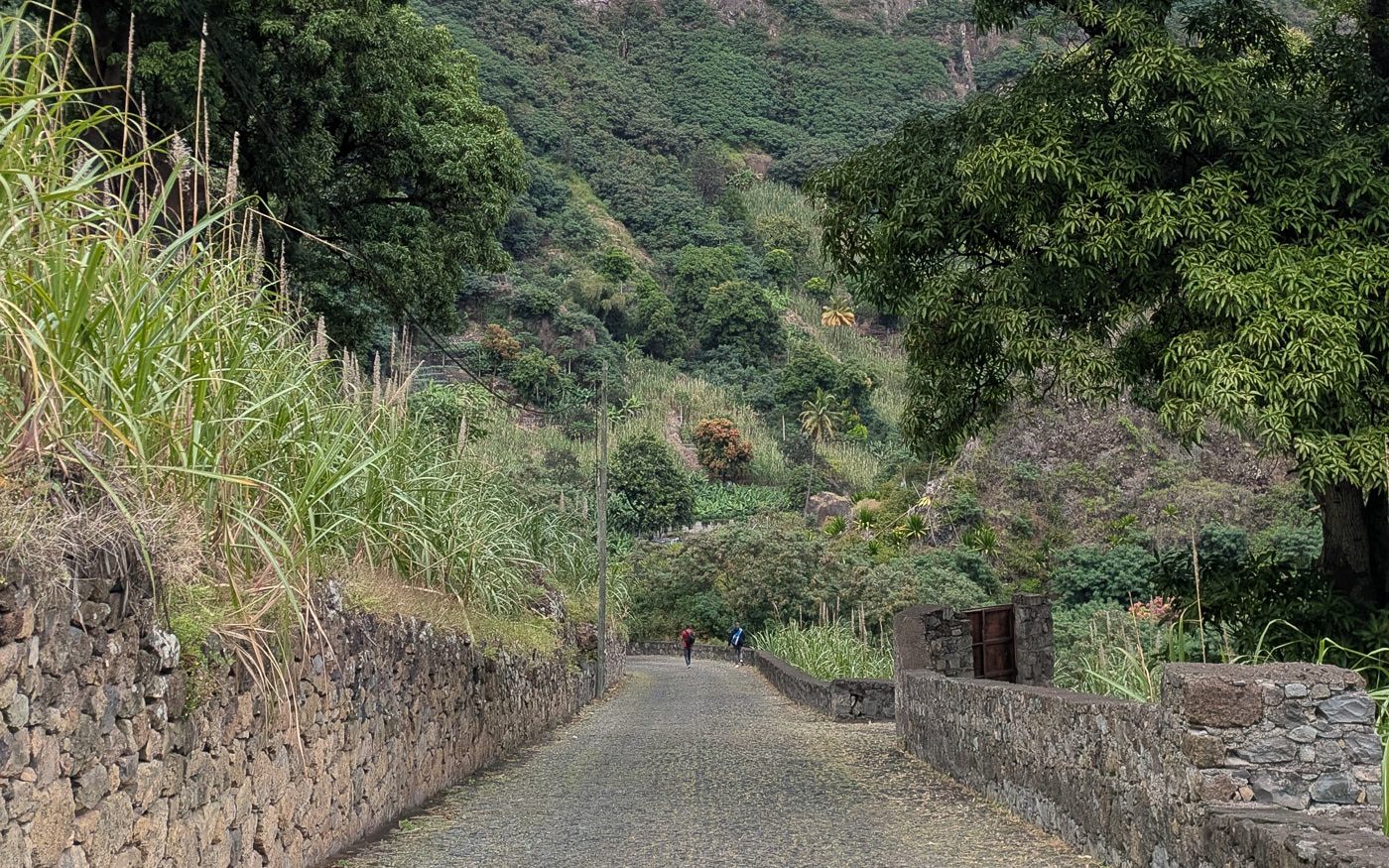
The island’s identity is deeply tied to its rural traditions. It is defined by coastal fishing and rich terraced agriculture, where sugar cane, banana, and papaya plantations thrive along the volcanic hillsides. The scene — aging structures striping the valley walls — is probably very similar to that from centuries ago.
The stone paths are a direct result of that historic farming. Villages sat in valleys separated by volcanic ridges, so people built caminhos de pedra across them by hand, laying slabs up gradients that no wheel could take. Roads have since reached some of the island, but plenty of Santo Antão is still connected the old way, and the paths are working infrastructure rather than heritage.
The numbers are small and the terrain is not. Santo Antão covers 785 square kilometers and holds around 38,200 people, and it rises to 1,979 meters at Tope de Coroa. Cova, the crater sits at 1,166 meters on its floor with a rim at 1,522 meters. There is no working airport, so the ferry from Mindelo is the only way in.
Cape Verde gained independence from Portugal in 1975 and has used Cabo Verde as its official name since 2013. Across the channel on São Vicente, Mindelo turned a deepwater harbor and a century of coaling traffic into a culture of its own, and it exported morna to the world, mostly through Cesária Évora. UNESCO added the music to its intangible heritage list in 2019.
Sign up for the Epic Newsletter to gain instant access to our insider packing lists and receive regular adventure updates.
Expect lots of cool photos, trip announcements, and highlights from our favorite places around the world. Never spam.
Get exclusive trip updates, be the first to know when we launch a new itineraries and offer discounts, and stay up to date with what’s happening at Epic Expeditions!