Take a look at our newest adventure: hiking in Cape Verde!
DIFFICULTY: Strenuous
MAX ALTITUDE: 6,962 meters
TOUR DURATION: 19 days
LODGING: Mix of hotels and expedition tents
GROUP SIZE: 8-12 people
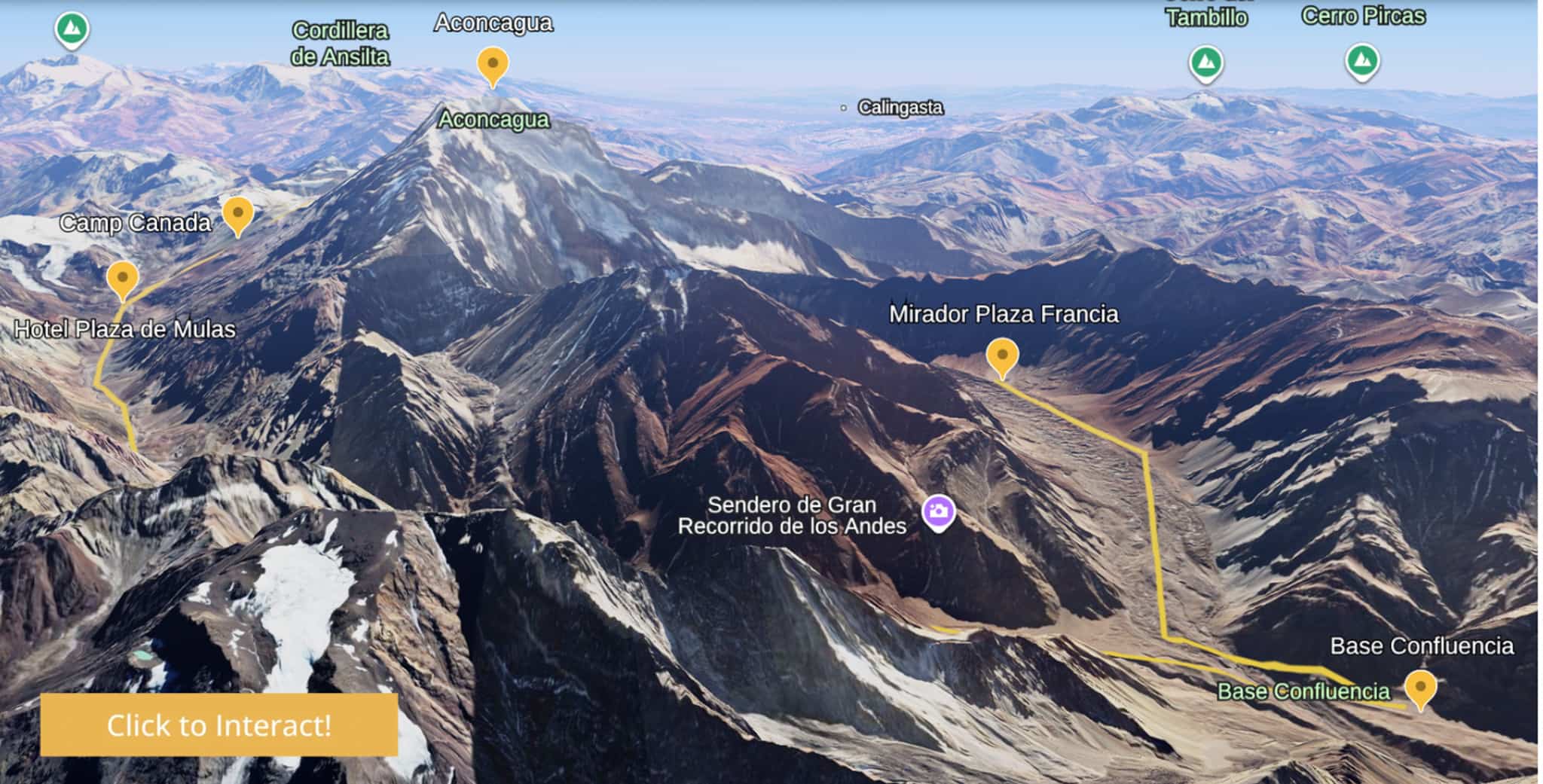
Aconcagua (6,962m / 22,841 ft), rising out of the Andes in western Argentina, is the highest peak in South America and the tallest mountain on Earth outside Asia.
Epic’s Aconcagua expedition is built for ambitious adventurers chasing their first big peak, Seven Summits hopefuls, and experienced trekkers ready to step into big mountain territory.
Our 19-day itinerary runs deliberately longer than most operators with extra acclimatization days through Confluencia, Plaza de Mulas, and the upper camps at Nido de Cóndores and Cólera. This is how summit success is won, well before the final push from 6,000 meters to the top.
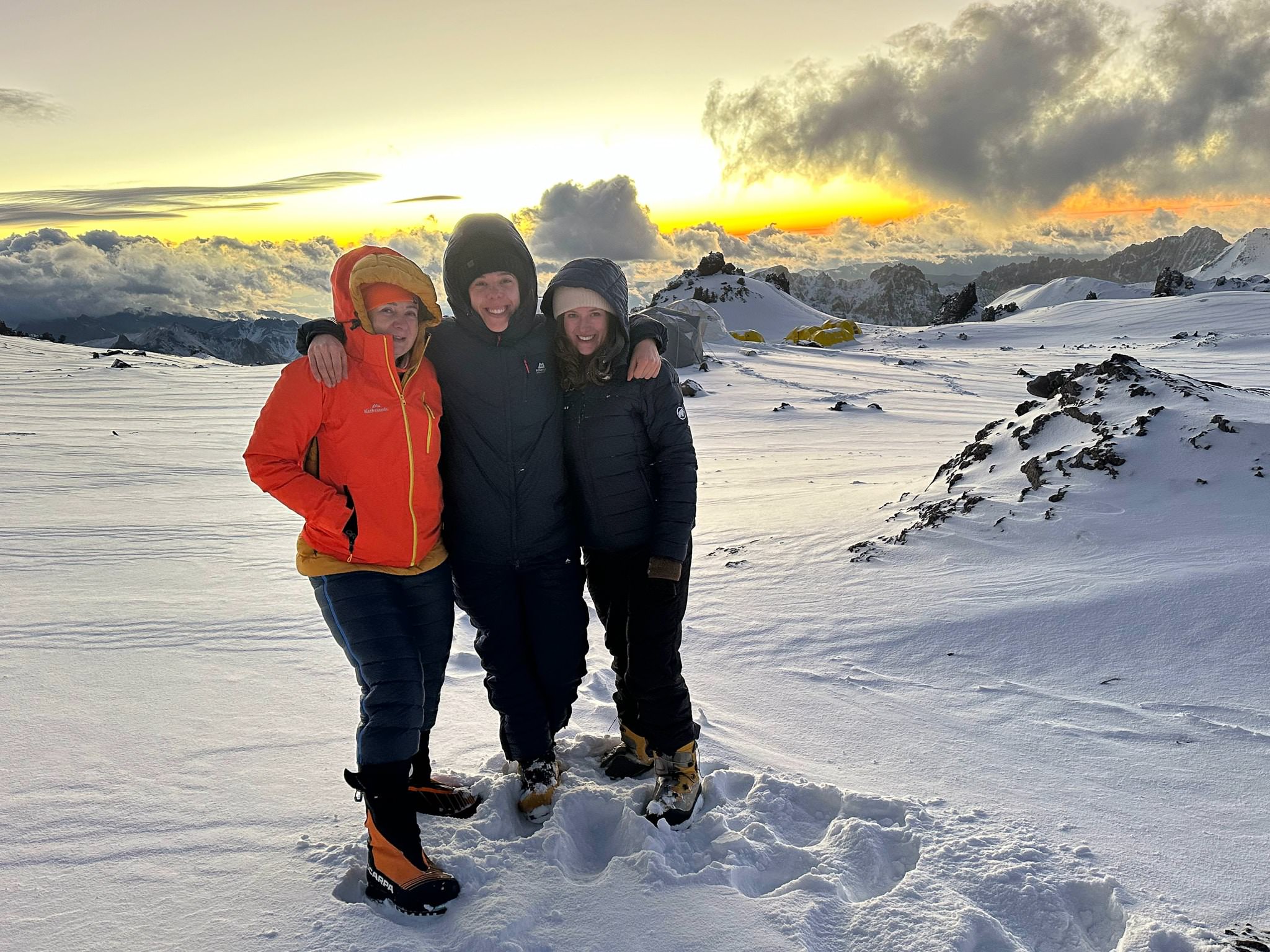
You’ll climb with IFMGA-certified mountain guides and a low 2:1 client-to-guide ratio on summit day, alongside a small group of like-minded climbers from around the world.
Standing at the roof of the Americas is a challenge every mountaineer dreams about – and now it’s your turn!
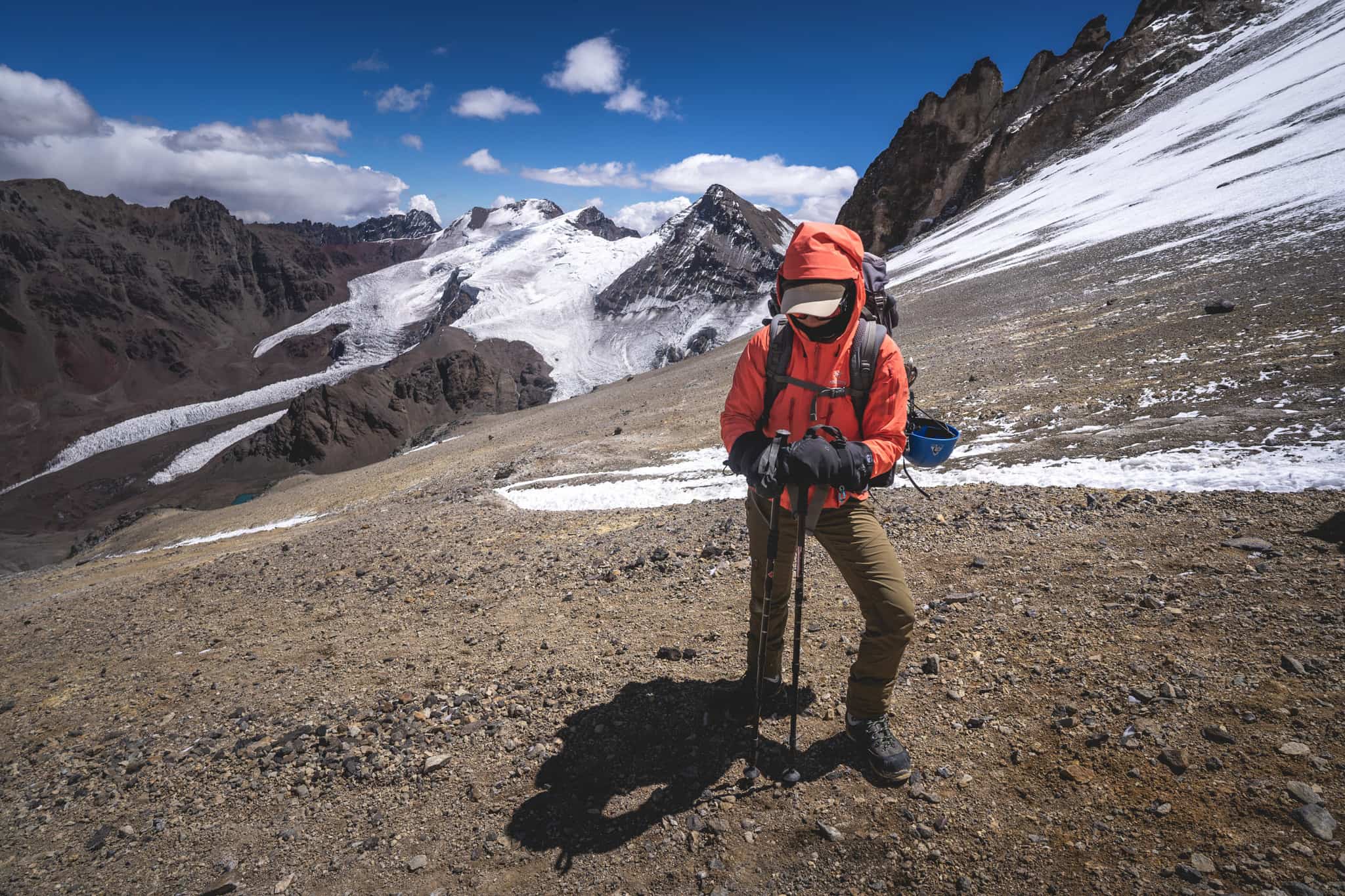
Stand on the summit of South America – the highest peak on the continent and one of the actual Seven Summits
A non-technical peak just shy of 7,000 m: Aconcagua’s Normal Route requires no ice climbing or technical rope work
Learn from the best: climb with IFMGA-certified mountain guides and seasoned Argentinian arrieros (mule drivers) who know every ridge, camp, and weather pattern on the mountain
Use it as a launchpad for bigger adventures – 19 days of proper acclimatization sets you up for future 7,000-meter or even 8,000-meter goals
Finish the expedition in Mendoza – Argentina’s wine capital and the gateway to the high Andes
Dates | Place | Deposit | Full |
|---|---|---|---|
| January 23 - February 10, 2027 | $600 | $8650 |
Most climbers who reach out have a list of questions before they put down a deposit. That’s how it should be, and whatever it might be, we’re here for you!
Fill out the form below to send an inquiry or make a trip deposit. Or email us directly to set up a call with our team. We’re happy to walk you through our Aconcagua itinerary, what acclimatization looks like, the gear you’ll need, and anything else on your mind before you commit to the climb.
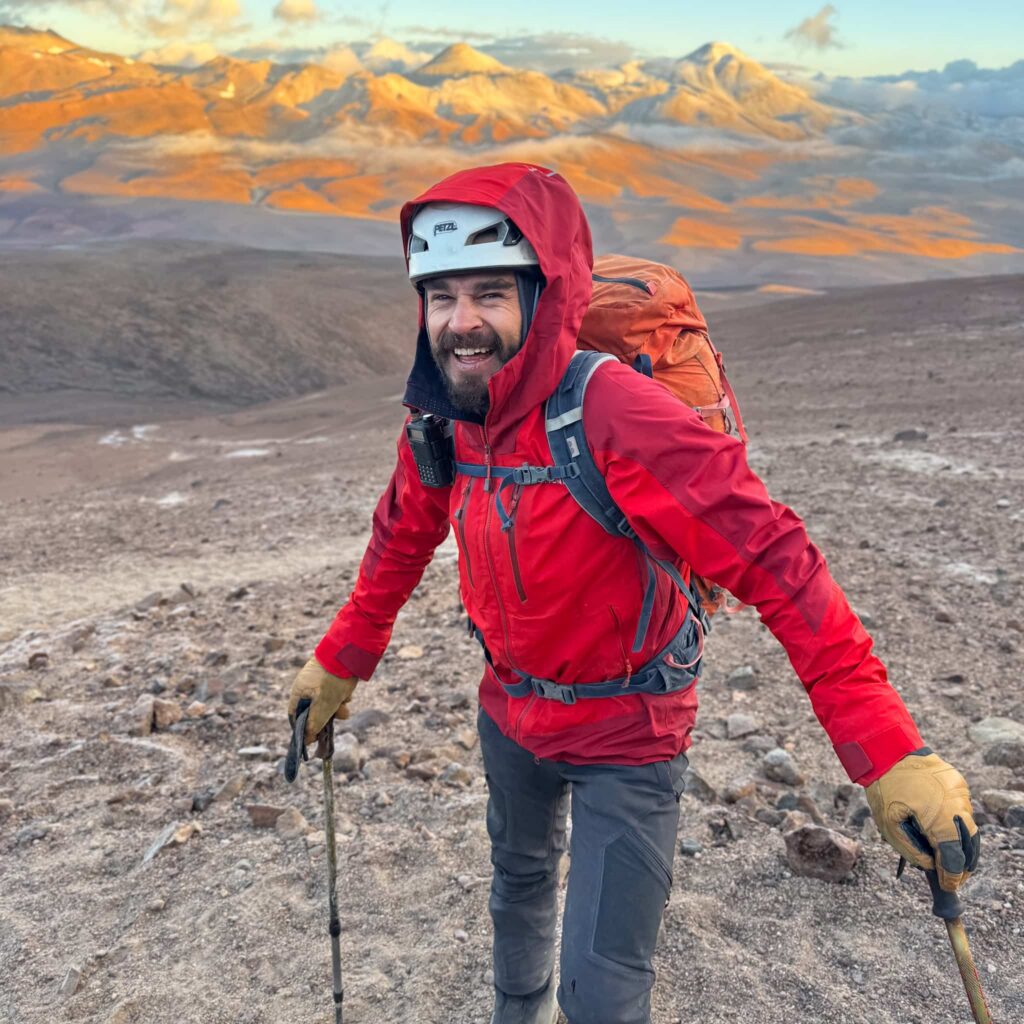
As a native of Chile and professional mountain guide for the last 20 years, there is not much Gustavo can’t do.
Gustavo is an IFMGA guide who regularly leads trips around the world. His specialty is in Ecuador and Chile, Aconcagua in Argentina, where he leads multiple expeditions throughout the season every year.
He is the kind of guy who comes down from climbing Cotopaxi, only to go for a run before dinner. We are luck to have this legend on our team.
Today is the day it all begins. Welcome to Argentina!
Make your way to our group hotel in central Mendoza, the laid-back wine capital that serves as the launching point for every Aconcagua expedition.
Settle in, shake off the long-haul travel, and meet the team in the late afternoon for introductions and our welcome dinner.
Mendoza runs on a relaxed Andean rhythm. Leafy plazas, late dinners, plenty of Malbec. Take the evening as your last bit of comfort before three weeks on the mountain.
Note: We strongly recommend arriving in Mendoza one or two days early. This gives you time to shake off the jet lag and start adjusting before we head up into the mountains. The majority of this expedition takes place above 4,000 meters, and arriving early gives you the best chance to feel good, stay strong, and enjoy the climb.
Accommodation: Hotel in Mendoza
A full day in town for the official Aconcagua expedition briefing, permit arrangements, and a thorough gear check with the team.
We go through your kit piece by piece (base layers, sleeping system, double boots, summit parka, mittens) so any gaps can be sorted at one of Mendoza’s outdoor shops before we leave. Food, stove fuel, and mule logistics get finalized with the arrieros (Argentinian mule drivers) who’ll move the heavy gear to base camp for us.
We’ll have a delicious dinner together in Mendoza before settling into an early night – tomorrow we head for the mountains!
Accommodation: Hotel in Mendoza
Today the expedition truly begins.
We leave Mendoza early and head west into the Andes by road. After about 3–4 hours of driving, climbing steadily out of the wine country and up into high desert, we reach the ski village of Penitentes and the famous natural stone arch at Puente del Inca, both worth a quick look before we hit the trailhead.
At Horcones we register at the Aconcagua Provincial Park office, finalize packing, and hand the heavy duffels to the mule team. From here we walk in with light packs.
The trail to Confluencia follows the Horcones river up a wide, dry valley. It’s well-marked and gradually rising, and 3–4 hours of steady walking brings us to our first camp at 3,400 m. First night under canvas.
Accommodation: Tented camp at Confluencia (3,400 m)
A classic Aconcagua acclimatization day.
We leave most of our gear at Confluencia and head up the side valley toward Plaza Francia at 4,000m. This is the standard rest-day push on every Normal Route program – the body needs time at altitude before we move up to Plaza de Mulas tomorrow.
14 km round trip, 4–6 hours moving. Slow pace, plenty of water, a long break at the top, then back down to camp for an early dinner.
Accommodation: Tented camp at Confluencia (3,400 m)
Day 5 sees one of the longest trekking days of the expedition.
18–20 km of valley hiking from Confluencia up to Plaza de Mulas Base Camp at 4,300m. The terrain is gradual but unrelenting, and the combination of altitude, distance, and exposure to the high-desert sun catches a lot of climbers out. Slow, steady pacing is the only way to do it well. Expect 7–9 hours on your feet.
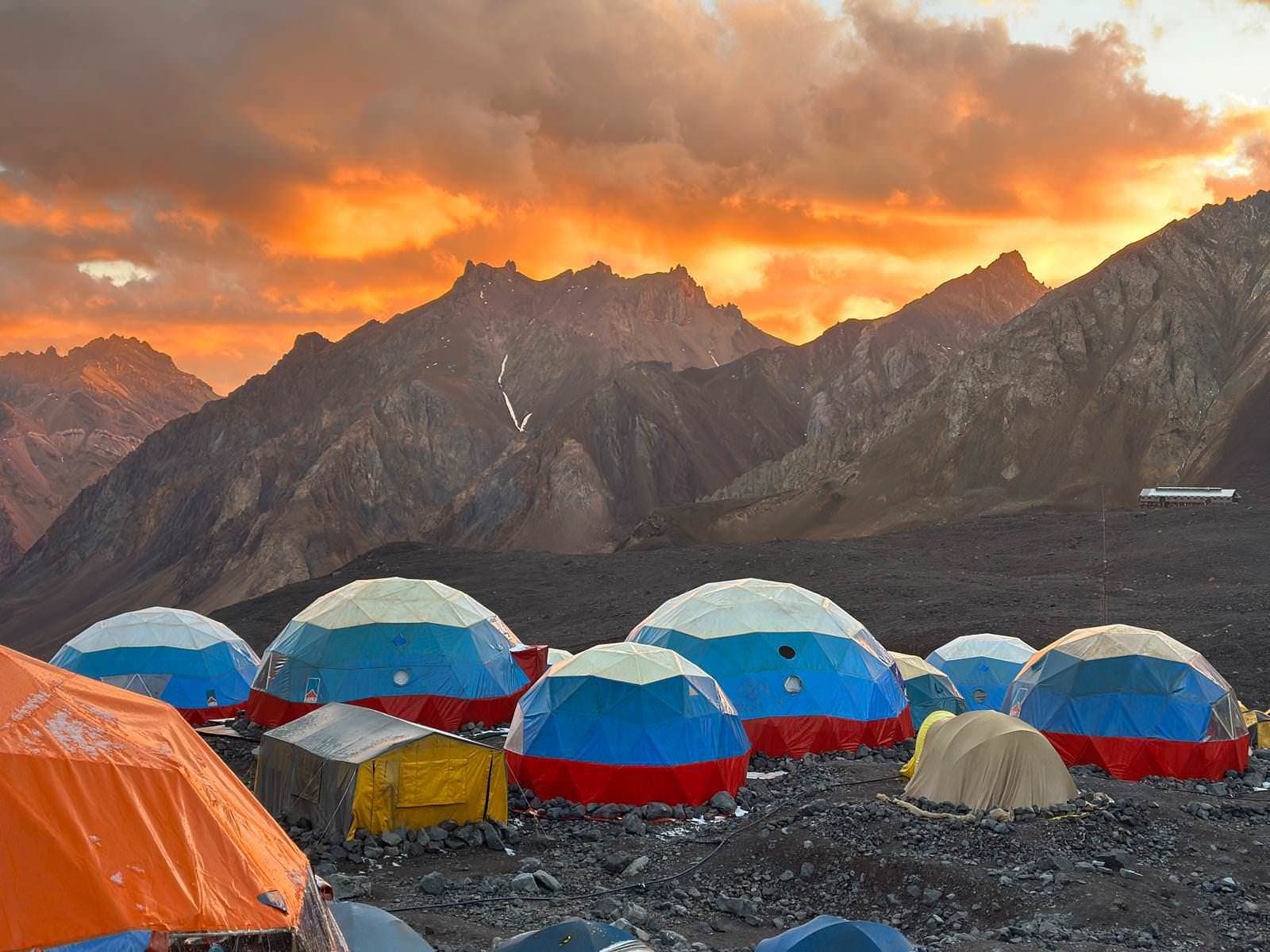
When you finally crest into Plaza de Mulas, you’ll find one of the highest and most developed base camps in the world.
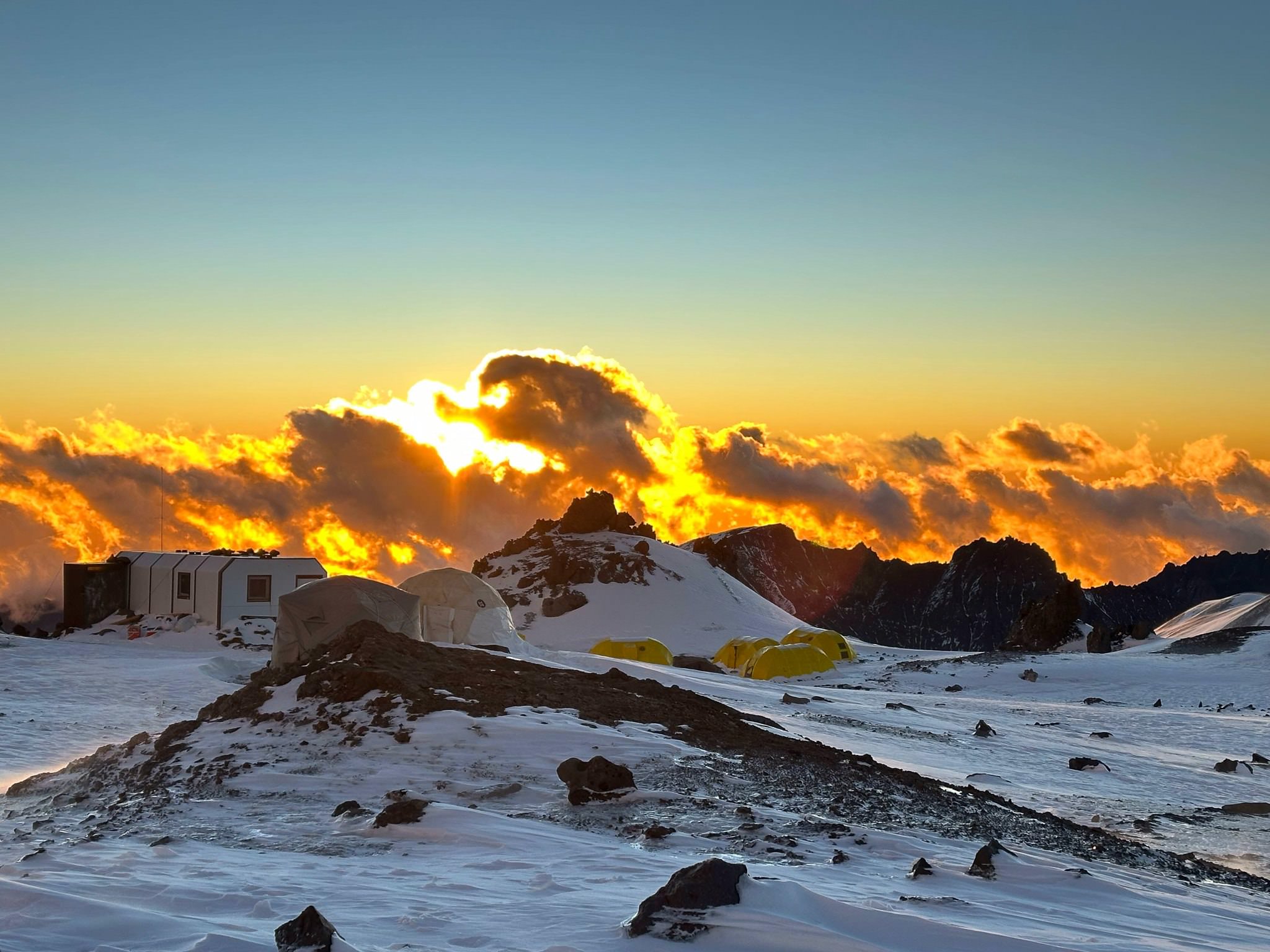
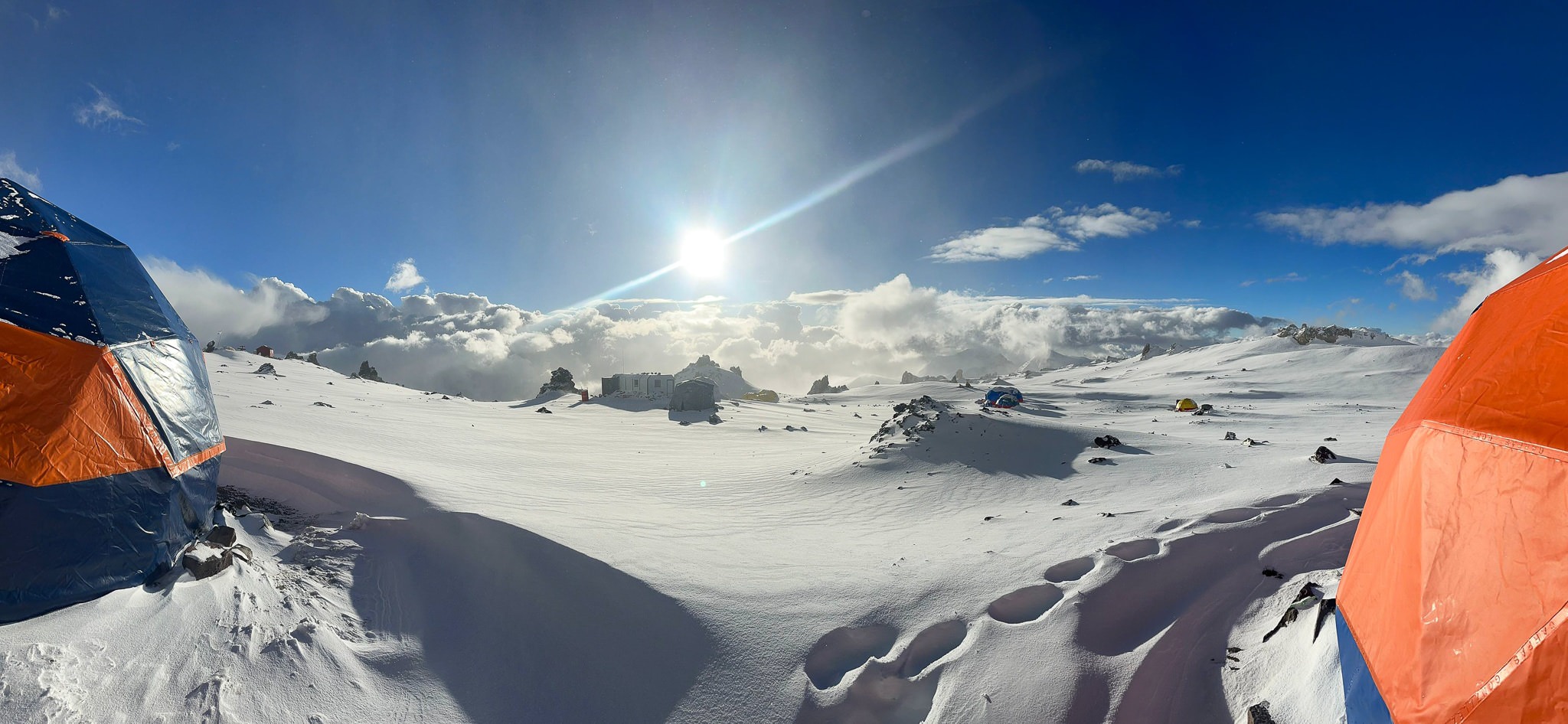
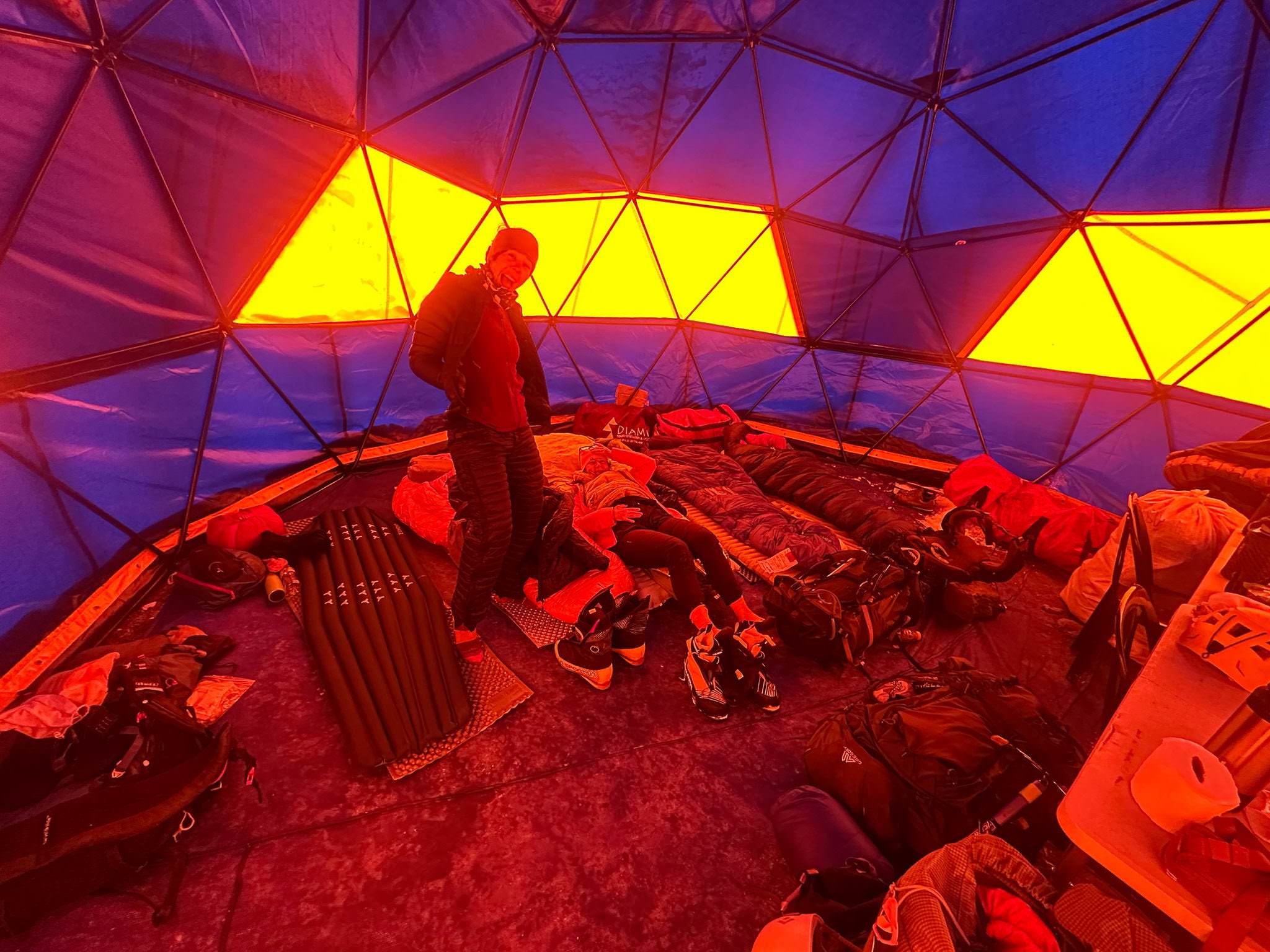
At 4,300m, it operates like a small mountain village: spacious communal dining areas, hot showers, satellite internet (weather permitting), and a dedicated tent for every climber. This is home for the next several days.
Accommodation: Base camp tent at Plaza de Mulas (4,300 m)
A proper rest day after that long approach.
The mandatory medical check with the park doctors happens today: a quick assessment of blood pressure, oxygen saturation, and general fitness for altitude. Everyone climbing Aconcagua goes through it. Beyond that, the day is yours. Hydrate, eat well, sort your summit pack, take short walks around camp to keep the body moving without overdoing it.
Plaza de Mulas sits in a stark, high-desert basin under the upper walls of the Aconcagua massif. Make the most of the comforts here. From this point on, things get progressively more spartan.
Accommodation: Base camp tent at Plaza de Mulas (4,300 m)
The acclimatization rotation begins.
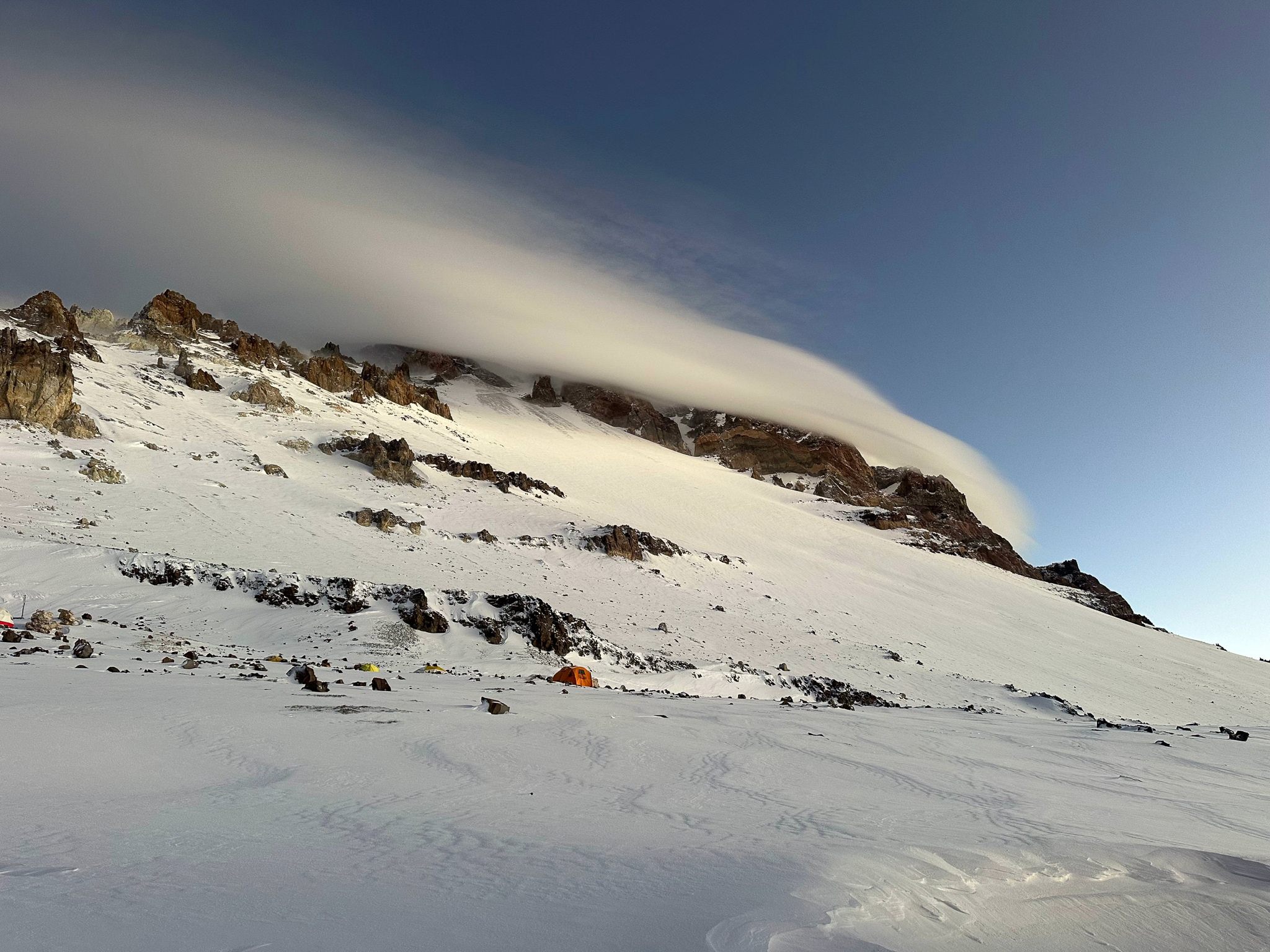
Today we ferry summit gear up the scree slope above Plaza de Mulas to Camp Canadá at 4,900m. We cache what we don’t need yet and stay at Canadá for the night. That extra time at altitude is what trains the body to handle the upper camps.
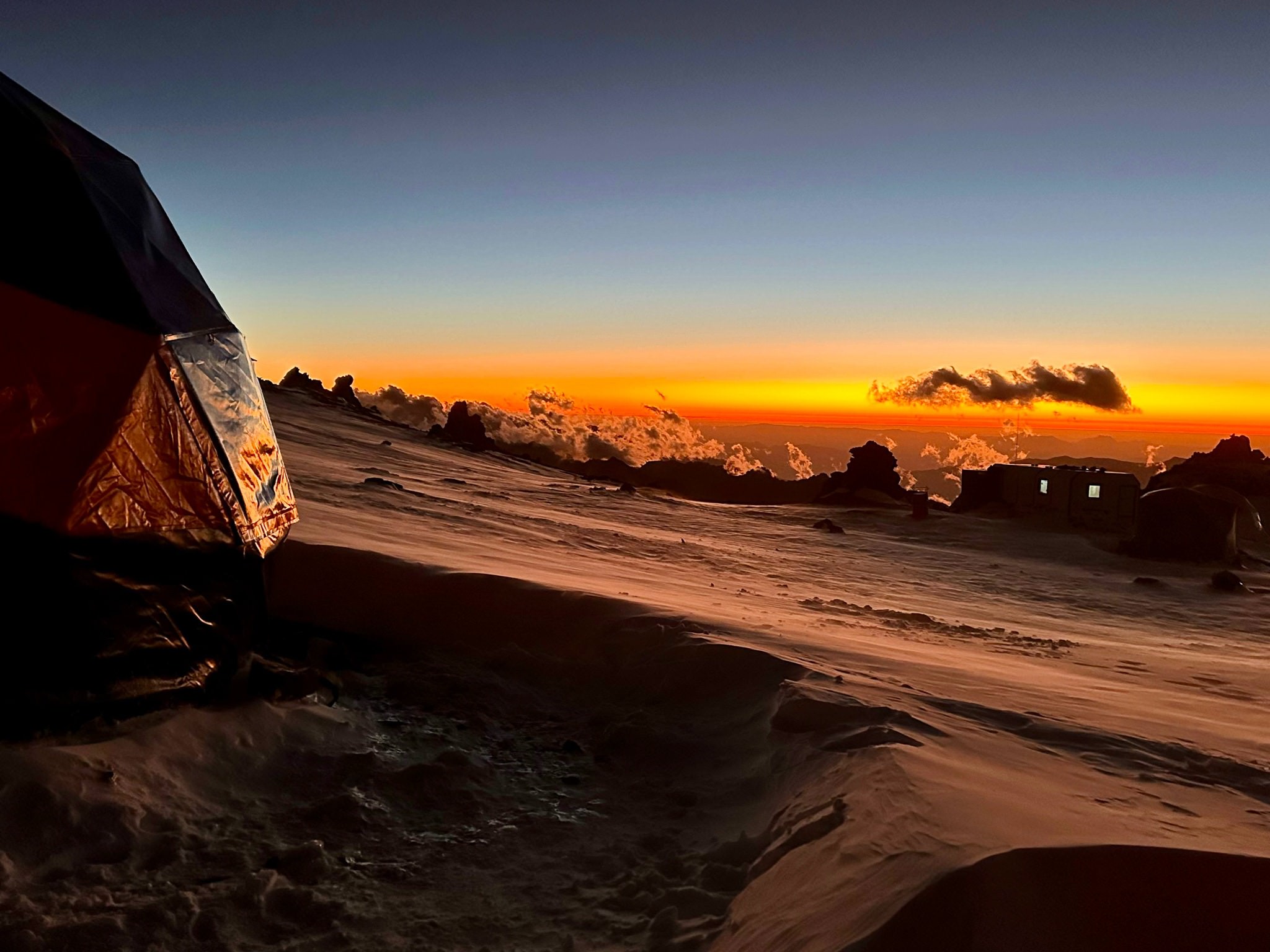
Canadá is small, exposed, and a long way from the comforts of base camp. Layer up: temperatures drop fast once the sun goes down.
Accommodation: Expedition tent at Camp Canadá (4,900 m)
A demanding day in the rotation.
From Canadá we keep moving higher, pushing up to Nido de Cóndores at around 5,500 m to stash more gear at what will be our next high camp. Then we make the long descent all the way back down to Plaza de Mulas to sleep.
Climbing high and sleeping low is one of the most reliable acclimatization patterns in high-altitude mountaineering. The total distance today is only around 6 km, but with the altitude gain, the descent, and the steeper terrain above Canadá, it works out to a solid 8 hours of moving.
A hot meal in the base camp mess tent and a full night at 4,300m hits different after a day spent up at 5,500 m.
Accommodation: Base camp tent at Plaza de Mulas (4,300 m)
Second rest day at base camp. After two heavy days on the rotation, today is for recovery.
By now the body should be settling into life at 4,300 m: easier sleep, better appetite, less heart-pounding when you walk across camp. Another check-in with the park doctors if anyone wants it.
Otherwise: hydrate, eat, read, get ready mentally for the move up to the high camps. The next stretch of the program is where the expedition ramps up.
Accommodation: Base camp tent at Plaza de Mulas (4,300 m)
Back up the mountain.
Today we head up the same route to Camp Canadá, this time hauling food and fuel for the higher camps. We cache the supplies and stay at Canadá for the night.
The trail is familiar from Day 7 and the legs should feel a little more acclimatized this time around. Same route, more efficient pace.
Accommodation: Expedition tent at Camp Canadá (4,900 m)
A short move higher. From Canadá we climb up to Nido de Cóndores, “Condor’s Nest” in Spanish, named for the Andean condors that frequent this stretch of the Andes.
Sitting at around 5,500 m, Nido is our second high camp and the launching point for the final summit push. Today involves a short distance but a big jump in altitude. Expect to feel it once camp is set.
Accommodation: Expedition tent at Nido de Cóndores (5,400–5,500 m)
A rest day with an option to keep moving. There’s an optional acclimatization hike up to around 5,700 m for anyone who wants a bit more time at altitude before the summit push. This involves a steep climb up to the higher elevation, then a drop back to sleep at Nido. Anyone who’d rather conserve energy can stay at camp.
Either way, today is about banking time at 5,500 m with plenty of hydration, calories, and rest.
Accommodation: Expedition tent at Nido de Cóndores (5,400–5,500 m)
Our final big rotation before the summit. We climb up to the high camp at Berlín (5,930 m) or Cólera (~6,000 m), cache our summit gear and food, then drop back down to sleep at Nido.
Both camps sit on a windswept ridge around 6,000 m and serve as the launching point for summit day.
The exact camp we use depends on conditions and how busy the routes are. Cólera is slightly higher and often a touch less crowded. Berlín is the historic high camp, named for an old German hut that once stood here.
Accommodation: Expedition tent at Nido de Cóndores (5,400–5,500 m)
The final move before summit day is a short climb up from Nido (2 to 3 km, 3 to 4 hours), but the air at 6,000 m is thin enough that even a short distance feels significant. We aim to be in camp early to settle in, melt water, eat, and get whatever rest the altitude allows.
Sleep at 6,000 m is rarely deep sleep. Most climbers just lie there breathing slowly, and any rest of any kind counts at this altitude. We’ll do a final gear check before bed.
Tomorrow is the day.
Accommodation: Expedition tent at Berlín (5,930 m) or Cólera (~6,000 m)
The big one. Alarms in the dark, layers on, headlamps lit, hot drinks down. We start in the cold and work our way upward through the upper mountain, slowly and steadily, all the way to dawn.
The route follows the Traverse and then the Canaleta, the loose-scree gully that finishes the climb. There’s no technical climbing on the Normal Route, but at nearly 7,000 m, the Canaleta is the kind of slog that climbers remember for the rest of their lives.
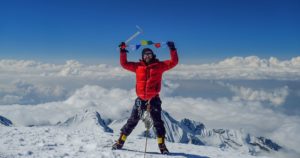
Then you’re on top. 6,962 meters. The highest summit in the Americas, the tallest mountain on Earth outside Asia, and one of the Seven Summits. Photos, hugs, a moment to take it all in.
Descent back to high camp takes 3 to 5 hours depending on conditions and how much you have left. Total time round trip can be anywhere from 8 to 14 hours. It’s a long day but worth every step.
Accommodation: Expedition tent at high camp (5,930–6,000 m)
Time to go down! After the summit push, dropping around 1,700 vertical meters back down to Plaza de Mulas feels like flying. The lower you get, the better everyone feels: oxygen comes back, appetite comes back, the world becomes color again.
A hot shower at base camp. A real meal in the mess tent. Tonight is the dinner where the trip starts turning into a story.
Accommodation: Base camp tent at Plaza de Mulas (4,300 m)
We retrace the long valley out to Horcones with summit-fresh legs and the worst of the altitude behind us. Most groups walk this stretch significantly faster than they walked it in.
At the park gate we meet our transport and drive 3–4 hours back to Mendoza via Penitentes and Puente del Inca. By evening you’re in a hot shower, then a proper meal, then a real bed. After all those days at altitude, even the simple stuff feels like a celebration.
Accommodation: Hotel in Mendoza
A full day to recover, celebrate, and just be off the mountain. The team organizes a closing dinner in the evening: the meal where summit photos get passed around, stories get exchanged, and the trip officially becomes something you’ll talk about for years.
How you spend the day is up to you. Most people sleep in, walk Mendoza’s leafy plazas, find a good steak and a glass of Malbec, and let the body register what you just did.
Accommodation: Hotel in Mendoza
Today we say goodbye. The expedition officially ends after breakfast. Hotel checkout is around 11 am. We recommend booking your outbound flight after 2 pm so you have time for breakfast, checkout, and the airport transfer.
If you’ve got time before flying home, there’s plenty to see in Argentina. Mendoza wine country is right here, and Patagonia, Iguazú Falls, and Buenos Aires are all worth the detour. Speak to the team for recommendations.
You leave Aconcagua a member of a small club: people who have stood on the highest point in the Americas. Wear it well.
They speak Spanish in Argentina, but it’s Argentine Spanish: famously distinctive, with a strong Italian influence on rhythm and vocabulary. Argentines say vos instead of tú and use che as a casual way to get someone’s attention.
Mendoza is a tourist-friendly city, and most people in the hospitality industry speak some English. That said, learning a few basics (greetings, numbers, how to order food and a glass of Malbec) will make every interaction feel warmer. Argentines genuinely appreciate the effort.
Here’s the visa breakdown for the most common nationalities heading to Aconcagua:
United States, European Union, UK, and Australian citizens:
Other nationalities:
Check with the Argentine Embassy or Consulate in your home country to confirm visa requirements well before booking flights.
Keep your entry stamp safe; it’ll be checked on departure from Argentina.
Accommodation mixes city comfort with high-altitude expedition life.
In Mendoza: Tourist-standard hotels with hot showers, fast WiFi, and breakfast included. Twin-share by default. A single room supplement is available for +$500 USD if you prefer privacy.
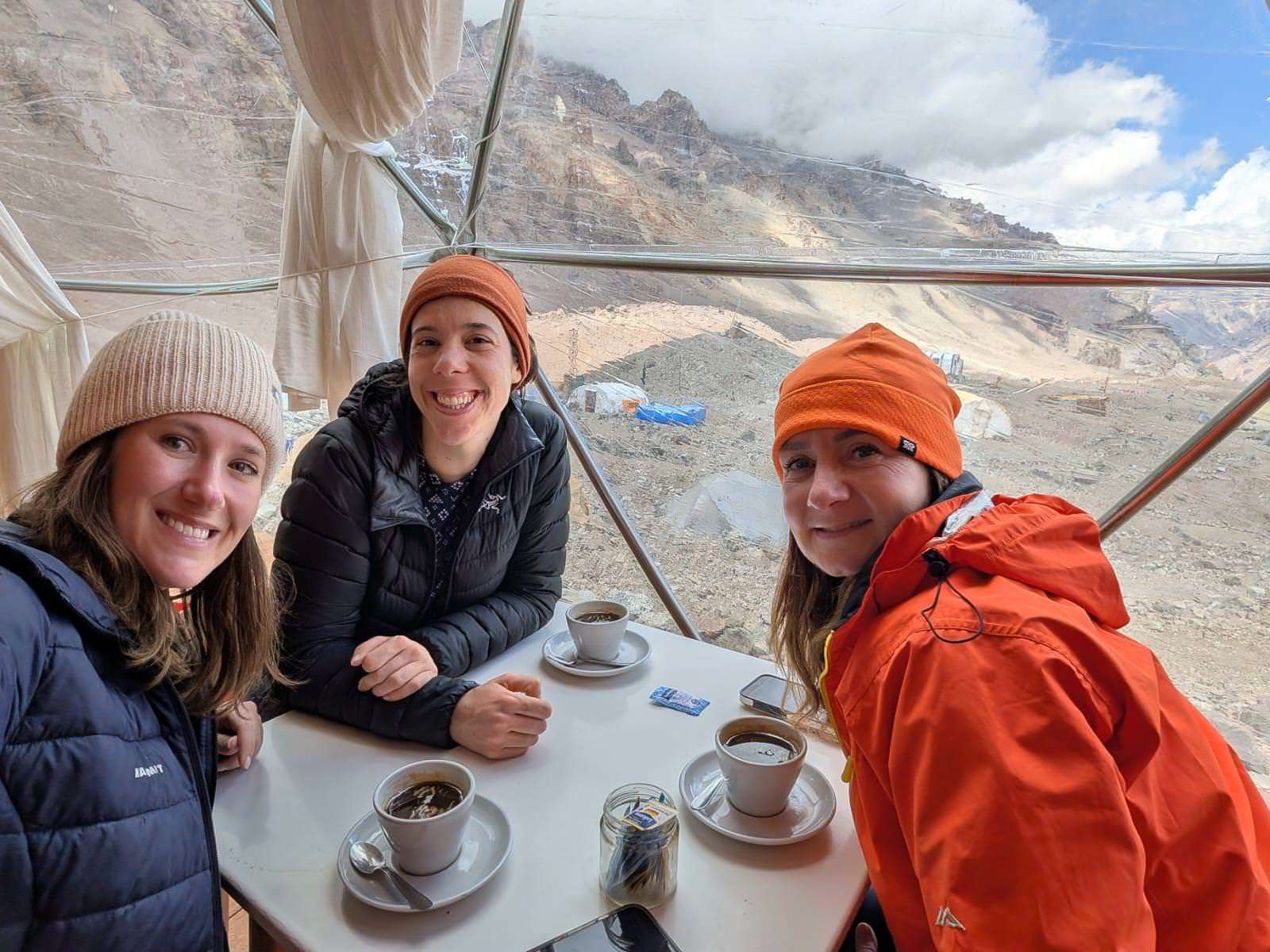
At Plaza de Mulas Base Camp (4,300 m): Spacious communal dining areas, hot showers, satellite internet (weather permitting), reliable power for charging devices, and a dedicated single tent for every climber. Plaza de Mulas is one of the most developed base camps in the world. Make the most of it.
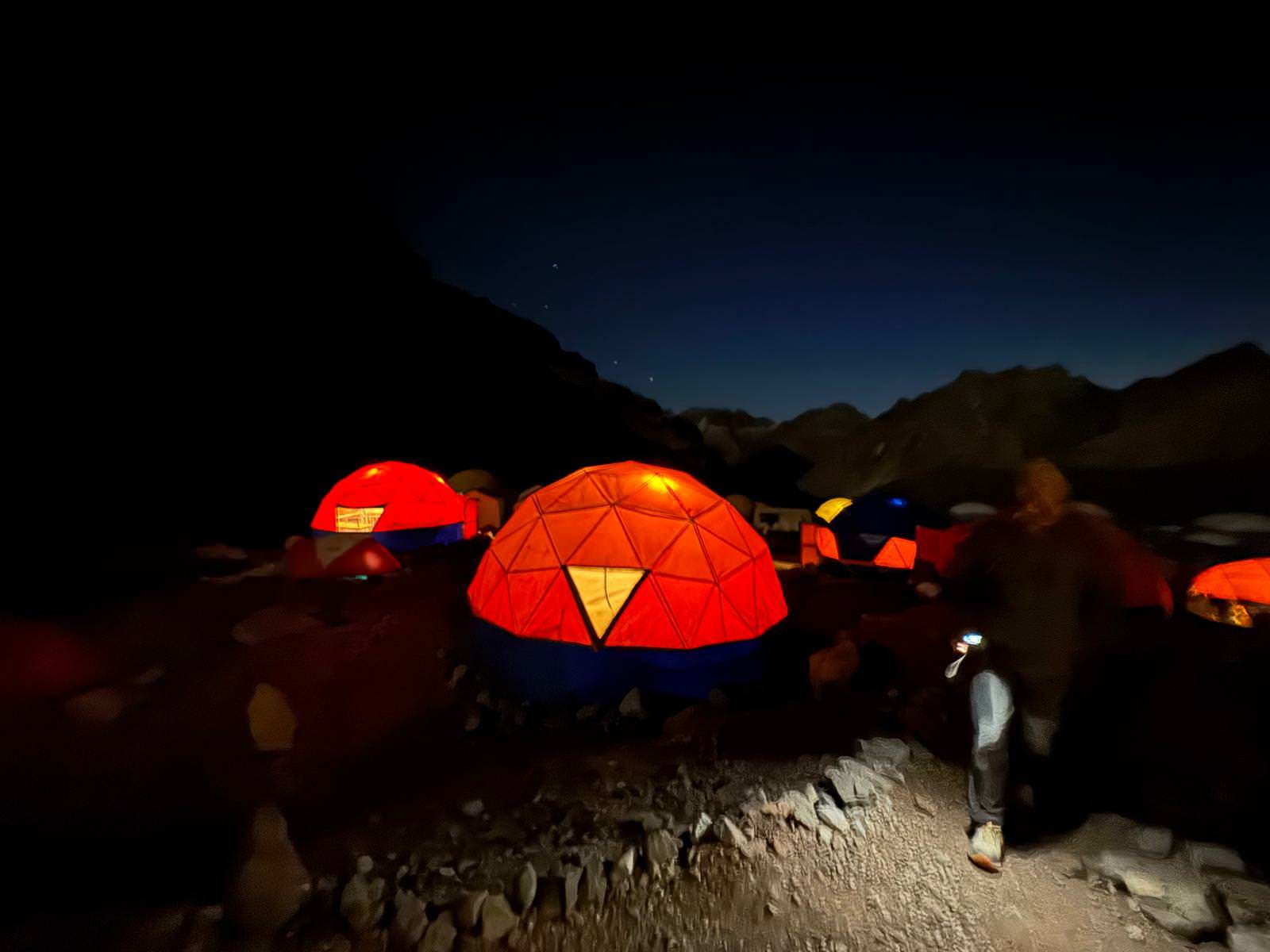
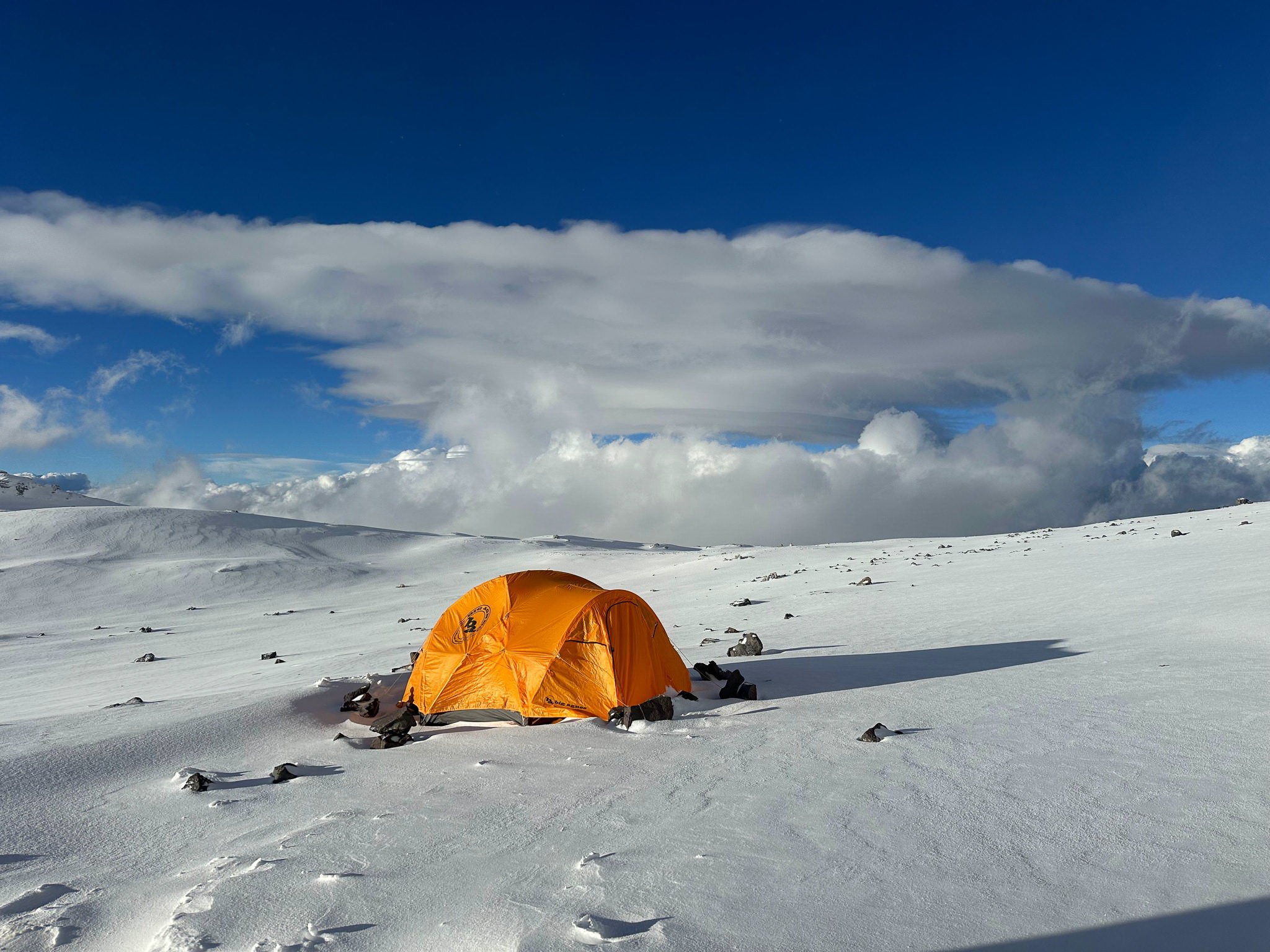
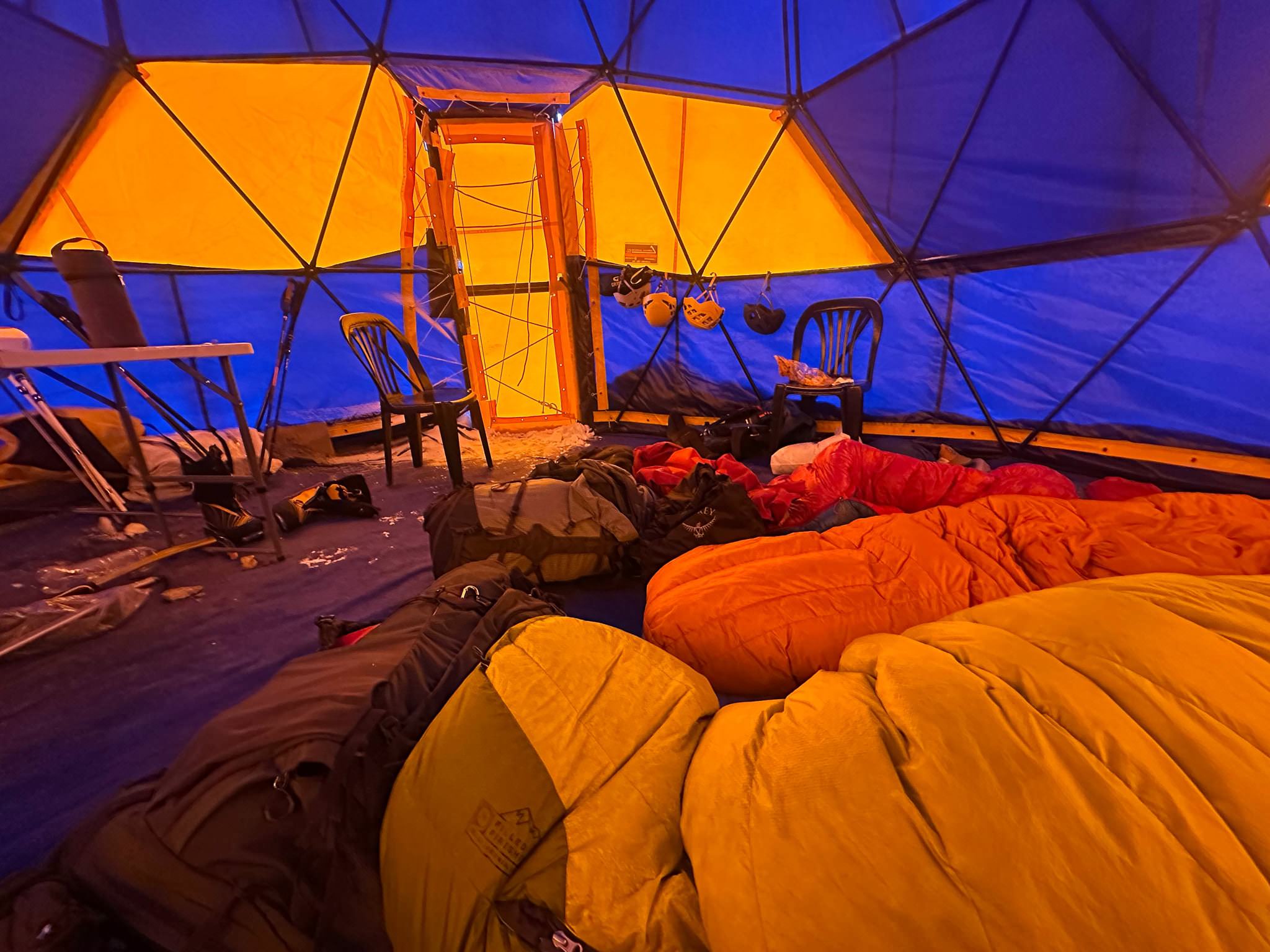
At the high camps (Camp Canadá, Nido de Cóndores, Berlín/Cólera): Robust 4-season expedition tents built to handle the wind, cold, and altitude. Twin-share basis.
Aconcagua is a serious high-altitude expedition. You need to be in genuinely good shape, capable of long days of hiking and climbing over mixed terrain.
What the trip actually demands:
You won’t be carrying a heavy pack on the approach. Our arrieros (mule drivers) move the bulk of the gear from Horcones to Plaza de Mulas Base Camp.
Above base camp, you’ll move your own personal kit between the high camps.
The name of the game is slow, controlled walking. The climbers who do well on Aconcagua are those who pace themselves and respect the mountain’s tempo.
Climbing Aconcagua at nearly 7,000 m carries real risk. This is not your average holiday. Guest safety is our #1 priority, and the program is built around prevention, smart decision-making, and proper acclimatization.
What’s built into the expedition:
Altitude sickness is the most common risk on Aconcagua. Symptoms are monitored closely by our guides. The 19-day program is specifically structured to give your body time to adapt, but if you have a history of altitude issues, consult your doctor about medication like acetazolamide before the trip.
Travel insurance covering trekking and climbing up to 7,000 meters is mandatory for this expedition.
Yes you can. The single supplement for a single hotel room in Mendoza is +$550 USD.
At Plaza de Mulas Base Camp, every climber already gets a single tent as standard. No supplement needed.
At the high camps (Camp Canadá, Nido de Cóndores, Berlín/Cólera), tents are twin-share due to the logistics of moving tent weight at altitude. There is no high-camp single tent option.
Yes, we can accommodate dietary restrictions on this expedition. Please let us know well in advance so we can plan food properly for both Mendoza and the mountain.
Additional cost may apply for specialty diets. Reach out for current pricing.
Yes. High-quality rental gear is available in Mendoza, which keeps your luggage significantly lighter for international travel.
What you can rent:
Reserve your rentals in advance to ensure correct sizes and availability. Contact us for current pricing.
The Aconcagua expedition runs during the austral summer (January–February), the most favorable weather window for attempting the summit. Conditions vary dramatically with altitude.
Mendoza (Days 1, 2, 17–19) — Urban summer climate:
Horcones Valley and Approach (Days 3–4) — Lower Andes climate:
Plaza de Mulas Base Camp (4,300 m) — High-altitude desert climate:
High Camps (5,000–6,000 m) — Extreme alpine climate:
Summit of Aconcagua (6,962 m):
Important: Even in summer, Aconcagua’s climate is highly variable. Success on the mountain depends on flexibility, preparation, and respecting weather windows.
Didn’t find the answer you were looking for? Send us a message!
The Stone Sentinel
The name Aconcagua most likely comes from the Quechua Ackon Cahuak, meaning “Stone Sentinel,” though scholars also point to possible Mapuche and Aymara origins. Whatever the etymology, the meaning fits: a sentinel of stone standing guard over the southern Andes, visible from miles in every direction.
The first recorded summit was made on January 14, 1897, by Matthias Zurbriggen, a Swiss mountain guide working with the British FitzGerald expedition. He reached the top solo on the third attempt. In the 125+ years since, Aconcagua has become one of the world’s most-attempted 7,000-meter peaks and a fixture on every serious mountaineer’s list.
It’s one of the actual Seven Summits (the highest peak on the South American continent) and the highest mountain anywhere outside Asia.
Today the mountain sits within Aconcagua Provincial Park, an Argentinian protected area covering the upper Horcones and Vacas valleys.
What Makes Aconcagua Different
What draws climbers to Aconcagua is the rare combination of extreme altitude and a non-technical route. The Normal Route requires no ropes, no fixed lines, no advanced climbing skills. If you can walk uphill in crampons with a heavy pack at 6,500 meters, you can summit Aconcagua.
Where most people struggle is the altitude itself. The summit ridge is exposed, the Canaleta gully near the top is a soul-grinding slog at nearly 7,000 meters, and gusts of 80 km/h or more aren’t unusual. Patient acclimatization and good weather discipline are what separate summit days from turnaround days.
This is why our 19-day program runs deliberately longer than the industry standard. The math of acclimatization doesn’t get gamed.
Small Things Worth Knowing
A handful of details that don’t fit anywhere else but are part of the experience:
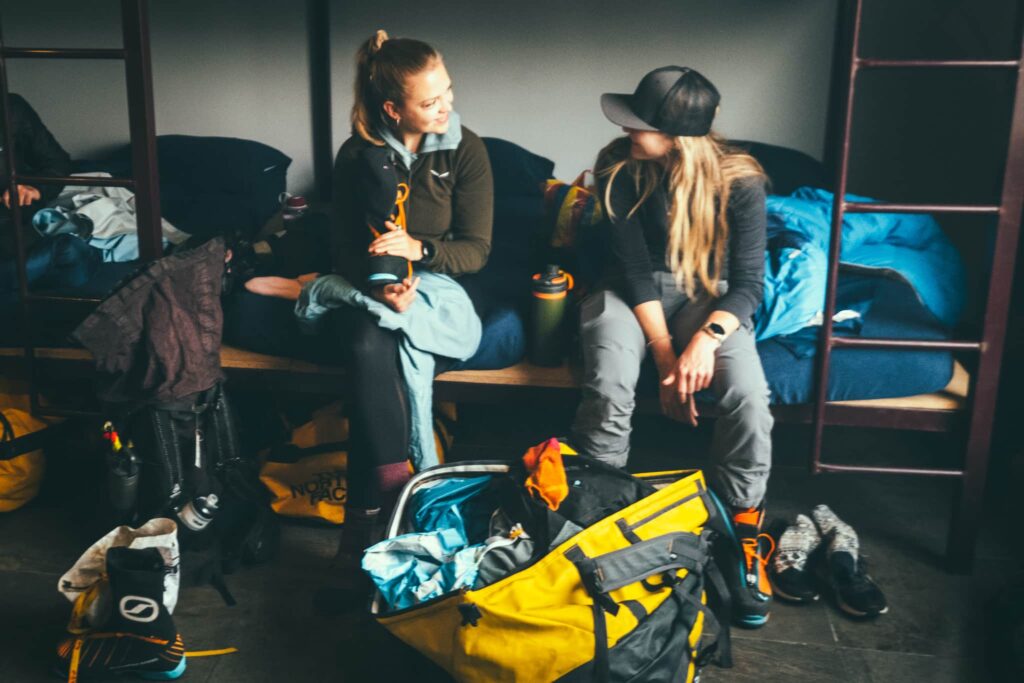
Sign up for the Epic Newsletter to gain instant access to our insider packing lists and receive regular adventure updates.
Expect lots of cool photos, trip announcements, and highlights from our favorite places around the world. Never spam.
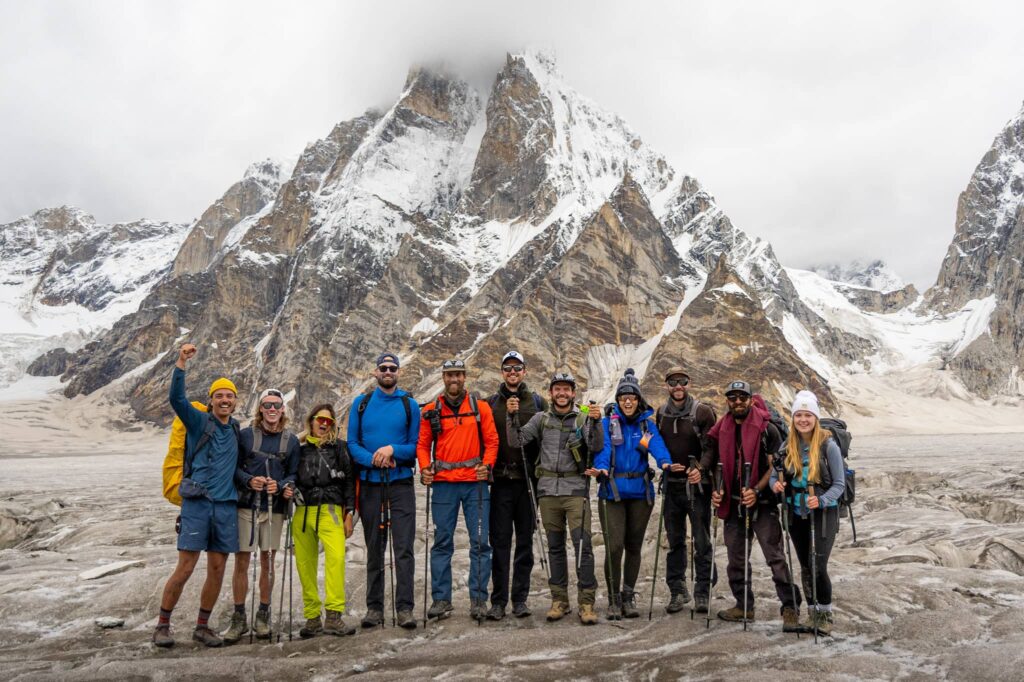
Get exclusive trip updates, be the first to know when we launch a new itineraries and offer discounts, and stay up to date with what’s happening at Epic Expeditions!