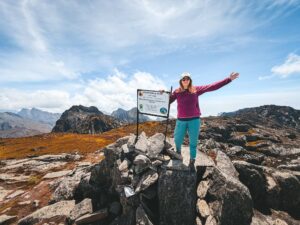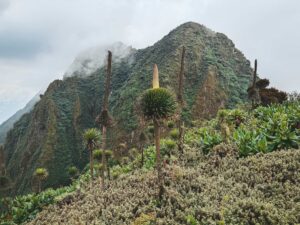
Take a look at our newest adventure: hiking in Cape Verde!
DIFFICULTY: Moderate
TOTAL TREKKING DISTANCE: 75 km (46.6 miles)
MAX ALTITUDE: 4,620 meters (15,157 feet)
TRIP DURATION: 13 days
LODGING: Mix of hotels, lodges, and camping/mountain huts
GROUP SIZE: 12 people
Tucked into the highlands of East Africa, Uganda is one of the continent’s most underrated adventure destinations—lush, diverse, and still far from the touristy safari trail and the over-hyped lines of Kilimanjaro. From the volcanic landscapes near the Rwandan border to the rugged peaks of the Rwenzori Mountains, this trip has all of the ingredients of a classic Epic destination.
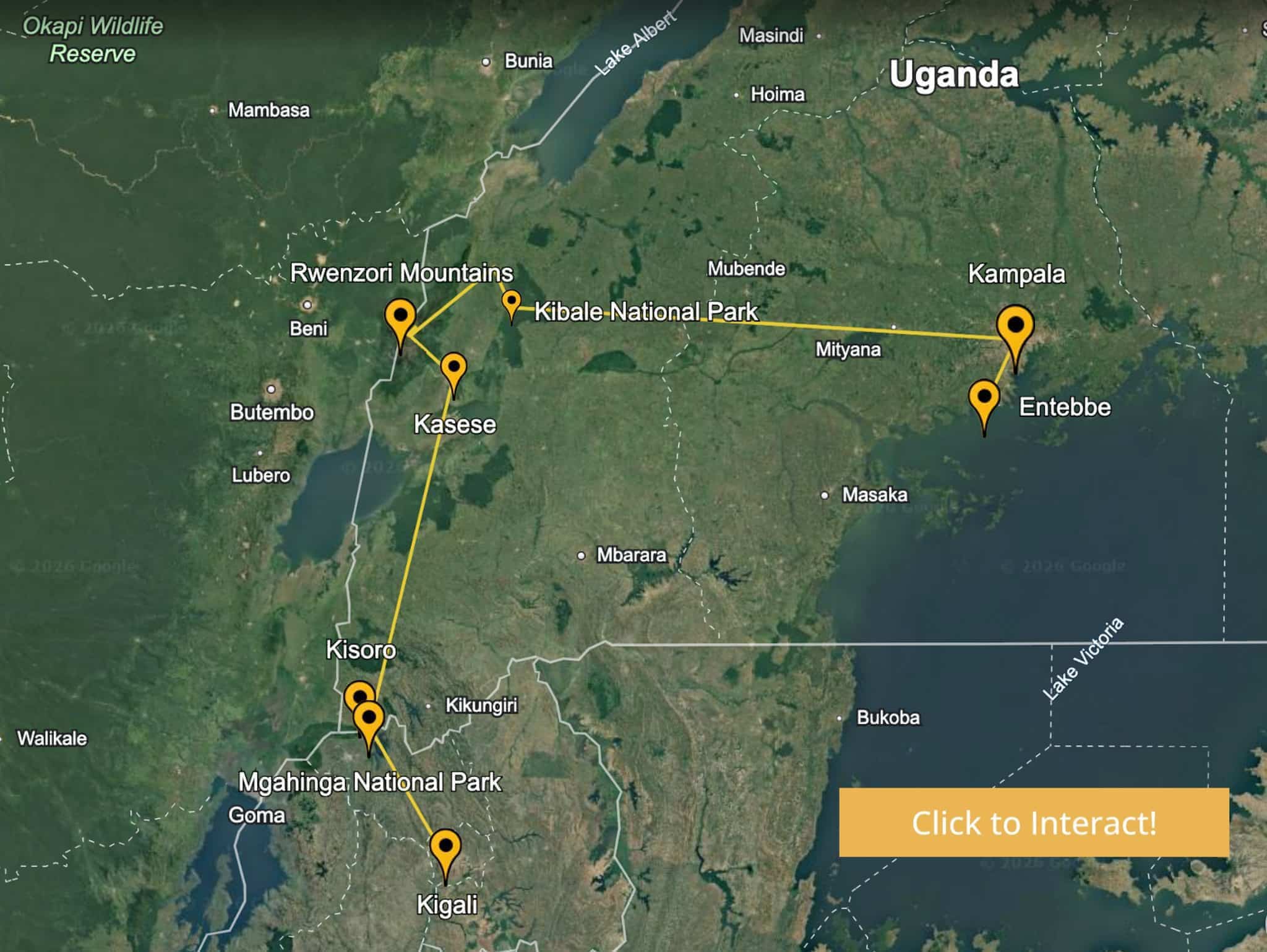
Over two weeks, we move from Kigali into southwestern Uganda, settling in Kisoro beneath the Virunga volcanoes before tackling the steep, ladder-lined ascent of Mount Sabyinyo—where you’ll stand in Uganda, Rwanda, and the DRC at the same time. From there, we head north into the Rwenzoris for a multi-day trek through rainforest, bamboo groves, and high alpine terrain, culminating in a summit with wide-ranging views across the “Mountains of the Moon.”
We finish in Kibale Forest with a chimpanzee tracking experience, then return to Entebbe via Uganda’s rolling countryside.
This trip has it all: a physical challenge, the chance to hang out with chimps up close, highland culture, and just the right amount of unknown to make it a proper adventure.
Join Epic Expeditions in Uganda for our first-ever trip on the African Continent. This is the stuff adventure dreams are made of.
Uganda is the perfect destination for those who love hiking without the crowds, want a strong dose of up-close wildlife encounters, and want to experience a 100% unique Uganda itinerary that you won’t find anywhere else.
Dates | Status | Deposit | Full |
|---|---|---|---|
| February 10th - 22nd, 2027 | $600 | $4399 (early bird) |
Whether you’re just curious about this trip or are ready to make a deposit, we’re here for you.
To submit an inquiry or make a trip deposit, please fill out and submit the form below.
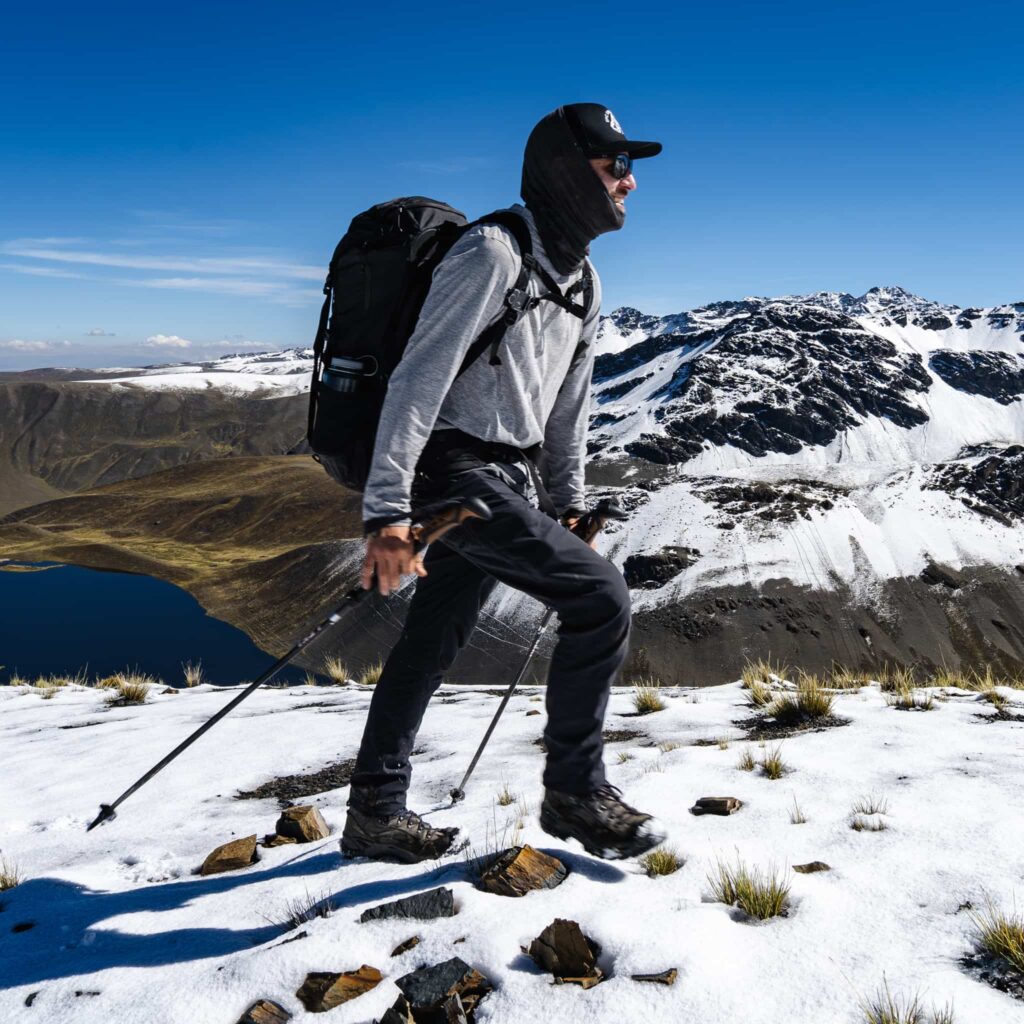
For nearly a decade, Chris has been traveling to remote corners of the world leading Epic Expeditions. Every year he leads group trips to K2 Base Camp, the Everest region in Nepal, the mountains of Mongolia, other destinations in Central/East Asia, and South America. He is the director and founder of Epic Expeditions.
Chris believes in using community, remote environments, and powerful adventure experiences to push people out of their comfort zones and discover what they are truly capable of.
In turn, this has led to a career-long journey of facilitating meaningful memories and personal growth for countless people from around the globe – thus, this trip was born!
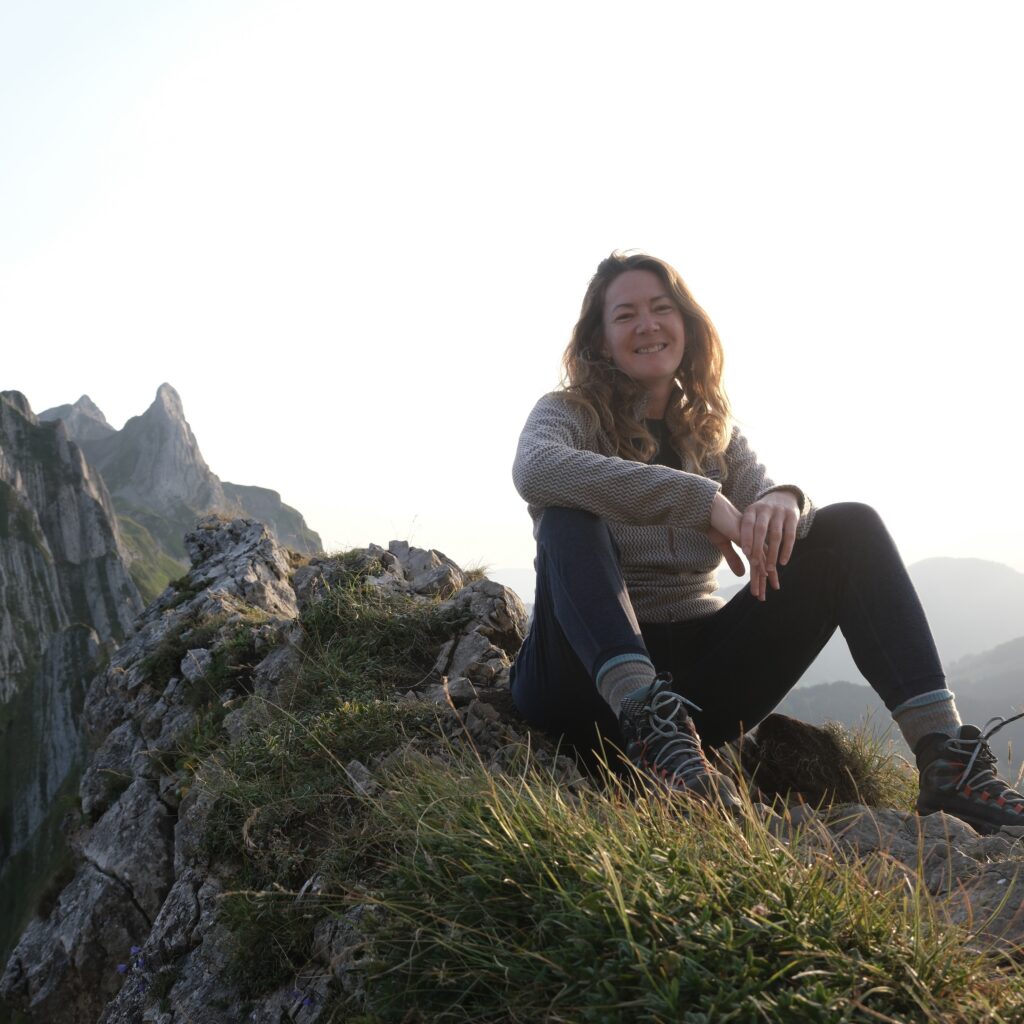
Amy has worked in the corporate world for many years, first in the environmental field and later in investment banking, but has always been dreaming about her next outdoor adventure.
Since 2008, she has been traveling around the world and has been tackling as many hikes as possible. Amy has visited over 140 countries and is constantly getting excited about new destinations to visit along the way.
Aside from hiking, her favorite way to learn about different cultures is by trying local cuisine. She will go well out of her way to seek out hot springs, find delicious desserts or visit markets to pick up ingredients to recreate dishes at home.
Today, the group meets in Kigali for our first group meeting and introductions.
You’ll have the day to arrive, go to the hotel and get settled and then the entire group will gather for dinner at a local restaurant.
If you arrive early, you have free time to explore museums or some of the lovely rooftop cafes in Kigali, the most tranquil capital city in East Africa.
Note: We always suggest arriving a day early so you have extra time to settle in and shake off the jet lag before the trip starts.
Accommodation: Hotel in Kigali
Enjoy a relaxed morning in Kigali and leave in the morning to head to Kisoro. As we approach the border, you will see Rwanda’s Volcanoes National Park and the peaks that make up the Virunga Massif, a chain of volcanic mountains shared by Rwanda, Uganda and the Democratic Republic of the Congo. If weather cooperates, you’ll get your first glimpse of Mt Sabyinyo, the peak we will be climbing from Kisoro!
Drive time: 5-6 hours, including border crossing.
Accommodation: Hotel in Kisoro
Today we will head up one of the volcanoes in Mgahinga National Park. The hike up Mt Sabyinyo crosses through bamboo forests and lichen-covered heather trees. In the bamboo zone in particular, keep an eye out for golden monkeys; it’s also possible to spot buffalo and other animals along the route.
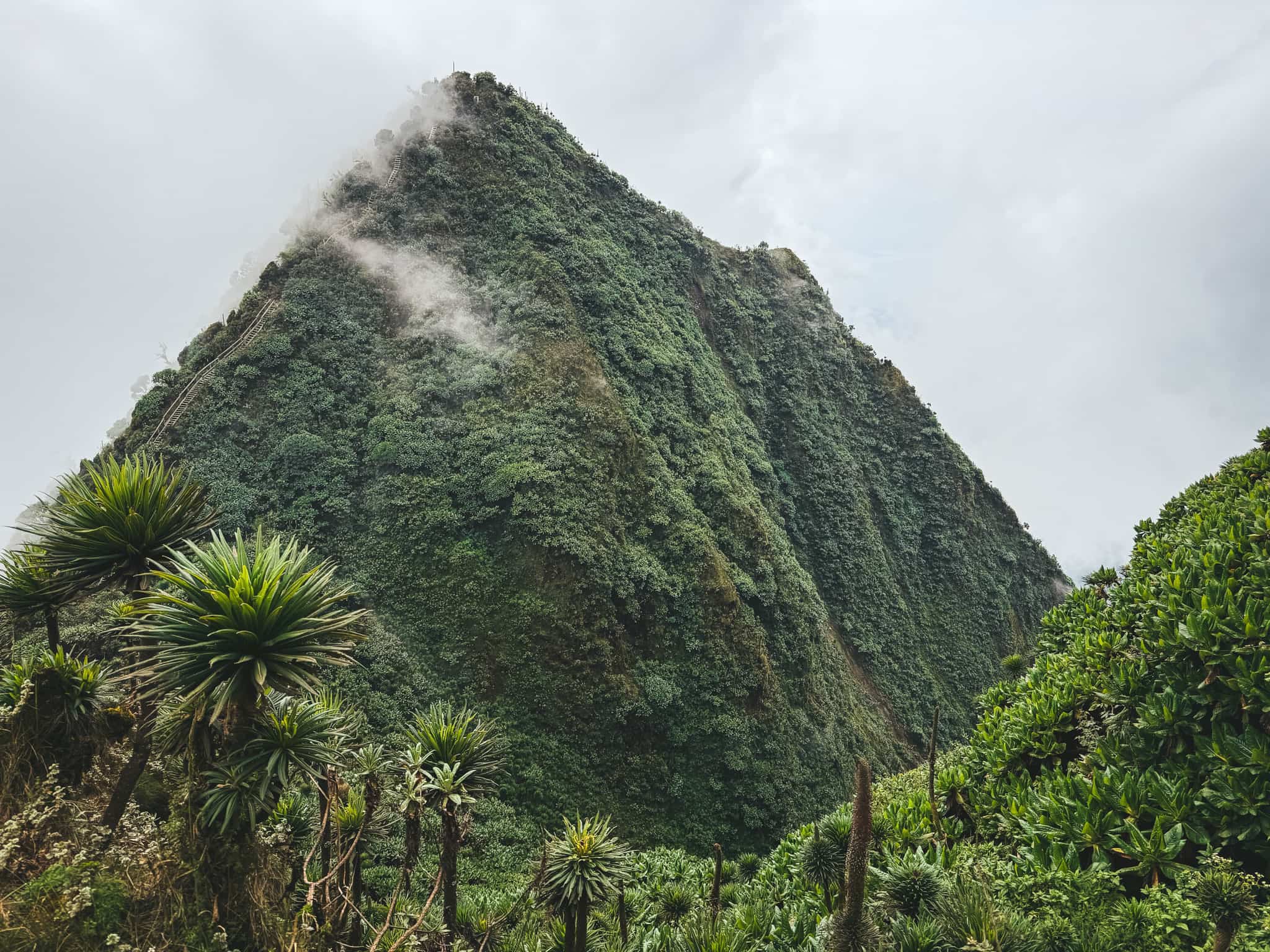
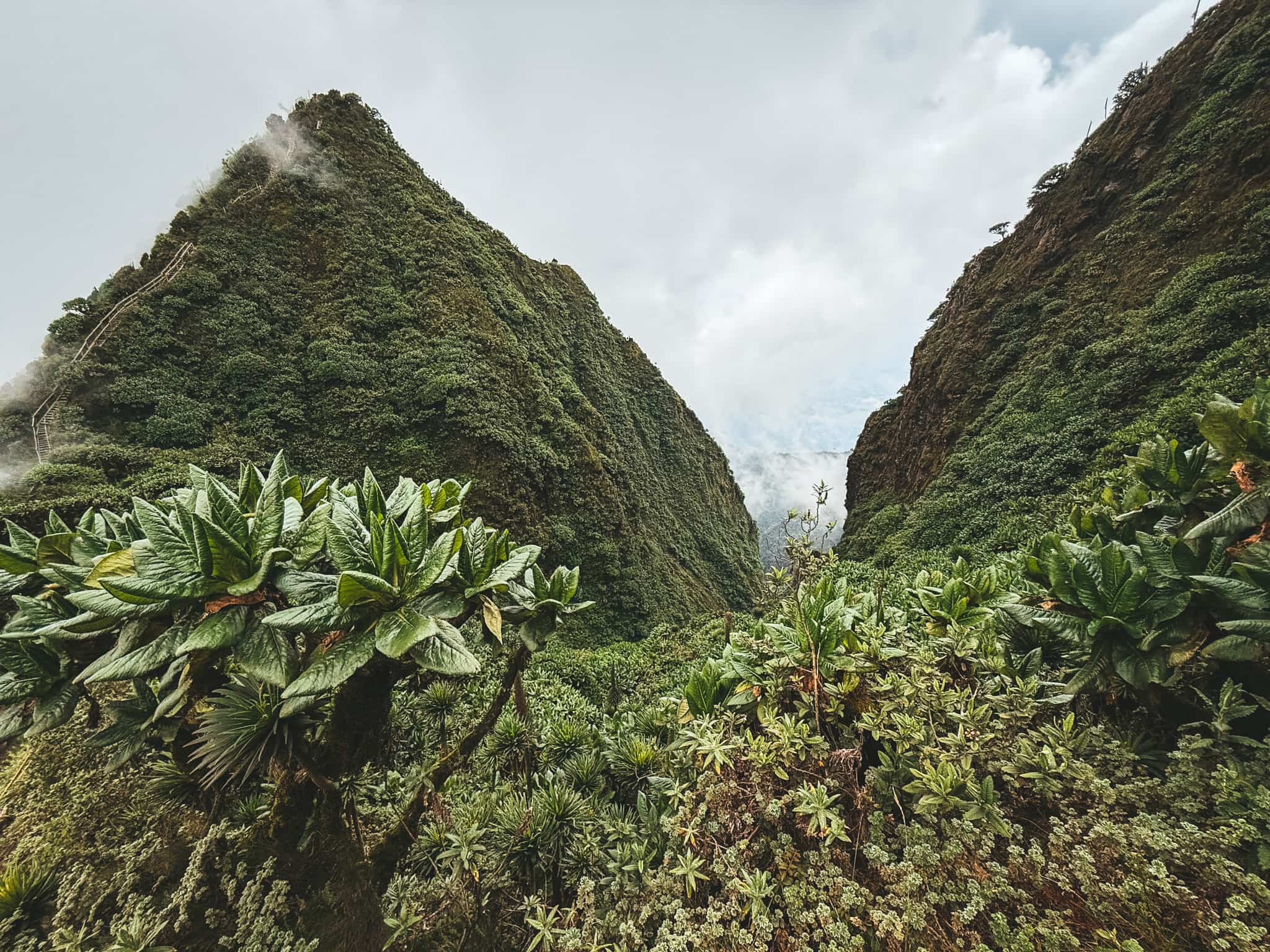
You’ll go up a steep trail where you get glimpses into Rwanda and DRC. This trail features a number of wooden ladders, so be prepared for some climbing. Sabyinyo means “Old Man’s Teeth” in local languages because of the jagged shape of the summit compared with the other conical volcanoes in the area.
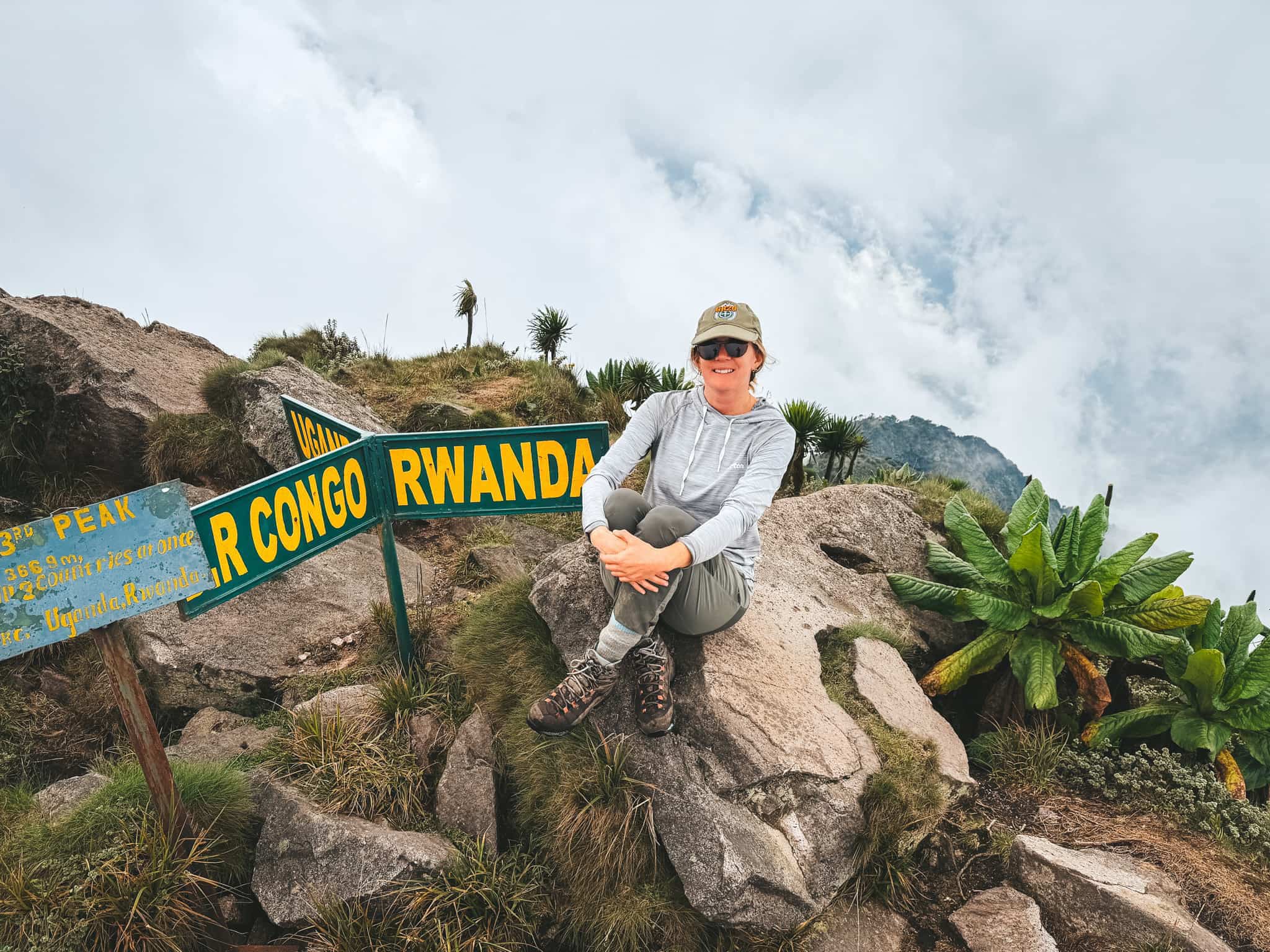
The summit of the hike is on the 3rd and highest peak that we come to, topping out at 3,669m. In total, this hike is 14km round trip with 1,400m of elevation gain and loss. On the summit, you can stand in Uganda, Rwanda and DRC at the same time as the mountain is shared by the 3 countries. This full-day hike typically takes 7-9 hours on average.
Accommodation: Hotel in Kisoro
We are on the move again from Kisoro to Kasese, en route to the legendary Rwenzori Mountains.
Enjoy a beautiful drive through hills and mountains in southwestern Uganda, passing through tea and matoke (green banana) plantations and small towns. As we get closer to Kasese, we will pass through Queen Elizabeth National Park, so keep an eye out for lions, elephants, buffalo, waterbucks and antelope. We’ll also make a quick stop at the Equator monument just before getting to Kasese.
Drive time: 7-9 hours depending on road conditions.
Accommodation: Hotel in Kasese
Have a hearty breakfast in Kasese and then head to Kilembe to the Trekker’s Hut to meet the team and have a pre-hike briefing. The hike begins from the Trekker’s Hut at 1,450m and we start to walk slowly uphill through the community, passing shops, schools and coffee plantations.
Once we cross into the national park boundary, we’ll enter dense forest and there is the possibility of seeing various species of monkeys (black and white Colobus, blue-faced monkeys and more rare L’Hoest, chimpanzees are also in this area but not usually seen).
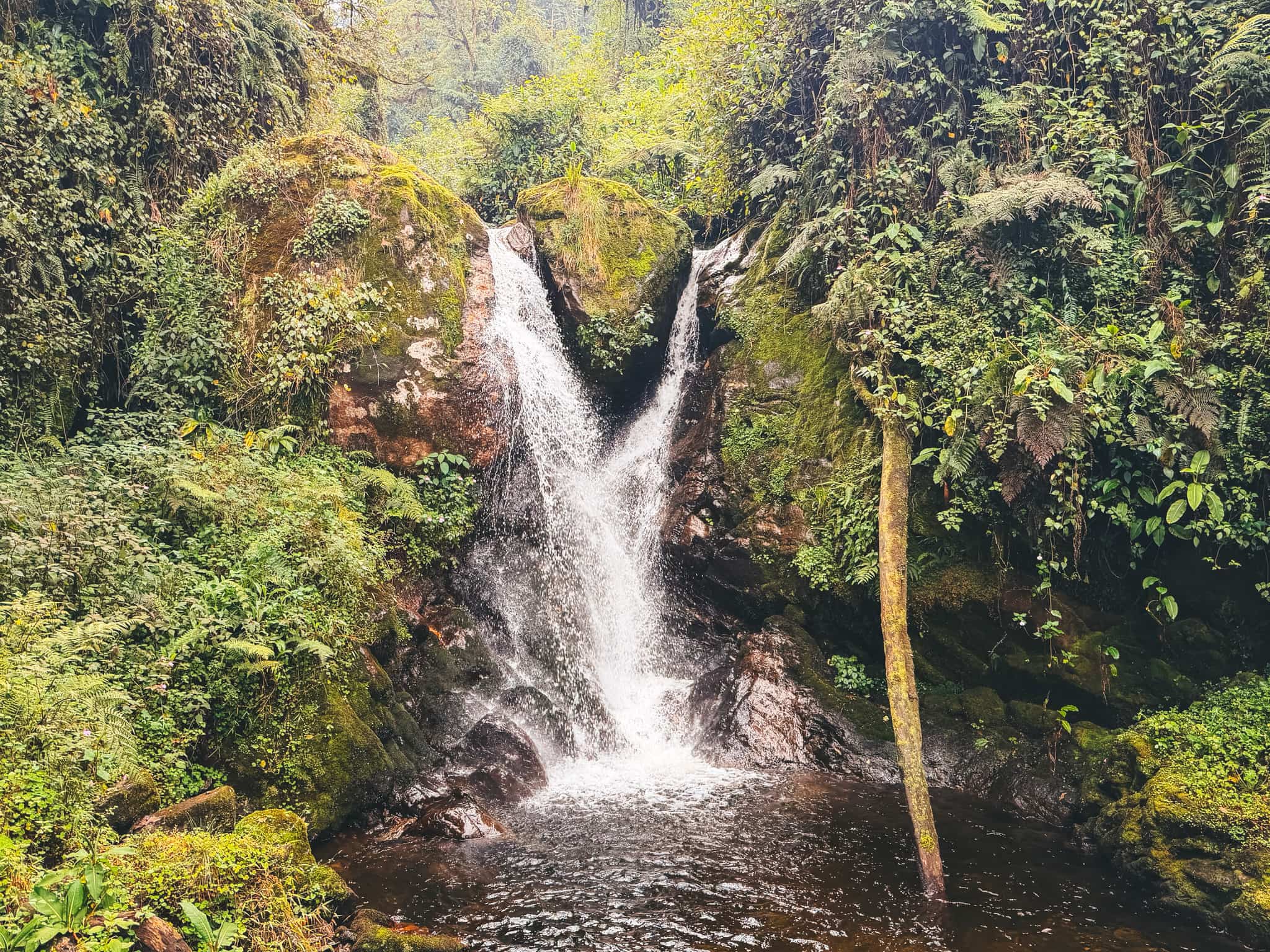
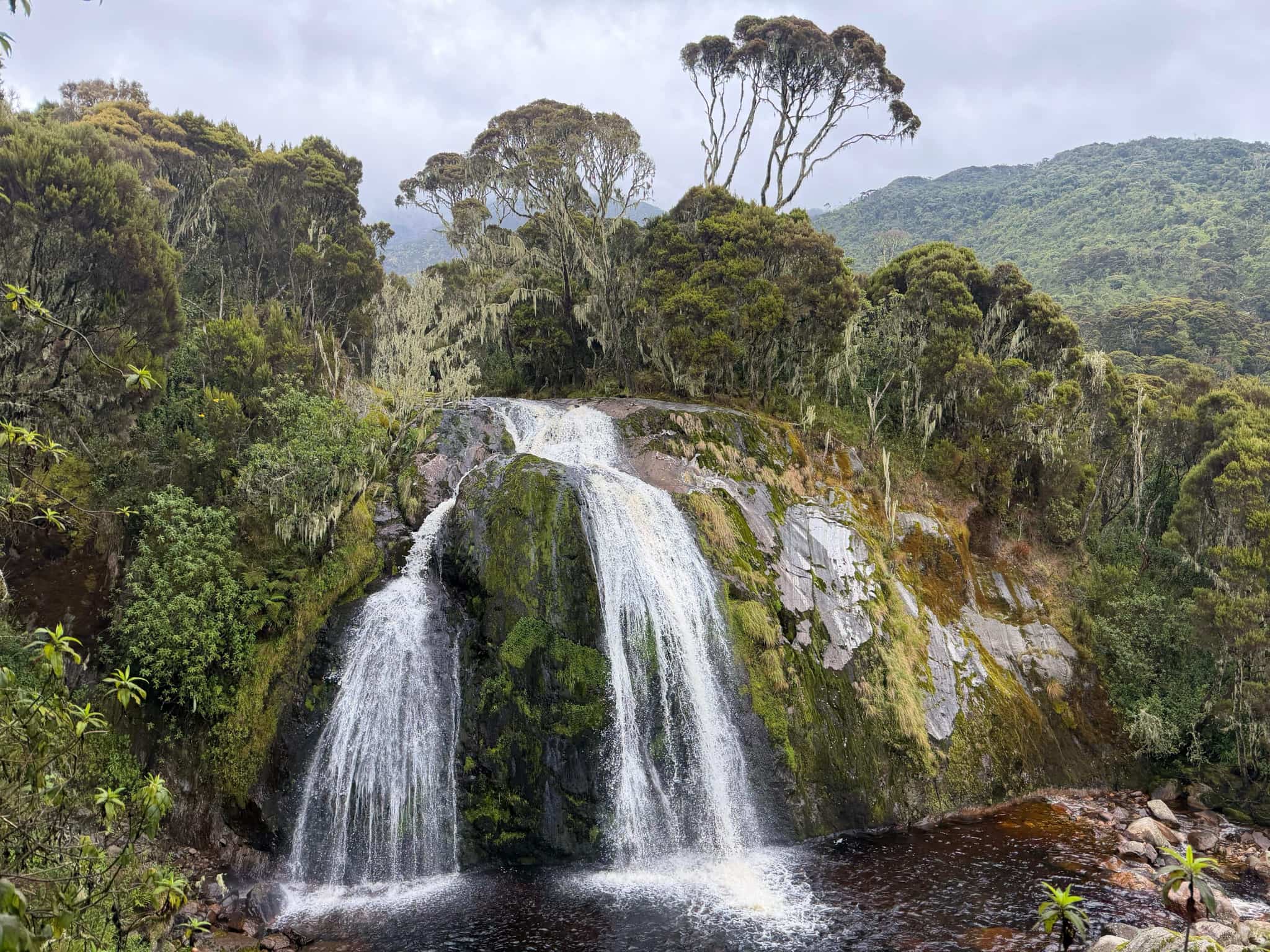
The total hike is around 9km, with 1,200m of elevation gain, expected to take around 5-6 hours. Just before arriving at the hut for the night, we’ll pass a waterfall (Enock’s Falls) which makes for a lovely spot to swim or shower after dropping off bags at the hut.
Accommodation: Mountain Hut
The goal today is to hike from Sine Camp to Mutinda Camp.
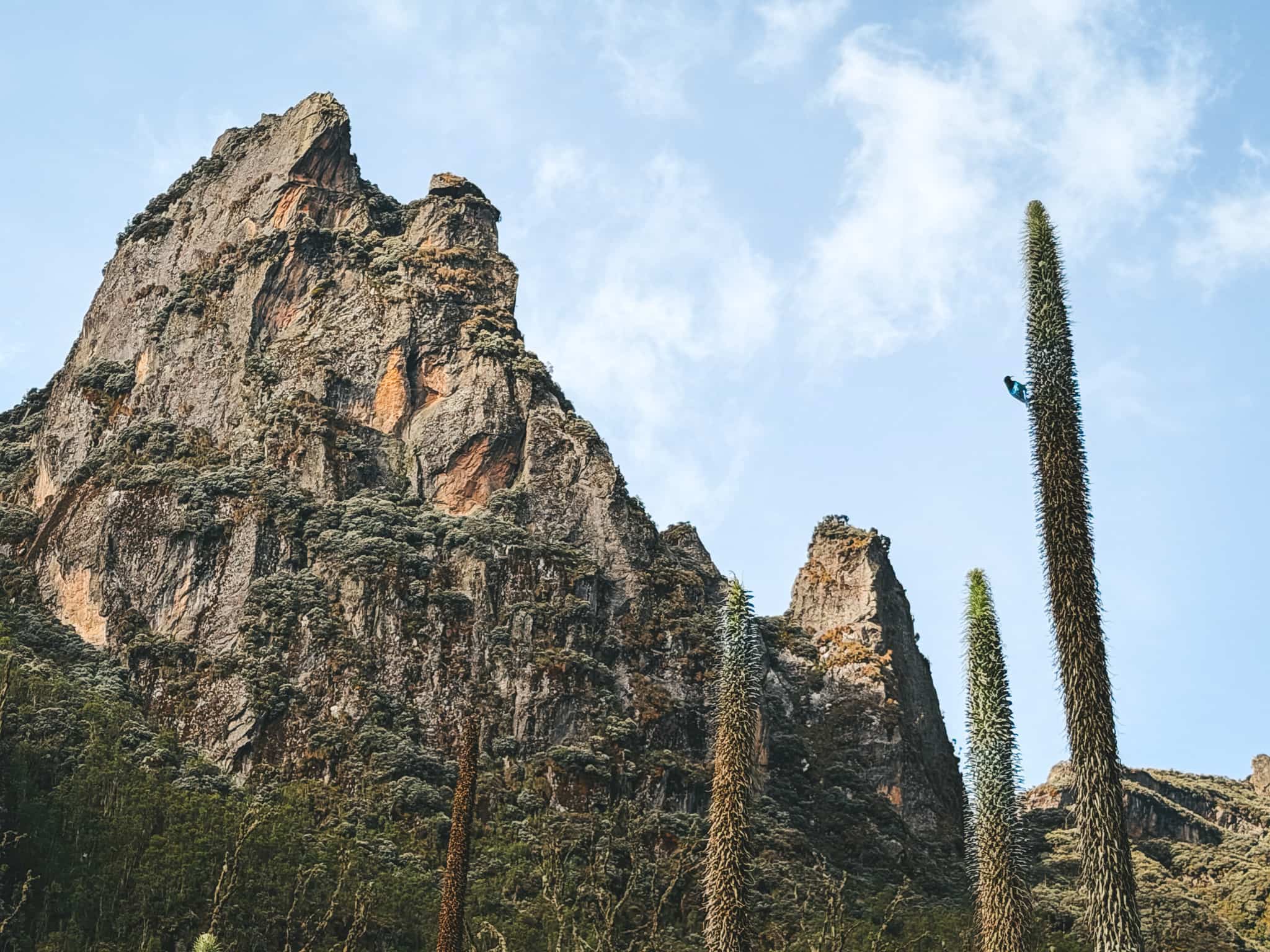
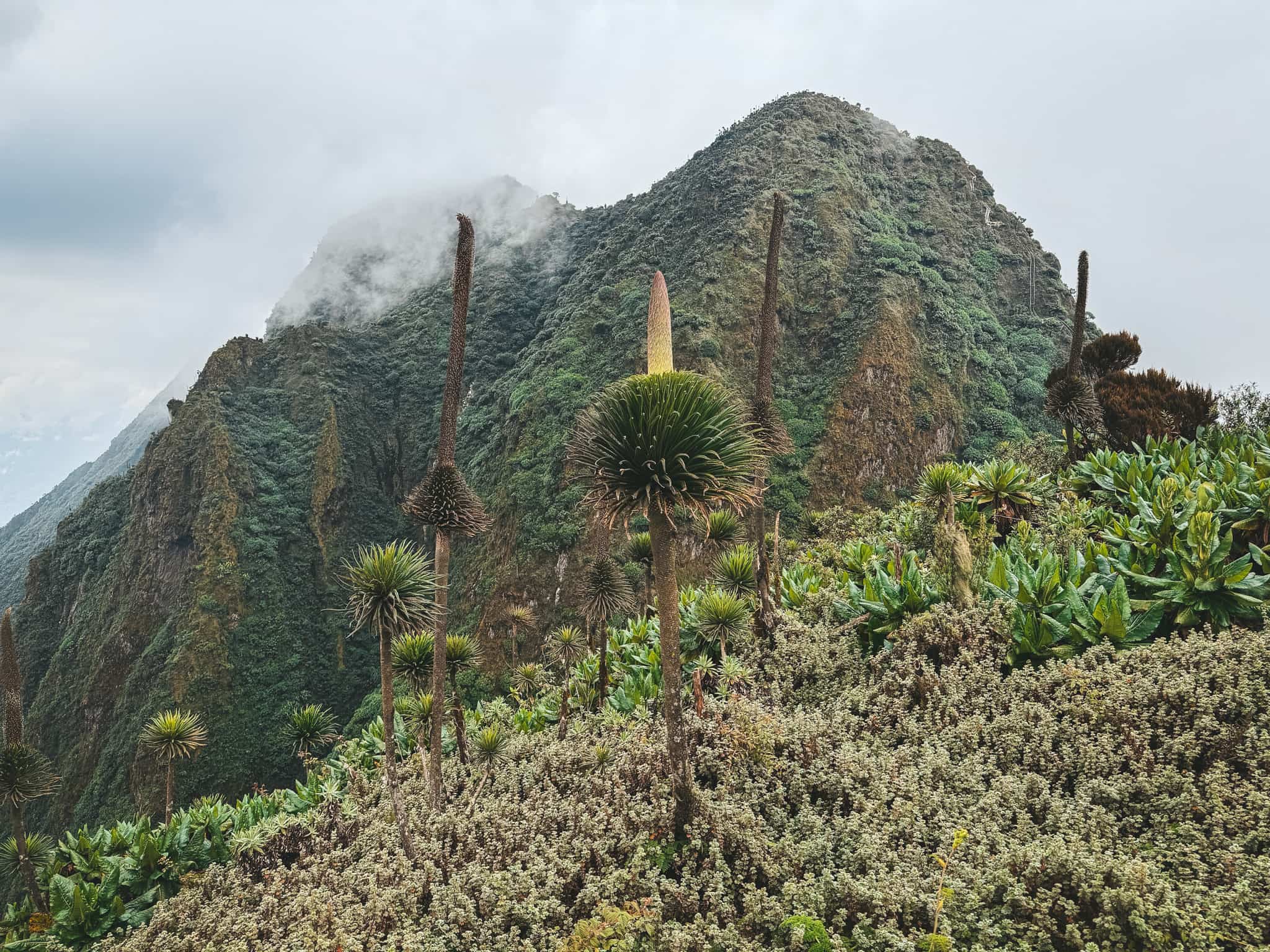
The hike starts off in the tropical forest, then goes into the transition zone with the bamboo forest before moving into the heather zone with moss and lichens covering heather trees, as well as giant lobelia gardens. You’ll feel like you’ve stepped into a lost world full of prehistoric-looking plants.
The last stretch into camp is on wooden boardwalks that undulate with the landscape. The total hike is around 7.5km, with 1,100m of elevation gain and 100m of elevation loss and is expected to take around 5-6 hours. After arriving in camp, you can relax by the river and nearby waterfalls or choose to do an optional hike to Mutinda Lookout for views across the mountain range, as well as back to Kasese and Lake George.
This optional hike to the lookout takes ~3 hours roundtrip and goes up to nearly 4,000m.
Accommodation: Mountain Hut
Hike from Mutinda to Bugata Camp. Today’s hike will be about half on boardwalks and half on boggy trails.
On the first part of the trail, you can spot dozens of colorful sunbirds zipping around and hanging out on the lobelia. Once you start climbing, the views open up and you will pass lovely waterfalls before entering the boggy moorlands that lead up to camp. From the camp, enjoy views of Lake Bugata further below, as well as Lake Kopello and Weismann’s Peak in the distance.
There are also many red forest duiker in this area. The total hike is around 5.5km, with 600m of elevation gain and 100m of elevation loss, expected to take around 5-6 hours.
Accommodation: Mountain Hut
Summit Day!
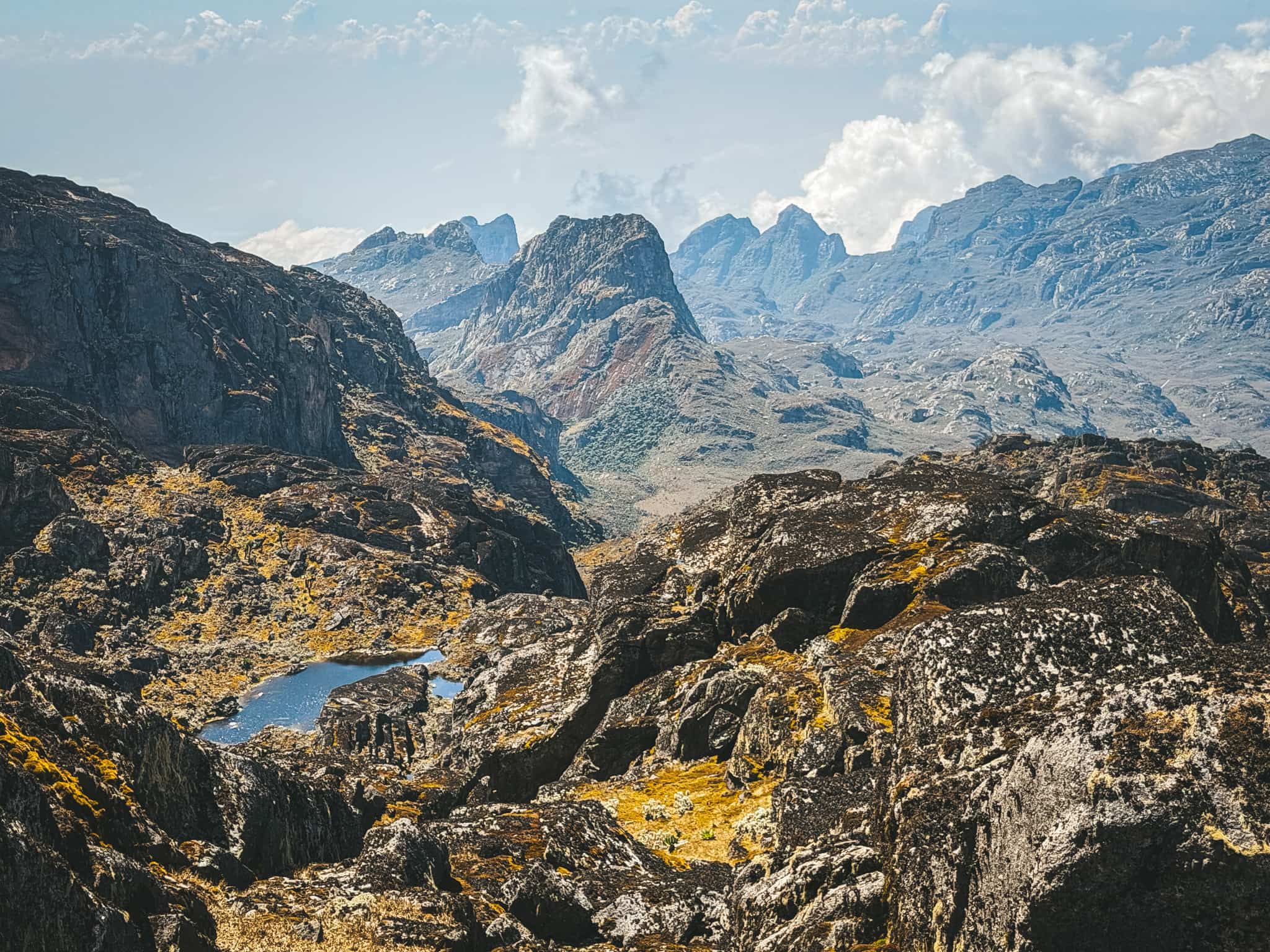
The day starts with views of the four lakes spread across the valley below. We’ll descend a bit from camp to walk around the lakes and then climb up the rocky terrain towards Oliver’s Pass, which sits at 4,505m. Once at the pass, it’s only another 30-45 minutes to the summit on rocky and mossy terrain.
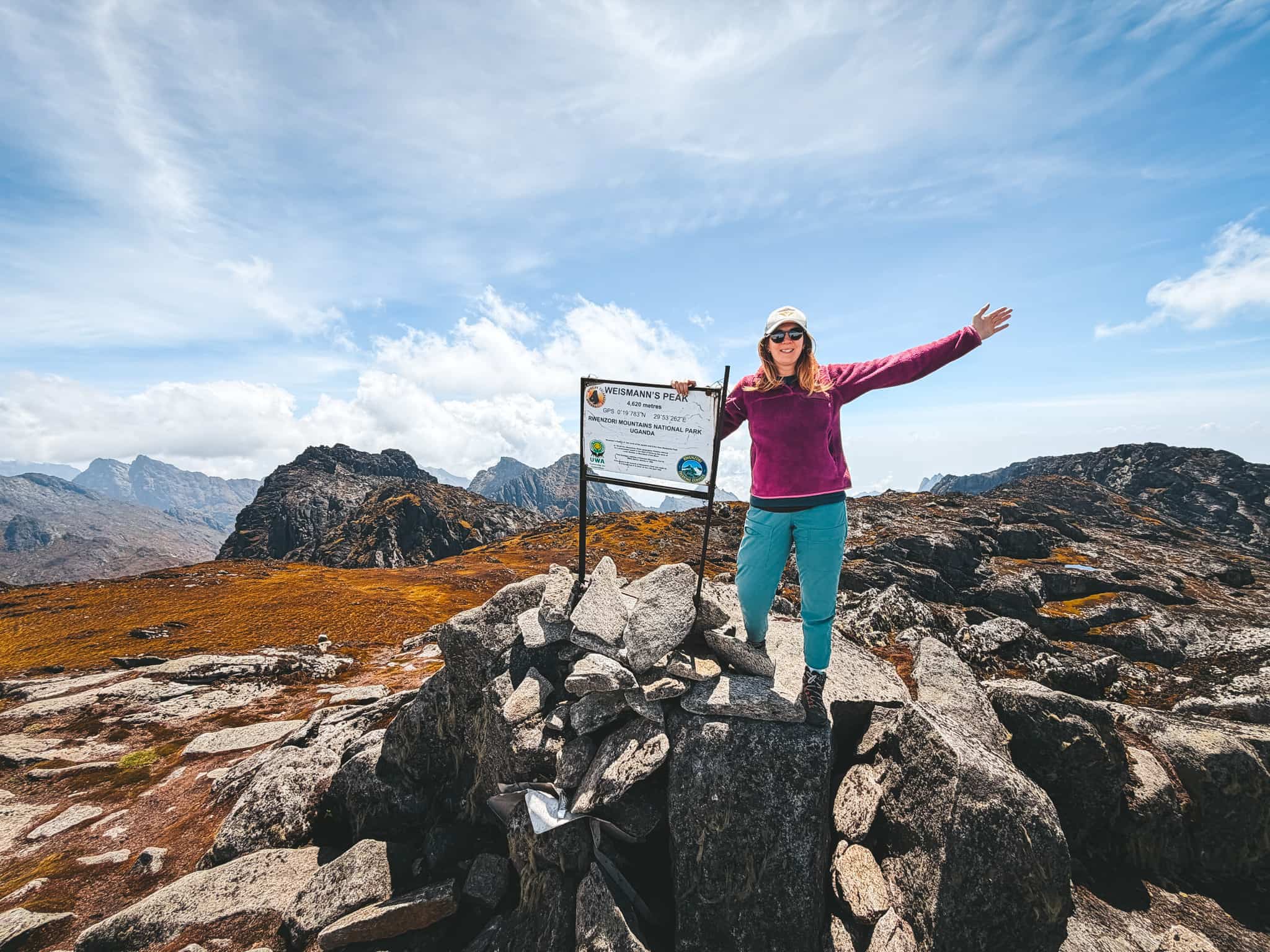
Weismann’s Peak tops out at 4,620m. On a clear day, enjoy stunning views of the tallest peaks and tropical glaciers in the Rwenzoris, including Margherita Peak, Mt Baker and Mt Speke. You can even make out trekking huts on both the Congo and Uganda sides of the peaks.
The total hike is around 8.5km, with 650m of elevation gain and 650m of elevation loss, expected to take 6-8 hours.
Accommodation: Mountain Hut
After getting a good night’s sleep following the big push to the summit, today we will begin the trek out of the Rwenzoris. We’ll head from Bugata Camp and again cross over the boggy moorlands, alternating between walking on trails and boardwalks. We will climb up to Hunwick’s Pass before beginning a steep descent towards Kiharo Camp and then continuing on to Forest View Camp at 2,580 meters, our home for the evening.
Accommodation: Mountain Hut
We’ll continue hiking out the Nyamwamba River, passing a few more small waterfalls today.
We’ll join up with the trail we entered on and make our way to the park gate and then through the community to the Trekker’s Hut.
We will then head to Fort Portal to have a celebratory dinner and relax at our comfortable hotel.
Total distance is 13km with 200m of elevation gain and 1,700m of elevation loss, expected to take 7-8 hours.
Time for a next level shower and a night at a comfy hotel.
Accommodation: Hotel in Fort Portal
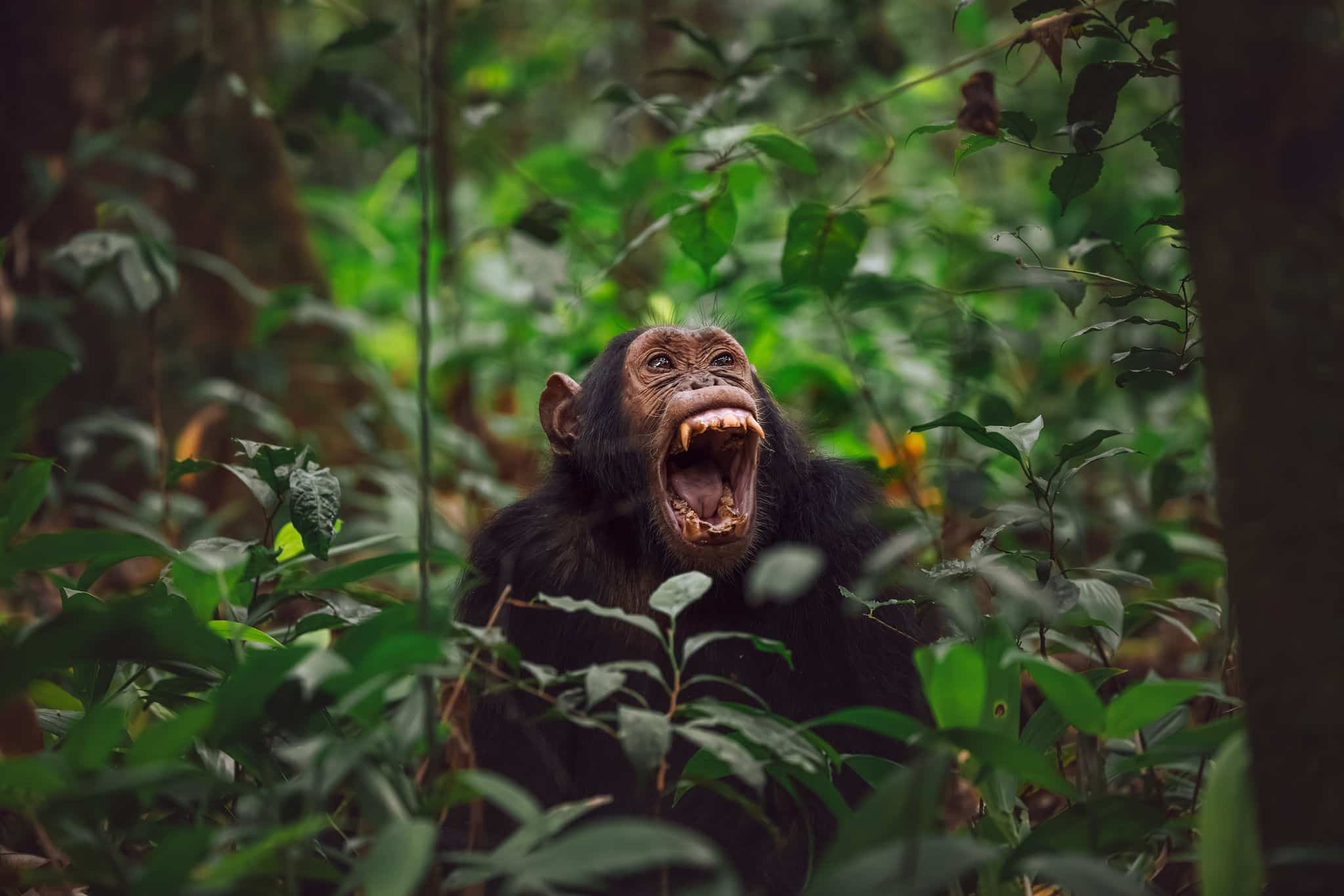
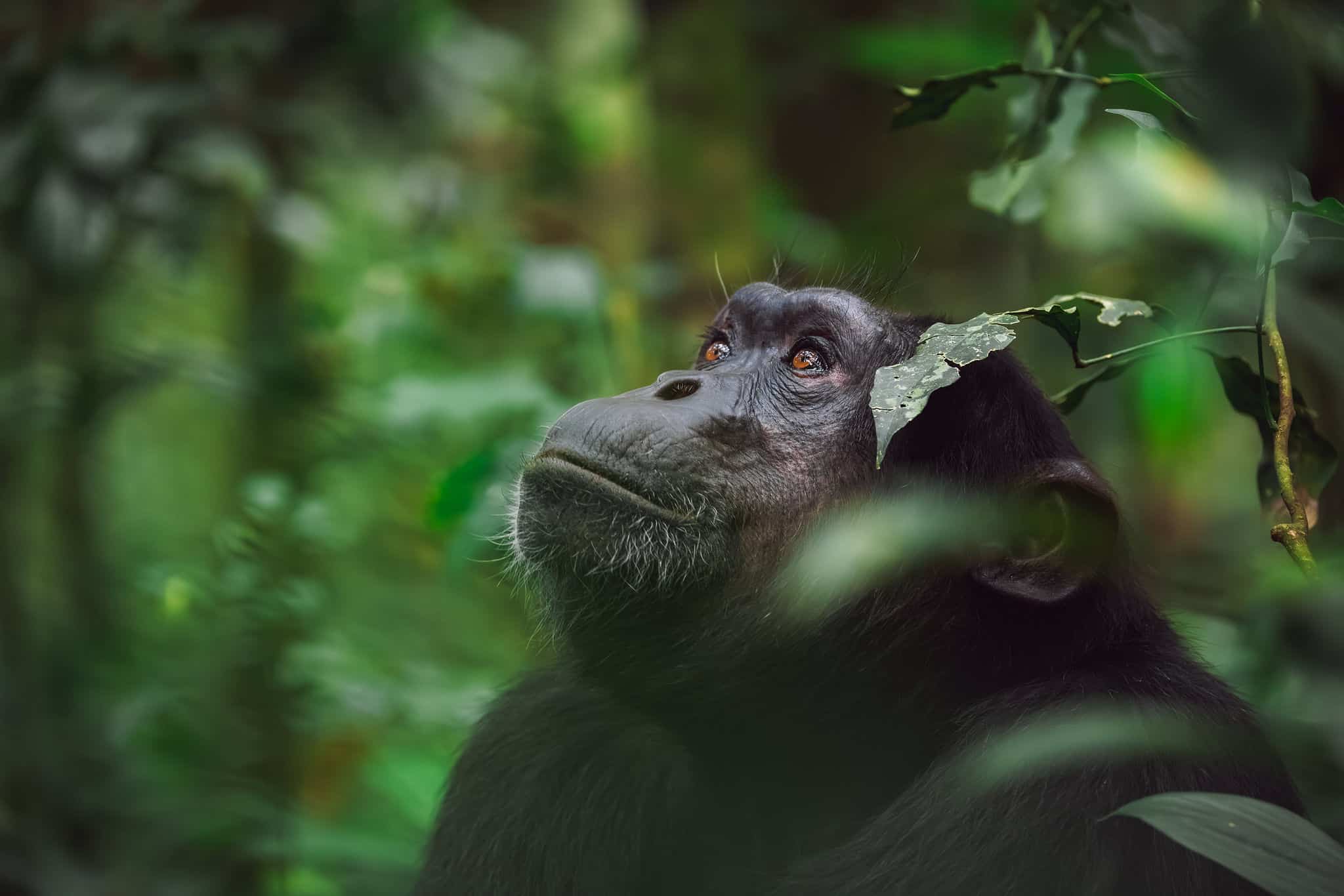
Today we will visit Kibale National Park and get to observe chimpanzees in their natural habitat through the chimp habituation experience. This is a very unique experience that can only be done in a few parts of the world; let’s just say that today is going to be a day you will never forget.
We’ll have a morning briefing with park rangers and then begin our hike to a nearby chimp community. Kibale National Park has 13 chimp communities, 5 of which are habituated and around 1450 chimps total.
Once we have located the chimps, we get to spend 4 hours with them, watching as they swing through the treetops and have breakfast, interact with each other, and, if we are lucky, can even see them up close on the ground as they relax and groom each other. Chimp habituation starts at 6:30am from Kanyanchu Visitor’s Center and lasts 5-6 hours. Distance covered will vary, but could be up to 6-8 miles on mostly flat terrain. After chimp trekking, relax at hotel.
Accommodation: Hotel in Fort Portal
We have our last big drive of trip back to Drive to Entebbe / Kampala. The drive itself will take 6-7 hours.
After checking into the hotel and some chill time, we shall meet for our final team dinner and recap the incredible few weeks we have just had together.
Accommodation: Hotel in Kampala
Alas, our grand Uganda adventure has come to end and the team must go our separate ways.
Check out of the hotel is around noon. With the exception of breakfast and airport transfers, there are no other group activities or services provided by Epic on this day.
Yes. Most Western travelers require visas for both Uganda and Rwanda. The most convenient option is the East Africa Tourist Visa, which allows entry to Uganda, Rwanda, and Kenya on a single visa and is valid for 90 days. If you don’t choose this option, you’ll need to apply for each visa separately online before arrival. Entry requirements can change, so it’s worth checking official government sites a few weeks before departure.
Participants should apply for the East Africa Tourist Visa through the country they are entering first.
You should be comfortable hiking 6–8 hours per day over multiple consecutive days, often with elevation gain. Previous multi-day trekking experience is helpful, especially at altitude, but not essential if you train in advance. This trip is best suited to active travelers who are prepared for sustained physical effort.
This is an Epic trip, and as always, there is a physical challenge element to this itinerary.
The more you prepare, the more you will get out of this trip. Simple as that.
A Yellow Fever vaccination certificate is required for entry into Uganda. Commonly recommended vaccines include Hepatitis A, Typhoid, and routine immunizations (tetanus, MMR, etc.). Malaria is present, so most travelers take anti-malarial medication. You should visit a travel clinic 6–8 weeks before departure to get up-to-date advice based on your medical history and current guidelines.
Uganda is generally considered safe for travelers, particularly in the regions visited on this itinerary.
Tourism infrastructure in national parks and trekking areas is well established, and local guides are experienced and well versed in the terrain. We will always give you a daily briefing with things like weather forecasts, what to expect on the trail on a hiking day, and keep you in the loop on the day’s plan.
As with any destination, basic precautions and common sense apply—avoid walking alone at night in big cities, keep valuables secure, and generally do not flash signs of wealth.
Kigali
Kisoro
Mount Sabinyo
Kasese
Rwenzori Mountains
This is where weather becomes the most variable and important:
Overall Takeaway:
Kibale Forest National Park
Entebbe
Accommodation on this trip reflects the remote areas we travel through. You’ll stay in a mix of simple guesthouses, locally run lodges, and mountain huts during the Rwenzori trek. Facilities in the mountains are basic, with shared spaces and limited amenities. At other points in the trip, we use more comfortable hotels where you can rest and recharge.
Overall, the focus is on practicality, cleanliness, and location relative to where this itinerary takes us. Hotels are always a carefully selected part of the Epic Expeditions experience and we also try to splurge on something really nice when it is needed (think after a massive trek)!
Yes you can! The single supplement ensures you can have a solo hotel room during our stays in a town or a city.
Please inquire with us for pricing.
Food in Uganda is straightforward and based on local staples. Meals often include rice, beans, vegetables, chicken, beef, and matoke (steamed green bananas). In towns like Kisoro and Fort Portal, restaurants offer a mix of local dishes and simple international options. During the Rwenzori trek, meals are prepared by the support team and are designed to be filling and reliable rather than super varied or complex.
Dietary requirements can usually be accommodated with advance notice.
English is the official language of Uganda and is widely spoken, especially in towns, hotels, and by guides. In rural areas, you’ll hear local languages such as Luganda, Rukiga, and Runyankole. Communication is rarely an issue on this trip, as your guides and support staff all speak English.
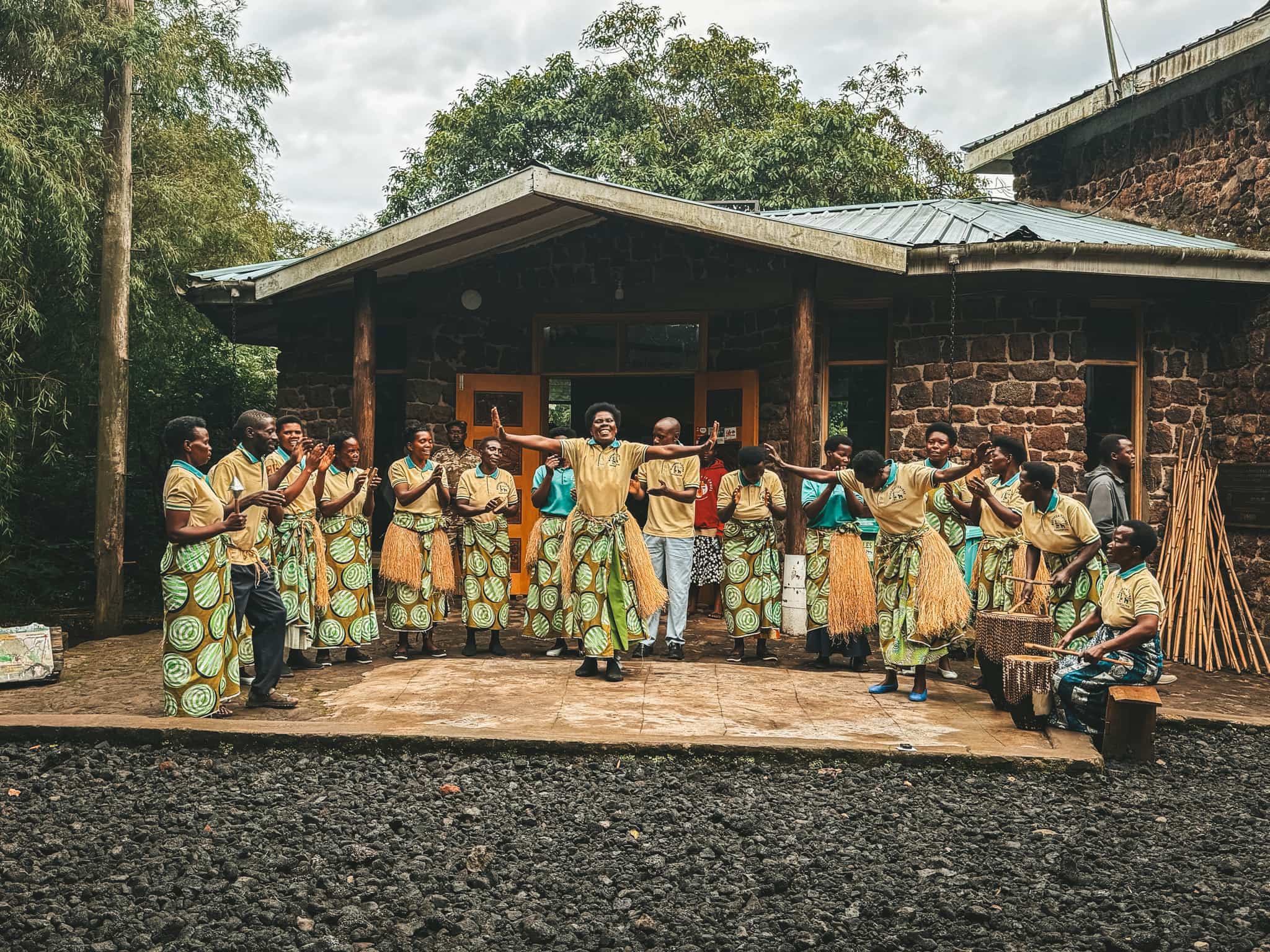
This itinerary passes through southwestern Uganda, a region with a strong rural identity and a mix of ethnic groups. You’ll move through farming communities, small towns, and market areas where daily life is centered around agriculture. While this isn’t a structured cultural tour, there are plenty of natural interactions along the way—especially during walks, transfers, and time spent in local towns.
The Rwenzori trek is physically demanding. Expect long hiking days, steep ascents, and uneven terrain, often in wet or muddy conditions. Altitude is a factor, with the trek reaching over 4,600 meters. No technical climbing is required, but good fitness, stamina, and a positive mindset are essential. This is one of Africa’s more challenging treks and should be approached with proper preparation.
Chimpanzee tracking in Kibale Forest National Park involves hiking through dense forest with experienced rangers to locate a habituated group. Once found, you’ll spend several hours observing them at close range. Chimps are active and often move through the forest canopy, so the experience can involve a fair amount of walking and repositioning.
Uganda is one of the few places in the world where an experience like this is possible, so we are super stoked to include it in this itinerary!
They are different experiences, but chimp tracking has a few advantages. The primate groups are larger, encounters tend to last longer, and chimps are more active—moving, vocalizing, and interacting with each other. It also comes at a lower cost and with fewer permit restrictions. For many travelers, it feels less staged and more dynamic than gorilla trekking.
The best time to visit is during the dry seasons: June to September and December to February. Trails are generally in better condition, and travel is more predictable. That said, the Rwenzori Mountains receive rainfall year-round, so you should be prepared for wet conditions regardless of the season.
Wildlife sightings vary, but you can expect to see chimpanzees, various monkey species, and small forest animals during trekking. While passing through Queen Elizabeth National Park, there’s a chance to spot larger animals such as elephants, buffalo, and antelope from the road.
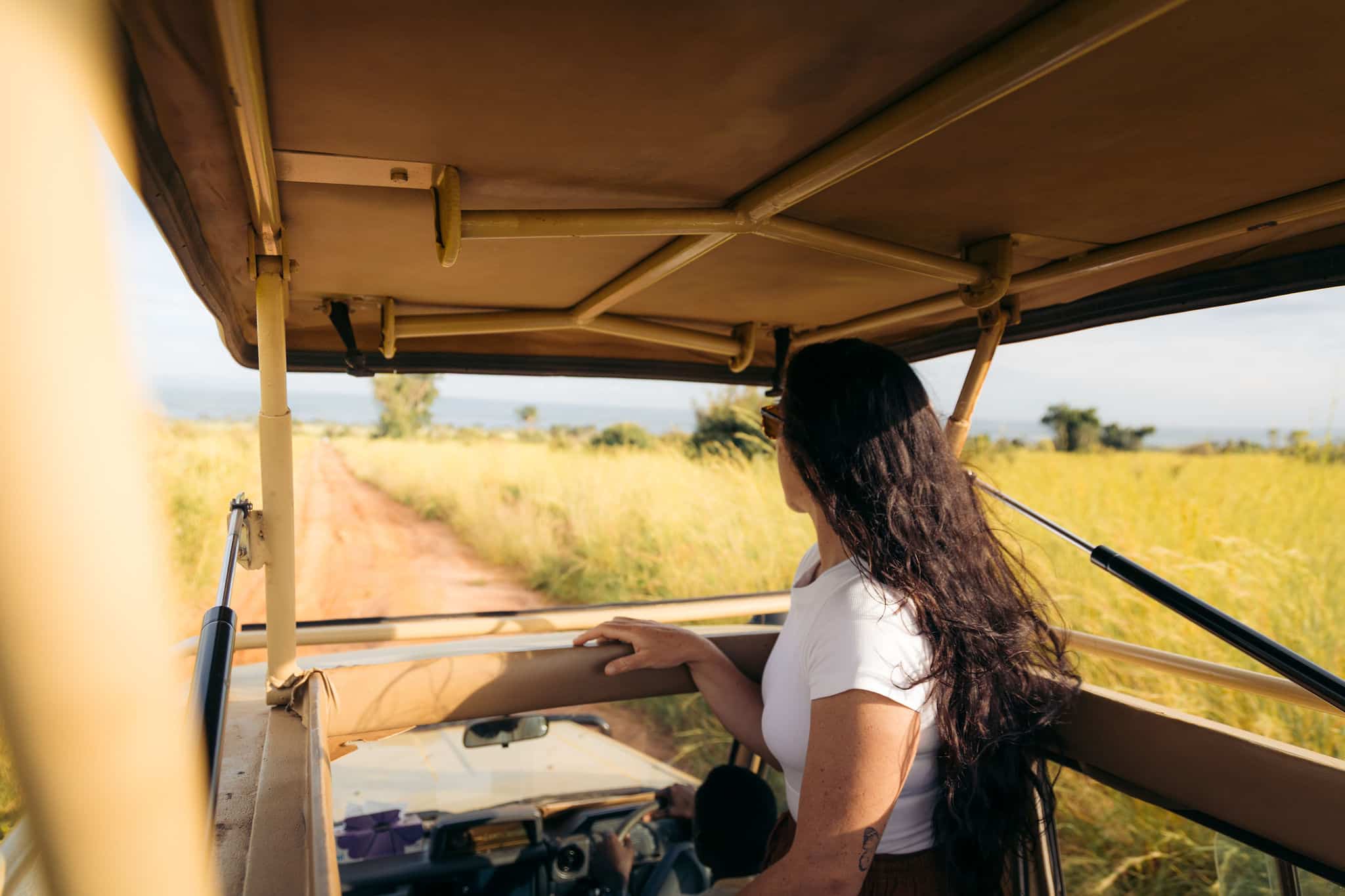
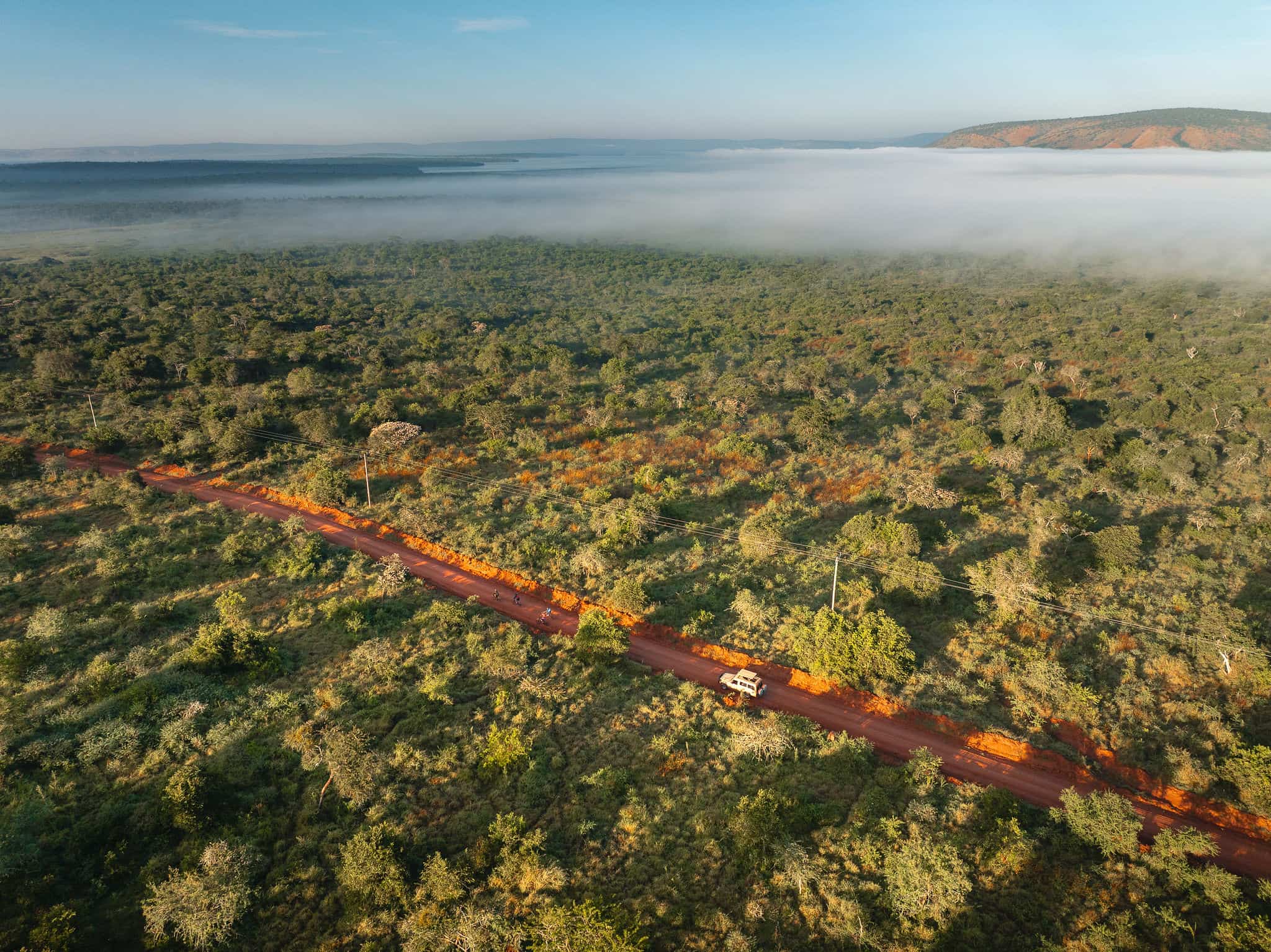
We use private 4×4 vehicles or minibuses, depending on group size. Road conditions vary significantly—some paved, others rough and slow-going—especially in rural areas. Travel days can be long, but they’re also a good opportunity to see different parts of the country.
Yes. Uganda offers a quieter, less commercialized experience compared to destinations like Kenya or Tanzania. It’s particularly well suited to travelers interested in trekking, primate encounters, and varied landscapes, rather than traditional big-game safaris.
Compared to East Africa’s better-known safari circuits, western Uganda has long remained under the radar. For decades, attention was focused on Kenya and Tanzania, while Uganda quietly rebuilt itself after a turbulent post-independence period. Since gaining independence from Britain in 1962, the country has steadily developed its tourism infrastructure, with a particular focus on conservation and low-impact travel. What that means today is simple: fewer crowds, less commercialisation, and a more grounded travel experience.
The landscapes you’ll move through on this trip have a deep connection to the early days of African exploration. The Rwenzori Mountains, often referred to as the “Mountains of the Moon,” were first described by ancient geographers and later sought out by European explorers trying to locate the source of the Nile. Even now, they feel remote. Thick vegetation, persistent cloud cover, and complex terrain kept these mountains largely inaccessible for years, and they remain one of the least-visited high mountain ranges in the world.
Further south, near Kisoro, the chain of volcanoes along the borders of Uganda, Rwanda, and the DRC forms part of the greater Virunga region. This area is geologically active and biologically rich, with fertile soils that support dense farming communities. Life here is closely tied to the land, and as you travel through, you’ll pass small villages, terraced hillsides, and local markets that reflect a slower, more traditional pace of life.
Conservation plays a major role in how tourism operates in this part of Uganda. In places like Kibale Forest National Park, chimpanzee tracking is tightly managed. Groups are limited, time with the animals is controlled, and experienced rangers guide every visit. Long-term research and habituation programs have made it possible to observe chimpanzees at close range while minimizing stress on the animals. Revenue from permits feeds directly back into conservation and local communities, creating a system that supports both wildlife protection and livelihoods.
What ties all of this together is the sense that Uganda is still figuring things out on its own terms. It’s not polished in the way some destinations are—but that’s part of the appeal. For travelers interested in trekking, wildlife, and understanding a place beyond surface-level impressions, western Uganda offers a more layered experience.
Sign up for the Epic Newsletter to gain instant access to our insider packing lists and receive regular adventure updates.
Expect lots of cool photos, trip announcements, and highlights from our favorite places around the world. Never spam.
Get exclusive trip updates, be the first to know when we launch a new itineraries and offer discounts, and stay up to date with what’s happening at Epic Expeditions!