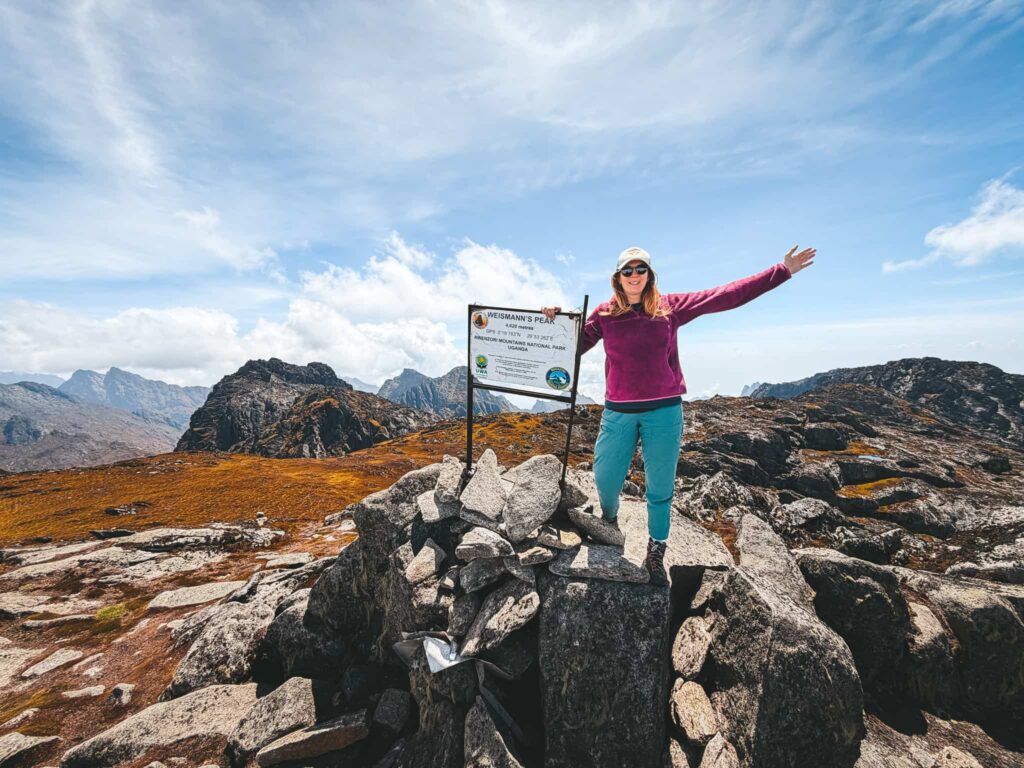
Key Takeaways:
- Fewer than 1,000 people trek the Rwenzoris each year
- The landscape moves through five distinct ecological zones as you climb – dense jungle, bamboo, giant heather forest, afroalpine lobelia fields, and equatorial glaciers
- Uganda requires research before you go – read the current travel advisories, sort your insurance, and go with an operator who knows the region
- If you’ve done Kilimanjaro and want something rawer, harder, and more rewarding, trekking in the Rwenzoris is the answer!
Around 50,000 people climb Kilimanjaro every year. In the same period, fewer than 1,000 visit the Rwenzori Mountains – a range that contains six of Africa’s ten highest peaks and the continent’s third-highest summit at 5,109 meters.
This gap has nothing to do with quality either; the Rwenzoris are wilder, wetter, and more physically demanding than Kili, and the terrain is unlike anything else on the continent. The landscapes shift so dramatically with altitude that trekkers describe the experience as moving through entirely different worlds within the same week.
The Rwenzori Mountains just haven’t had the exposure and can’t lean on the hype from being “the tallest”. But as avid adventurers and lovers of all things truly epic – that’s very good news.
Where are the Rwenzori Mountains Located?
The Rwenzori Mountains run along the border between Uganda and the Democratic Republic of Congo, roughly 6 hours west of Kampala by road. The range stretches approximately 120 kilometers and covers close to 1,000 square kilometers – most of which sits within Rwenzori Mountains National Park, a UNESCO World Heritage Site since 1994.
The gateway town is Kasese, in western Uganda. From there, the park entrance and trailheads are less than an hour away. It’s accessible without the kind of multi-day approach travel that some remote African destinations require, which makes the Rwenzoris easier to access than most people realize at first.
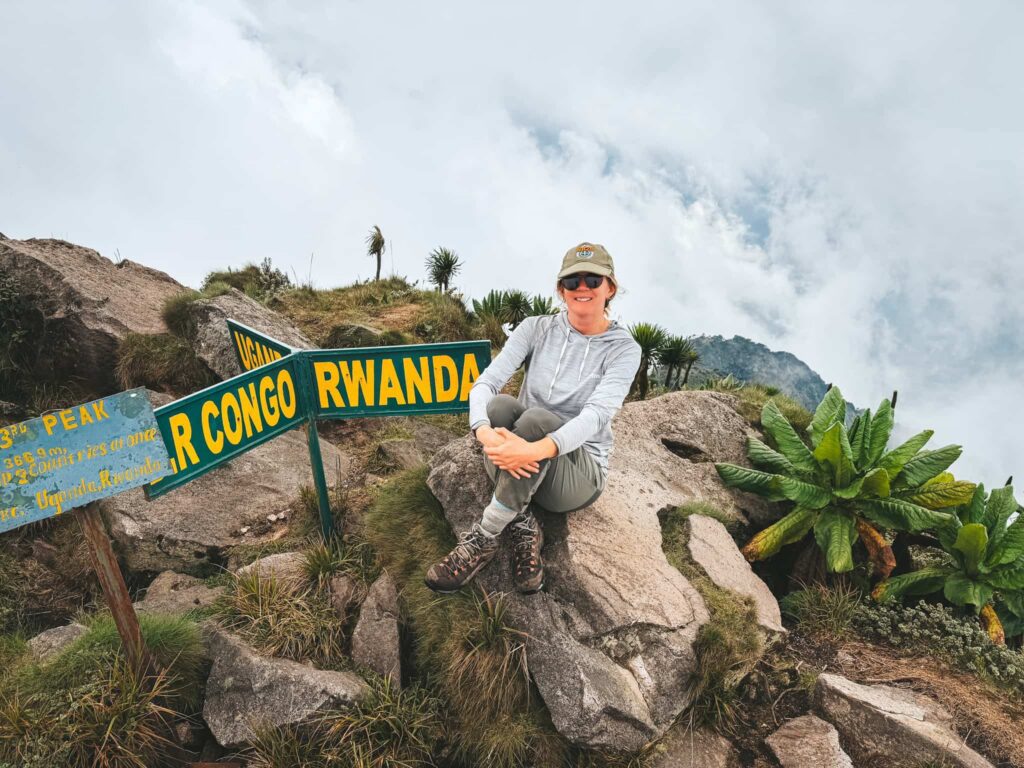
What an initial glance at the map doesn’t prepare you for is the elevation. The range sits almost exactly on the equator, and yet it holds glaciers. Yes, equatorial glaciers – six of Africa’s ten highest peaks are here! Margherita Peak on Mount Stanley tops out at 5,109 meters which is Africa’s third highest point, behind only Kilimanjaro and Mount Kenya, and significantly more remote than either.
What are the Rwenzori Mountains’ Biggest Draws?
In many of the mountain regions where we lead trips around the world we’ve found that destinations usually offer one thing done well. The Rwenzoris on the other hand is totally different and offer several stacked on top of each other, sometimes literally, across 5,000 meters of vertical terrain!
Here’s what keeps pulling serious trekkers back and what convinced us to start guiding trips to the Rwenzori Mountains in Uganda.
The Trekking
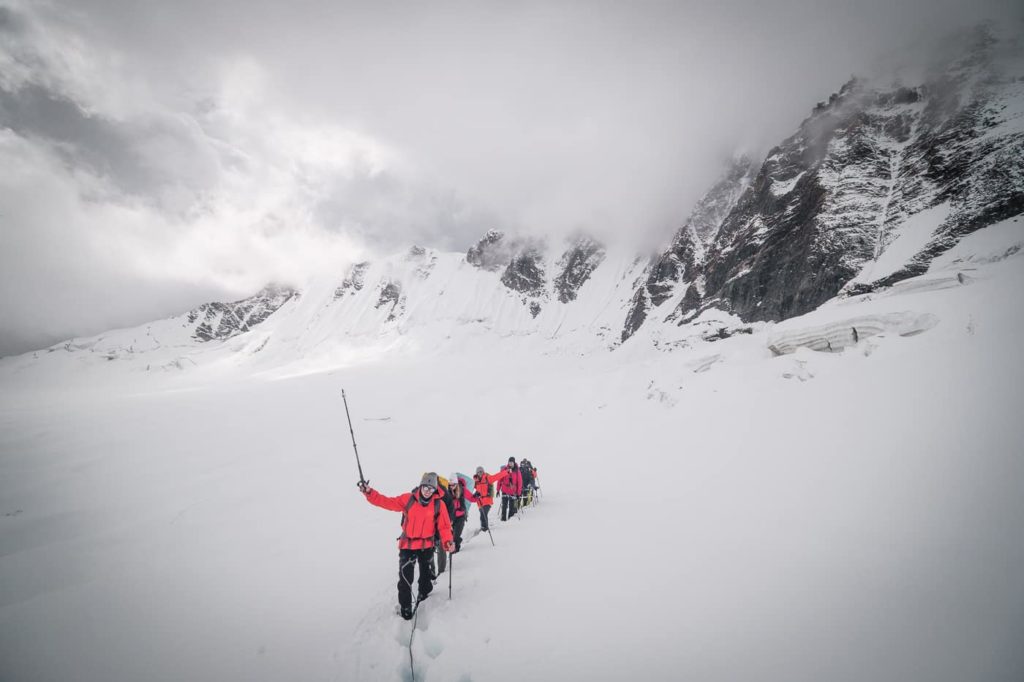
Multi-day trekking in the Rwenzori mountains is among the most varied on the continent. Routes typically run seven to eight days, and the conditions can be more demanding than those on Kilimanjaro. You can expect significant elevation gain, wet and technical trail conditions, and cumulative fatigue that really builds across the week; proper hiking technique is essential!
What makes the Rwenzori trek more challenging than other high-altitude experiences in Africa for us is the terrain underfoot. Boggy paths, river crossings, exposed ridgelines, and forested descents all feature in the same trip. The going isn’t always straightforward, so you do have to stay alert throughout.
Camp elevations move from around 2,600 meters at the lower huts to above 4,000 meters in the upper zones. Epic works with local and qualified Western guides on all Rwenzori expeditions, that is, people who know this terrain and know when the mountain is asking more of you than expected.
The Landscape
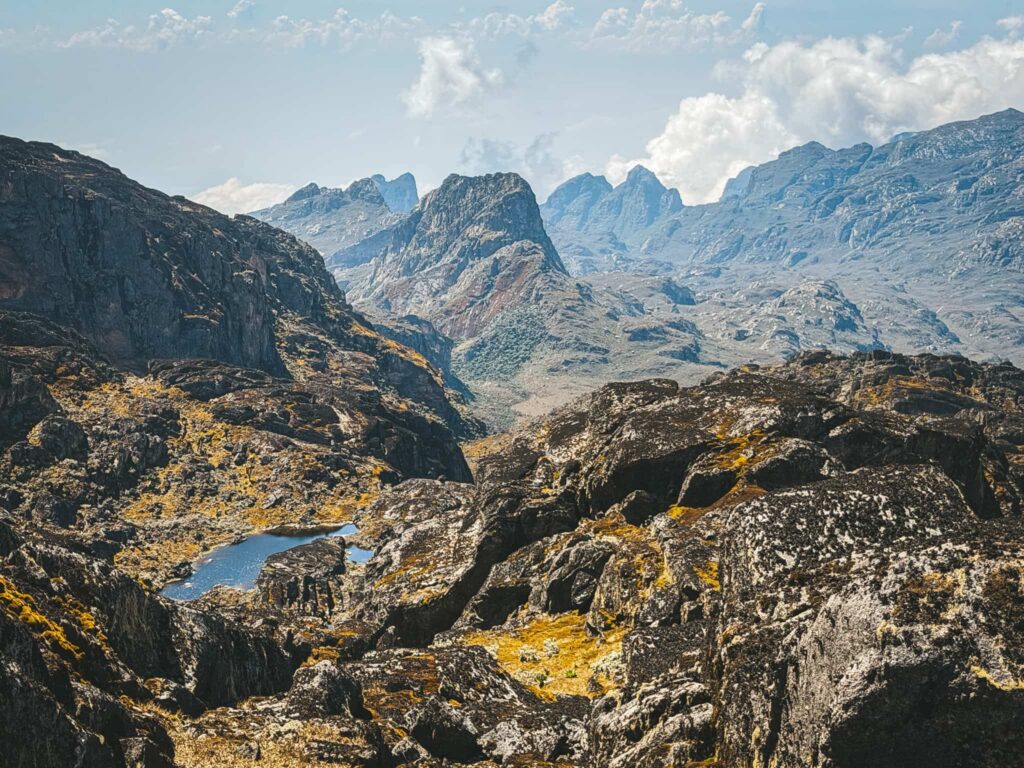
This is what most people aren’t prepared for. The Rwenzoris sit on the equator, which should mean jungle. Instead, the range moves through five distinct ecological zones as you climb, and by the upper elevations, the landscape looks less like Africa and more like another planet.
It starts in dense montane forest, a trail shaded and humid, with Colobus monkeys moving through the canopy above you. Then comes:
- The bamboo zone
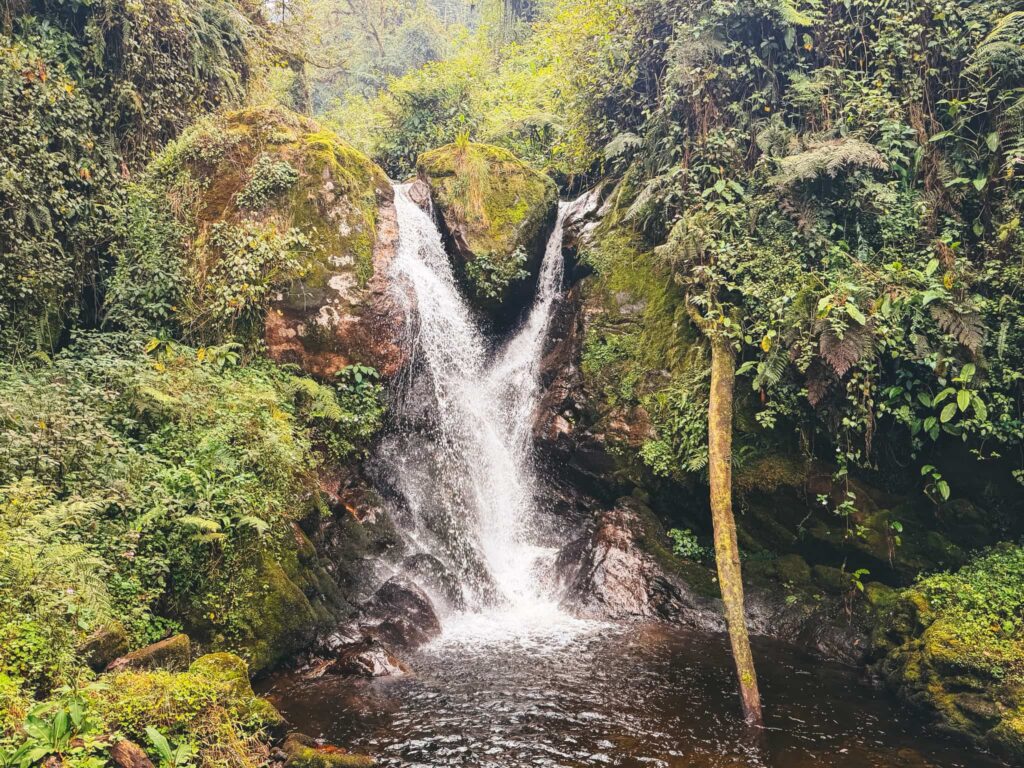
- The heather-rapanea zone with giant tree heathers draped in moss
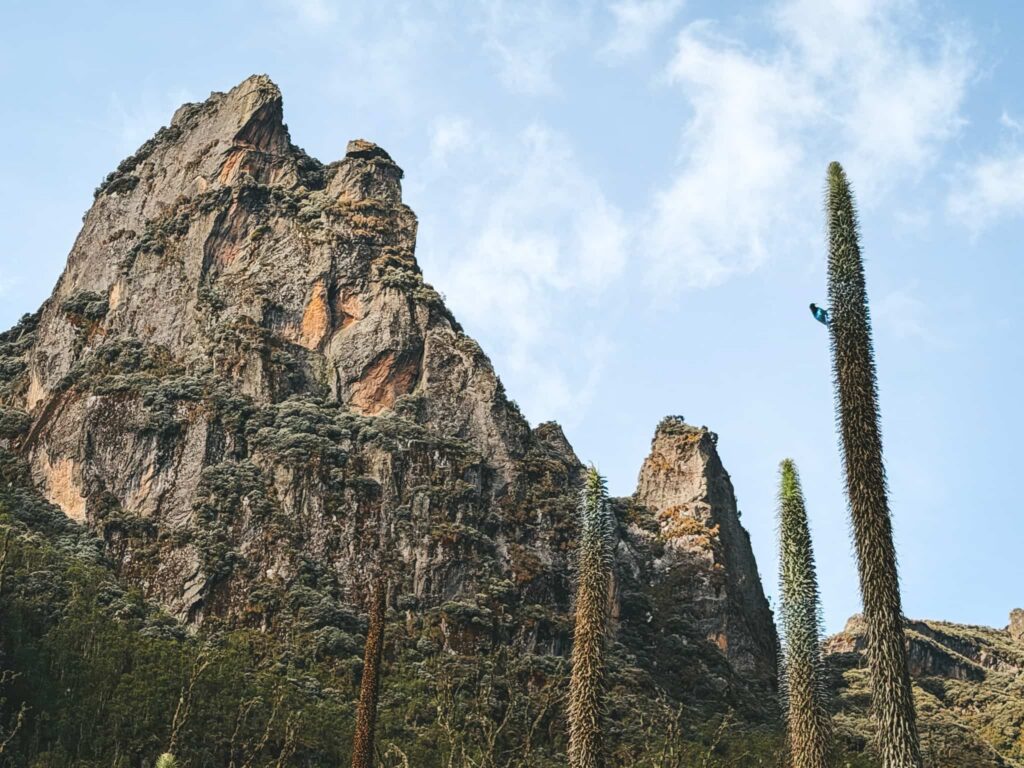
- And then the afroalpine zone, where giant lobelias tower over boggy ground and groundsel trees cluster around the path in formations that are kind of mind-blowing to exist at this altitude.
- Above that: raw, exposed rock and, on the highest peaks in Uganda, glaciers sitting exactly on the equator!
This range is famously called the “Mountains of the Moon”. Spend a few hours in the upper zones, and you’ll see exactly why.

The Wildlife
The Rwenzoris sit within the Albertine Rift, one of Africa’s most biodiverse regions. The park holds over 217 bird species, more than 70 mammal species, and 54 species found nowhere else on Earth.
On the trail, you can expect Colobus monkeys in the lower forest, the rarer L’Hoest monkey (if you’re keen-eyed), and red forest duiker throughout the upper valleys. They’re actually common in the higher terrain rather than an occasional sighting.
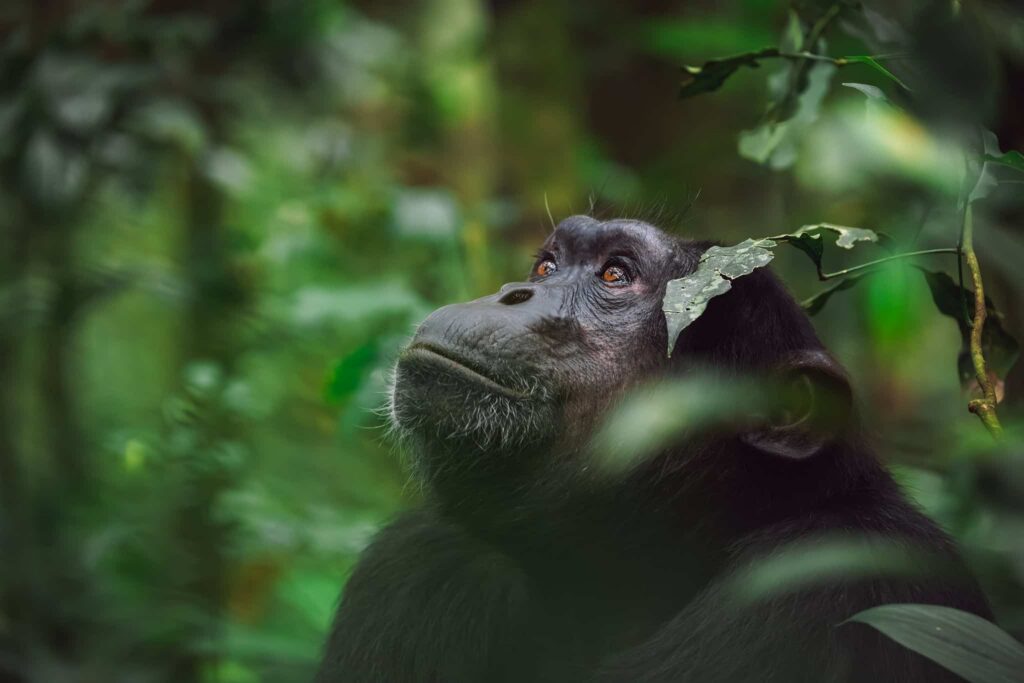
Chimpanzees are present in the forested lower zones, though they’re rarely encountered on the mountain itself (which is why we combine our Rwenzori trekking expedition with Chimp trekking in another region).
When is the Best Time to Visit the Rwenzoris?
There are two windows to trek in the Rwenzoris: June to August, and December to February. These are the Rwenzori dry seasons, and they represent meaningfully better trekking conditions than the rest of the year.
But now for the honest part: “dry season” in the Rwenzoris is a relative term.
This range receives up to three meters of rainfall annually, and it has a well-earned reputation as one of the wettest mountain environments on the planet. Expect to be hiking in the rain, even in the good months, and wet trails, regardless of when you go. Pack accordingly with waterproof layers, dry bags for electronics and sleeping gear, and footwear that can handle boggy ground for multiple consecutive days.
In our opinion, the shoulder months of March to May and September to November are best avoided. Trail conditions deteriorate significantly, river levels rise, and the upper zones can become hazardous. Some routes may be entirely inaccessible.
What to Understand Before Visiting
The Bakonzo People and the History of the Range
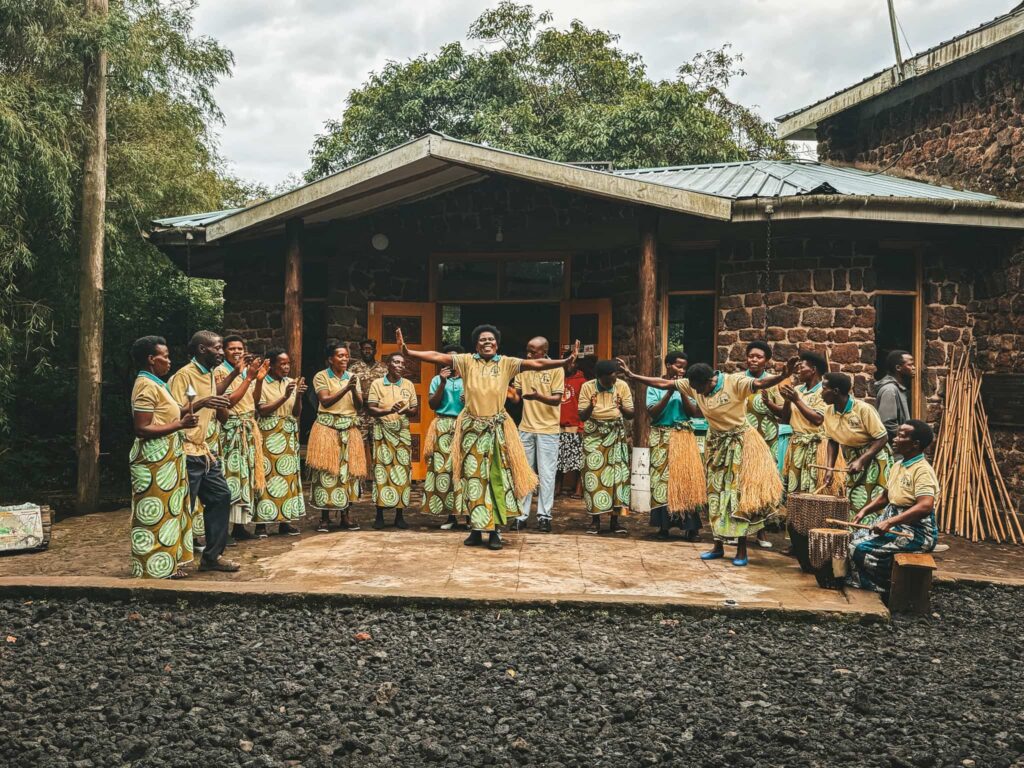
The Rwenzori Mountains have been home to the Bakonzo people for centuries. They are the indigenous community of the range, farmers, hunters, and the guides who know this terrain better than anyone. The name “Rwenzori” itself is derived from their language, loosely translating to “place of snow,” which tells you something about how long they have understood what sits above the clouds here.
History of Rwenzori Expeditions
The Western world’s awareness of the range dates to 1888, when Henry Morton Stanley encountered the mountains during his Emin Pasha Relief Expedition. The first recorded summit of Margherita Peak followed in 1906, led by Italian explorer Luigi Amedeo di Savoia.
The mountains became a UNESCO World Heritage Site in 1994, recognized for their exceptional biodiversity and ecological significance within the Albertine Rift.
That history matters on the trail because the Bakonzo guides who work in the park carry generational knowledge of the range, including its moods, its routes, and how its rhythms shift across the seasons. Epic works alongside local Bakonzo guides and qualified Western guides on all Rwenzori expeditions. That combination of local fluency and operational experience is our secret sauce to offering well-run trips in Uganda.
Safety
Before you plan a trek, you’ll likely be wondering if Uganda is safe to visit.
The US State Department currently carries Uganda at a Level 3 advisory – “Reconsider Travel”, and specifically flags western Uganda near the DRC border due to armed groups and historical instability in that area.
As with most advisories, though, they don’t really capture the ground reality well and instead throw a blanket rule on an entire region, including the Rwenzori National Park itself.
The park has a strong ranger presence and is a well-established trekking destination. The gorilla trekking region at Bwindi Impenetrable Forest operates under the same broad advisory and draws tens of thousands of international visitors annually. Uganda has come a long way from the instability of the Idi Amin era, but this is not a destination where you travel without doing your research first.
Before you go, make sure you have covered:
- Current travel advisory. Check your government’s latest guidance before booking. The situation in border regions can change.
- Travel insurance. Ensure your policy covers western Uganda, high-altitude trekking insurance, and emergency evacuation.
- LGBTQ+ travelers. Uganda’s 2023 Anti-Homosexuality Act criminalizes same-sex relations with severe penalties. This is a legal reality that affects whether Uganda is the right destination for some travelers.
- Go with the right operator. Local knowledge and current ground relationships matter here more than in most destinations.
Health
- Yellow fever vaccination is a formal entry requirement for Uganda. It’s a good idea to carry your certificate.
- Malaria is present at lower elevations year-round. The risk decreases significantly at altitude, but the days before and after the trek pose a risk. Consult your doctor.
- Altitude – Camp elevations on the upper routes push above 4,000 meters. Anyone with a history of altitude sickness should flag this with their doctor and with Epic before booking.
- Water – Treat all water on the mountain. Most operators supply boiled water at camps but make sure you pack a water purification bottle such as the Grayl Geopress.
Why Rwenzori Over Kilimanjaro or Mt Kenya
We mentioned the numbers at the top of this guide. Around 50,000 people a year on Kilimanjaro, fewer than 1,000 on the Rwenzoris. But the gap in visitor numbers is really a gap in two entirely different philosophies of what an African mountain trek should be.
Firstly, Kilimanjaro is extraordinarily well-run (depending on the operator), logistically impressive, and accessible to a wide range of fitness levels. It’s an amazing adventure, don’t get us wrong – you can have a powerful experience on Kilimanjaro, and most people do.
But there’s no denying that when you are there, you are moving through a machine designed around trekker volume, and trust us when we say you can certainly feel that on the mountain.
Mount Kenya is a step closer to the Rwenzori experience with fewer crowds, more technical terrain, and real altitude at Point Lenana (4,985 m). But even here, the mountain’s proximity to Nairobi and its status as East Africa’s second most-recognized summit mean it draws a well-worn route and a well-worn experience.
The Rwenzoris are completely different.
What you get instead is five ecological zones, camps where your group is the only group, and a summit view that looks out across peaks most people in the world couldn’t even point to on a map. Yes, the mountain asks more of you physically, the trail is wetter, slower, and less forgiving underfoot – but as with all things truly epic – the reward scales accordingly.
See the “Mountains of the Moon” with Epic
Epic has been guiding expeditions to remote, demanding destinations since 2018: K2 Base Camp, the Atacama at 4,500 meters, Kokoda, Snow Lake. The formula is consistent across all of them: small groups of fun, like-minded people, local expert guides paired with qualified Western trip leaders, and no filler in the itinerary.
In the Rwenzoris, that combination works – this is not a range with a well-worn support system. The Bakonzo guides we work with carry generational knowledge of this terrain, and the Western guides we pair them with have run expeditions in places where things don’t always go smoothly and know what to do when they don’t.
Our Rwenzori trek sits within a broader Uganda itinerary, complete with chimpanzee tracking and overland travel that lets you see the whole region Epic style.
If you’ve been looking for an African adventure that isn’t Kilimanjaro, this is it. Check out our Rwenzori expedition or get in touch – we’re happy to talk through whether this trip is the right fit for you.