Key Takeaways:
- Slow down, seriously — most hikers start way too fast
- Take shorter steps and look ahead on the trail rather than at your feet
- Let your glutes do the work on climbs.
- Break your boots in before the big day
- The small stuff — good posture, quick rest stops, catching blisters early — adds up more than you’d think.
Most people don’t think much about how they hike. It’s just walking, right? Not quite.
Hiking, especially over rough terrain, at altitude, or across multiple days, is a skill. And like any skill, good hiking technique is the difference between moving efficiently and grinding yourself down both physically and mentally.
At Epic Expeditions, we’ve spent years leading hiking groups through some of the world’s most demanding wilderness landscapes. Glacial moraine, jungle ridgelines, high-altitude desert, loose scree, and alpine zones above 5,000 metres – this is the kind of terrain that punishes bad habits fast.
What we’ve noticed from our clients and from years of suffering ourselves is that those who struggle most when hiking aren’t always the least fit. They’re typically the ones who never built the basic hiking skills that keep you moving well over long distances.
This article is built around what works for us, and more importantly, what we’ve seen work for hikers at all levels of fitness and experience. Whether you’re preparing for your first big multi-day trek or looking to get better at hiking before something more serious, everything here is practical and tested on real trails.
What New Hikers Get Wrong
You don’t need years of experience to hike well. But there are a handful of habits that trip up beginners and, if we’re being honest, plenty of experienced hikers too. Most of them are easy to fix once you know what to look for.
Going out too fast
This is the single most common mistake we see on our expeditions, and it happens on almost every trip. Day one energy is high, the scenery is often incredible, and people take off at a pace they have no chance of sustaining for five or eight hours, let alone across multiple days.
The first thing we tell our clients at almost every pre-trip briefing: hiking is not a race. A good hiking strategy is to set a pace on Hour One that you could comfortably hold on Hour Eight. That means often you’ll feel like you’re starting slower than feels natural, especially if you’re carrying a pack.
Ignoring how you actually move
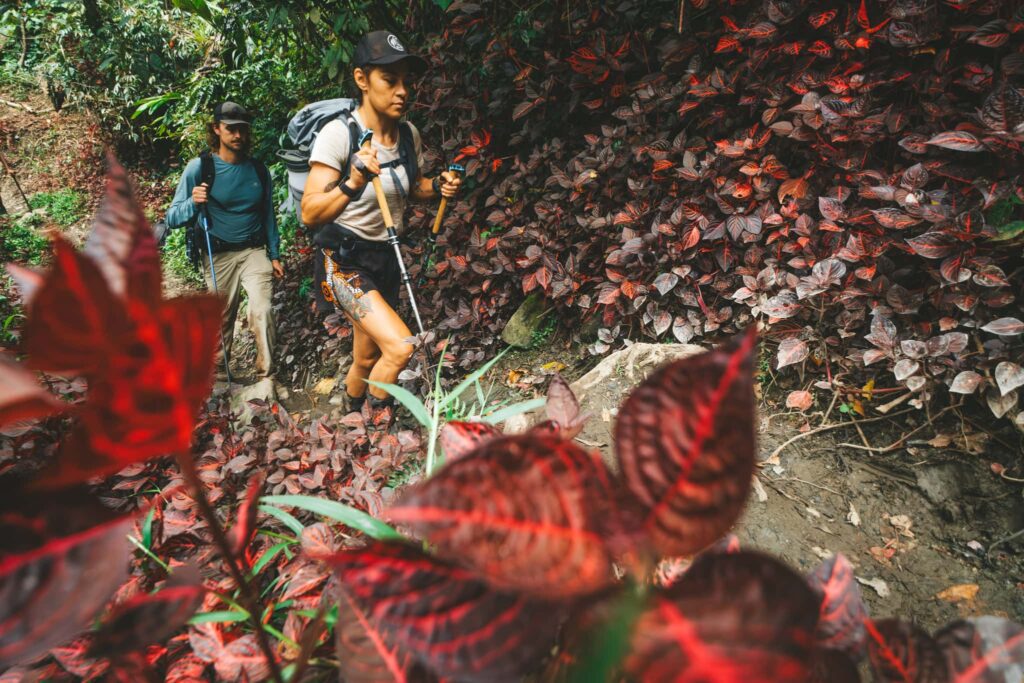
The single biggest improvement most new hikers can make is shortening their stride. Shorter steps keep your weight centred over your feet, which means better balance on rocky or loose terrain and far less impact on your joints.
Place each foot with intention rather than just letting it land wherever momentum carries it. This is a deliberate skill, and it takes conscious effort before it becomes natural. We’ll break down specific techniques for different terrain in a later section, but the habit of paying attention to how you move rather than just where you’re going is the foundation on which everything else builds.
Showing up to the trailhead in brand new boots
We’ve written an entire article about hiking foot care, and for good reason. One of the most common and most avoidable problems we see is trekkers who arrive on day one of an expedition wearing boots they bought the week before. By day two, their heels are shredded, and they spend the rest of their trek in agony.
Your boots need to be broken in properly before any serious hike – that means actual trail kilometres.
And, the boot itself needs to match what you’re doing. A light trail shoe is great on a well-maintained path, but it won’t give you much ankle support or grip you will need on scree, wet rock, or glacial moraine.
Not taking hydration seriously
By the time you feel thirsty, your hiking performance and how you actually feel on the trail have already been affected. Your energy, your concentration, your joint function, your mood, all of it takes a hit.
The discipline is drinking small, consistent amounts throughout the day rather than draining a full bottle at each rest stop. Keep water accessible so you’re not stopping to dig through your pack. And if you’re hiking in heat, at altitude, or both, you’ll want to add electrolyte supplements to help your body hold onto the fluids you’re taking in and keep your salt levels stable.
Not understanding layers
After footwear, the most common gear failure we see is not understanding how to layer. Most trekkers, especially when hiking in the cold, overlayer at the start of the day or set off wearing bulky jackets that have them sweating within twenty minutes.
The principle is simple but takes discipline: start the day slightly cool. Within a few minutes of walking, you’ll warm up considerably. If you’re comfortable standing still at camp, you’ll be overheating once you actually get moving.
You don’t need to freeze yourself, but work on resisting the urge to overdress. And if you do get too hot or too cold while hiking, stop and make the change. It’s a two-minute adjustment that is far better than soaking your base layer in sweat and risking freezing from the inside once you stop moving again or the temperature drops.
Hiking Techniques to Practice
We’ll get into the habits to break before hitting the trail soon, but this section is about skills to build first. These are techniques that experienced hikers use almost without thinking, but they all started as deliberate practice.
Breathing and rhythm (fixing your pace)
We mentioned earlier that starting your hike too fast is a guaranteed way to ruin your day. The easiest and most reliable way to lock in a sustainable, all-day pace to begin with is to first control your breathing.
Combine our advice on shortening your stride with diaphragmatic breathing: deep belly breaths where your stomach expands on the inhale. But don’t overthink it. Instead, stop, get your breathing in check. Once you have that down, sync your breath to your newly shortened stride.
A good rule of thumb: if you can’t hold a conversation while you walk, you’re hiking too fast. On treks like our K2 Base Camp expedition, where you’re out for two weeks across glacial terrain and altitude, the people who have the best experience are almost always the ones who start slow and stay consistent.
Get off your toes
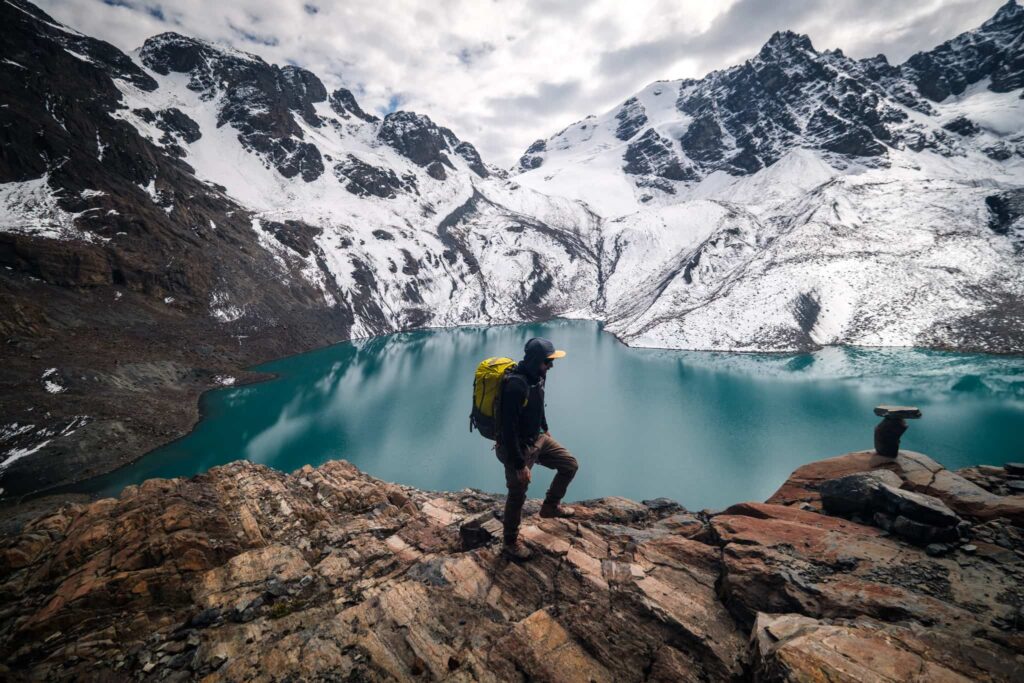
When the trail kicks up, do not hike on your tiptoes. Your calves are small muscles, and they will burn out fast. Instead, drop your heels to the ground, shorten your steps, and push up using your glutes. They are the biggest muscles in your body, and they are built for all-day endurance.
Also, be sure to pick up your feet when walking. Shuffling is a good way to stub toes, trip, and potentially end up face-first on the ground, and potentially with broken bones.
Read the trail & stop staring at your boots
Most hikers plod along staring directly at the dirt immediately below their feet. If you do this on a trail filled with slick roots or loose rocks, your reaction time is zero, and you are going to stumble.
If you’re wondering how to get better at hiking and want an easy answer, you just need to pick a line. Look three to five meters ahead of you on the trail. This gives your brain time to process the safest places to step before your foot actually has to land there.
Fix your posture (stop hunching)
When fatigue sets in, most hikers naturally hunch forward, rounding their shoulders under the weight of their pack. This is a disaster for your efficiency and can lead to injury. A hunched hiking posture compresses your chest, restricts your oxygen intake, and throws your center of gravity completely off.
Proper hiking technique involves maintaining a tall and open chest posture. You’ll want to roll your shoulders back and down, and ensure the hip belt of your pack is carrying the vast majority of the weight. Your backpack’s shoulder straps should bear almost no weight and act to support the load.
Master the Micro-Break
Part of maintaining an all-day hiking pace is how you handle your rest stops. If you drop your pack and sit on a rock every twenty minutes, your leg muscles will immediately start to cool down and stiffen up, especially in cold weather.
Instead, experienced hikers use micro-breaks, often without even thinking about it. The idea here is to stop for thirty seconds to a minute every now and then. Do not take your backpack off. Stand upright, lean on your trekking poles, take a long drink of water, let your heart rate drop slightly, and start moving again. This applies to all types of hiking and terrain.
This is the perfect chance to admire the view or get your camera out!
Use trekking poles
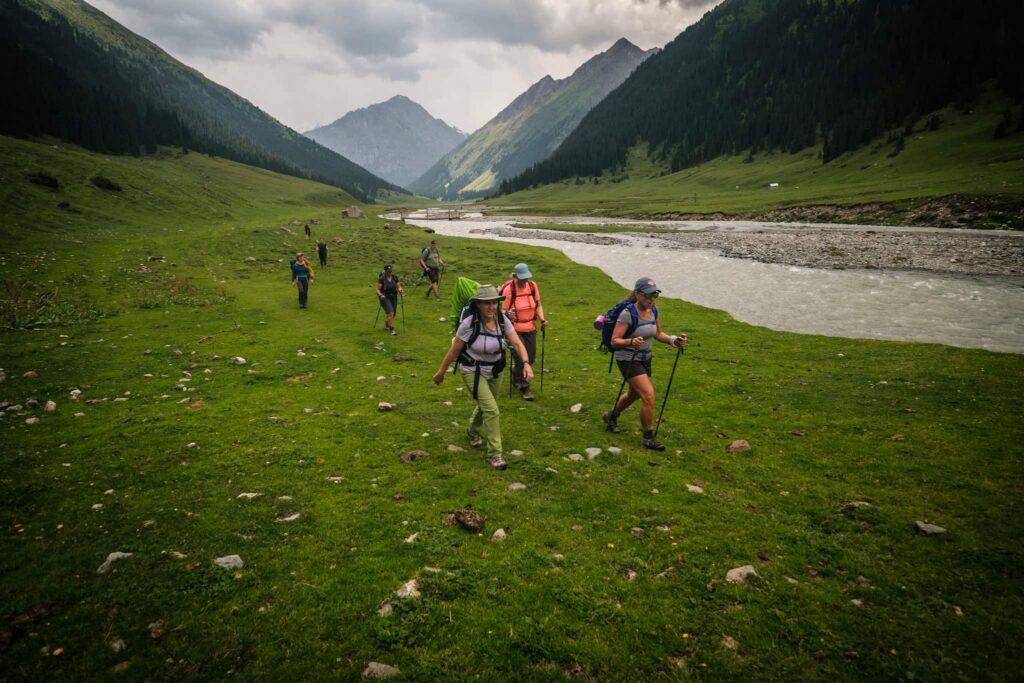
Trekking poles are essentially four-wheel drive for your body and help way more than you might think – but only if you use them correctly.
Plant them in opposition to your feet to match your natural walking rhythm, e.g. your right pole plants with your left foot, and your left pole plants with your right foot.
Slip your hands up through the bottom of the wrist straps so you can rest your body weight down into the strap itself. Do not put a death grip on the foam handles; carry them lightly but confidently, and focus on getting into a rhythm.
It may feel awkward at first, but trust us, after a few hours of hiking with poles, it’ll feel just as natural as without them.
Uphill and Downhill: Special Considerations
Everything we’ve covered so far in learning how to hike applies to flat and rolling terrain. But when the trail tilts significantly in either direction, your technique needs to adapt. Most hiking injuries and most energy wasted happen on steep ground, and uphill and downhill hiking technique each have their own set of demands.
Hiking uphill
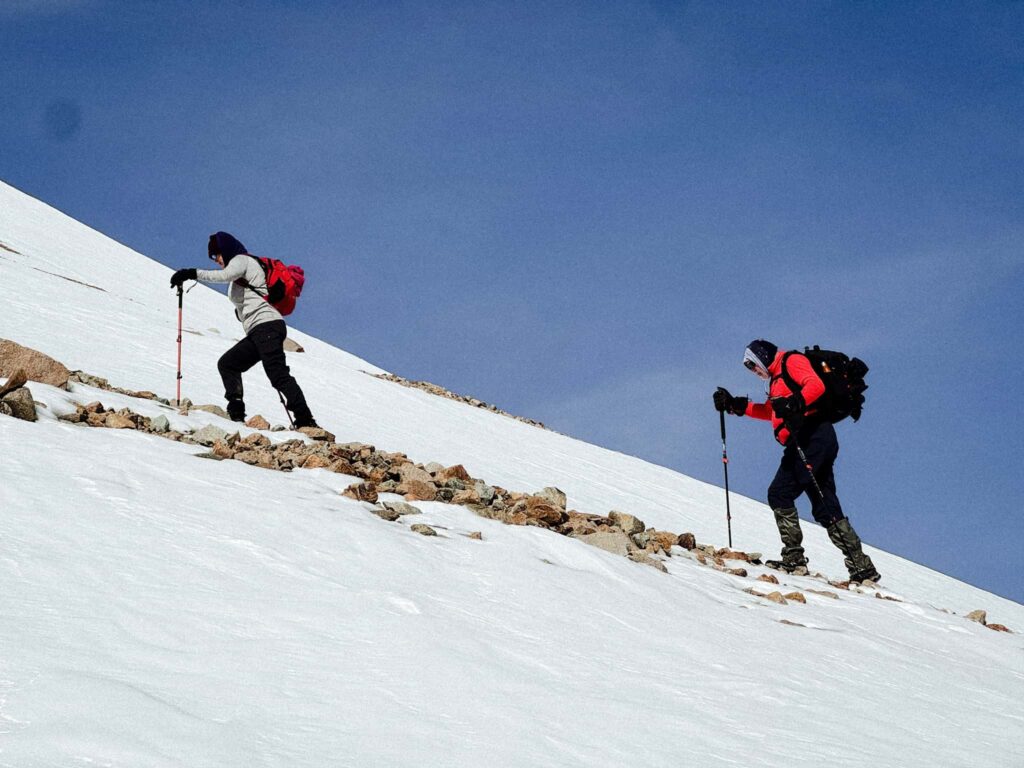
The instinct on a steep climb is to lean forward, take big steps, and power through it. This burns out your legs fast and sends your heart rate through the roof. The approach that actually works over sustained climbs is almost the opposite.
With risking sounding like a broken record, when hiking uphill, again, you’ll want to shorten your steps. The steeper the gradient, the smaller your steps should be, and the more natural your uphill hiking technique will feel.
Keep your feet relatively flat on the ground rather than pushing off your toes. As we mentioned earlier, your glutes can work all day, but your calves cannot. On very steep sections, zigzagging across the slope rather than going straight up reduces the effective gradient and takes pressure off your legs.
One technique worth learning is the rest step, which is used by mountaineers at high altitude but works just as well on any steep trail, especially if you are training.
As you step up, lock the knee of your back leg for a split second so your skeleton bears your weight instead of your muscles. That brief pause gives your working leg a moment of rest before the next step. Yes, it feels slow at first, and people will pass you. But over a long climb, you’ll still be moving steadily.

Hiking downhill
The reality of hiking is that more injuries occur on the way down than on the way up. Your knees absorb repeated impact, your quads work overtime as brakes, and fatigue from the ascent makes it easy to lose concentration when the terrain demands the most of it. Many can admit to running downhill with “finish line fever”, ready to be done.
The single most important tip for how to hike downhill is that you do not want to lean back. It’s a natural instinct on steep ground, but it puts your weight behind your feet, which means less grip and more impact on your knees with every step.
Instead, keep a slight forward lean so your weight stays over your feet. Bend your knees a little more than feels natural. Think of it like sitting slightly into each step rather than landing stiff-legged. This shifts the work from your knee joints to your quads and glutes, which can handle it far better.
If you’re preparing for a specific trek, we’ve put together a detailed trekking fitness guide that covers training programs, injury prevention, and how to build the endurance you’ll actually need.
Tips for Hiking Better
You have the foundation. These are the smaller details that are easy to overlook but make a noticeable difference over a long day.
- Tighten your boot lacing before descents. Your foot sliding forward inside the boot is what causes bruised toenails and blisters on the front of your toes. A snug heel lock takes thirty seconds and saves days of pain.
- Trim your toenails before the trip. Short and straight across, a few days before you leave. Long toenails jamming into the front of your boots on every downhill step is as avoidable as it is painful.
- Eat before you’re hungry. Appetite drops during sustained effort, especially at altitude. Snack consistently throughout the day with calorie-dense foods you actually enjoy eating. We’ve written a more detailed guide to hiking nutrition and probiotics for travel that’s worth reading if you’re preparing for a hike or bigger trip.
- Test all your gear on training hikes. Boots, pack, layers, poles, water system.
- Catch hot spots early. A warm patch on your heel is a blister forming. Tape it immediately.
- Loosen your pack straps on uphills, tighten on downhills. Shifting weight between your hips and shoulders throughout the day prevents pressure building up in one area. Small adjustments, big difference over eight hours.
- Carry your water where you can reach it. If drinking requires stopping and opening your pack, you won’t drink enough. Side pockets, hydration bladders, whatever works – just make it accessible.
Essential Hiking Gear
The gear you need depends entirely on where you’re hiking. A packing list for glacial moraine and high-altitude passes looks completely different from one for a humid tropical jungle. There’s no universal list that works on every trail.
That said, there are some essentials worth investing in regardless of terrain. Tailor these to your trip or your preferred hiking environment.
- Hiking boots. Your most important purchase. A versatile all-rounder like the Lowa Renegade GTX is a boot several of our team have relied on for years across a wide range of terrain. Depending on the region and the length of the trail, most of our team use lighter trail runners for warmer lower sections of a trail and switch to a stiffer, waterproof hiking boot once the terrain gets more technical.
- Hiking socks. Good quality socks make more of a difference than most people expect. Merino wool hiking socks regulate foot temperature, wicks moisture away from your skin, and resists odour far better than synthetic alternatives. Cotton is the enemy for hiking as it absorbs sweat, holds it against your skin, and creates blisters.
- Backpack. Probably second to your boots in importance. A 30–40 litre pack is ideal for day hikes and expeditions where local porter networks carry the bulk of your gear, while 50–60 litres is more appropriate if you’re carrying your own camping setup. But more important than size is fit – look for a pack with a proper internal frame, adjustable hip belt, and load lifter straps, then test it weighted on your training hikes.
- Moisture-wicking base layer. Whether you’re hiking in tropical humidity or alpine cold, the layer closest to your skin is the most important one. You want it to wick sweat away from your body and dry quickly. Your hiking companions will want it to be a natural material that doesn’t stink after three days – again, merino wool ticks both boxes.
- Sun protection. High-SPF sunscreen applied regularly throughout the day. Quality polarised sunglasses (bring a spare pair if you’re on a longer trip). Lip balm with SPF, and more of it than you think you need. If you’re hiking in strong sun, a lightweight long-sleeve sun shirt gives better protection than any amount of sunscreen and keeps you cooler than exposed skin.
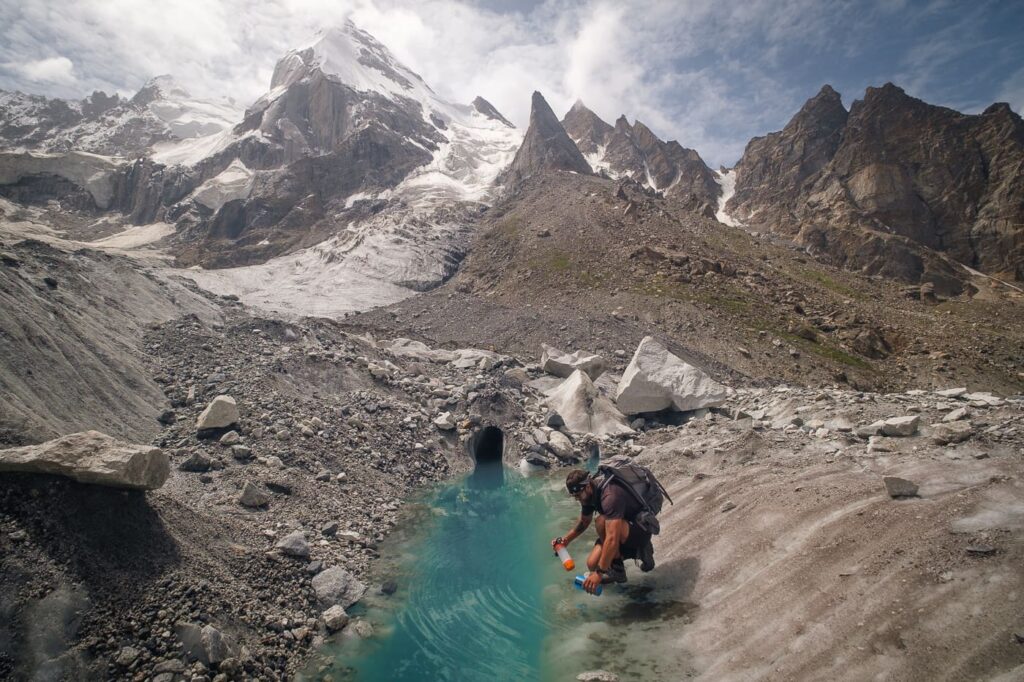
- Water purification. On remote trails you won’t always have access to clean water. A purifier bottle like the Grayl Geopress lets you fill from streams and rivers and drink immediately. Our staff have used these across every continent we operate on and it remains the single piece of gear we recommend most consistently. Read our Grayl review here.
- Buff. One of the lightest and most versatile items you can carry. Sun protection for your neck, a headband to keep sweat out of your eyes, a dust shield on dry trails, extra warmth around your neck when the temperature drops.
You Have to Walk Before You Hike
Everything in this article comes down to one thing: hiking well is a practice. Nobody is born knowing how to manage their pace, place their feet on loose rock, or breathe efficiently on a steep climb. No matter your hiking goals, these are skills you build by getting out and walking and hiking, paying attention to how your body moves, and making small adjustments over time.
Start where you are. If you haven’t hiked much before, go for longer walks with a loaded pack. If you already hike regularly, pick one or two hiking techniques from this article and focus on them next time you’re on a trail.
The best hikers we know, the ones who move well over difficult terrain for days on end, all have one thing in common. They never stopped learning. They paid attention, they adjusted, and they put in the kilometres.
We love hiking. It’s the foundation of everything we do at Epic Expeditions, and every trip we run has hiking at its core. If you’re looking to put these skills into practice alongside like-minded people with all sorts of hiking experience, come join us in some of the most raw, wild, and breathtakingly beautiful places on earth.