
Key Takeaways:
- Pick Madeira if you have limited time and want to hike: it’s warmer, drier, and the whole island is a day trip from one base.
- Pick the Azores if you want space, hot springs, and whales, and you have more time to see more than one island.
- They are further apart than most people assume. Funchal to Ponta Delgada is about 985 km, the same as Berlin to London, and there is no ferry.
- For Americans and Canadians, the Azores are closer than most of Europe: Boston to Ponta Delgada is under five hours nonstop.
Both Madeira and the Azores Islands share a nationality, a currency, a volcanic origin story, and a nickname, the Hawaii of Europe. So on paper, you’d be excused for thinking they are similar; they are not.
The islands of Madeira and the Azores are located approximately 985 km (610 miles) apart in the Atlantic, which is about the same distance as Berlin to London.
Madeira is a single steep island you can drive around in three or four hours, while the Azores are made up of nine islands spread across 600 km of ocean. Understandably, most travelers will only pick one, so the question is which should you visit: Madeira or the Azores?
Good question.
First, Is Madeira a Part of the Azores?
No, but this is a common misconception, so we won’t scold you here. Madeira and the Azores are two separate archipelagos, and each has been its own autonomous region of Portugal, with their own regional governments, since the ’70s.
Both chains can be grouped into Macaronesia: the broader scatter of volcanic island groups of the Atlantic, far off the coast of Europe and West Africa. Macaronesia also encompasses Spain’s Canary Islands and the independent nation of Cape Verde. The name is Greek for “islands of the fortunate,” a claim the climate section will likely put to the test.
The Azores Islands
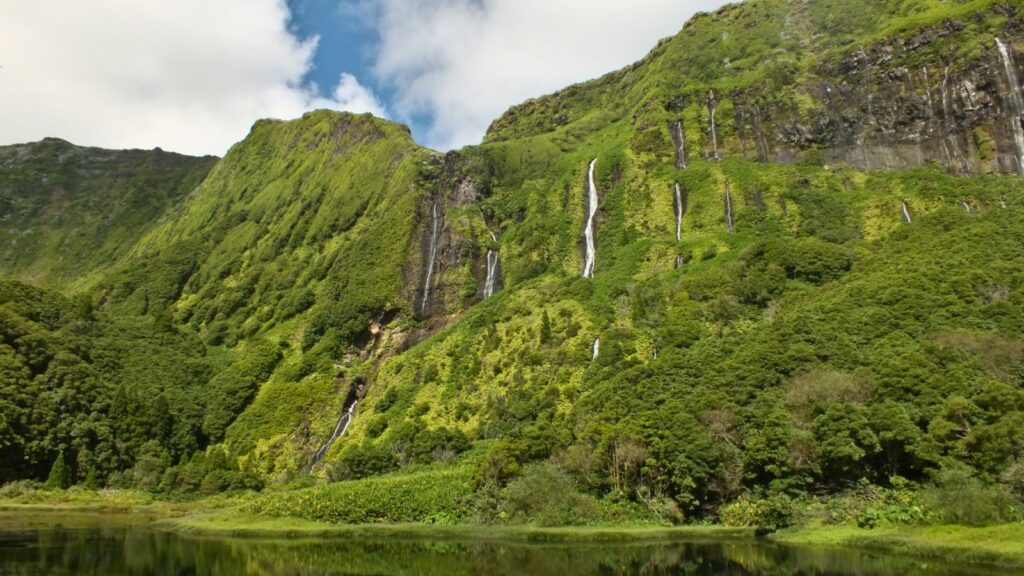
The Azores are nine inhabited islands cast into three groups: São Miguel and Santa Maria in the east, Terceira, Graciosa, São Jorge, Pico and Faial in the center, and Flores and Corvo way out to the west. São Miguel, the Azores’ main island, covers about 745 km² and has about 133,000 of the region’s 240,000 people.
Madeira
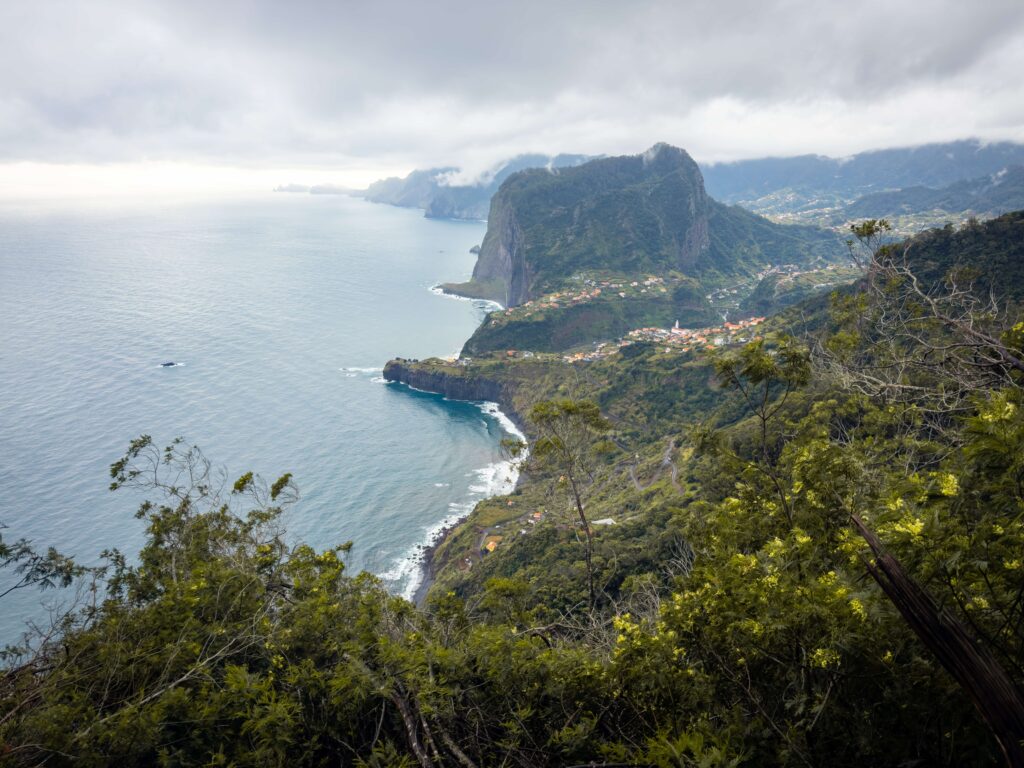
The Madeira archipelago is mostly the island of Madeira itself, the beach island of Porto Santo, and the uninhabited Desertas and Selvagens reserves. Madeira is closer to the Canaries (about 470 km) than to Ponta Delgada, and no ferry links the two regions.
At approximately 741 km², Madeira spans about the same area as the Azores’ São Miguel, but has twice the number of residents at approximately 266,000 at the time of writing.
Climate

By European standards, Madeira and the Azores are mild year-round. Neither sees a frost at sea level; both are warm enough to swim in August (just) and get called a “land of eternal spring” by somebody at the tourism bureau (understandably).
However, the main climate difference is in the rain, both how much and how often it shows up.
Funchal (Madeira) gets about 53 days of rain a year while Ponta Delgada, the Azores’ main city, gets about 122. While Madeira is often touted for experiencing four seasons in one day, the Azores take this to another level. This means a traveler can experience a clear morning at Sete Cidades and a full fog-out by the time you park at the viewpoint.
Madeira has its own quirks too. We compared rainfall above by the main cities. But in Madeira, the north coast and the high peaks take most of the weather while the south coast, where Funchal is, sits in a rain shadow. So it’s safe to expect a lot more rain if you are visiting the north. We like to say the sun is always shining somewhere on Madeira, but it’s likely raining somewhere too, so choosing the best time to visit is tricky.
Winter is where the two part ways. Madeira is typically 2 to 3°C warmer from October to April, and there is no month without good hiking, including in the winter – and we mean it. Winter hiking is still doable in the Azores, but it’s far less reliable; most are better off storm watching.
So which has the better weather? Madeira
Madeira takes this one. Even taking into account Funchal sitting on the dry side of the island, you get far more dry days here and a slightly warmer winter. The rain mostly keeps to the north coast and the mountains, while the Azores tend to get a lot more overall.
That said, the Azores’ climate is fairly comparable in summer, and all that rain is why they’re so green. Spring and autumn are our pick on Madeira.
Geography
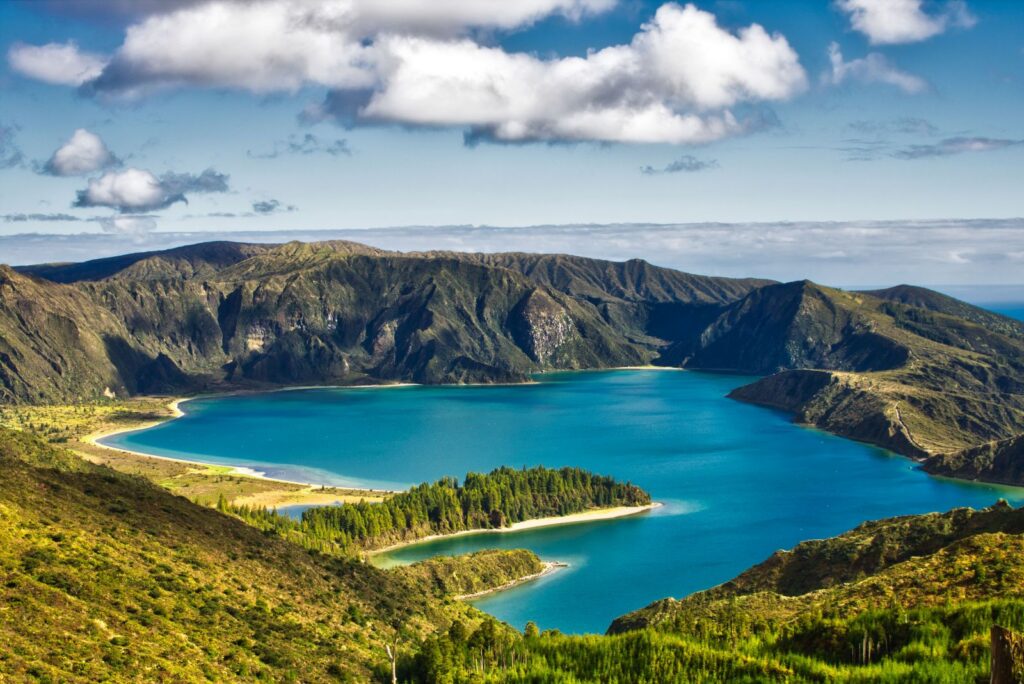

This is the hardest one to call in the great Madeira vs Azores debate, and that’s because they are quite similar, with a few subtle differences.
Madeira is one old volcano that the Atlantic has been propping up for a few million years. The result is steep: knife-edge ridges, valleys cut hundreds of meters deep, sea cliffs that drop straight into the water, and a UNESCO-listed laurel forest clinging to the north side.
The island is also crisscrossed by levadas, irrigation channels carved into the hillsides over centuries, which double as some of the best walking paths in Europe. You won’t find them anywhere else, including the Azores.
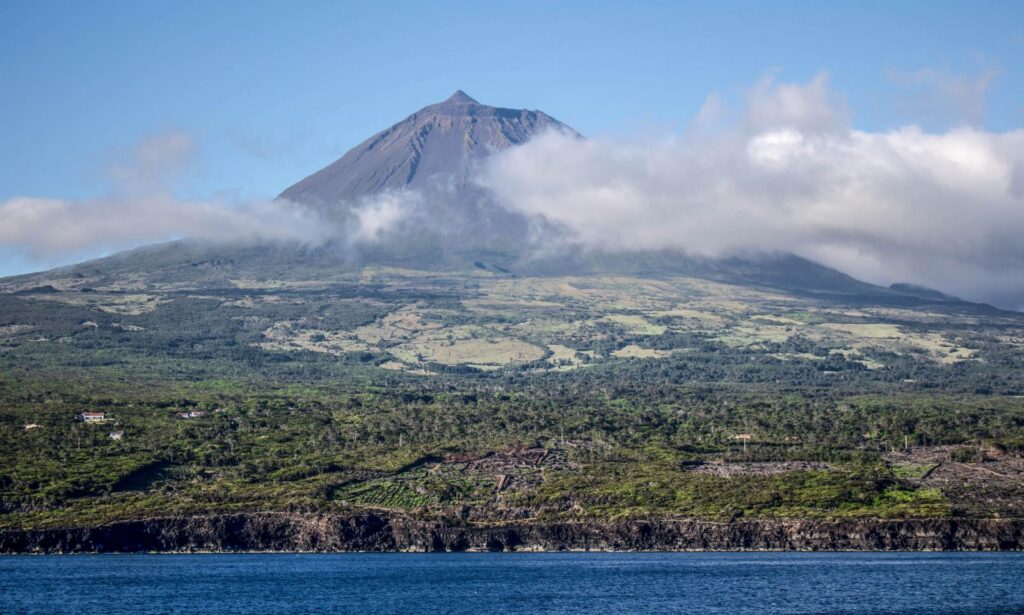
The Azores are younger and still very much alive. Pico, at 2,351 m, is the highest mountain in Portugal and looks the part, a near-perfect cone rising straight out of the sea. Elsewhere you get crater lakes (Sete Cidades, Lagoa do Fogo, Furnas), hot springs, lava fields turned into vineyards, and the fajãs of São Jorge: flat shelves of land at the foot of the cliffs with villages perched on them.
Fun fact: the most recent eruption, at Capelinhos on Faial in the late 1950s, added a chunk of new land to the island. In the Azores, each island has its own vibe, which is a big part of the appeal. São Miguel has the lakes and thermal baths, Pico has the volcano, São Jorge has the surf, and Flores has the waterfalls.
So which is more beautiful? Toss up
Some of our team live on Madeira, so we’re biased, but we’d still call this one even.
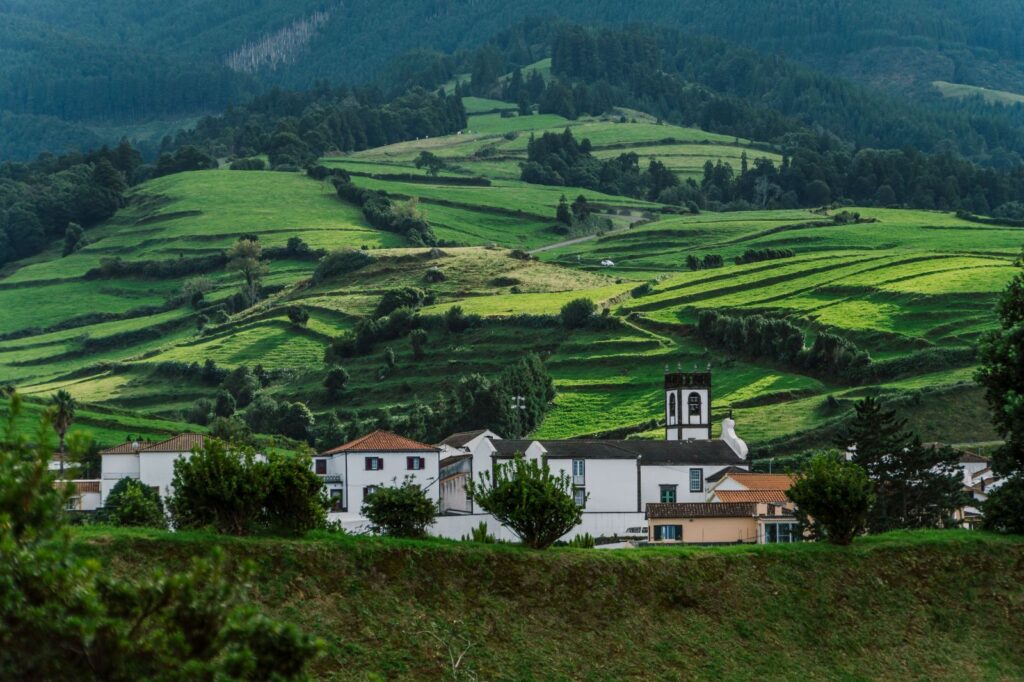
Madeira is more dramatic. Everything is vertical and steep. The Azores, on the other hand, are more varied, with lots of different kinds of coastal landscapes, including the rolling green hills that Madeira sorely misses.
If one steep and jaw-droppingly beautiful landscape is your thing, it’s Madeira. If you’d rather have nine different ones, each slightly different to the last, pick the Azores.
Accessibility
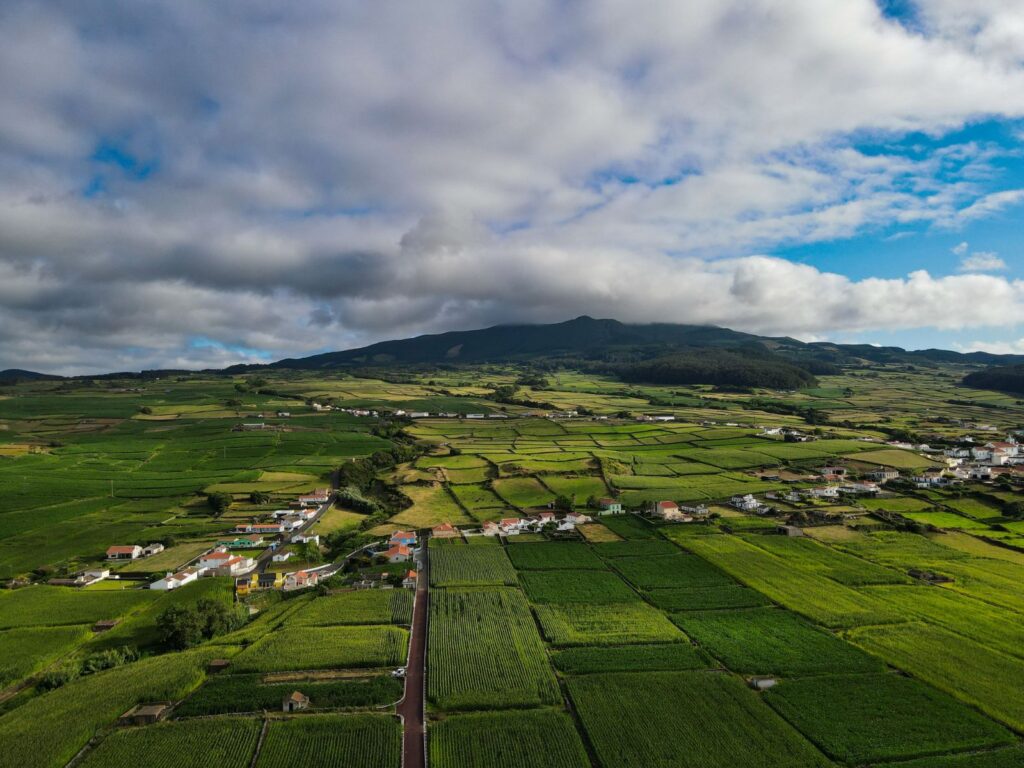

Though boasting an incredible history of seafaring, modern Macaronesia isn’t exactly the most accessible by boat, at least these days. In fact, flying in is the only realistic way to reach either, and from Europe this is an easy call.
Lisbon to Funchal takes about an hour and a half, Lisbon to Ponta Delgada closer to two and a half, and Madeira has direct flights from most big Western European cities for most of the year, many with low-cost carriers like Ryanair. We cover the flight options in detail in our guide to getting to Madeira.
The Azores have far fewer European routes, and fewer still since Ryanair pulled out of the islands in March 2026. But from North America, it’s a different story. Azores Airlines flies nonstop to Ponta Delgada from Boston (under five hours), New York, Toronto and Montreal. Air Canada and WestJet added Toronto in summer 2026, and United flies in from Newark. Azores Airlines also lets transatlantic passengers stop over in the islands for up to a week at no extra fare.
Comparatively, Madeira has only one direct flight from North America, United from Newark, and only in the summer. Any other route will require a connection, typically through Lisbon.
So which is more accessible? Toss up
We call this one a tie-breaker as well – but really it depends on which side of the Atlantic you live on. Europeans will find Madeira cheaper and easier to reach, with more flights in more months. Americans and Canadians will find the Azores closer than most of Europe, with a nonstop that takes less time than flying coast to coast.
Getting Around
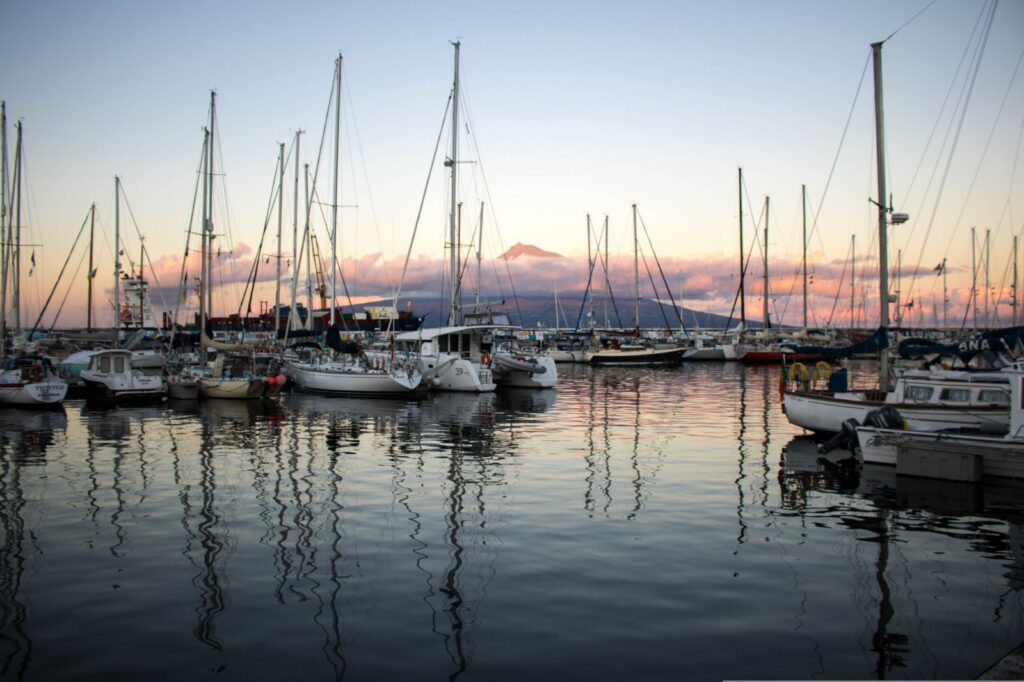

If you really want to see the islands, we’d say that a rental car is the way to go, and that’s true for both. Buses exist and work fine between the main towns on Madeira and the Azores, but trailheads, viewpoints and the good restaurants up in the hills are a different matter.
Madeira is compact enough that one base generally covers the whole island. An expressway runs along the south coast with a tunnel every few minutes, so traveling from Jardim do Mar in the west to Funchal takes about an hour, and the eastern tip about less than half that. However, village roads are steep, narrow and shared with buses that have right of way here whether they technically do or not. So while rental cars are the best way to get around, we’re warning you in advance that roads can be very tricky.
The Azores are a different proposition. São Miguel on its own is easy, with quieter roads and gentler gradients than Madeira. That said, if you want to see a second island, you need to account for the logistics. That can be a flight or a ferry with a new rental car at the other end, and a schedule that can change as often as the weather. Some ferries are year-round, like the one between Pico and Faial, taking about 30 minutes. Most other crossings are summer only though, and the smaller islands have tiny private-hire fleets that sell out months ahead.
So which is more convenient? Madeira
This is purely because you can truly see Madeira while only staying in one accommodation. You unpack once, and every hike on the island is a day trip from the same bed. Technically, you can do the same in the Azores, but to really see those islands requires much more planning and more patience.
That said, the actual driving might be nicer in the Azores. Madeira’s hairpins are an acquired taste, to say the least.
Activities
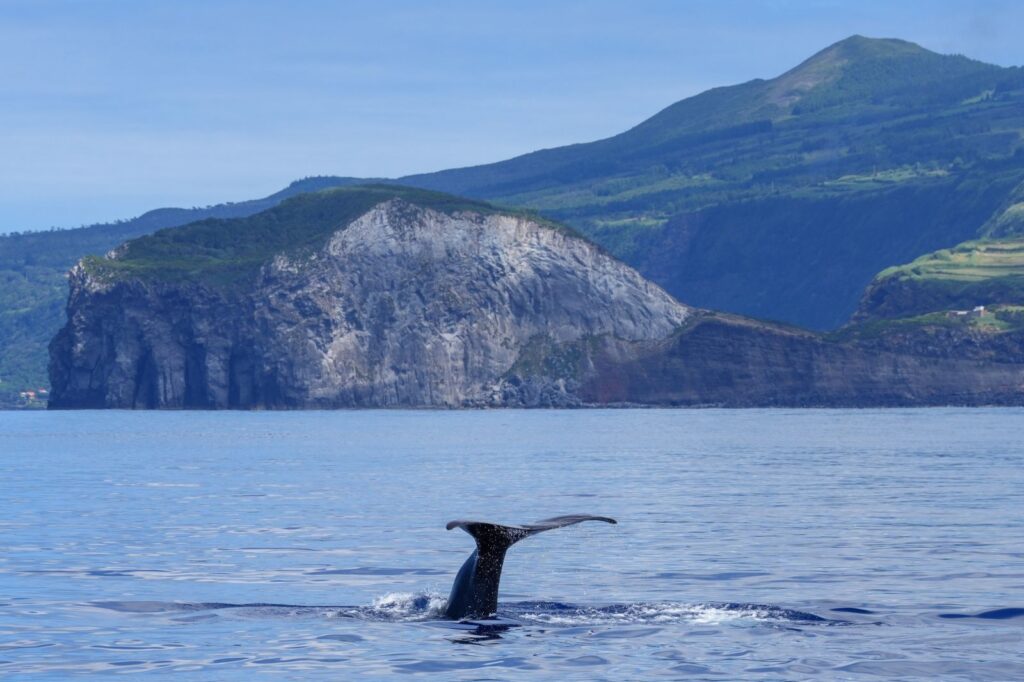

As you might expect from volcanic islands cast out into the Atlantic, these islands have the same draw: hiking, canyoning, whale and dolphin watching, surfing, diving, wine tasting and, in true Portuguese fashion, a jam-packed festival calendar.
Hiking is the main attraction on both, but at the risk of sounding too biased, this is where Madeira pulls ahead. The island features dozens of marked trails crisscrossing the whole island. The “biggest” thing with hiking on Madeira is that almost every route involves serious up and down, but the views are always worth it.
Madeira’s trails have gotten very popular in recent years, with the famous trails now running on a booking system with a small fee (€4.50 on most, more for the Areeiro ridge). The good news is that there are always quieter and equally as beautiful paths the locals use as long as you know where to find them.
Conversely, the Azores have around 90 marked trails spread across nine islands, most of them free, quiet and gentler underfoot. The big exception is Pico, a seven-hour slog up and down the highest mountain in Portugal. On top of that, there are hikes to crater rims, the waterfalls of Flores and the fajã descents on São Jorge.
Then the extras. The Azores have hot springs (unlike Madeira), some of the best whale watching in the world, with sperm whales year-round and even blue whales passing through in spring! Oh, and there’s beginner-friendly surf on São Miguel as well as some lesser-known world-class spots elsewhere in the archipelago. Madeira answers with whale and dolphin trips out of Funchal, big-wave surf at Jardim do Mar (strictly for the experienced), and deep-sea fishing for marlin, as well as bustling street markets and local complexos balneares.
So which offers more to do? Madeira
For hikers, Madeira wins by a clear margin. There are far more trails per square kilometer, each with more elevation and arguably more epic views – and good conditions in every month of the year.
If your trip is planned around hot springs, whales, and having a trail to yourself, the Azores win that round.
Beaches
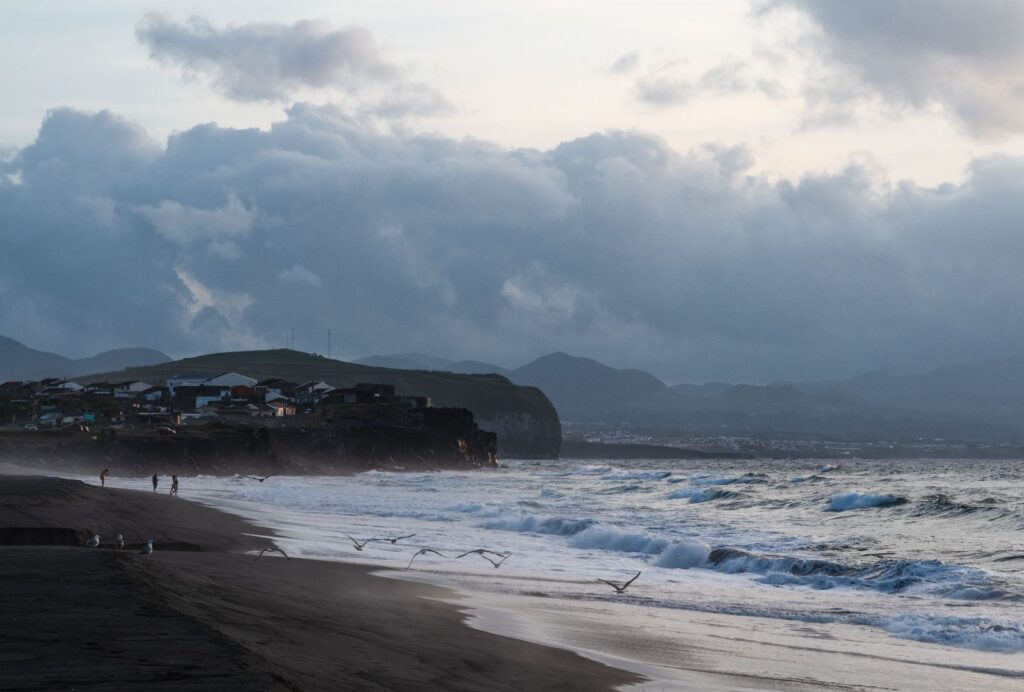

Madeira’s coast is mostly cliff. While there are beaches, they are mostly pebble or black volcanic sand, like Seixal on the north coast and Prainha near the eastern tip. Swimming in Madeira often involves natural lava pools, like those at Porto Moniz and Seixal, or off of one of the main man-made piers around the island. For a sandy beach day, Madeirans take the ferry to Porto Santo, whose nine kilometers of golden sand are the archipelago’s best.
The Azores have far more coastline and far more sand, though again, most of it is dark. Santa Bárbara on São Miguel is a long surf beach, Mosteiros has black sand under sea stacks, Porto Pim in Horta is a sheltered crescent in the middle of town, and Praia Formosa on Santa Maria, the sunniest of the nine islands, is the closest thing to a typical beach day.
In terms of swimming, the water is much the same in summer, and a degree or two warmer off Madeira in winter.
Fun fact: Madeira’s two golden beaches at Calheta and Machico were built with sand shipped in from Morocco!
So which has better beaches? The Azores
With more sand and more coast, the Azores take the cake when it comes to beaches. Madeira’s lava pools are special, and Porto Santo is a real beach, but it’s a ferry ride away.
Costs
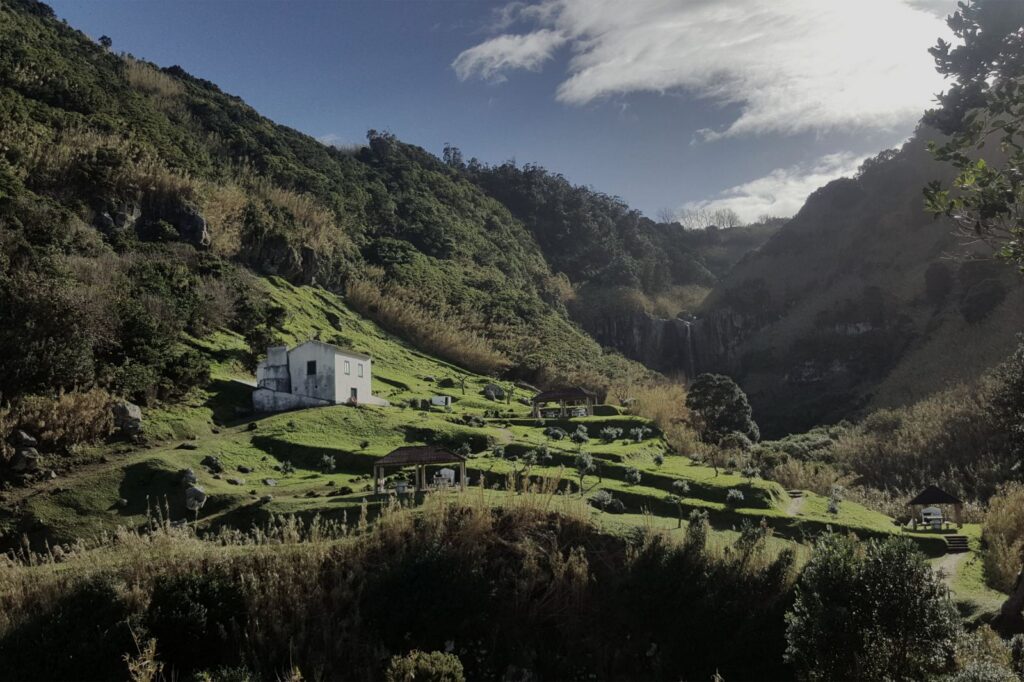

Neither island is the bargain it was ten years ago, but both are still good value by Western European standards, and you can eat and sleep well on either without your eye twitching at the bill.
In the Azores, a mid-range dinner for two is usually about €40 in Ponta Delgada, compared to about €55 or so in Funchal at the touristy spots. Madeira’s hotel prices have climbed in recent years, and they now sit among the highest in Portugal outside Lisbon. The one place the Azores cost more is the supermarket, since nearly everything arrives by ship.
Both charge a tourist tax of €2 a night (Funchal has voted to double it from 2027). Madeira also charges for its famous trails, which adds up over a week of hiking, while the Azores’ trails are free apart from Pico.
Aside from money you’re spending on the islands, one of the biggest chunks is usually spent on getting there. From Europe, flights are almost always cheaper to Madeira, thanks to the low-cost airlines. But from North America, the direct flights make the Azores cheaper to reach.
So which is more affordable? The Azores
But only by a little, and only if you stay on one island. A week on São Miguel typically comes in under a week on Madeira, but if you spread your week across multiple islands, then you’ll likely pay more.
Poncha, for the record, is still under €5 and you can pick up an espresso for €2 on both islands.
Cuisine


One thing’s for sure here: you’ll eat well on both, but the food is different. Madeira cooks like an island that has traded with the world for 500 years. The Azores cook like farmers that have perfected simple meals for the same amount of time.
Typical Madeiran meals are built around a few things done very well: espetada, chunks of beef grilled on a bay-laurel skewer and hung from a hook above your table; bolo do caco, a flatbread drowned in garlic butter; and tuna so good that buyers fly in to buy some fresh off the catch. Wash it down with poncha, the local sugarcane rum punch, or a glass of the Madeira wine the island is named for.
The Azores are dairy country. The nine islands produce about a third of Portugal’s milk, and it shows in the cheese, especially the sharp, aged queijo from São Jorge, and in the beef, which is as good as any on the mainland. The signature dish is cozido das Furnas, a pot of meats and vegetables lowered into the volcanic ground at Furnas and left to cook in the earth’s heat for six hours. Add pineapples grown in greenhouses, tea from Europe’s oldest plantation, and wine from Pico’s lava-walled vineyards.
So which has the better food? Madeira
If you ask our guides, or some of our previous clients, they’ll tell you Madeira has the best food in Portugal, full stop. Overall, Madeira has more variety, more restaurants worth the drive, and a drinking culture to match.
The Azores win on the quality of the raw ingredients, and cozido cooked by a volcano is something you won’t get anywhere else. Just don’t expect a big choice of restaurants once you leave Ponta Delgada.
Crowds
Madeira welcomed around 2.4 million visitors in 2025, which was a record. The Azores took almost half at 1.4 million, which were spread across nine islands with three times the land area.
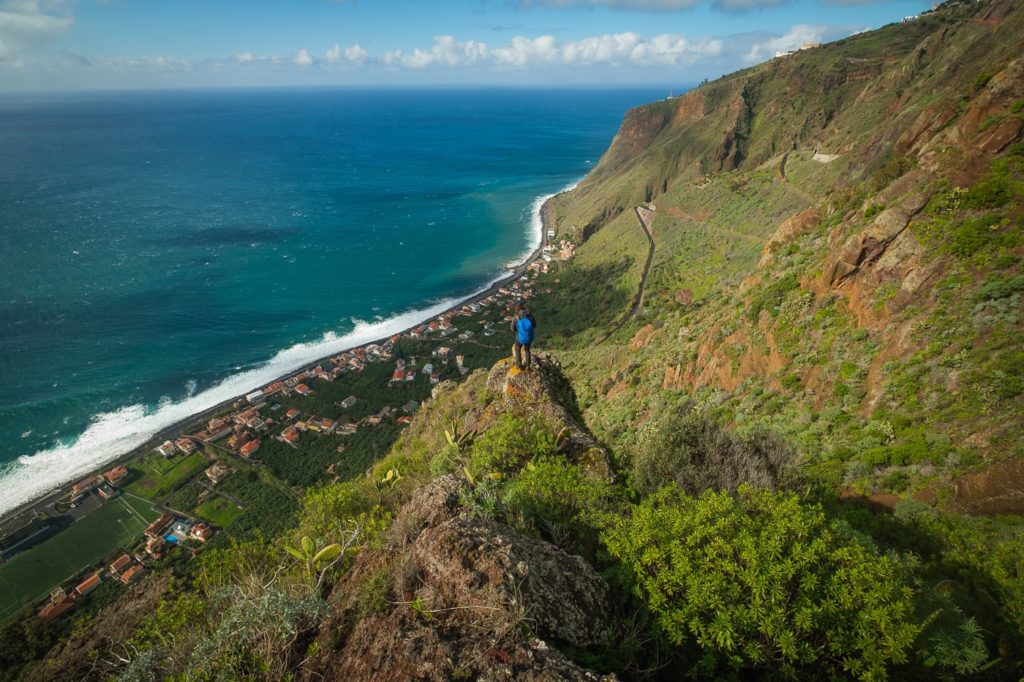
On Madeira, the tourists concentrate in Funchal, at a handful of viewpoints, and on the two or three famous trails, which is why the booking system exists and why the Areeiro car park is full by nine. Cruise ships play a big role in these numbers – Funchal had over 300 ship calls in 2025, and on those days the old town is elbow to elbow until mid-afternoon. The good news is that step away from all that, and the island empties out very fast. If you base yourself outside Funchal, in Santa Cruz, Ponta do Sol or Jardim do Mar, you won’t notice as much.
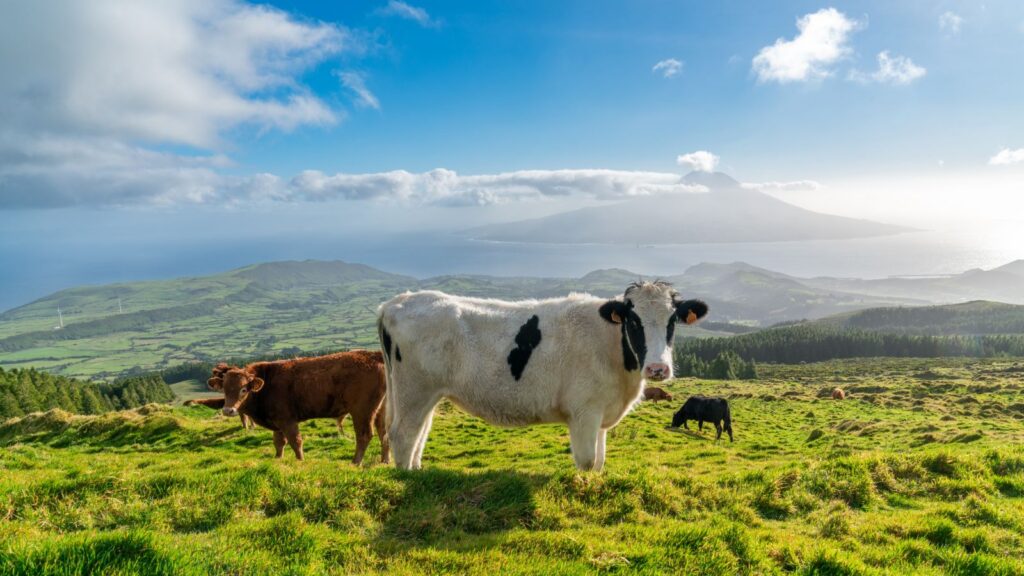
In the Azores, even the busy island is quiet by comparison. São Miguel takes about seven in ten of the region’s visitors, so Sete Cidades and Furnas get their share of tour buses in summer. But the trails are rarely crowded, and the other eight islands are something else again. If you only have time for one Azores island, make it São Miguel, the best island in the Azores for a first visit. Further out, Flores and São Jorge see a fraction of the traffic. Corvo has a few hundred residents and, like the rest of the archipelago, more cows than people. You can walk all day out there without meeting anyone, which is getting hard to say about anywhere in Europe. The destination dupe trend exists for places like this.
So which has fewer people? The Azores
By a long shot. If getting away from people is the point of the trip, the Azores have corners Madeira can’t match. That said, Madeira’s crowds are so concentrated that it’s easy to avoid once you know where to look.
What about the Canaries?

The third archipelago in this corner of the Atlantic is one we get asked about just as often. The Canary Islands are the warmest, driest and sunniest of the three. They have real sandy beaches, the highest mountain in Spain at 3,715 m (Teide on Tenerife) and eight airports served by cheap flights from most of Europe. They are also the busiest by far. The Canaries took close to 16 million foreign visitors in 2025, more than Madeira and the Azores combined several times over, and locals have been marching against overtourism since 2024.
Think of the three as a scale. The Canaries sit at one end: hottest, easiest, most crowded. The Azores sit at the other: they’re the wettest, wildest, emptiest. Madeira is our happy island in the middle. We’ve compared Madeira and the Canaries separately if you want the full rundown.
So which is better? Madeira or the Azores?
Time to tally it up:
| Madeira | The Azores | |
|---|---|---|
| Climate | X | |
| Geography | X | X |
| Accessibility | X | X |
| Getting Around | X | |
| Activities | X | |
| Beaches | X | |
| Costs | X | |
| Cuisine | X | |
| Crowds | X |
Madeira wins it 6 to 5, on weather, hiking, food, and the fact that it’s easier to plan an epic trip without having to island hop. Here’s how we’d break it down.
Pick Madeira if you have a week, you want the surest weather for hiking, you’d rather spend your days climbing than driving, and you want the best food possible. Pick the Azores if you’re flying from North America, you want space and silence, hot springs and whales are high on the list, and you have more time to do justice to more than one island.
Are the Azores worth visiting? Absolutely, just give them at least a week to appreciate.
Or do both. In all honesty, you won’t regret visiting either, Azores or Madeira. If you have the time, it’s just a two-hour flight between them, no ferry, and in our view it only makes sense with two weeks or more in hand.