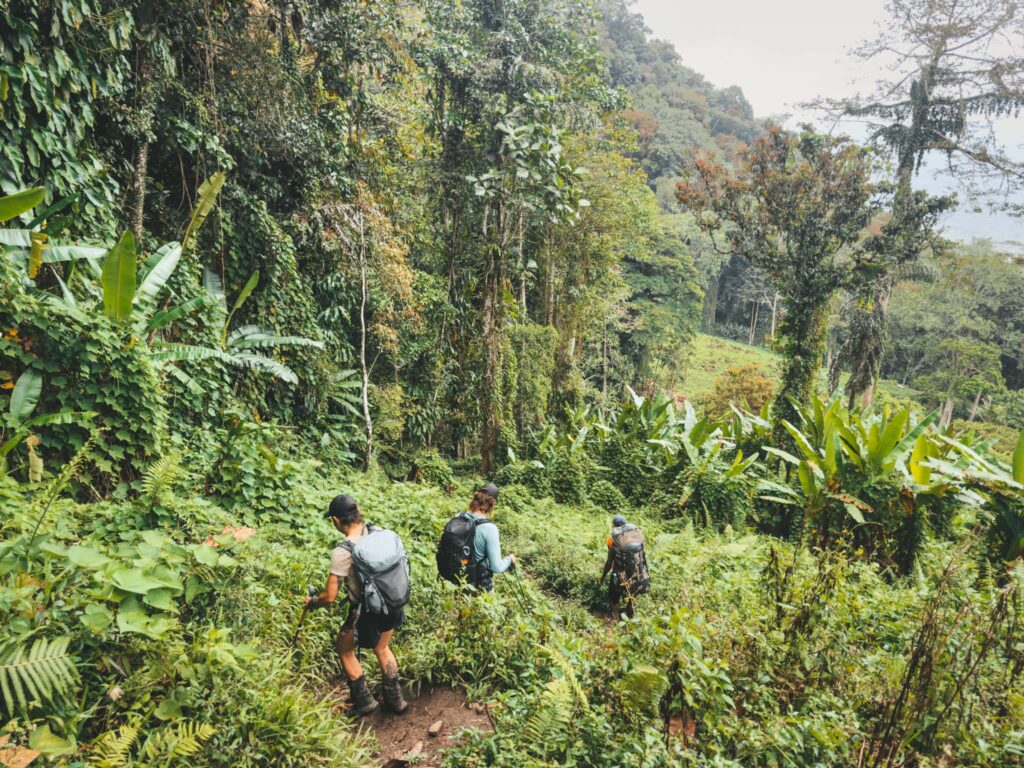
For Australians, trekking the Kokoda Track is close to a pilgrimage, but most people from North America and Europe have never heard of it.
The truth is it’s one of the best jungle mountain treks anywhere in the world, with a heavy slice of WWII history thrown in!
It’s also a challenging trek. The track climbs and drops the whole way, the tropical heat and humidity never really let up, and the descents tend to be harder on your knees than the climbs. Many people who finish it will tell you it was the hardest trail they’ve ever walked.
So why do people walk the Kokoda Track in the first place? That’s the honest question, and it’s the one this article exists to answer.
What is the Kokoda Track?
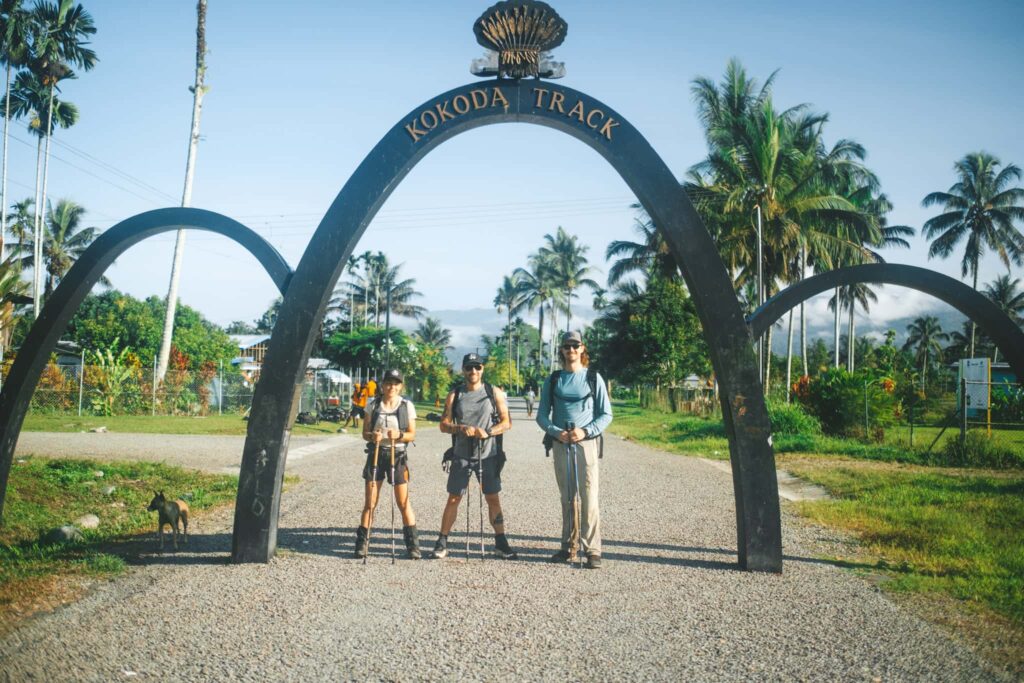
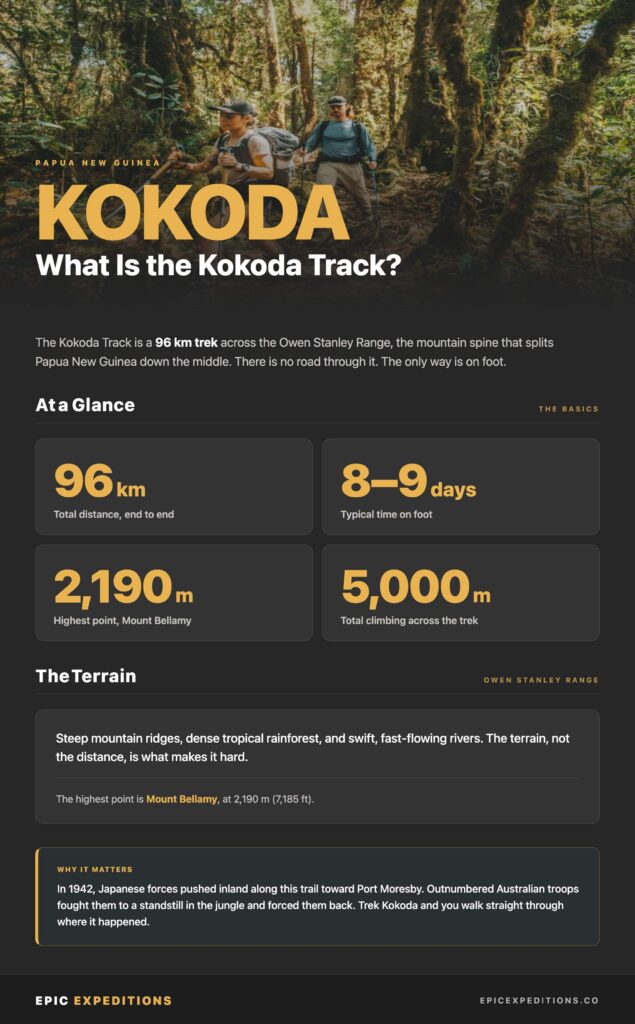
The Kokoda Track is a 96-kilometer hiking trail that runs across the Owen Stanley Range, the mountain spine that splits Papua New Guinea down the middle. It connects Owers’ Corner, a couple of hours’ drive from the capital Port Moresby, with the village of Kokoda on the northern side. There’s no road in between, and the only way through is on foot.
Here’s the track at a glance:
- Distance: 96 kilometers
- Where: Owen Stanley Range, Papua New Guinea
- Route: Owers’ Corner in the south to Kokoda village in the north
- Time on foot: around 8 to 9 days
- Highest point: roughly 2,190 meters, near the Kokoda Gap
- Terrain: jungle, steep and near-constant up-and-down, heat and humidity
- Claim to fame: the 1942 Kokoda campaign, some of the hardest fighting of WWII
But one of the key reasons why people hike the Kokoda track is that it’s one of the most important pieces of ground in WWII military history. In 1942, Japanese forces landed on the north coast of Papua New Guinea and pushed inland along this trail, aiming to capture Port Moresby and threaten Australia. Australian troops, badly outnumbered at the start, fought them to a standstill in the jungle and slowly forced them back, and you trek straight through where it happened.
Reasons to Hike the Kokoda Track
It is one of the most historically significant trails in the world
Most of what makes Kokoda significant only hits home once you’re out there sweating through it.
Spend three days climbing and dropping these ridgelines in the heat, then picture doing it with a rifle on your back, low on food, malaria coming on, and the enemy dug in somewhere above you. That’s the feeling no book or documentary can offer.
Once your own legs have argued with these hills, you understand why a campaign across 96 kilometers dragged on for months and broke men on both sides.
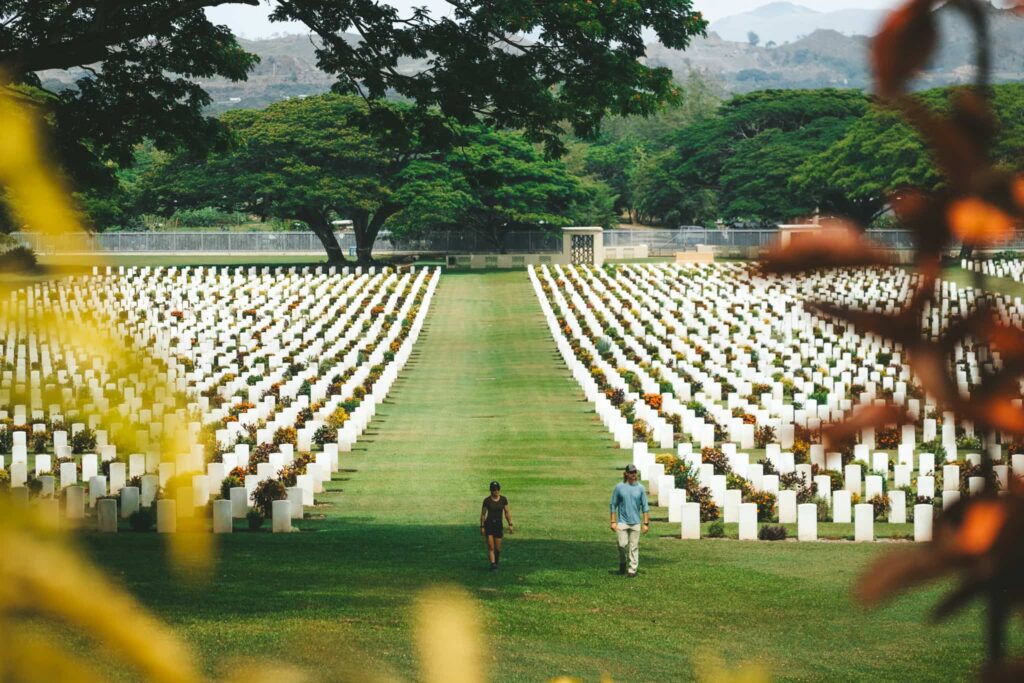
The track also runs past the actual battle sites, more or less in the order they happened. You trek through Eora Creek, Templeton’s Crossing, Efogi, and Brigade Hill, places that were incredibly significant during the conflicts of 1942.
The one that tends to stop people is Isurava. The memorial there is four granite pillars cut from Australian stone, one word to each: Courage, Endurance, Mateship, Sacrifice. They look out over the ridge where Australian and Papuan troops held off a far larger Japanese force for five days in August 1942, and where Private Bruce Kingsbury earned the first Victoria Cross awarded on Australian territory.
The terrain is tough but worth the effort
Let’s be straight about the difficulty of the Kokoda Track, because it’s the ‘why‘ question most people actually want answered.
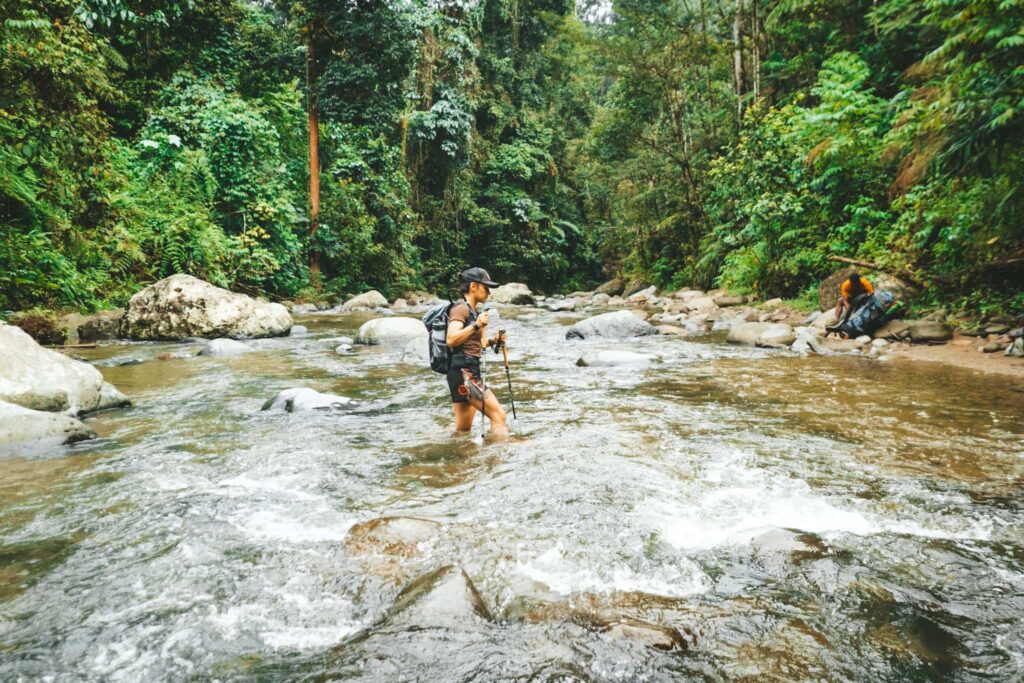
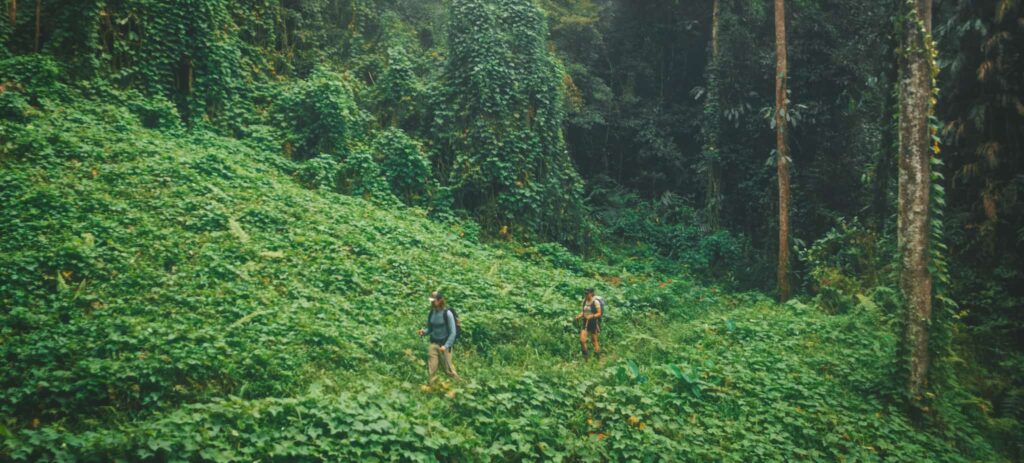
What makes it hard is the up and down. You climb a long, steep ridge, drop most of the way down the other side, cross a river, bash through dense jungle and then start the next climb.
But in our experience, the descents are the sneaky part. In some cases that means hours of bracing downhill on muddy ground. It isn’t technical, so there’s no climbing, no ropes, and no high altitude.
But every single season people finish Kokoda across a wide range of ages, as long as they train the right way.
So why do it? As with most challenging things, there’s always a reward at the end. You finish near a river most days, and there’s not much better than dropping into cold, clear jungle water after hours of climbing in the heat. Furthermore, the camps are comfortable, the food is much better than you’d expect this deep in the jungle, and the trail runs you through cool moss forest and out to ridgeline views over an ocean of jungle.
It’s hard work, and it’s some of the best jungle trekking you’ll do anywhere on the planet.
The cultural significance runs deeper than the war
The history of the Kokoda Track is what gets most people to book a trip. But what we’ve noticed is that it’s the local people they talk about when they get home.
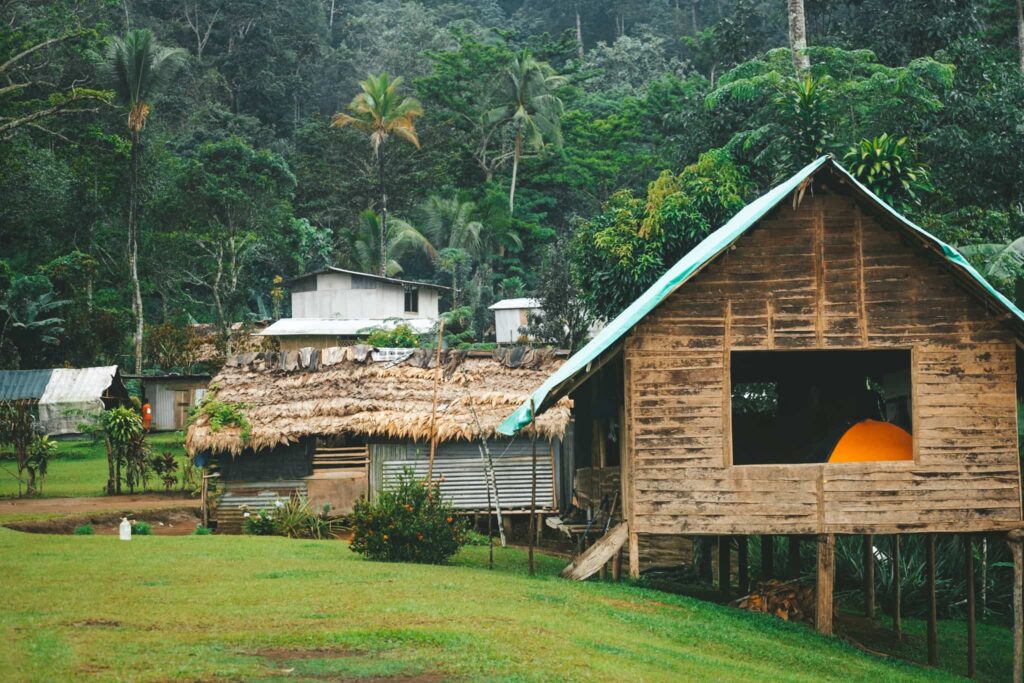
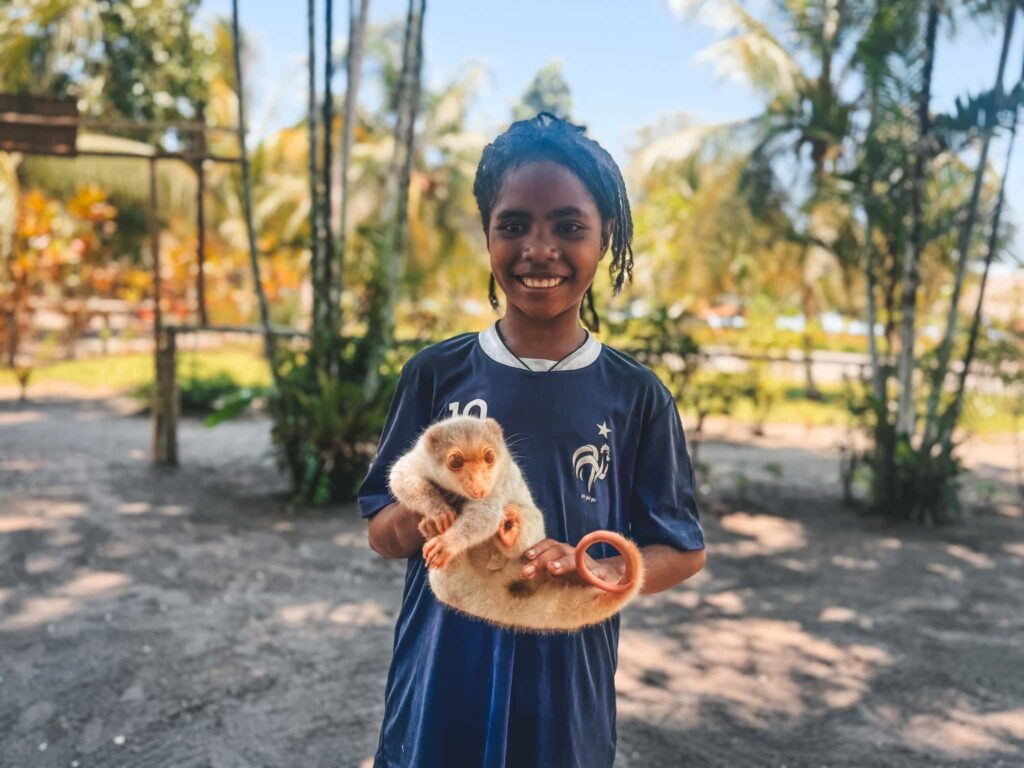
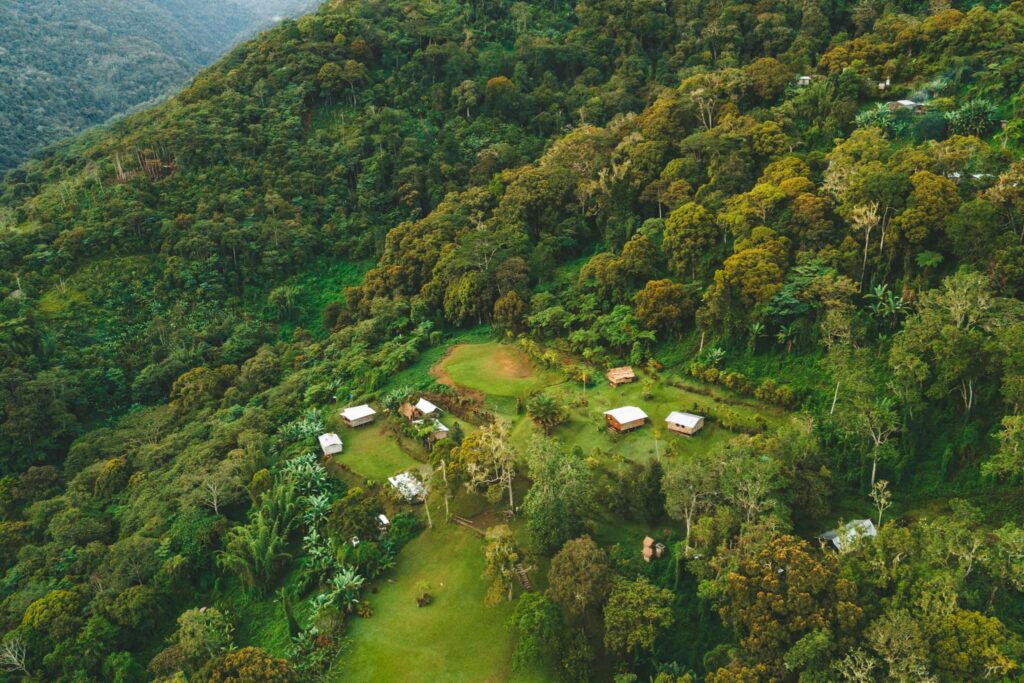
Kokoda doesn’t run through a national park or a wilderness reserve. It runs through villages that have been there for generations, places like Naoro, Menari, Efogi, and Kagi, where families live, gardens are still tended, and kids come out to watch the line of trekkers pass through.
That connection runs straight back to the war. In 1942, thousands of Papuan men carried supplies to the front and brought wounded Australians back down, often over the same ground you’re trekking. The Australian soldiers called them the Fuzzy Wuzzy Angels, and PNG still marks a Fuzzy Wuzzy Angels Day each November.
Many of the porters and villagers along the track today are their descendants, and you feel that history in how well you’re looked after out there.

Papua New Guinea is a diamond in the rough
Why would you hike the Kokoda Track – isn’t Papua New Guinea dangerous? Google that and you’ll find plenty to worry about. But the truth is most of the “dangers” are at Port Moresby, the capital, which does, admittedly, have a real reputation for crime.
The Kokoda Track is a different experience altogether. Out there you’re in remote mountain villages, trekking with a local crew who know the route and the people along it. The actual risks are the ones you’d expect from hard jungle trekking: heat, slips on muddy descents, and looking after your feet.
Our guide to safety in Papua New Guinea covers the full picture, but know that a guided Kokoda trek and a night out in the capital are not the same trip.
And the thing those “official” warnings miss is that PNG being undeveloped is the whole appeal. This is one of the last countries on earth still living largely on its own terms, with cultures and landscapes that haven’t been sanded down for visitors.
It’s a real off-the-radar adventure
Mention the Inca Trail or Everest Base Camp and most well-traveled people nod along. But… mention the Kokoda Track outside Australia, and you’ll mostly get blank looks.
For us, that’s the appeal.
Around 3,000 people trek Kokoda in a year, and most of them are Australian. In contrast, Everest Base Camp sees tens of thousands. You’re not shuffling along in a line of strangers or fighting for a photo at the top of a pass. In fact, it’s the opposite; for long stretches, it’s just your group, the porters, and the jungle.
That makes Kokoda one of the best off-the-radar alternatives to the treks everyone’s already done.
It will change how you measure a hard day
This is type-2 fun, the kind you enjoy more looking back than you do at the time. The climbs hurt, the descents grind, and somewhere around day four you stop caring how you look and just keep moving. Then you walk into Kokoda village, and the thing that felt impossible on a map is done.
That feeling doesn’t wash off when you fly home. A bad day at work or a setback that would have rattled you before is easy to sweep off your shoulder once you’ve crossed the Owen Stanley Range under your own steam.
That part is hard to put in a brochure, and it’s why people who hike Kokoda often come back for the next hard thing.
The jungle is alive with rare wildlife
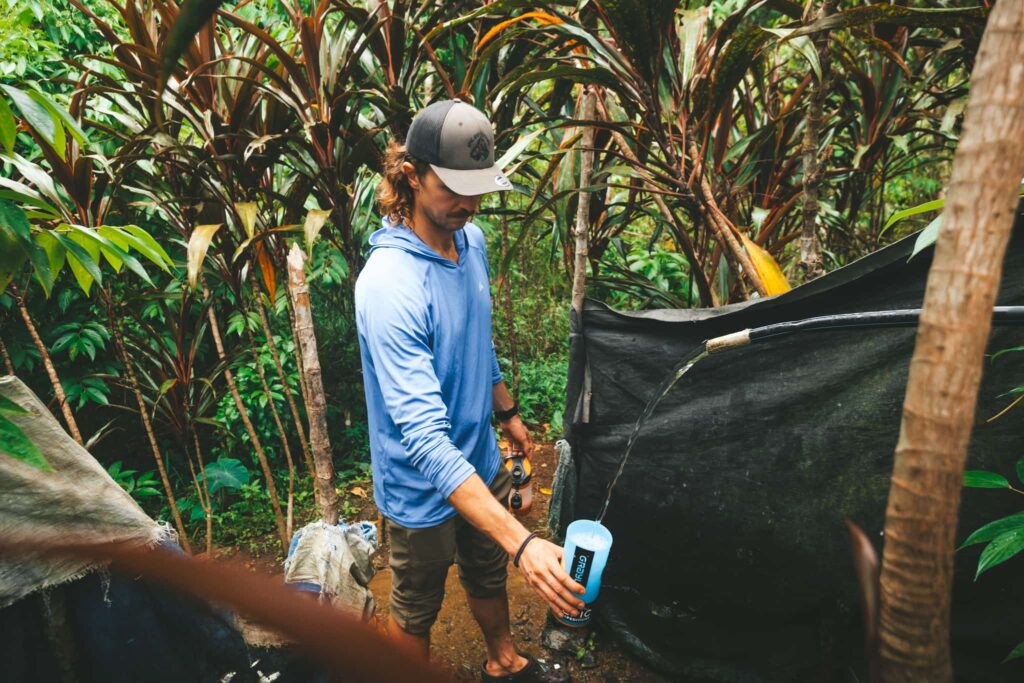
The Owen Stanley Range is one of the richest pockets of wildlife on earth, and you trek straight through it. The weather is wet – and that’s what feeds the incredible ecosystem.
Papua New Guinea is the world capital of birds of paradise, with 38 of the planet’s 43 species. Nine of them live in the forests along the Kokoda Track, including the Raggiana (bird-of-paradise), PNG’s national bird. You’re more likely to hear them than get a clean look, but the calls coming out of the canopy at dawn are unlike anything you’ve ever heard.
Papua New Guinea is also home to the largest butterfly on earth, the Queen Alexandra’s birdwing, with a wingspan that can top 25 centimeters! You’d be lucky to see that one, but smaller birdwings and a steady traffic of butterflies are everywhere on the trail. Combined with that, you’ve got 4,000-plus plant species packed into the mountains you’ll be trekking through.
You can still see the war in the jungle
Eighty years on, the 1942 battlefield hasn’t been cleared away. The jungle has grown over it, but the Kokoda campaign is still physically there if you know where to look.
Trekkers and locals still come across relics in situ: rifles and machine guns claimed by the jungle, mortar rounds, ammunition, helmets, mess tins, and the personal gear soldiers left behind. Whole caches turn up, including a stash of more than 160 shells for Japanese mountain guns, and around Myola artillery shells still surface from the old lake bed.
You also walk past foxholes and weapon pits cut into the ridgelines, exactly where men crouched in the rain and waited.
Much of this sits among the graves of the men who died here, so the rule is simple: look, don’t take. Between the relics, the dug-in positions, and the memorials at Isurava, Brigade Hill, and Kokoda, you get a battlefield you can actually walk through.

Getting there is part of the adventure
The Kokoda journey starts way before the first climb. To reach the southern trailhead at Owers’ Corner, you drive out of Port Moresby and watch the city give way to jungle. At the other end, most groups fly out of Kokoda on a small plane, lifting off a grass airstrip and banking out over the Owen Stanley Range you just spent a week and a half bashing through on foot.
The journey in is epic, but the flight out is where the remoteness of it all really sets in. From the air you see the full wall of mountains, ridge after ridge of green with cloud pooling in the valleys, and the scale of what you just achieved becomes clear. Not many treks let you finish on foot and fly out over the exact ground you crossed.
You will forge friendships for life
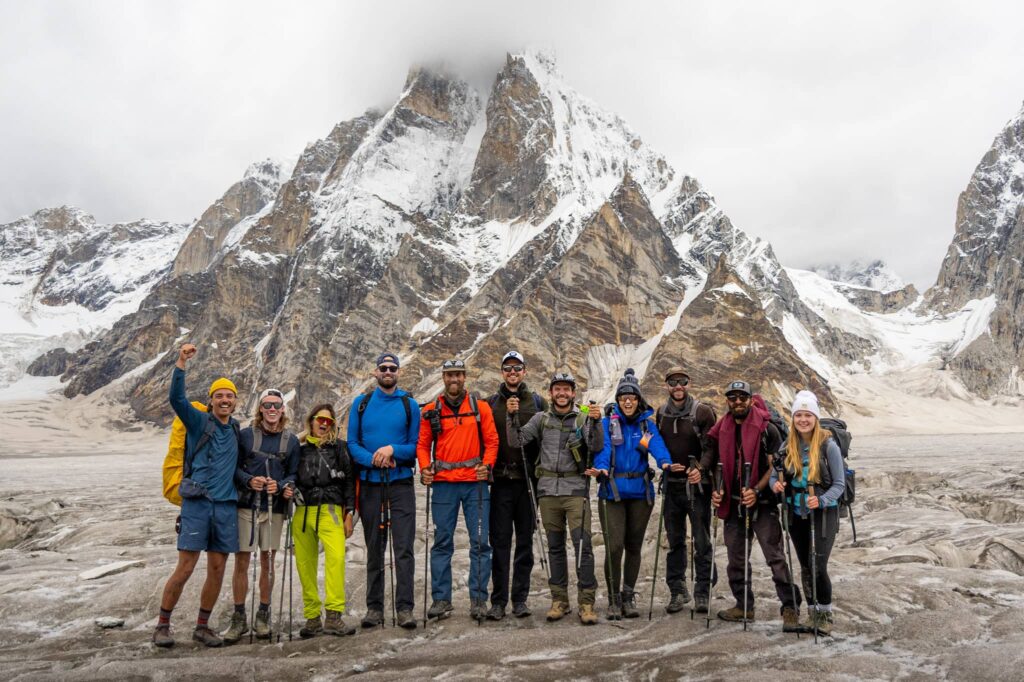
The best friendships are forged through hard things. Eight or nine days of climbing, sweating, swimming in cold rivers, and standing quietly at Isurava together brings people together in a way a beachside vacation never can.
The hard parts, the funny parts, the moments that hit you out of nowhere – you go through all of it shoulder to shoulder with the same small group, and you come out the other side with friendships that last a lifetime.
That’s what Epic is about: the people you share the hard miles with, and the memories that come out of them. That’s why we keep coming back to the Kokoda Track.
If that’s the kind of trip you’ve been waiting for, come and do it with us. You can read the full itinerary and secure your spot on the Kokoda Track Expedition trip page. Happy trekking, and we’ll see you out there.