Key Takeaways:
- A gorilla trek is a guided hike on foot through dense jungle to find a wild gorilla family. You’ll then spend one hour with them at close range. There’s no vehicle, no fence, no glass.
- Gorilla treks happen in Bwindi Impenetrable Forest, a UNESCO-listed rainforest in remote southwestern Uganda.
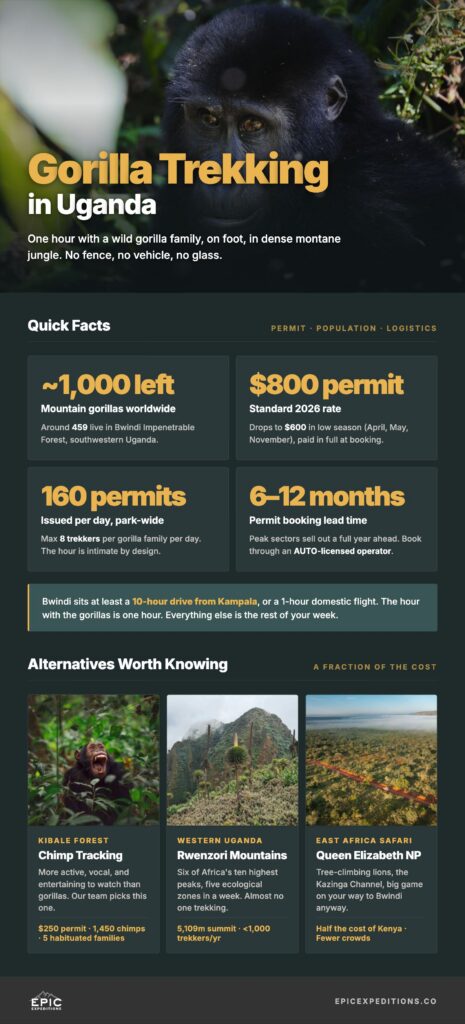
- Just 160 trekking permits are issued per day across the whole park. These cost $800 (or $600 in the low season) and should be arranged through a licensed operator at least 6-12 months ahead.
- Gorilla trekking is expensive, so some travelers may consider alternative experiences, like chimp tracking or mountain climbing, which are just as rewarding.
Gorilla trekking in Uganda is one of those experiences that we can personally say lives up to the hype. We’ve been, we get it, and we’d send our friends and clients in a heartbeat – that is, provided they understand what they’re signing up for.
Today, the permit alone is $800 paid in full even before you arrive, and let’s just say getting one issued from Uganda Wildlife Authority (UWA) isn’t as straightforward as booking online yourself. Once you’ve sorted that, the drive in from Kampala is at least ten hours each way.
For some travelers, the cost and logistics are well worth it for an hour spent a few meters from an animal that shares 98% of our DNA, deep in their habitat: one of the densest forests on the planet. For others, alternative experiences in Western Uganda, like seeing the chimps of Kibale and hiking the trails of the Rwenzori Mountains, offer just as much pull without the bureaucracy, and at a fraction of the price.
We have been guiding expeditions to remote, demanding parts of the world since 2018, and Uganda is the focus of our East African expeditions. This guide walks you through what it actually takes to organize a gorilla trekking experience in Uganda, whether it’s worth it for you, and the alternatives worth knowing about.
What’s the Hype? Why Go Gorilla Trekking
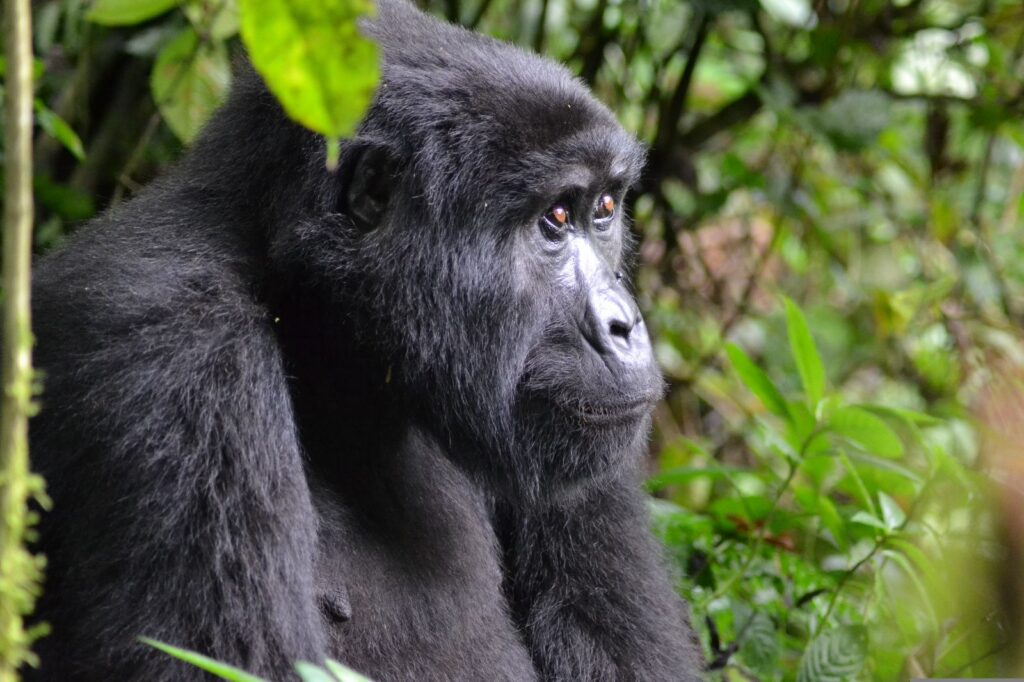
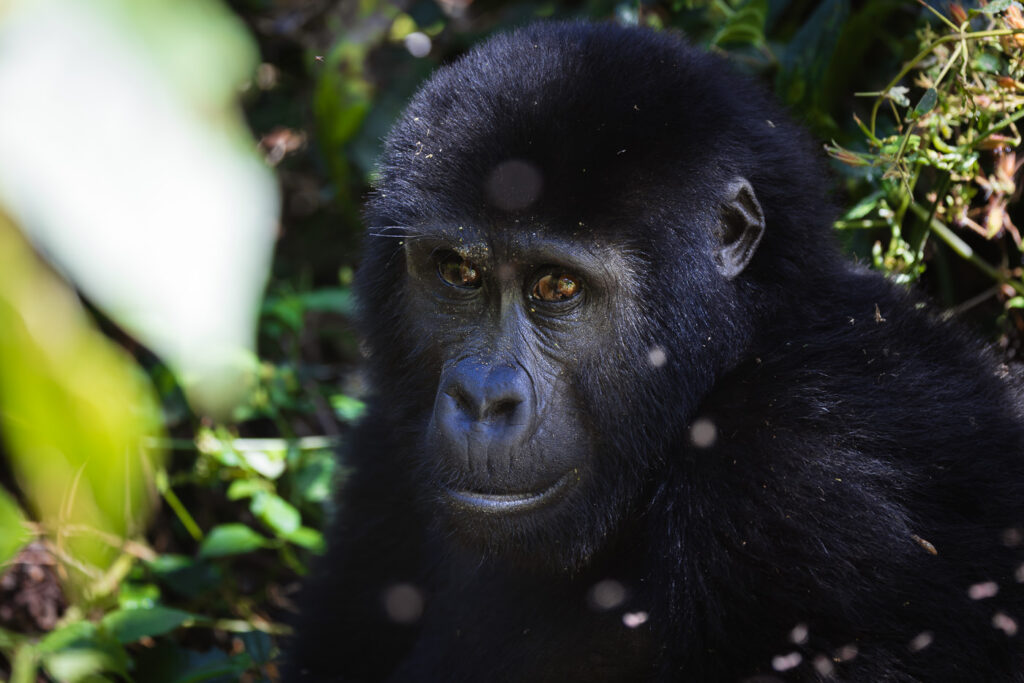
Just over 1,000 mountain gorillas remain on Earth, and roughly 459 of them live in Bwindi Impenetrable Forest in southwestern Uganda.
Gorilla trekking is one of the only large-mammal wildlife encounters left on the planet where there’s no fence, no glass, no vehicle, and no baiting. In other words, this is one of the last truly wild commercial wildlife experiences available in Africa – but you have to earn it.
Here’s what draws over 60,000 people per year to the remote jungles of Western Uganda:
- Most premium wildlife experiences in Africa happen from a vehicle at a 50-meter respectful distance. Gorilla trekking happens on foot, on the forest floor, with the family deciding how close you get – the limit is 7 meters, but gorillas often breach that!
- The setting: Bwindi Impenetrable Forest is a UNESCO World Heritage Site with equatorial montane jungle, misty hills, dense canopy, and visibility that drops to a few meters once you’re off the track.
- Only 160 permits are issued per day across the whole of Bwindi, and each gorilla family is visited by a maximum of eight people, so the hour with the family is real and intimate, and not staged for crowds.
- Perhaps most importantly, gorilla trekking is the sole reason for the species survival. The world mountain gorilla population has gone from around 480 individuals in 2010 to over 1,000 today, making it one of the few endangered species in active recovery. Your permit funds rangers, trackers, community programs, and the anti-poaching work that made that recovery possible.
That said, all of the above is what makes it worth wanting. Whether it’s worth doing for your particular trip is a separate question.
Where to Go Gorilla Trekking
Bwindi Impenetrable Forest is where the vast majority of gorilla trekking happens in Uganda. Mgahinga Gorilla National Park, in the far southwestern corner of the country, has one habituated family as well, but for most travelers organizing gorilla trekking in Uganda, Bwindi will be the destination.
Bwindi is divided into four sectors, each with its own headquarters and groups of gorilla families.
- Buhoma (north) – 5 habituated families and the most established trekking infrastructure in the park. The shortest typical trek and the widest range of accommodations, which makes it the most popular sector and the first to sell out in peak season.
- Ruhija (east) – 4 families, moderate-to-difficult terrain, and some of the best birdlife in the park.
- Rushaga (south) – 9 habituated families, the largest concentration in Bwindi. Rushaga is also the only sector that offers the four-hour gorilla habituation experience (more on that in the cost section).
- Nkuringo (south) – 3 families and the steepest, most physically demanding terrain in Bwindi.
A useful thing to know: you don’t always get to pick your sector. Permits are allocated by UWA based on availability, and in peak season, you tend to take what’s offered. Every sector does have a 100% sighting rate though, since UWA trackers stay with each family overnight and lead your group in the next morning.
Uganda vs Rwanda to See Gorillas
The other question we see come up a lot is whether to do gorilla trekking in Uganda or Rwanda.
Rwanda is faster and overall easier. Volcanoes National Park is a 2-3 hour drive from Kigali International Airport, the trekking is mostly through bamboo forest with less brutal undergrowth, and the whole thing can be done as a tight 3-4 day trip. The downside is that the permit alone is much more expensive at $1,500, and overall trip costs tend to come in at roughly double the Uganda equivalent.
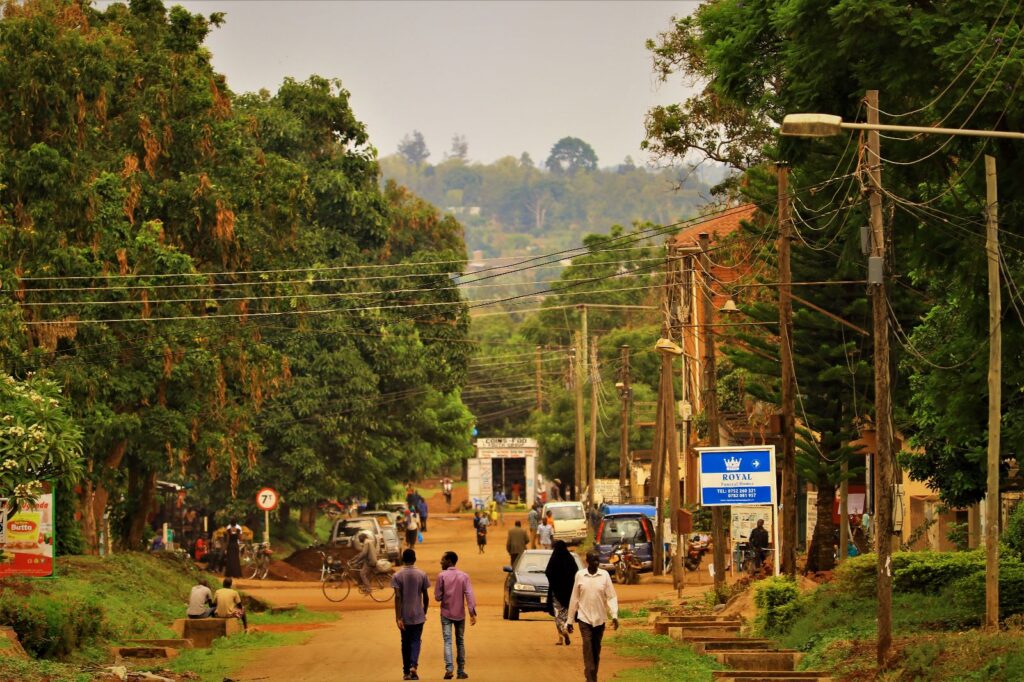
Uganda is the cheaper, wilder, and more flexible option. At the time of writing, the permit, while still pricey, is nearly half that of Rwanda’s at $800 per person (or just $600 in the April, May, and November low season). There are also 22 habituated families across Bwindi and Mgahinga compared with just around 12 at Volcanoes. However, getting to the forest requires a longer journey. You’ll either overland 10 hours from Entebbe, fly domestically to Kihihi or Kisoro, or use the trekker workaround of flying into Kigali and crossing into Bwindi’s southern sectors in around 4-5 hours (including a border crossing).
For us, we’d pick Uganda nine times out of ten. Rwanda is an option if you’re really tight on time, hiking with someone who doesn’t want to bushwhack, or building a broad Rwanda itinerary around the experience.
Best Time for Gorilla Trekking in Uganda
Bwindi is a rainforest. That means rain falls on it every month of the year, and there is no “perfect” trekking window. There are, however, two clear seasons that affect permit pricing, trail conditions, and how difficult this is going to be mentally and physically.
Dry seasons (June-September and December-February)
These are the peak months. Trails are firmer, treks are more predictable, and the gorillas are easier to track. It’s also technically the gorilla busy season. At the moment, this means permits for popular sectors are selling out 6–12 months ahead, especially around December and the New Year.
In general, it’s a good idea to book well in advance, no matter the season, but if you want to visit in the dry, plan at least 6-12 months ahead.
Wet seasons (April, May, November, with shoulder months March and October)
This period sees heavier rain, slipperier trails, and lower visitor numbers. April, May, and November are the months UWA discounts the permit to $600, a $200 saving, with the trade-off that low-season permits are non-rescheduleable once booked.
Furthermore, in these wetter months, gorillas often feed on lower slopes, so treks tend to be shorter and less physically punishing than in the dry season.
What “rainy” is actually like in Uganda is usually a 1-2 hour heavy downpour followed by bright sun, rather than all-day grey skies and storms. That said, the trails in Bwindi don’t drain quickly, and a wet month is a wet month underfoot regardless of the day’s weather.
For us, we’d say the best time for gorilla trekking in Uganda is June, July, August, or September for easier trekking, reliable weather, and enough time to plan around the booking competition. If you’re flexible, comfortable in mud, and want to save a couple hundred dollars per permit, April, May, and November are great alternative options.
Is Gorilla Trekking Difficult or Dangerous?
Gorilla trekking in Uganda is harder than most people expect, but also less dangerous than most people fear.
Difficulty
The hike can range from easy to demanding, depending on where the family is that morning. Mountain gorillas are always on the move, but usually sit down for a couple of hours to eat and rest once they find a good spot. This means UWA trackers set out each day to find them at dawn. They’ll then guide your group from the nearest road to wherever the family has settled for the day.
This means you never really know how far or difficult the gorilla trek will be. It can be a 30-minute uphill walk if you’re lucky. Or, if they’ve moved deep into the park overnight, a three-hour bushwhack through dense forest covering up to 14 kilometers round trip.
Three things make the hike harder than the distance suggests:
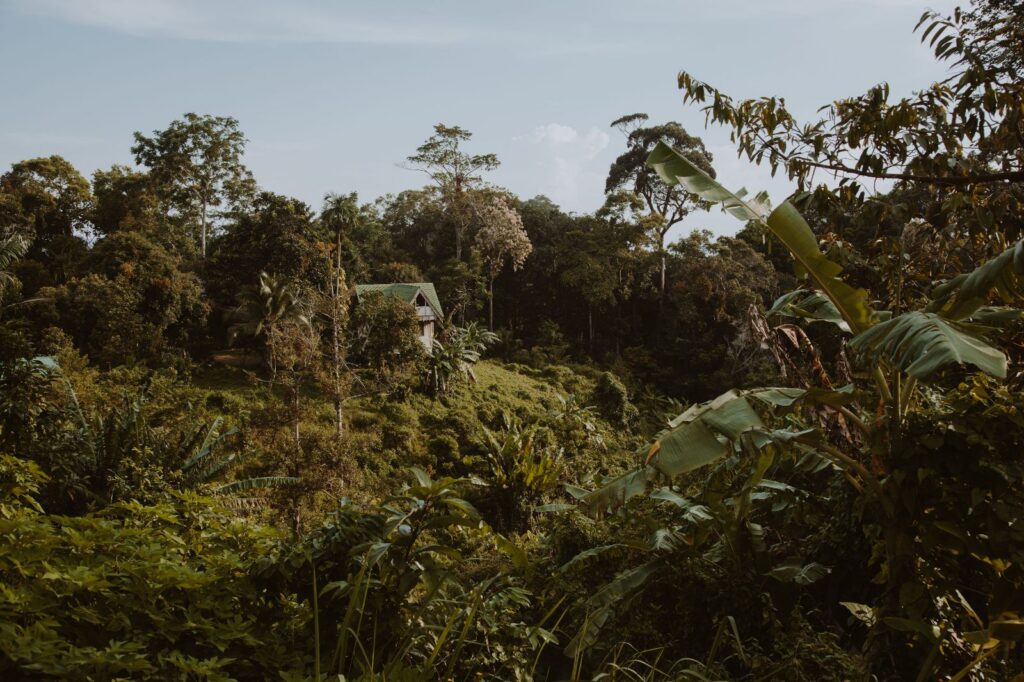
- The vegetation – Bwindi earns its “Impenetrable” name. Off the established trails, your guide cuts a line with a panga (a machete), visibility drops to a few meters, and there’s almost never solid footing. On our personal trip, when we set out to turn back, we could have sworn our carved trail had already grown back over!
- Altitude – Trailheads sit between 1,160 and 2,607 meters above sea level. This is not extreme by mountain standards, but enough to slow you down on the climbs.
- Terrain – Steep, often slippery slopes (particularly in the wet months), river crossings are common, and uneven ground is a certainty.
Our tip: If you can comfortably hike 6–8 hours on hilly terrain in changeable weather, you’ll be fine on a gorilla trek. Porters are available at every trailhead for around $20 to carry your bag, and they’re worth hiring even if you don’t strictly need one. The money goes directly to people in the community around the park.
Danger
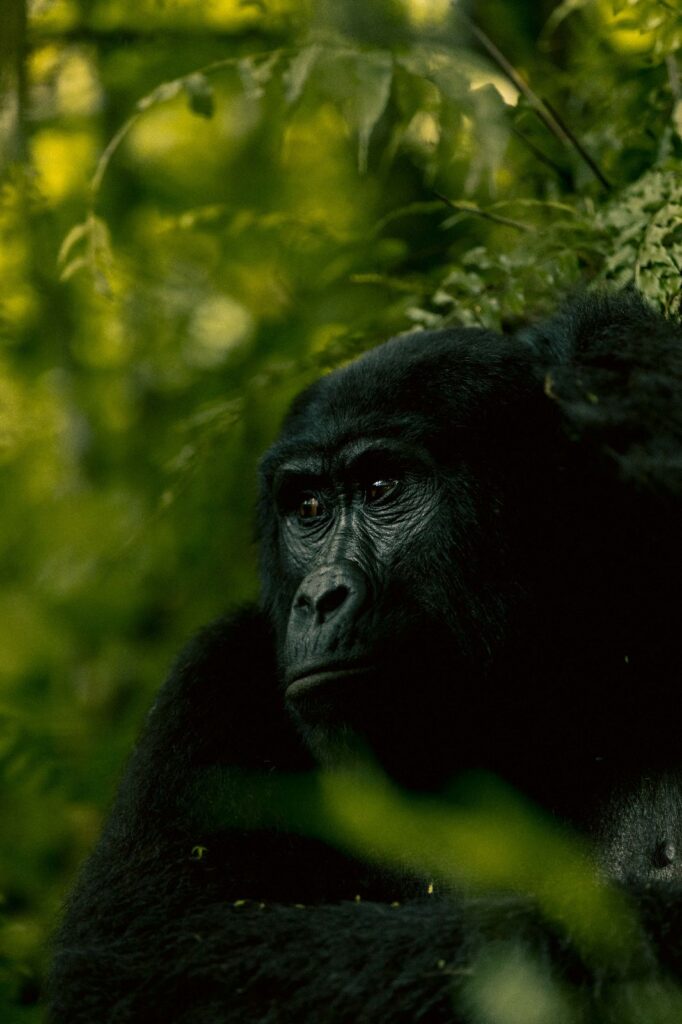
The biggest risk is not actually the gorillas; in fact, spending time with them is statistically the safest part of the experience. They’ve been habituated to human presence over the years, and encounters are tightly managed by UWA.
The real dangers, and what the armed ranger guiding you is actually for, are forest elephants and wild buffalo. These animals are both very territorial and common in Bwindi. They can be very dangerous if you surprise them on the trail. But even then, the rifle is a deterrent and definitely not a tool for managing the gorillas.
UWA staff will run you through a full safety briefing at the trailhead before your trek begins. Here’s a summary of the key protocols:
- Maintain a minimum distance of seven meters from the gorillas (they don’t always follow this rule themselves).
- Put your mask on the moment your guide tells you to, and keep it on for the entire encounter. Disease transmission risk goes both ways.
- Follow your guide’s instructions immediately and without question.
- Stay with your group at all times. Don’t wander off the trail your guide is cutting.
- Never touch a gorilla, even if a juvenile comes close out of curiosity.
- No flash photography, no eating or drinking near the family, and keep your voice low.
The wider safety picture in Uganda is worth understanding before you book, particularly the current travel advisory for the western border regions. We’ve published a guide on staying safe in Uganda, which is a useful read before you book.
How Much Does Gorilla Trekking Cost?
We’ve mentioned the pricey gorilla trekking permit a few times, but even setting aside the permits themselves, it is still one of the most expensive wildlife experiences in Africa. Here’s the breakdown.
The permit
While permit costs change year to year, here are the current UWA gorilla trekking permit rates:
- $800 standard rate (all months except April, May, and November)
- $600 low-season rate (April, May, and November only)
- $700 for foreign residents of East Africa
- UGX 300,000 for East African citizens
The permit covers one hour with the gorillas, the services of the UWA guides and trackers, and park entry. Everything else is on top, and as of 2026, UWA has now scrapped the old hold-without-payment system, so they are now not secured until paid in full.
Gorilla habituation experience
If you want more than one hour with the family, Rushaga Sector offers the gorilla habituation experience. This involves four hours with a semi-habituated family in a maximum group size of just four trekkers.
The permit has just increased to $1,800 in 2026, so it’s a serious investment, and considerably more expensive than the similar chimpanzee habituation experience in Kibale.
The rest of the trip
In our experience, the gorilla trekking permit is usually about a quarter to a third of the total spend. Due to the logistics and transit time involved, a typical Uganda gorilla trekking trip can easily run $2,400 – $4,500 per person for a 5-7 day itinerary, depending on accommodation choices.
The other components include
- International flights (not included in any trip quote you’ll see)
- Transport from Entebbe to Bwindi: a 10-hour overland transfer (cheaper) or a one-hour domestic flight to Kihihi or Kisoro ($200-400 each way)
- Accommodation near the trekking sector: $100 – $500+ per night depending on quality
- Meals, ground transport, and tour operator fee
- East Africa tourist visa: $100 (covers Uganda, Rwanda, and Kenya for 90 days)
- Tipping: roughly $20 per guest for the main guide, $3-4 per guest for the trackers as a group, and $20+ if you hire a porter
Can you book online yourself?
No, there’s no public online checkout. UWA accepts email and phone bookings, but in practice, that channel is mostly used by Ugandans and East African residents.
For foreign non-residents, that is, most tourists, direct booking would require you to show up at UWA’s reservations office on Kira Road in Kampala in person. This is not practical, considering you need to book this permit months in advance.
Instead, almost all international trekkers book their gorilla trekking tours through a licensed operator to secure permits, and that’s the path we see UWA pushing foreigners toward. The licensed tour operators (members of AUTO – the Association of Uganda Tour Operators) have direct access to UWA’s allocation system, can check real-time availability, handle the bank transfer to UWA in shillings, and confirm your permit in days rather than weeks.
Note that some operators will add a $50–100 booking fee per permit on top of the UWA face value if you do not engage them for transport or as part of a broader tour package.
So is Gorilla Trekking Worth the Price?
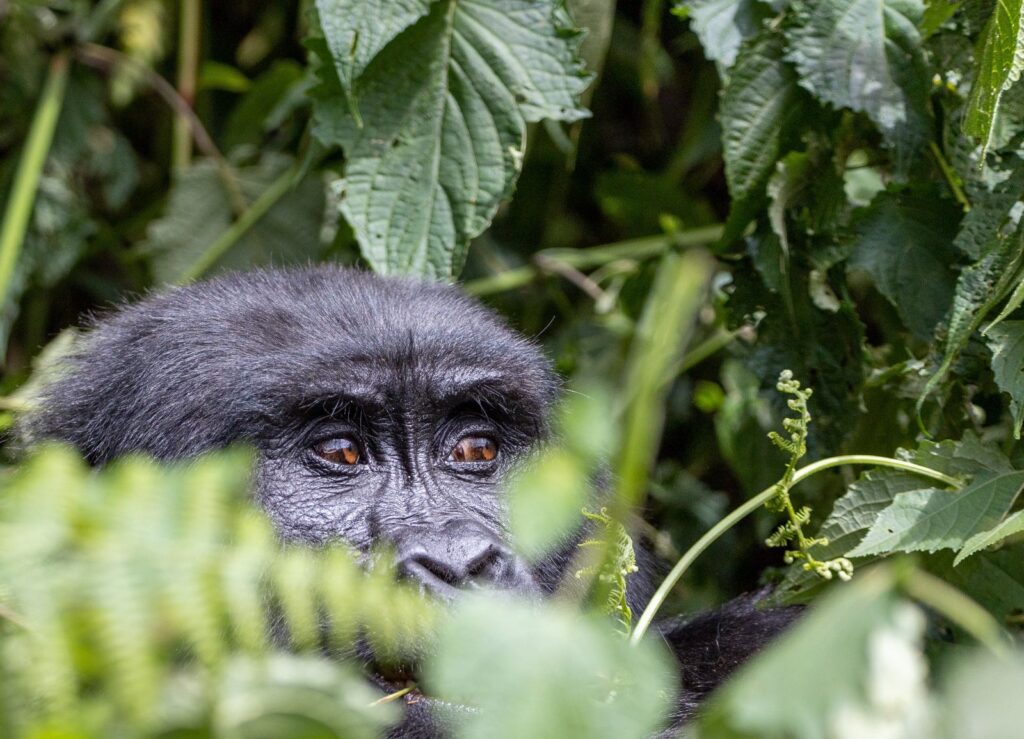
Depends on the traveler. For wildlife lovers, the experience itself is worth every dollar. Spending an hour with a wild gorilla family is extraordinary, and the members of our team who have done it don’t regret a cent.
But as you now know, it’s not as simple as showing up in Uganda and seeing gorillas. Between the permit, the transit, the accommodation, and the broader cost of getting yourself into Western Uganda, this is a major time and budget commitment. In fact, it’s common for most travelers to plan their entire Uganda itinerary around the gorillas.
And after factoring in all that, while we absolutely love the gorilla trekking experience, we’d say there are much better experiences to be had in Uganda at just a fraction of the cost.
Alternatives to Gorilla Trekking
As an adventure company leading offbeat expeditions in Uganda, here are the experiences we’d put up against gorilla trekking in a heartbeat.
Chimpanzee Tracking in Kibale
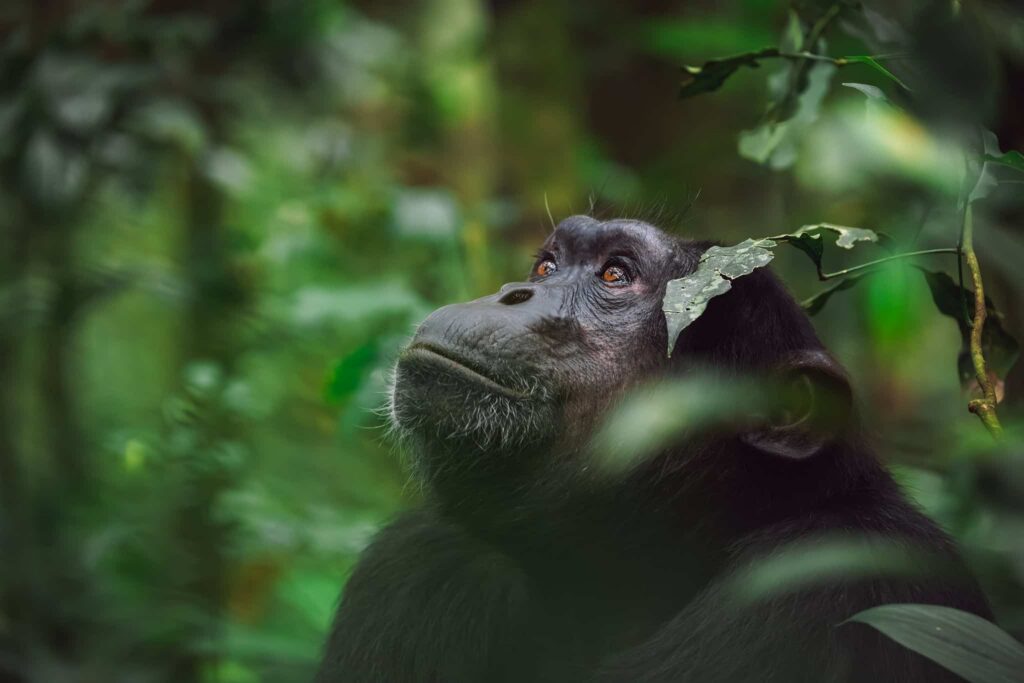
The closest substitute is one that our team enjoyed a lot more than the gorilla experience overall. This is because while chimpanzees are smaller, they are far more active, vocal, and entertaining to watch. Kibale National Park is home to 13 chimpanzee communities, 5 of which are habituated, with around 1,450 chimps in total.
This is the same park where the famous Chimp Empire docu-series was filmed.
A standard chimp tracking permit costs around $250 ($200 in low season), which is less than a third of a gorilla permit, and the four-hour chimp habituation experience is just $300 – over a thousand dollars cheaper than the equivalent gorilla habituation upgrade.
The Rwenzori Mountains
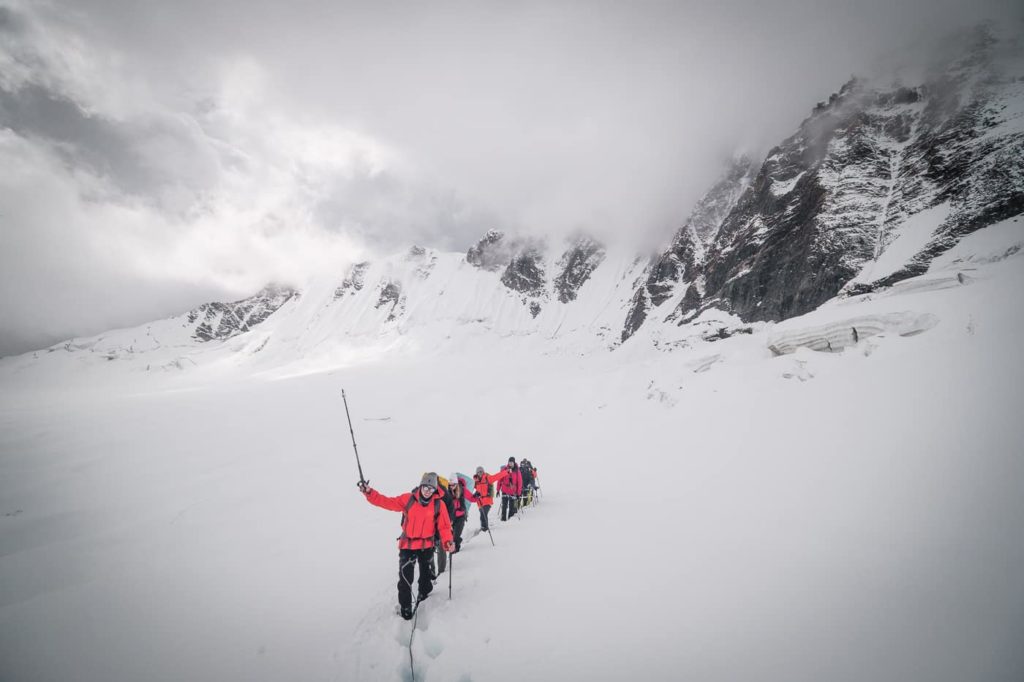
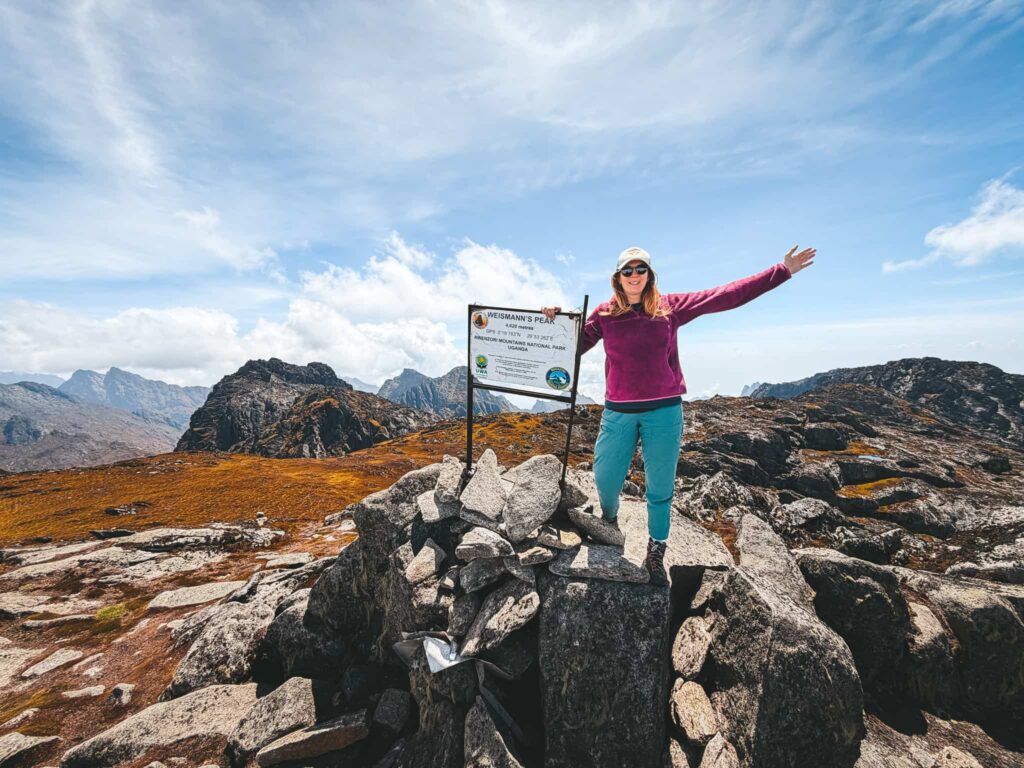
One of the most underrated mountain ranges on the continent. Six of Africa’s ten highest peaks sit in the Rwenzoris, including the third-highest summit at 5,109 m, and fewer than 1,000 people trek here per year.
The terrain shifts through rainforest, bamboo, afroalpine lobelia fields, and equatorial glaciers. If you’ve got a week and reasonable fitness, this is the trip. In fact, along with the chimpanzee experience, trekking in the Rwenzori mountains is the foundation of our Uganda expedition.
It also made our list of the best multi-day hikes in Africa.
Mount Sabyinyo and the Virunga highlands
Mount Sabyinyo is a 3,669-meter volcanic peak in Mgahinga National Park, with a summit that straddles three countries: Uganda, Rwanda, and the DRC. This is a wild Uganda trekking experience!
We climb it on day three of our Uganda trip – a steep, ladder-assisted day hike through bamboo forest and golden monkey habitat.
Queen Elizabeth National Park
This is the classic East African safari without the East African price tag. You’ll likely drive through it on the way to Bwindi anyway, so adding game drives or a boat trip on the Kazinga Channel is a no-brainer add-on.
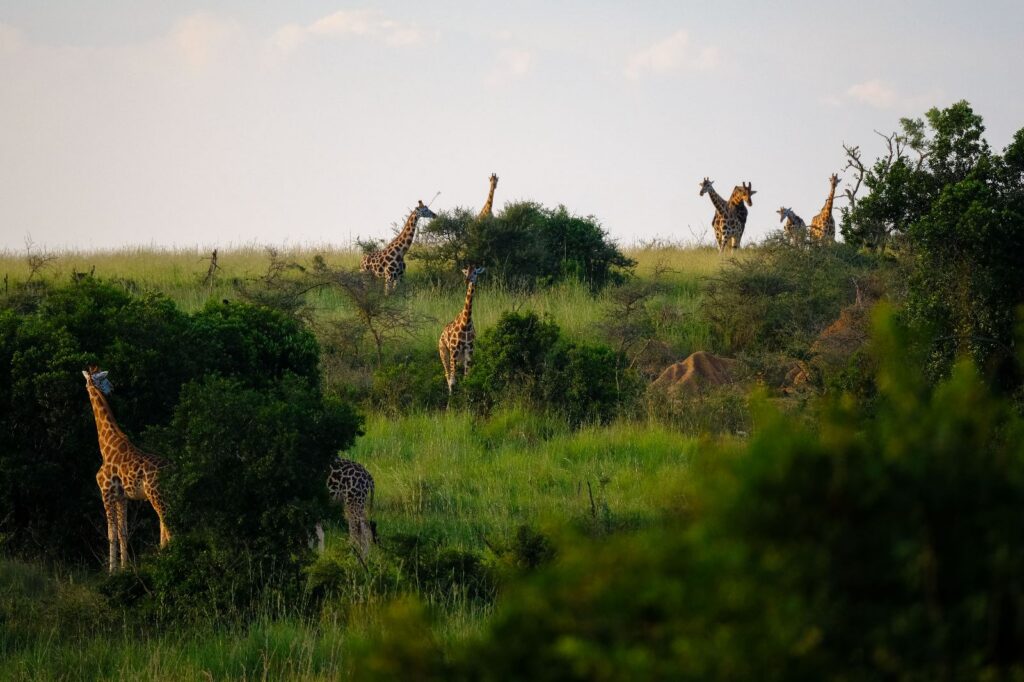
This park is famous for its tree-climbing lions in Ishasha, but is also abundant with elephants, buffalo, and hippos. You’ll also get a decent shot at a leopard sighting here, too!
Tips for Organizing a Successful Trip
A few things we’d tell anyone planning a gorilla trek before they book.
- Book the permit 6-12 months out for peak season and 3-6 months for low season, at least. For the December – January and the June – August window, popular sectors sell out a full year ahead. Low season (April, May, November) is more forgiving but still tends to book out 2-3 months in advance. Note though every year the demand is different.
- Use an AUTO-licensed operator and cross-reference reviews. The Association of Uganda Tour Operators (AUTO) is the industry body, and its members are the operators with direct UWA system access. For independent reviews, SafariBookings.com is a reliable resource in East Africa, and if all else fails, you’ll want to check the company’s Google reviews.
- Plan at least 8 to 10 days for a Uganda trip. Gorilla trekking alone justifies a 5-day round trip from Kampala, but trust us when we say that Uganda rewards you for staying longer. We’d combine the gorilla trek with at least one alternative – Kibale chimps, the Rwenzoris, or Queen Elizabeth. If you want to see it all, we run a Rwenzori Mountains & Chimpanzee trekking expedition in Uganda, we’d recommend adding 2-3 days before this departure if you would like to experience Gorilla trekking as well.
- Don’t skip the game drives. This is the underrated part of Uganda travel. In our experience, the wildlife viewing in Queen Elizabeth, Murchison Falls, and Lake Mburo holds up against Kenya and Tanzania, at a fraction of the price and with a fraction of the vehicle traffic.
- Build in contingency time. Mountain weather, road conditions, and domestic flight delays all cause schedule slippage in Uganda. Add at least one buffer day around your gorilla trek date, and don’t book a flight out of Entebbe within 24 hours of your final transfer.
What to Wear While Gorilla Trekking
Bwindi is a wet, dense, equatorial forest that you’ll be bushwhacking through. The wrong gear will turn a hard day into a miserable one. The right kit is fairly straightforward, doesn’t cost a fortune, and you can pack most of it from what you already own.
- Lightweight long-sleeved shirt. Protects your arms from stinging nettles, thorns, and biting insects, all of which Bwindi has in volume. A quick-dry hiking shirt in a muted color works fine and is great on safaris and game drives, too.
- Lightweight long trousers or hiking pants. Same logic here. A tip we use is to tuck them into your socks once you are sitting still at the gorillas if the safari ants become an issue.
- Waterproof hiking boots. Decent ankle support is essential on the steep, muddy slopes. And just as with any trek, take care of your feet and don’t show up with brand-new boots – if you haven’t worn them on a hike before, you’ll regret it quickly.
- Gaiters. Underrated piece of kit. They keep mud, water, and ants out of the top of your boots when you’re crossing wet ground.
- Rain jacket and a rain cover for your daypack. Bwindi is a rainforest; ensure your camera and valuables stay dry.
- Gardening gloves or lightweight work gloves. Guides will tell you this, and most travelers ignore it. You will grab vegetation to steady yourself, and a lot of it has thorns or stinging hairs!
- Wide brim foldable sun hat. Sun in the open, cover in the rain, and easy to pack.
Regardless, Uganda is an Amazing Place
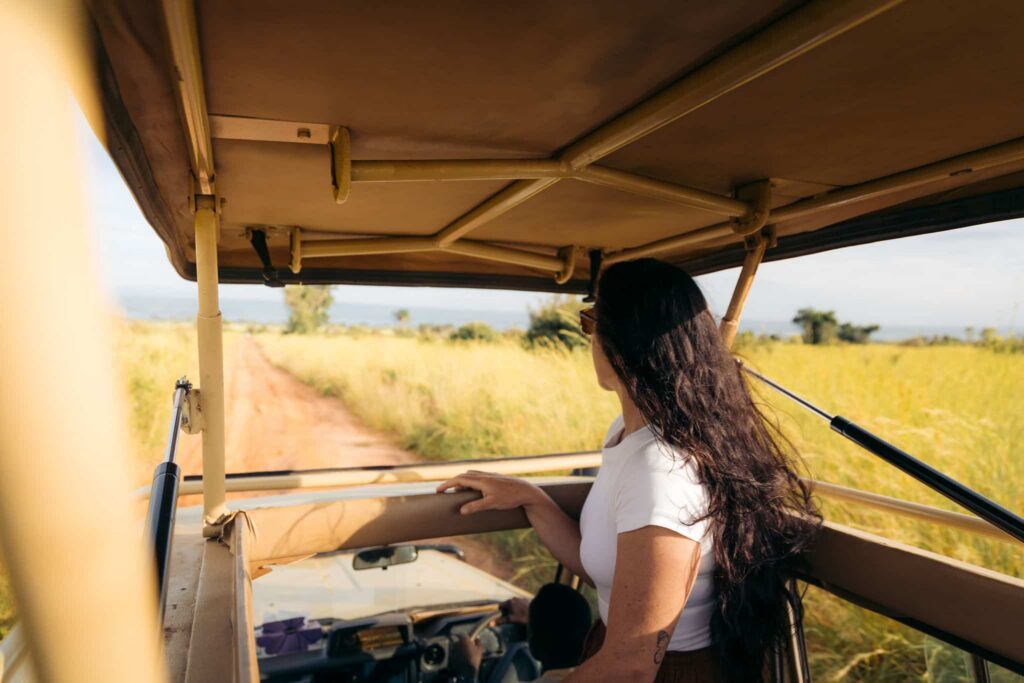
Gorillas or no gorillas, Uganda is one of the great adventure countries on the planet. We tend to think of gorillas as the Uganda gateway drug. They pull you in, and the rest of the country gets you hooked.
Once you’re in, you’ll see what we mean. The Rwenzoris are easily one of the great mountain ranges of our planet, and most people have never heard of them. The chimps of Kibale are arguably more entertaining and awe-inspiring than the gorillas, while Queen Elizabeth and Murchison Falls hold up against any safari park in Tanzania or Kenya.
In our opinion, if you’ve come to Uganda for the gorillas and left after doing the rest, you’ve done Uganda right. If you want to see the rest without the gorilla permit, that’s the trip we organize. Check out our Uganda expedition for the chimp habituation, the Rwenzori trek, Mount Sabyinyo, and a couple of curveballs that don’t make any standard Uganda itinerary.