
Take a look at our newest adventure: hiking in Cape Verde!
Madeira, Cape Verde, Azores, Canary Island
Macaronesia – not to be confused with the Pacific Island nation of Micronesia – is a collection of island chains in the Atlantic Ocean, spread across the North African coast. Composed of semi-autonomous nations and newly independent ones, all former colonies of Portugal or Spain, one could be forgiven that these drops of lands could be significant at all.
Truth is: there is a lot more going on around these archipelagos that many might think. In fact, many, ourselves included, might even call them “paradise.”
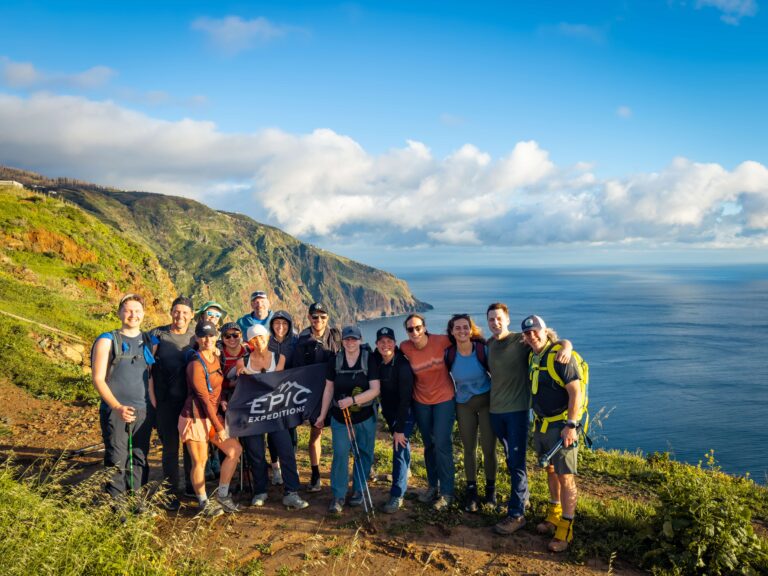
Each island chain brings something to the table. Madeira, which has become the home-away-from-home outpost for many Epic members, is a dramatic drop of green, renown for its rugged coastline and thigh-busted trails. Meanwhile, the Azores hide deep in the Atlantic, shrouded in mist and bubbling with natural wonders. Cape Verde, the only independent nation among the lot, has more infinitude than a 5-sided coin i.e. its potential is endless.
For those seeking an adventure in a region that is not too far removed but just off-the-beaten path enough to be, the islands of Macaronesia are worth consideration.They offer a huge variety of activities, and it is no wonder that many have been likened to the “Hawaii of the Atlantic.”
Oh, and we won’t be visiting the Canary Islands again anytime soon. We’re not ones for the tourists crowds, and it’s just not our vibe there (for now).

“So you think you have Europe all figured out, huh? Well, there is this place called Madeira Island in Portugal that is going to change all of that. Picture the cobblestone streets and fragrant bakeries of old Europe combined with lush forests, waterfalls, and a lifetime’s worth of adventure potential. Nice to meet you, Madeira.”
– Chris Lininger (Founder, Director) on visiting Madeira
“Santo Antão is a remote, genuine and untouched island — a living island, not curated for tourism. Life is shaped by its people, agriculture, fishing, coffee, papaya and sugar cane. Its simplicity, dramatic volcanic landscapes, deep valleys and rugged mountains are crossed by an ancient network of trails, once essential to everyday life. A place of raw beauty, rich traditions and a truly authentic spirit.”
– João Freitas (trip leader, guide) on visiting Cape Verde
Madeira
Madeira is blessed with a subtropical climate, meaning that most parts of the island have an eternal spring vibe. It is comfortable all year round.
Although we could be on the island any time of the year (and usually are), October – April are our favorite months. Summers are the busiest and most hectic time to visit.
Cape Verde
The best time to go is between November and June, when the islands stay dry and the trade winds blow steadily. We prefer January, when temperatures are pleasant for hiking and there’s almost no rain.
The rainy season runs from August through October. Rain can leave the stone trails slippery, and every so often it washes out parts of the path.
Azores
June through mid-October. Unlike Madeira and Cape Verde, you want to visit the Azores in the summer, when the islands are at their driest and warmest, and the trails are firm underfoot. Winters are too damp, foggy, and unpredictable to plan ahead.
Spring is a good second choice: by May the winter rains are easing off, the hillsides are green, and there are plenty of sunny days for hiking.
Madeira
Madeira is notorious for having interchangeable weather. It might be raining buckets on one part of the island, misty in the mountains, and totally sunny on the other coast. There is a rule here: if it is raining on one part of the island, there is usually some sun to be found on the other side.
Generally, temperatures are mild since Madeira is a subtropical island. They grow bananas here, but also the high mountains get the occasional dusting of snow in the winter.
Cape Verde
Cape Verde’s weather depends on which island you’re on and which side of it you’re standing. The trade winds blow in from the northeast. On the tall islands, the slopes facing that wind catch moisture and stay green, while the sheltered sides can look almost like desert.
Rain is rare, and when it does come, it usually pours for a short time between August and October. Winter brings its own weather: the Saharan wind called the harmattan sometimes blows in a dusty haze that dims the sun and softens the views.
Temperatures stay warm all year, since the islands sit off the coast of West Africa. They grow bananas and sugarcane here, and the sugarcane goes into grogue, the local rum.
Azores
The Azores have a reputation for packing four seasons into a single day: you can start a hike in sunshine, walk into thick mist on a crater rim and finish in a passing shower. December is the wettest month, with about 153 mm (6 inches) of rain, while July gets only about 26 mm (1 inch). Most showers blow through quickly, so if the view is hidden, give it an hour.
The Atlantic keeps temperatures mild all year, from January highs of about 16°C (61°F) in Ponta Delgada to August highs around 25°C (77°F). That humid, mild air is why the islands are so green, and why São Miguel can grow pineapples in glasshouses and run Europe’s oldest tea plantation.
All of our trips in the region will feature similar accommodation setups. We will be staying at locally owned hotels and guesthouses in small villages, most often near the sea. These lodgings offer different amenities: hotels often have an in-house restaurant, gym, and a pool, while the rooms have a private bathroom, balcony, air conditioning, and wifi. Guesthouses will be more quaint but no less comfortable.
Depending on the itinerary, we may stay in a single location or multiple locations, depending on where we need to be. In Madeira for example, we will only be using a single hotel for the entirety of our stay and making day trips from it. In Cape Verde, getting around is not quite as easy, so we will be staying in various villages as we visit them, using multiple accommodations by the end of the trip.
Madeira & the Azores
In most of the places we visit, the locals speak English. Even if you think you know some Portuguese, the local dialects can be difficult to understand. People from Lisbon have a hard time understanding people from both sets of islands! Learning a few words of Portuguese will always be appreciated by local folks.
Madeira and the Azores use European telecommunications companies, which means most travelers will get some sort of roaming service. That being said, check your plan before you leave, especially if you’re coming from outside the EU. Roaming charges can add up fast, and a local SIM or a travel eSIM is often much cheaper.
Signal is strong in the towns and along the coast of the main islands, but it drops off quickly in the mountains and the more remote corners, especially in the Azores.
Cape Verde
Although Portuguese is the official language, few, if any, locals speak it formally. Almost everyone speaks Cape Verdean Creole, called Kriolu, which even fluent Portuguese speakers can struggle to follow. English is spoken in the busier, more popular parts of the island chain, but we rarely visit these places. If all else fails, a simple “bom dia” still does the trick.
Cape Verde isn’t part of the EU, so roaming deals are less reliable. The islands have two mobile networks, Alou (formerly CV Móvel) and Unitel T+, and both sell inexpensive SIM cards at the airport and in shops in town.
Signal is reliable on Sal, Boa Vista, São Vicente and Santiago, but it gets patchy on Santo Antão and Fogo, often dropping to 3G outside the towns. On the remote trails and up on the volcano, expect little or no signal at all.
Madeira & Azores
Both Madeira and the Azores are blessed in the sense that there are no wild animals that are going to kill you, and crime rates are among the lowest in all of Europe.
The biggest danger on the islands is its natural features. The ocean is notoriously powerful and every year a few people are swept out to sea.
The mountains and rivers present their own inherent dangers as well – which is why we plan our hikes to places we know well and that are relatively safe for most hiking skill levels.
Cape Verde
Cape Verde is known for being quite safe. Its people are also very welcoming, warm, and helpful to all visitors who visit their small island chain.
That being said, crime is not unheard of. Use common sense when in urban areas (Mindelo) where pickpocketing is more frequent. Treat Cape Verde like any large European city that you might visit.
Madeira
The food on Madeira is seasonal, but expect to eat lots of fresh fruit (including tropical fruits like passion fruit and banana), local seafood, tasty salads, shellfish, barbecue, and of course, the famous drink from the island: poncha.
Fresh fish and shellfish are standard classics. Lapas and tuna are particularly beloved on the island. Other classic dishes include various regional meat dishes and local twists on classic Portuguese fare, such as espetada (grilled meat skewers) and carne de vinha d’alhos (pork in wine and garlic).
Cape Verde
The food in Cape Verde is simple, filling and full of island flavor, so expect lots of fresh fish, tropical fruit like papaya, mango and banana, creamy goat cheese and plenty of beans and corn. The famous drink is grogue, a strong sugarcane rum, often mixed with honey or molasses.
Fresh tuna, wahoo and lobster are standard classics along the coast. The national dish is cachupa, a slow-cooked stew of corn, beans and fish or meat; leftovers get fried up with an egg for breakfast the next morning.
Azores
In the Azores, the cows are everywhere: grazing on green hillsides, ambling down country roads and sometimes holding up traffic. All that grass makes for rich milk, creamy butter and some of Portugal’s best cheese, especially the sharp, peppery São Jorge. In fact, the islands account for nearly a third of Portugal’s entire cheese production.
Grilled lapas (limpets) are as popular here as they are on Madeira, and octopus stewed in wine is a Pico favorite. Other classics include alcatra, Terceira’s beef pot roast cooked in a clay pot, and cozido das Furnas, a meat and vegetable stew slow-cooked underground in volcanic heat.
Madeira & the Azores
Both Madeira Island and the Azores are in Portugal and also part of the European Union (EU).
Visa-free entry is standard for most Western nationalities, including the USA, UK, Australia, New Zealand, Canada, and every other country in the EU.
Cape Verde
Citizens of the US, UK, Canada and the EU do not need a visa and can stay up to 90 days. Everyone, regardless of nationality, must complete EASE pre-registration online and pay the Airport Security Tax of 3,400 CVE, which is about €31.
Register at least five days before you fly and use only the official government portal, which ends in .gov.cv. Arriving without it costs 6,800 CVE at the airport. Your passport needs at least six months of validity from the date of entry.
Madeira & the Azores
As a member of the EU, Madeira and the Azores use the euro as their currency.
ATM machines are present all over the islands, except in remote villages.
Cape Verde
The official currency is the Cape Verdean Escudo (CVE). It is advisable to exchange some money into Cape Verdean escudos during the trip, particularly for smaller purchases, markets, local restaurants and places away from the main tourist centres. Euros may be accepted in some places, but the exchange rate offered locally may be less favourable.
Credit and debit cards are accepted in many hotels, larger restaurants and businesses, and ATMs are available on the main islands. However, Santo Antão is more rural and cash remains important. Participants should therefore not rely exclusively on cards and should carry a reasonable amount of Cape Verdean escudos. A Visa or Mastercard is recommended as a backup.
Our team members are experts on all things adventure!
If you’re interested in going on a trekking tour in one of the main island chains of the Atlantic but still have unanswered questions, feel free to give us a shout anytime. We’re ready and able to assist you in any way possible when it comes to planning your next big trip.
So ask away!
Get exclusive trip updates, be the first to know when we launch a new itineraries and offer discounts, and stay up to date with what’s happening at Epic Expeditions!


