There is a specific kind of magic that only happens when hiking in cold weather. The air is sharper, the views are clearer, and the satisfying crunch of boots on packed powder is undeniably beautiful.
But let’s not kid ourselves.
We’re the first to admit that prying yourself out of a warm down sleeping bag when the mercury’s reading in the negative degrees requires the purest act of sheer willpower.
We have spent years guiding teams through the frozen valleys of the Karakoram and the wind-scoured steppes of Mongolia. We’ve learned that thriving in freezing weather isn’t about being the “tough guy” at camp, sitting in shorts and a cotton t-shirt to prove some kind of point.
It’s about having the right systems, the right gear, and actually knowing how to use it.
From mastering your layering system to keeping your water from turning into a brick, here are our essential cold-weather hiking tips to help you stay safe, warm, and genuinely enjoy hiking in the cold.
The Challenges of Hiking in the Cold
Before we dive into our favorite pieces of cold-weather hiking gear and our winter trekking tips, we need to address the elephant in the room (or the mammoth on the glacier).
Overcoming the Mental Game

Cold weather hiking isn’t just “summer hiking, but with a jacket”. In our experience, the biggest is hardly ever frostbite either; it’s the mental game.
The cold introduces a heavy mental inertia. It convinces your sleepy mind that ‘warm and boring’ is a survival strategy, making the decision to venture into the wind feel completely counterintuitive.
Sadly, we’ve seen it happen, and we’d be lying if we didn’t admit that we’ve lived it ourselves. We travel halfway across the world to see a very specific sunrise over a certain peak, only to sleep through it because we couldn’t muster the will to face the chill.
The cold is temporary, but the regret of missing the alpine view of a lifetime because we were too cozy to move lasts forever. Yes, dialing in your cold-weather hiking gear is crucial, but sometimes the only thing standing between you and the experience is a little bit of grit and a calculated (and safe) mental push.
The Margin for Error Shrinks
That mental push must always be balanced against the physical reality. When hiking in temps 30 degrees or less, the environment fights back harder.
Everyone knows the risk of hypothermia. But what not everyone understands is that in almost any cold-weather hiking scenario, the stakes are simply higher.
Think, a twisted ankle in the summer is a massive nuisance, but a twisted ankle in deep snow or on a glacier can quickly spiral into a survival situation. On top of injury risk, your body is burning through calories at an alarming rate just to keep the internal furnace running, and cold muscles are far more prone to injury.
How to Dress for Cold-Weather Hiking
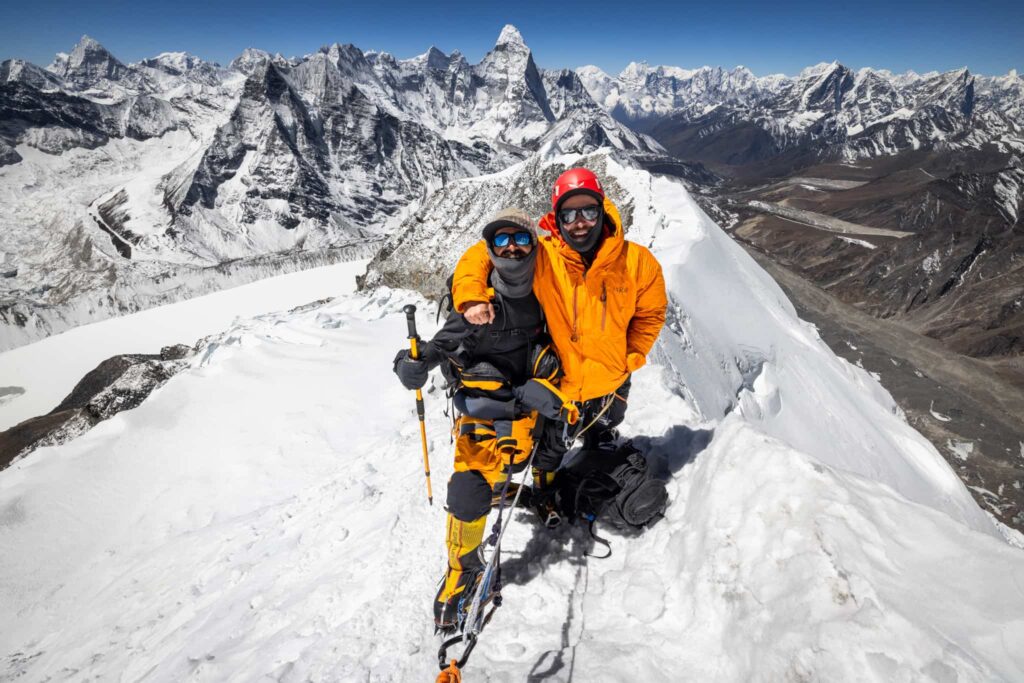
For years, we told guests that no matter the conditions, being cold is a choice. Then a German trekker corrected us, apparently, an entire nation beat us to the punch. She shared a well-known idiom that roughly translates to “quit whining about the weather and get better gear.”
It’s a harsh truth, but in the elements, the difference between misery and comfort is rarely the forecast; it’s your layering system, and we see that as more of a philosophy than a packing list.
Are you dealing with a chilly morning with temps showing just less than 40 degrees Fahrenheit? Or, are you pushing through truly freezing weather on a wind-swept plateau in Mongolia? Are you trekking on a flat trail in winter, or attempting a summit in technical mountain terrain?
You will need to adapt your gear to the conditions, but once you have the philosophy down pat, dialing in your packing list becomes a lot easier, and you will be much more comfortable trekking in the cold.
Sweat is the Enemy, Not the Cold
If you overheat, even briefly, and sweat into your base layers while moving, that moisture will cool very quickly the second you stop for a break. Wet clothes in the cold turn into a refrigerator against your skin, sapping your body heat.
The goal isn’t to be “toasty” while trekking; it is to be comfortably cool and dry.
To achieve this, you need a flexible system that moves moisture away from your skin while trapping just enough heat to keep the engine running. That’s the basis of the layering philosophy.
Base Layer
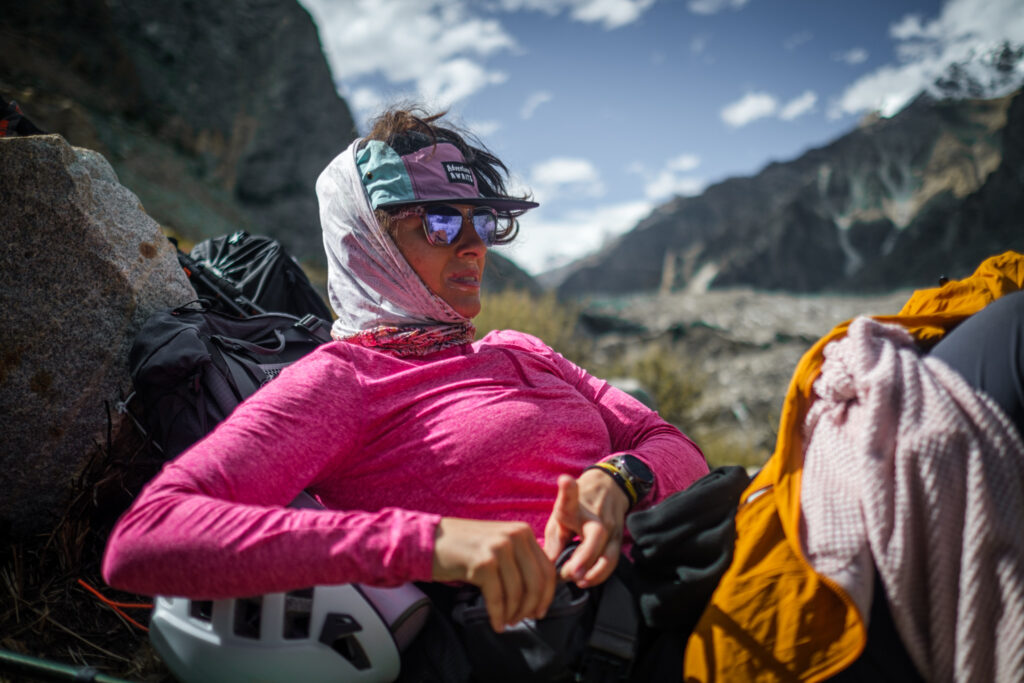
This one’s simple. Your base layer touches your skin, so it only has one job: moisture management.
You don’t rely on this layer to insulate you; instead, you do want to select thin materials that wick sweat away from your skin and into the outer layers.
- Merino Wool: The gold standard. We love it because it’s natural and stays warm even when wet. It has natural odor-fighting properties too, which your campmates will appreciate.
- Synthetic: A good runner-up that dries faster than wool but tends to hold the stink. Synthetic base layers are usually cheaper.
- Avoid Cotton: Cotton absorbs moisture, loses all insulating properties when wet, and sucks heat away from your body. It’s a terrible base layer, so we avoid it.
Mid Layer
The mid-layer is responsible for trapping your body heat. It’s your insulation, and we often see trekkers making mistakes here because this layer isn’t as simple as just one jacket.
An effective mid-layer system usually combines a few pieces that you add or subtract depending on the trek and the weather. For example, you might strip off your fleece while grinding up a steep incline, only to throw it back on, this time stacked under a lightweight down jacket, the moment you reach an exposed viewpoint.
To make this simple, we group the mid-layer into two categories.
- The active mid-layer: A breathable, lightweight grid fleece is a great workhorse. It’s super lightweight and traps warmth but lets sweat vapor escape while hiking hard.
- The static mid-layer: This is your heat trap that should be thrown on in cold weather as soon as you stop moving. A lightweight down or synthetic jacket provides massive warmth for its weight and is easy to pack. However, it doesn’t usually breathe well, so you should be careful hiking in it unless it’s extremely cold.
The Shell Layer
Similar to your base layer, your shell is quite simple. It has one job: to protect your other layers (and body) from the elements.
- Hard shell: Yes, they’re expensive, but we swear by membrane materials like GoreTex for an outer layer. These are great at keeping out wind, snow, and rain, while remaining breathable, lightweight, and easy to pack. It’s a layer we bring on every single trek, no matter the temperature or forecast.
- Soft shell: For drier, colder days, soft shell jackets offer decent breathability and more warmth. However, they’re heavier, and if you are hiking in the rain, they can stay wet.
The Heavy Down Layer
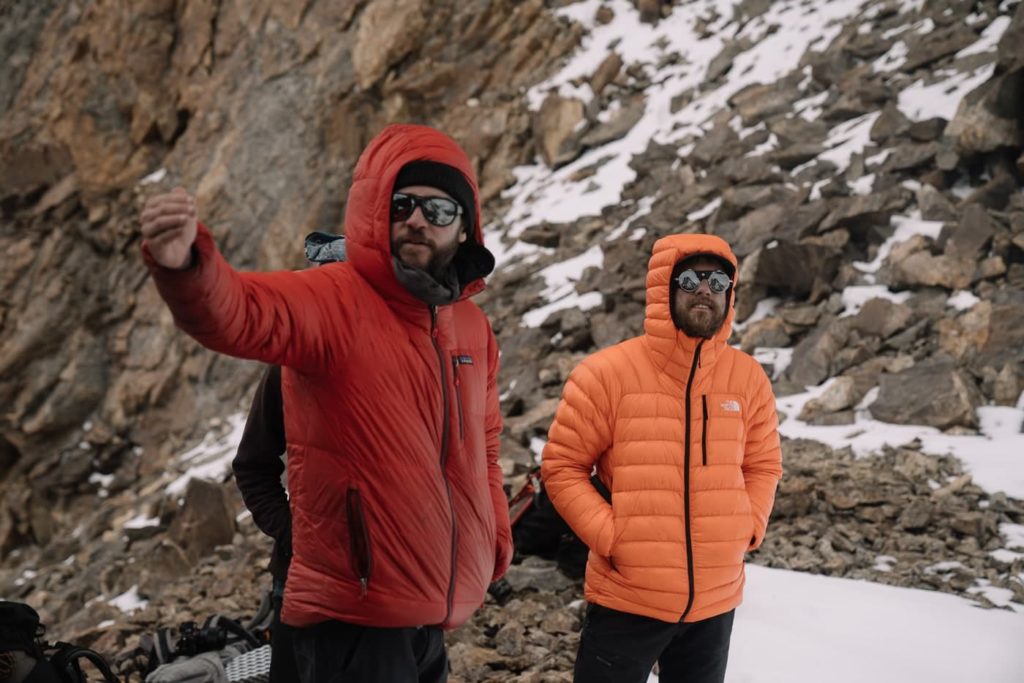
Finally, there is the “big puffy.” This isn’t the thin layering jacket you slip under a shell. This time, we are talking about the massive, high-down-fill power, Michelin-Man-style parka jacket.
They are significantly heavier and bulkier than your standard layering pieces, and we usually recommend packing these for treks in extremely cold environments.
Your heavy jacket usually lives at the bottom of your pack until you stop moving. But when you pull it out on a bone-chilling morning at a place like Concordia on the K2 Base Camp trek, you will instantly become the envy of every shivering trekker in sight. It is the closest thing you can get to wearing a sleeping bag while drinking your coffee, and will help you enjoy that hard-earned summit for much longer.
Extremities
When your body gets cold, it pulls warm blood away from your hands and feet to protect your vital organs, making your hands and feet the first to freeze and the hardest to thaw.
Luckily, it’s quite easy to wear a wool beanie for your head and pair it with a hiking buff or a balaclava to protect your face. Your hands can stay warm with gloves or for when the cold really sets in, use a waterproof shell mitten.
As trekkers, we’re really serious about taking care of our feet. Thick hiking socks are crucial, but the actual sock material (we love merino!) and your boot fit are equally important. Tight boots equal cold feet because they cut off circulation. You need a buffer of warm air around your toes. If you can’t wiggle them freely, your boots are too tight, and you’ll have cold, blistered feet in no time.
Camping and Sleeping in the Cold
We have spent enough nights in cold tents to know that a good night’s sleep in freezing weather isn’t about having the thickest sleeping bag on the planet. It’s about physics.
It All Starts With the Pad
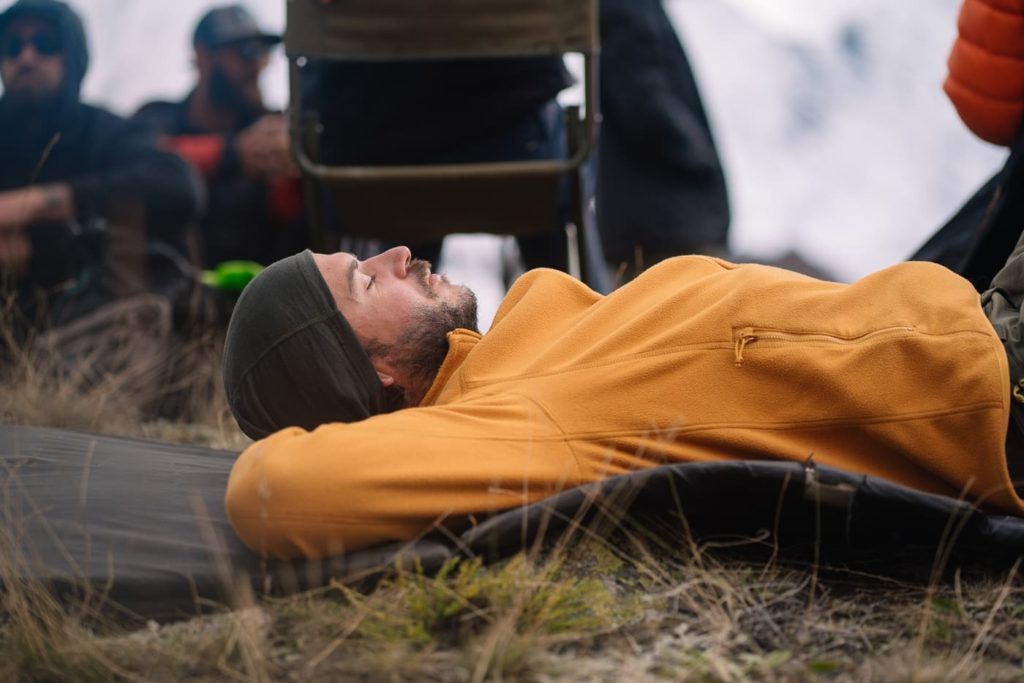
At camp, you are fighting two things: the air around you and the ground beneath you.
The biggest mistake we see trekkers make is buying a $1000 expedition sleeping bag and putting it on a $20 foam pad.
In the cold, the ground is an infinite heat sink, and it WILL suck the warmth out of your body significantly faster than the air. You need to look at the R-Value (resistance value) of your sleeping pad.
- Summer Pads: Usually R-1 to R-2. Useless in the snow.
- Winter Pads: You need a minimum R-Value of 4.0, though we prefer 5.0+ for really cold camps.
Understanding Sleeping Bag Ratings
Outdoor marketing can be misleading. A bag labeled “0 degrees” might not actually keep you warm at 0 degrees. You need to look at the specific ISO/EN ratings on the tag:
- Comfort Rating: The temp at which a “cold sleeper” can sleep comfortably.
- Limit Rating: The temp at which a “warm sleeper” can sleep without waking up shivering.
- Extreme Rating: Some bags will list this temp at which you survive for six hours without dying of hypothermia. But to be honest, if you are relying on the “extreme” rating, you are having a very, very bad time.
Tips for Staying Warm in a Sleeping Bag
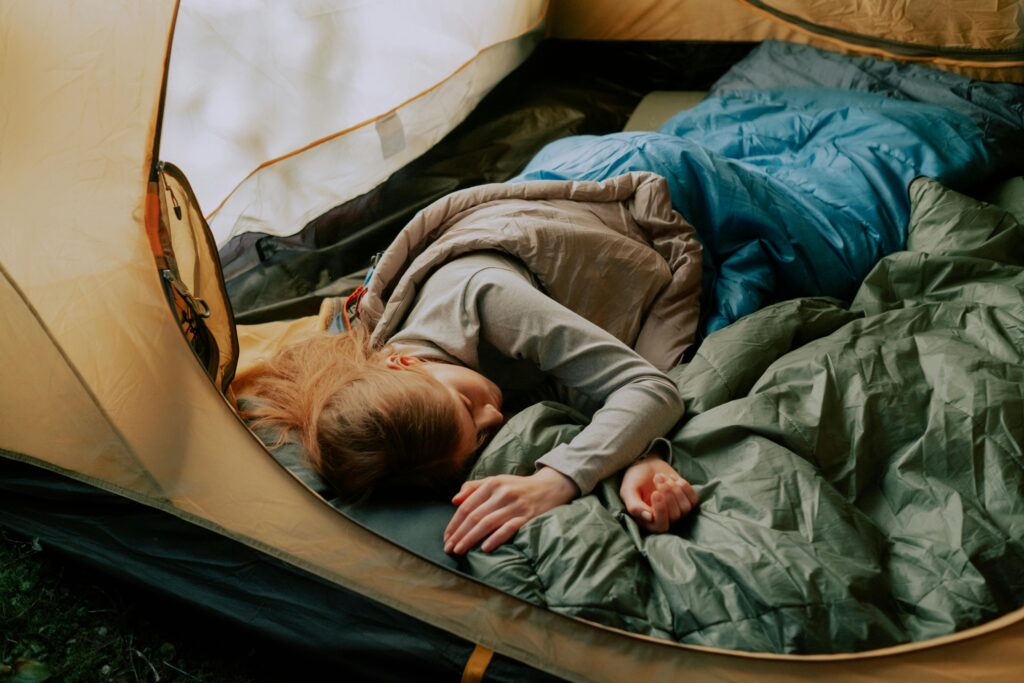
We wrote an entire guide on how to stay warm in a sleeping bag, but here’s the crash course:
- The hot water bottle: The oldest trick in the outdoor book because it works. Boil water, fill your Nalgene bottle (ensure the lid is cranked tight!), slip it inside a spare sock, and toss it into the bottom of your sleeping bag 20 minutes before bed.
- Stoke your internal furnace: Your body needs fuel to generate heat, and your sleeping bag traps that heat. Eat a high-fat, high-protein snack right before bed (like a Snickers bar or a spoonful of peanut butter) to keep your metabolism churning.
- Don’t breathe inside: It is tempting to bury your face inside the hood to warm your frozen nose. Don’t. The moisture from your breath will condense inside the down insulation and freeze. Cinch the hood tight, but keep your mouth and nose exposed.
Cold-Weather Hazards and Injuries
You can have the best gear in the world, but if you ignore what your body is telling you, things go south fast.
Sunburn and Snow Blindness
Snow reflects up to 80% of UV rays, meaning you are getting hit by the sun from above and below. We have seen people burn the inside of their nostrils in cold weather!
Wear sunglasses (we love glacier glasses with side shields) at all times, even when it’s cloudy. Snow blindness feels like having sand in your eyes and can leave you temporarily blind for 24 hours. Slather sunscreen on every inch of exposed skin, including the underside of your chin and nose.
Dehydration
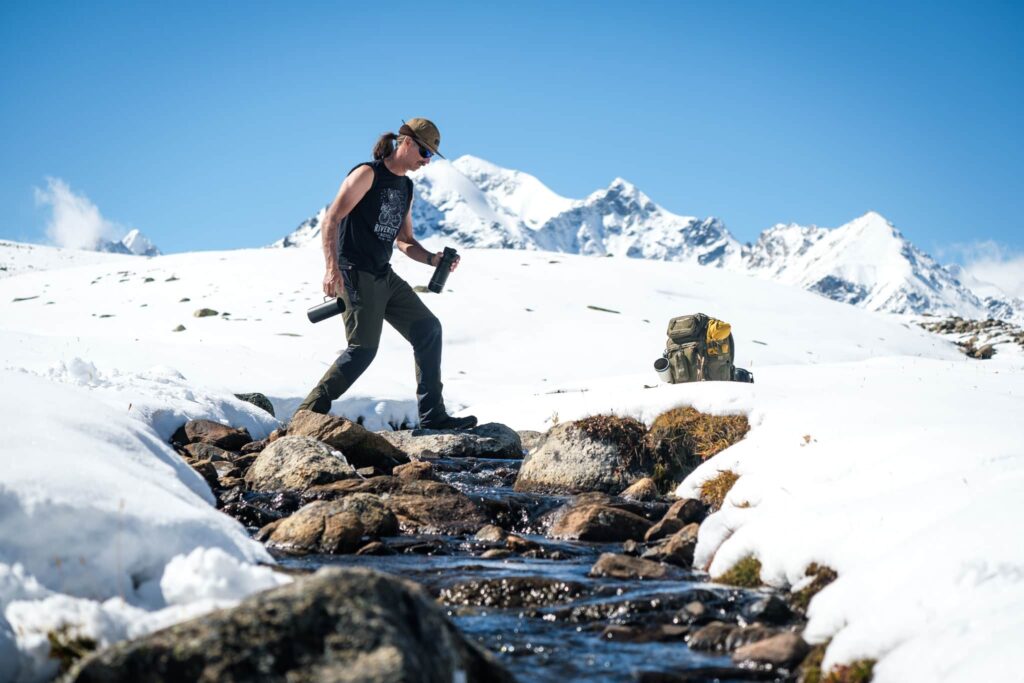
The most common hazard in cold weather isn’t hypothermia or frostbite, it’s dehydration. In cold dry air, you lose a massive amount of moisture just by breathing (that steam coming out of your mouth is water leaving your body). And, because you aren’t hot and sweaty, your brain doesn’t trigger the “thirst” signal.
However, it’s important to force yourself to drink. Even if the water is freezing cold. A cold weather hiking tip we’ve learned is to keep your bottle upside down (water freezes from the top down), or bury it inside your pack close to your back panel.
Hypothermia
Hypothermia doesn’t always look like shivering. Often, it looks like confusion. If someone starts stumbling, mumbling, fumbling with zippers, or grumbling irrationally, their core temperature has likely dropped into the danger zone.
These early warning signs of hypothermia are very important to recognize. If noticed, get them into dry layers (or a sleeping bag if necessary), and feed them sugar and warm liquids.
Frostbite
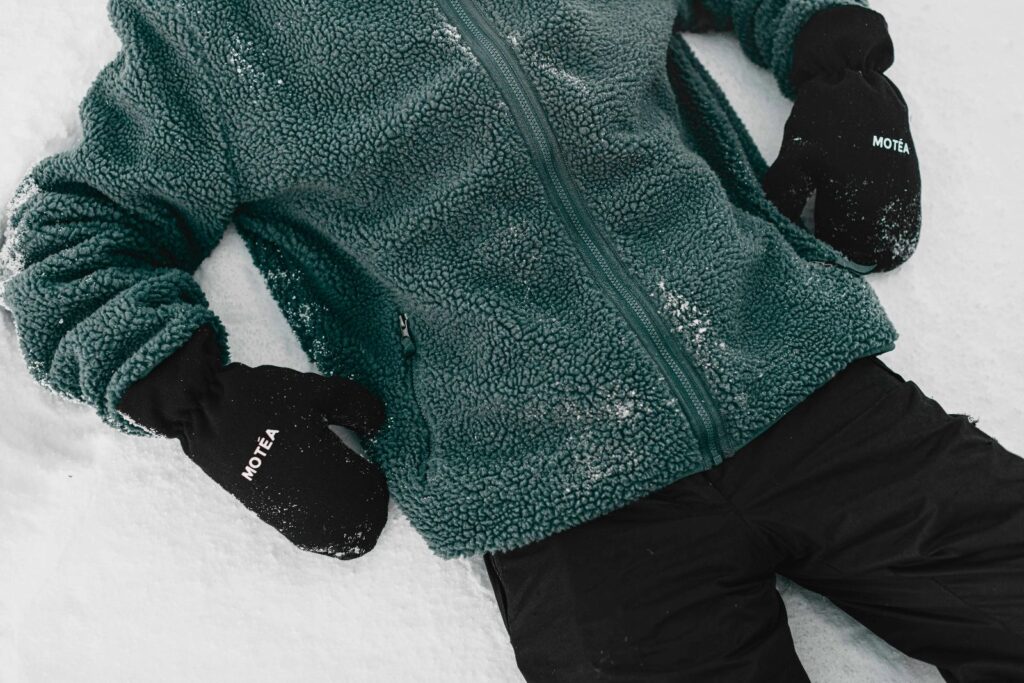
Cold fingers are normal; numb fingers are a warning sign. Frostbite happens when the tissue actually freezes. It usually starts with “frostnip” (numb, pale skin that can also get itchy) before progressing to waxy, hard skin that turns white or blue.
Prevention is the only cure. If you lose sensation, stop and warm the area immediately (put fingers in your armpits) until the feeling returns. Never rub frostbitten skin; you will damage the tissue.
Useful Gear to Have in Frigid Temperatures
It isn’t always the big-ticket items that save the trip. Often enough, it’s the small, unsexy details, like having liquid water instead of a block of ice, or a dry place to sit, that keep morale high when the conditions get real chilly.
The "Sit Pad"
A tiny piece of closed-cell foam weighs less than 2 ounces (about the weight of a Snickers bar) and easily folds down to strap onto the side of your hiking pack, right opposite your water bottle.
Sitting directly on snow or frozen rock sucks the heat out of your body instantly. We guarantee that every time you stop for a water break and throw this down, you will be the envy of the group.
Glacier Sunglasses
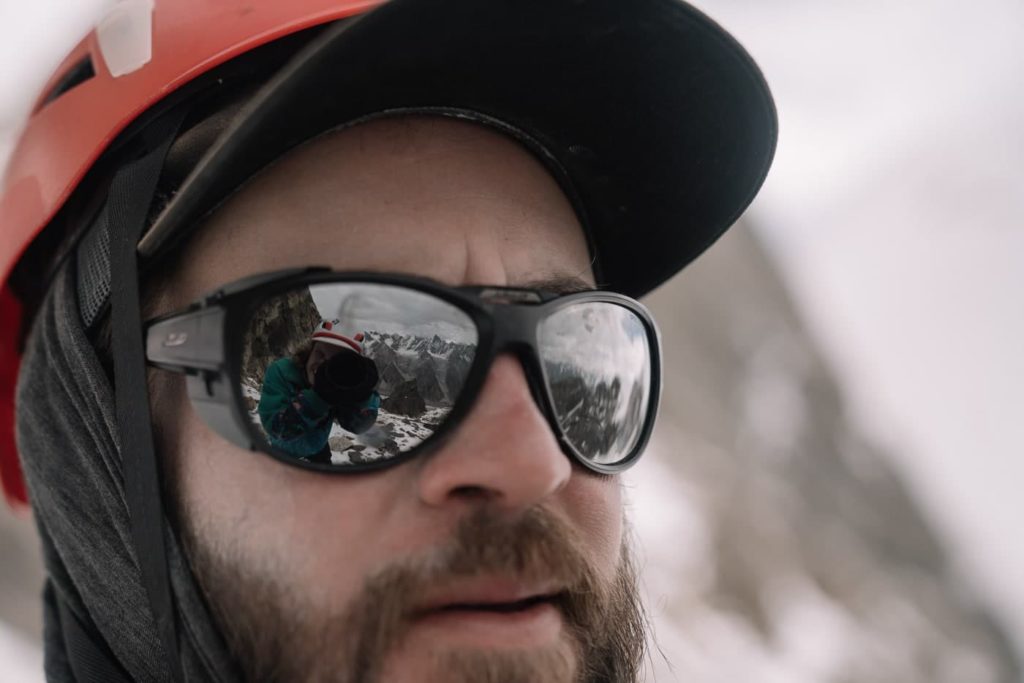
Sunburn and snow blindness are legitimate trip-enders. This here writer learned this the hard way as a young, naive backpacker in the Himalayas when he had to spend two days stuck in a dark teahouse room waiting for his vision to return after the snow fried his retinas.
Don’t risk it. Invest in proper Category 3 or 4 glacier glasses with side shields. Some great options are the Vallon Heron glacier glasses for a classic look, but the Oakley Clifden is another great option for high-altitude protection.
Down Booties
These are the “camp shoes” of your dreams. Down booties are essentially sleeping bags for your feet with a rubber sole.
When you walk into a teahouse or mess tent wearing these, you might get a few looks at first. But as soon as everyone else resorts to thawing their toes by the stove while you are lounging in padded luxury, those looks turn to pure jealousy.
Hand and Toe Warmers
Some purists might mock them, but there’s a reason they are one of the most commonly recommended cold-weather hiking items.
Hand and toe warmers are cheap, easy to pack, and incredibly effective “cheat codes” for morale. Toss a hand warmer in your pocket or stick a toe warmer on top of your socks (inside the boot) and never look back.
The Buff
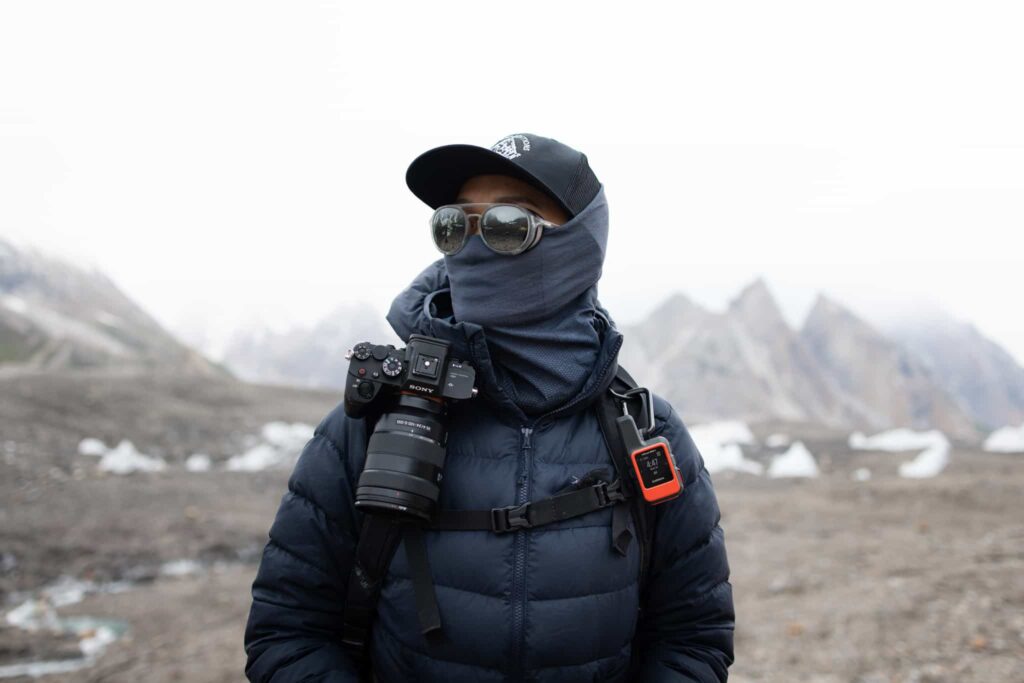
Ok, everyone knows the team at Epic Expeditions loves a buff. We don’t want to sound like a broken record, but sometimes the best gear is also the most boring.
A standard merino hiking buff protects you from the sun and wind, but in the cold, it’s amazing at sealing the gap between your jacket collar and your neck. You can buy fleece-lined versions, but we find they often trap too much heat and make you sweat.
Lithium Batteries & Power Banks
Cold weather eats battery life for breakfast. If you are joining us on one of our multi-day trips, you will need a solid headlamp for camp nights and early starts. But, standard alkaline batteries WILL drain in minutes in sub-zero temps.
The fix? Switch to Lithium batteries, which handle the cold significantly better. Also carry a backup headlamp battery or a lightweight hiking power bank to charge them via USB. It’s also a good idea to keep this battery bank close to your body (in an inner jacket pocket) to keep it warm so it doesn’t drain on you when you need it most.
The Pee Bottle
One of the worst things about cold-weather trekking is the need to pee in the middle of the night when it is negative degrees outside and the wind is howling.
The fix? Pack an extra Nalgene bottle. We prefer the wide-mouth version for… obvious reasons. And for the ladies, we recommend partnering this strategy with a Freshette pee funnel (as we discussed in our guide to gear for women trekking to K2 Base Camp.
And please, to avoid a midnight sip you will instantly regret, label your designated pee bottle with duct tape so you don’t mix it up!
Epic Trips that Feature Where It Pays to Be Ready
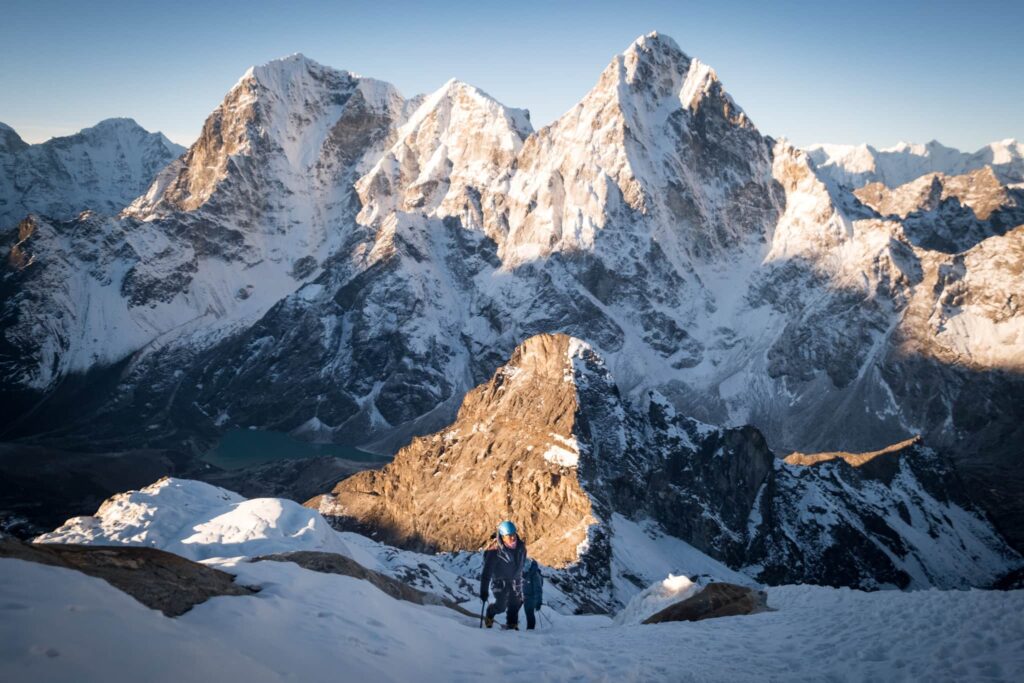
The truth is, all the gear knowledge in the world doesn’t mean much until you put it to the test. Reading about layering systems is one thing; feeling the bite of the wind on a 5,000-meter+ pass while staying perfectly warm inside your down cocoon is something else entirely.
If you are ready to trade the comfort zone for the kind of raw, unfiltered adventure that you’ll remember for life, join us in the land that Genghis Khan and his army of Mongols built on a horse and trekking tour to the Altai Mountains of Mongolia.
Or, stand in the chilly shadow of Karakoram giants on our epic itinerary to K2 Base Camp Trek in Pakistan.
We’ve learned to love the thrill of the cold, and we know you will too. Check out our trip calendar to see our full list of destinations.