If you have scrolled through social media lately, you have likely seen the viral queue of mountaineers in down suits, stalled on the summit ridge of the world’s tallest peak. This is an extreme case of a new concept only coined within the last decade: overtourism.
At Epic Expeditions, we live and breathe travel. We believe in its power to change lives, inspire growth, and build bridges between cultures. To us, the act of exploring the world is rarely a negative thing. However, as we will explore in this article, in some cases, there really is such a thing as too many tourists.
How do We Define “Overtourism”
You do not have to travel to the roof of the world to experience overtourism firsthand. In fact, you might have felt it while trying to get your hands on a viral focaccia sandwich you saw on Instagram, only to find the line wraps around three city blocks!
In its simplest form, overtourism is when there are too many visitors to a destination.
But stop right there you might say – “too many” is a subjective term. We agree, and like most things, context is everything. 100 mountaineers queuing up on the Hillary Step is a very dangerous scenario. 100 tourists on a main city strip in Tokyo is a quiet Tuesday morning.
The definition also changes here depending on who you ask. An investor in a large-scale hotel complex likely won’t call a crowded season “overtourism”. We bet they’ll call it profit. But local residents getting pushed out of housing markets in their own towns because every apartment has turned into a short-term rental? Yeah we can see why they feel differently.
To us, the definition is clear: overtourism is when the volume of visitors creates a net negative outcome for locals and their communities, the environment, and the travelers themselves.
We won’t take credit for that definition, it’s pretty in line with how the UN sees it. But sometimes statistics and clear cut definitions aren’t enough. Overtourism is often felt.
When an Italian nonna can no longer walk down the corso to the market without getting poked in the eye by a selfie stick, we would say that is overtourism. If you have to stand in a 50-long queue for 45 minutes to see a mountain viewpoint, that is overtourism.
If animals leave their habitats and natural landscapes, like trails or coral reefs, begin to physically erode under the weight of foot traffic, these are the clear signals that travel has mutated into something else entirely
What Causes Overtourism Initially?
To understand why the many popular destinations around the world are breaking at the seams, we have to look beyond the crowded streets and analyze the systems that drive us there. It is rarely a coincidence that millions of travelers descend on the exact same coordinates at the exact same time.
While it is easy to point fingers at “too many people,” the reality is a mix of technology, economics, and a fundamental shift in how we view the world.
Social Algorithms
It’s easy to blame social media for all the world’s problems these days. But the truth is overall, social media is an excellent travel tool that drives engagement and heavily influences choice. We even use it for finding remote places and epic hiking trails we might never have heard of!
However, the issue we see is that social media platforms are designed to prioritize high-engagement visuals. This creates a feedback loop where creators are rewarded for visiting the exact same locations as others before them. Think of crowds lining up for a chance to replicate a famous viral travel photo.
The issue is a quiet neighborhood or hidden waterfall can go from a handful of visitors to thousands in a matter of weeks – local infrastructure just cannot scale at the viral speed of a digital trend.
Disposable Travel Culture
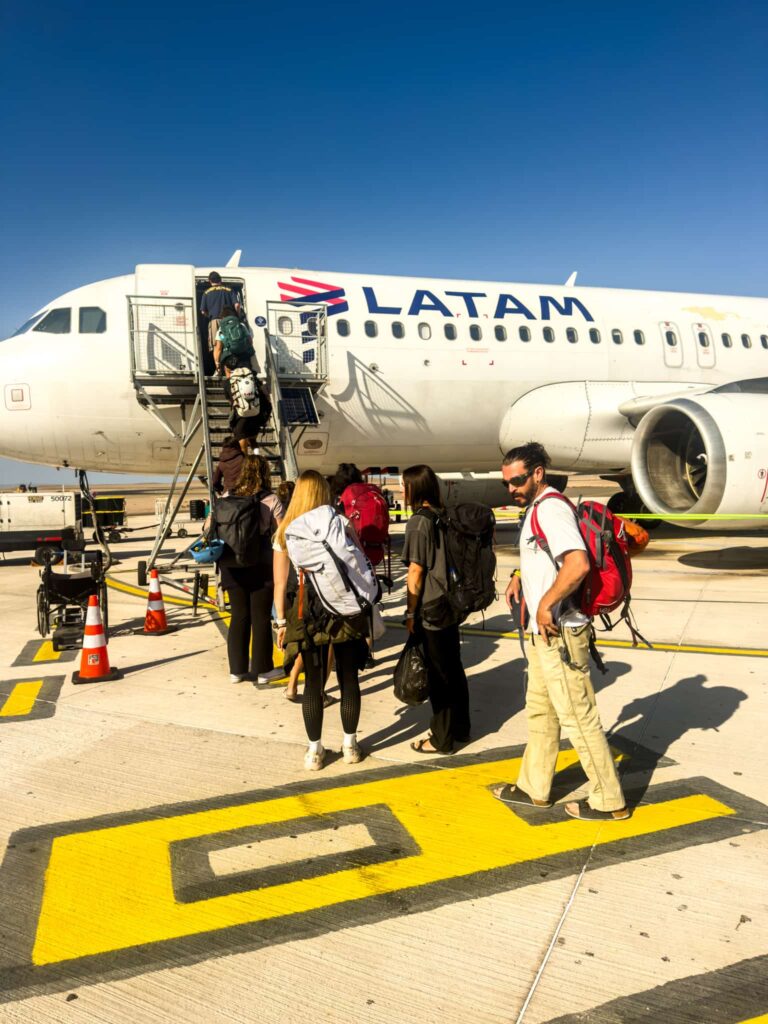
The explosion of low-cost carriers has democratized travel, which we view fundamentally as a good thing. Who doesn’t like cheap flights?
However, when a flight to Barcelona costs less than the taxi to the airport, it encourages a “disposable” mindset. We see a rise in high-frequency, low-duration trips where travelers rush in, consume the highlights, and leave before engaging deeply with the local culture.
This prioritizes volume over value, clogging city centers with transient foot traffic that contributes very little to the long-term local economy.
Efficiency Over Discovery
In a world obsessed with productivity and constrained by resources, we have started trying to “optimize” our leisure time. We see a saddening travel trend where many people treat countries like checklists to be completed rather than mysteries to be explored.
But it’s understandable, we all have a limited travel budget and a certain amount of time away from our duties to explore. In these scenarios “Top 10” lists and 5-star reviews become attractive because we are terrified of wasting a moment or a dollar on a bad meal.
This risk aversion herds everyone into the same “guaranteed” experiences, leaving 99% of a country or region unexplored while the remaining 1% is crushed underfoot.
What are the Consequences of Overtourism
We are a team of passionate, lifelong travelers. We know first-hand that the benefits of tourism are monumental. In regions like Northern Pakistan and Papua New Guinea, we have watched tourism pull families out of poverty, funding schools and infrastructure that otherwise wouldn’t exist.
When done right, travel bridges cultural divides, empowers local communities with sustainable income, creates powerful incentives to protect wildlife and natural resources, and it’s also pretty great for our own mental health.
But as we hinted at earlier, there is a distinct tipping point where these benefits curdle over into the negative impacts of overtourism. We are not listing these consequences to scorn anyone dreaming of a gondola ride in Venice or a sunset in Santorini. We list them so we can identify the causes of overtourism and ensure our own travels leave a positive impact instead.
Local Economy
Bringing money into local communities is one of the greatest things about tourism. However, in mass-tourism hubs like Bali for instance, a phenomenon called economic leakage can kick in.
Instead of money circulating through the local community, it flows directly out to foreign-owned hotel chains, international tour operators, and cruise ship conglomerates. The destination provides the resources and labor, but most of the profit leaves the country.
Then there is the issue of local inflation. When a town pivots to cater exclusively to visitors with strong currencies, prices rise to match that spending power. Suddenly, basic amenities and rent (often exacerbated by short term rental trends) become unaffordable for the teachers, nurses, and service workers who live there. Costa Rica is one such example.
Finally, something that we’ve noticed is often overlooked – overtourism can create a dangerous dependency. As we saw during the pandemic, when a region abandons traditional industries like farming or fishing to go “all in” on tourism, they can lose their resilience.
The Environmental Impacts
While the most visible and obvious issue is waste, the truth is that the most environmentally damaging aspect of overtourism is more than plastic wrappers on a trail.
In many remote areas, local systems were built to support a modest population. When tourism grows too quickly the demand for resources outpaces the destination’s physical ability to provide them.
Take water for example. Between daily industrial-scale laundry, high-pressure showers, daily room cleaning, and maintaining swimming pools, a tourist often consumes significantly more water per day than a local resident would.
Then there is the logistical nightmare of where our waste actually goes. A small island community might have a landfill designed for 2,000 people BUT when 10,000 visitors show up every week, each buying three plastic water bottles a day because they can’t drink from the tap, you’ve got a clear problem on your hands.
Without the industrial recycling plants found in major cities, remote communities are forced to either burn this plastic in open pits or pile it into landfills that are rapidly overflowing.
Overtourism Isn't Great for Travelers Either
Let’s be honest: overtourism ruins the trip for you too. And we’re not just talking about fighting for elbow room or waiting in line for a photo at the viewpoint. The real tragedy for us is that saturation fundamentally changes the human element of travel.
When a destination is at its breaking point, the “welcome” will wear thin. You stop being a guest and start being a number to be processed. Locals who might have once been curious about where you are from are now too exhausted by the sheer volume of strangers to even make eye contact.
The relationship becomes purely transactional. You pay your fee, you take your photo, and you get moved along so the next person can do the same.
Is that really what we travel for?
Overtourism Statistics & Burdened Regions
Here are a few stark examples of what happens when a destination hits its absolute limit.
- Venice, Italy – The city receives roughly 20 million visitors annually while the resident population has plummeted below 50,000. It has effectively ceased to be a functioning city and become a hollowed-out museum where locals are completely priced out of their own homes.
- Kyoto, Japan – The friction here became so intense that the Gion district recently banned tourists from private alleys. The behavior of visitors, chasing Geisha for photos and blocking traffic, forced a polite society to literally close its doors to outsiders.
- Barcelona, Spain – Locals have taken to marching in the streets and spraying tourists with water pistols while dining outdoors. Residents are fighting back against a housing crisis where short-term rentals have pushed them out of their own neighborhoods.
- Bali, Indonesia – The island is facing a critical “water crisis.” The tourism industry absorbs 65% of the island’s water supply, causing saltwater intrusion into the aquifers that local farmers rely on. Local resources are being diverted to fill resort swimming pools.
- Maya Bay, Thailand – The ecosystem here completely collapsed under the weight of 5,000 daily visitors. The government had to close the bay for years to allow the coral reefs to recover from the toxic mix of sunscreen, boat anchors, and foot traffic. It stands as the ultimate proof that we can love a place to death.
Are There Any Solutions for Overtourism?
Travel isn’t all doom and gloom, and it certainly isn’t the latest thing we’re supposed to feel guilty about.
Luckily, overtourism solutions are actually pretty darn simple. While governments, city planners, and massive hotel chains all have a role to play in managing the flow, the reality is that the travel industry is powered by one thing: demand.
Traveling to Less Popular Countries
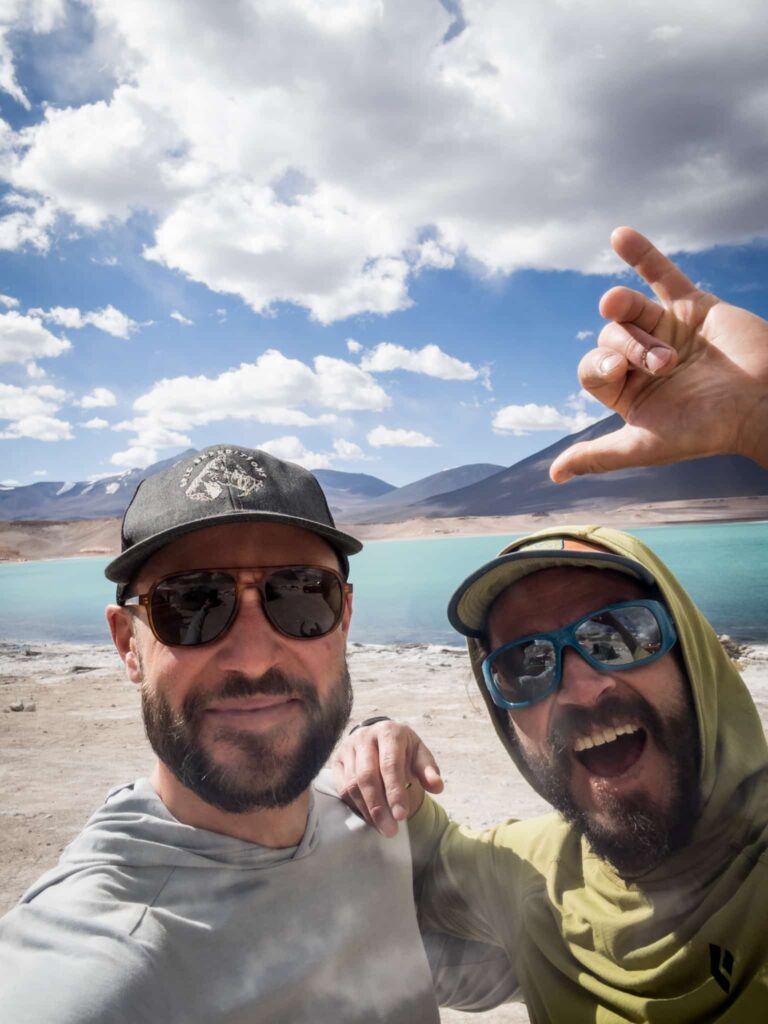
As travelers, the solution starts with us since we have the power to vote with our wallets. The most effective way to combat overtourism is to simply go where the crowds aren’t. We like to go one step further – we travel to places experiencing “under tourism”.
This is a core philosophy behind every trip we run. But don’t get it twisted – we don’t travel to remote places to be contrarian or to outrun crowds. We do it because after a long time of traveling this way ourselves, we’ve discovered it is the recipe for a truly rewarding and memorable travel experience.
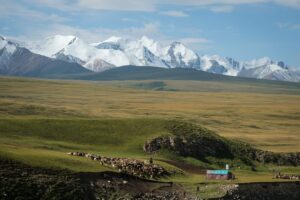
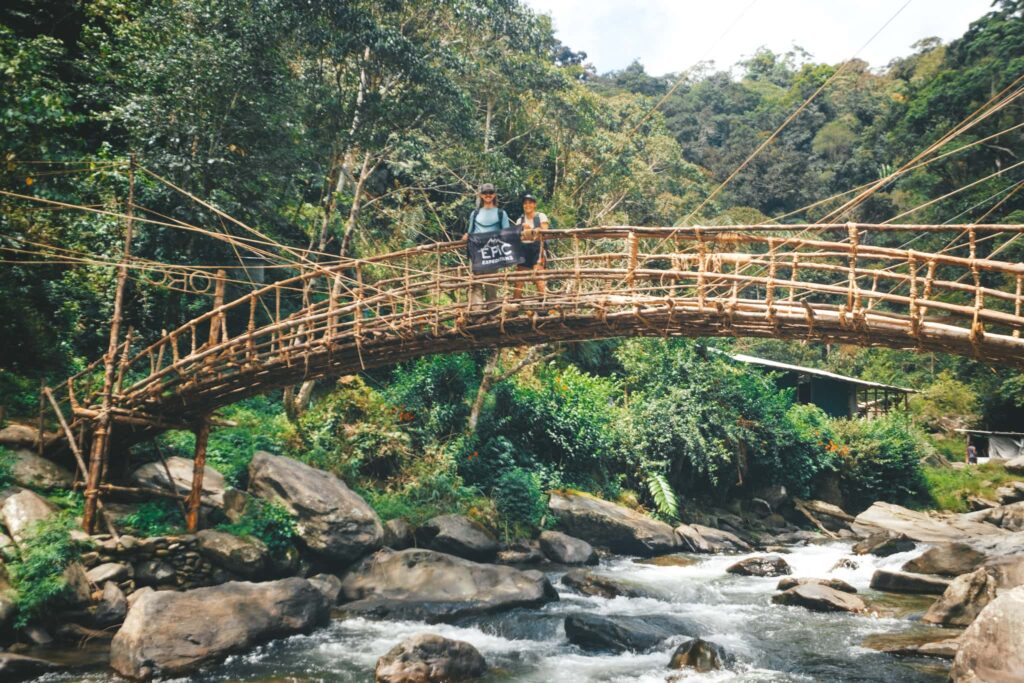
We intentionally choose destinations that are hungry for visitors, places like the remote valleys of the Karakoram in Pakistan or the vast steppes of Mongolia.
These aren’t “undertrodden” because they lack beauty; in fact, they are almost always more spectacular than the “TripAdvisor Top 10.” They are not burdened by overtourism because there is a perceived challenge to getting there.
These regions are perfect for active travel. It is trekking to distant peaks, experiencing homestays in villages that aren’t on Google Maps, and living in yurts with nomadic families who are just as excited to host us as we are to meet them. That mutual curiosity is what travel is all about. In our eyes, it is the only real answer to overtourism.
Sure, traveling to less popular countries isn’t always as easy as booking a flight and flopping into a 5-star resort buffet, but ask yourself, is that really why you travel?
With Risk Comes Great Reward
When you book a trip to an overtouristed hotspot like Santorini, you know exactly what you are buying. You pay for the famous sunset over the caldera, and you receive exactly that – an incredible view. But with a scene this beautiful, why does it still feel so lacking?
It’s because you have already seen it a thousand times online before ever landing in the Cyclades. And now, you are standing shoulder-to-shoulder with thousands of other people.
What you are actually feeling is the predictability of a choreographed, cookie-cutter transaction. You placed a safe bet to protect your hard-earned vacation time from disappointment, yet you still walk away feeling slightly underwhelmed.
Stepping into the remote corners of the world requires a different mindset.
In less popular countries, the infrastructure is raw and the experiences are completely organic. You need a healthy appetite for the unpredictable and a willingness to embrace the unknown. There is a profound thrill in taking that gamble, knowing the physical struggle might lead to a summit or a valley that will completely blow you away and potentially change your life.
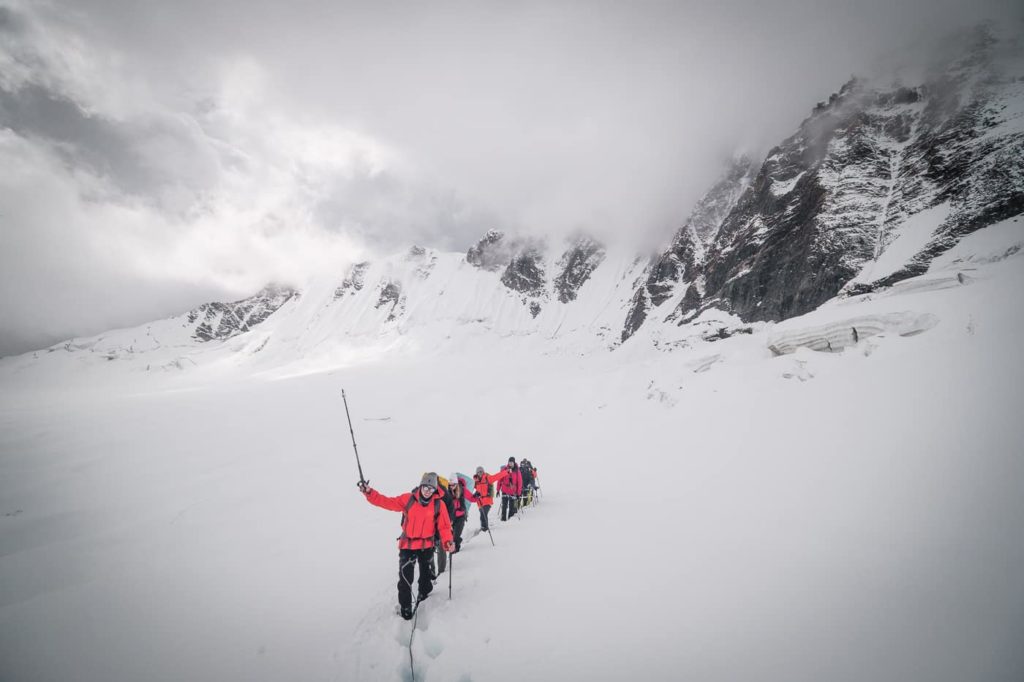
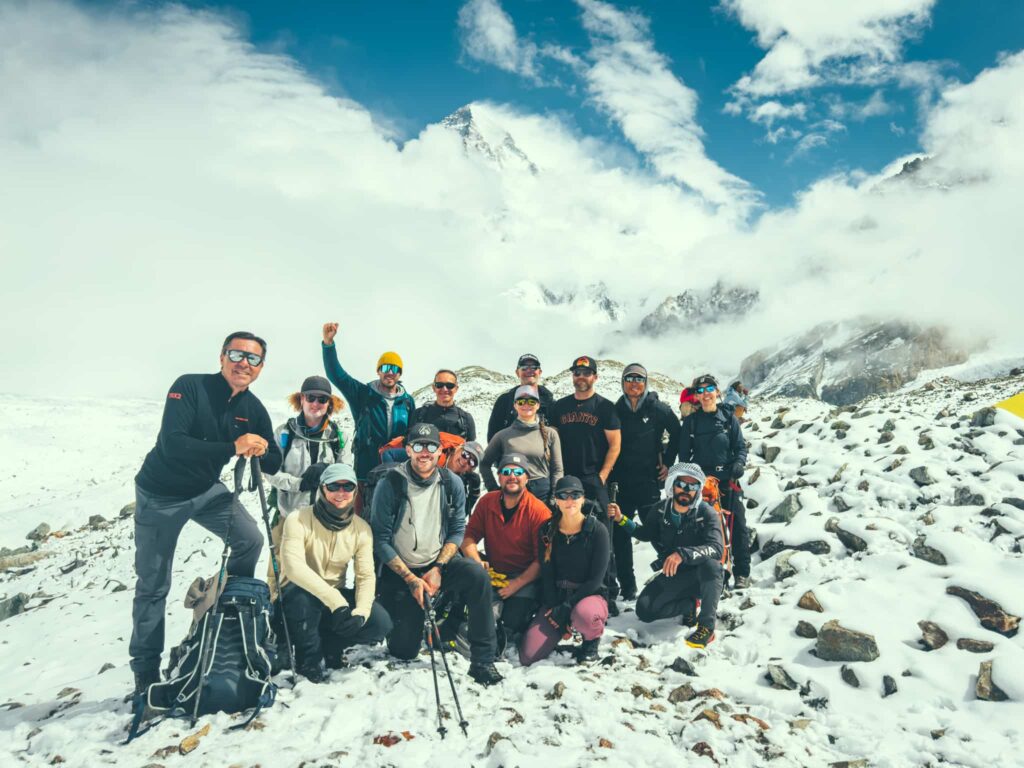
Take our K2 Base Camp trek in Pakistan, for example. We always aim to cross the 5,500-meter Gondogoro La to round out the expedition. Reaching that pass is often the perceived highlight for travelers before they ever touch the Baltoro. The reality, however, is that a sudden snowstorm, a shifting crevasse, or an increase in rockfall can shut the route down overnight.
While a reroute stings in the moment, standing out there in the Karakoram makes you realize the true value of experience lies in the pursuit itself.
If you demand a flawless, guaranteed outcome for your annual leave, that environment will frustrate you. For us, a healthy dose of unpredictability is a core pillar of adventure. The raw attempt and the camaraderie built while exploring the unknown are what make the effort worth it.
We Can Make a Positive Impact with Tourism
Travel is a force for good. Full stop.
We aggressively push back against the narrative that one should feel guilty for wanting to see the world. The negative impacts of tourism we discussed earlier are not inevitable consequences of travel. We see them more as failures of imagination.
This is easily overcome because overtourism is simply a problem of concentration. The moment you step off the main tourist trail, you stop being a burden on infrastructure and start becoming a vital part of a local economy.
In the remote regions we operate in, your presence provides tangible alternatives to exploitative labor. When a community can earn a sustainable income through hosting trekkers, guiding climbers, or sharing their culture, they no longer have to rely on industries that destroy their environment, like illegal logging, poaching, or dangerous mining work.
You enable them to choose.
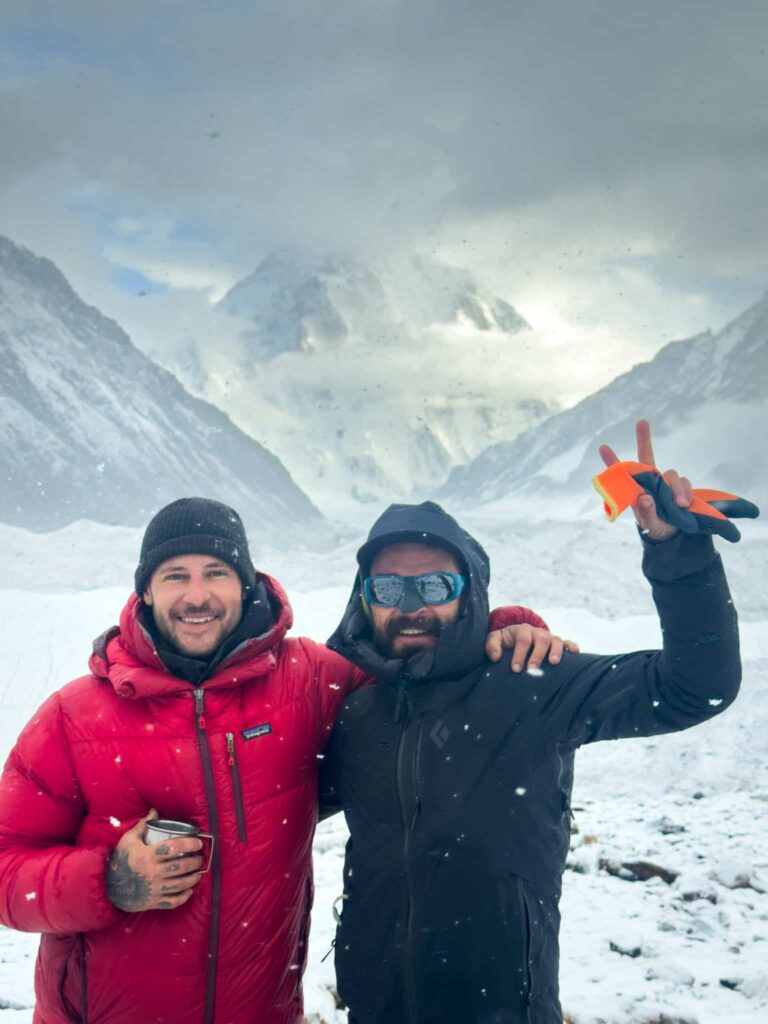
We build our expeditions hand-in-hand with local partners to ensure the benefit stays where it belongs. We guarantee that sharing a meal in a yurt or hiking a silent valley will stay with you longer than a cocktail on a crowded beach in Thailand ever could.
Here is how traveling to the “wrong” places creates the right impact:
- Economic independence – In many remote valleys, tourism is the only viable cash economy. Your visit puts money directly into the hands of families, allowing them to fund schools, healthcare, and infrastructure without waiting for government aid that might never come.
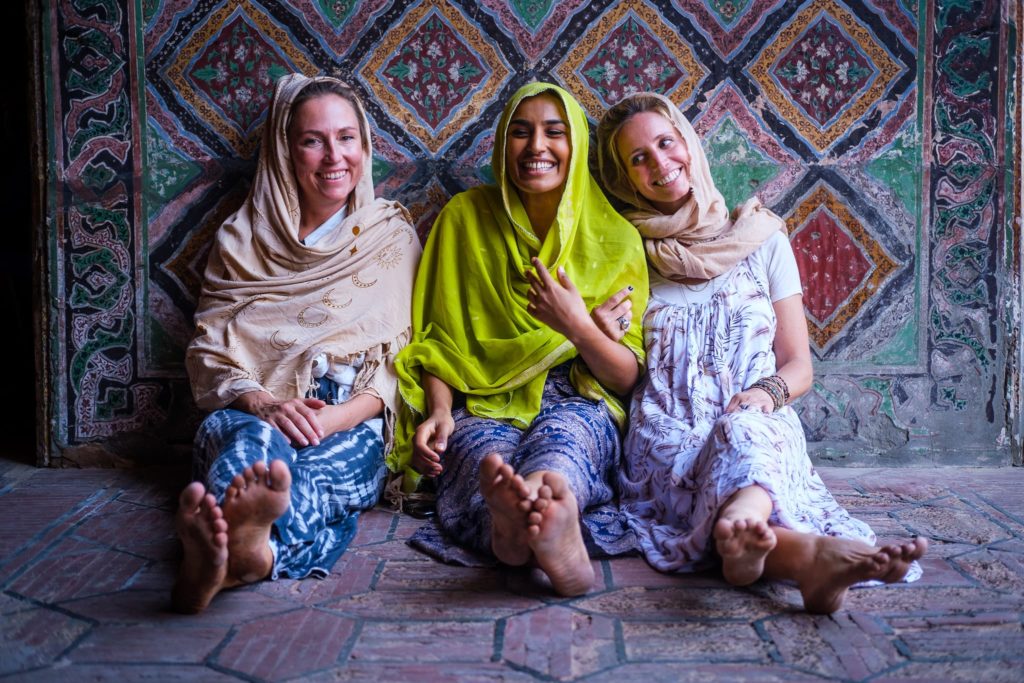
- Cultural exchange – Connection works both ways. You are engaging with people who are often just as curious about your life as you are about theirs. This breaks down stereotypes and builds genuine respect between cultures that might otherwise never meet.
- Preservation – When locals see that visitors value pristine nature, they have a powerful financial incentive to protect it. Tourism turns a standing forest or a snow leopard into a renewable resource worth more alive than dead.
Travel is a privilege, and when you do it right, it is a powerful tool for good. So stop feeling guilty, leave the crowd behind and join us in the mountains. We are going to the most beautiful, rewarding, and memorable locations on earth – the places where your presence actually matters.
Check out our trip calendar to see where we are heading next.