Central Asia doesn’t make the shortlist for most travelers. It probably isn’t on yours either, yet.
That’s not a knock on anyone. Sandwiched between Russia, China, and the Middle East, and saddled with country names that end in “Stan,” this region has been misunderstood and underreported for decades. For too many people, the Stans conjure images of visa headaches and geopolitical grey zones rather than what actually exists out there:
Epic mountain ranges, ancient trading cities, true nomadic cultures, incredible food, and some of the most disarming hospitality we’ve ever encountered anywhere on earth.
We’ve been running expeditions here for years – from the emerald lakes and jagged granite of the Kyrgyz Tian Shan to the cathedral valleys of Tajikistan’s Fann Mountains and beyond. We’ve discovered the reality to be the opposite of the reputation, and we think it’s well overdue for more people to find that out for themselves.
What to Expect from Central Asia
First, some geography. Central Asia is commonly understood as the five former Soviet republics: Kazakhstan, Kyrgyzstan, Tajikistan, Turkmenistan, and Uzbekistan.
Depending on who you ask (and how adventurous you’re feeling), the region’s natural borders bleed outward into Mongolia to the northeast, Pakistan’s Gilgit-Baltistan to the south, and Afghanistan’s remote Wakhan Corridor to the southeast.
For the purposes of this article, we’re taking the broader view. These places share too much culturally, historically, and geographically to be artificially excluded. They all remain largely free of overtourism, and some are places we know well from years of running expeditions on the ground.
The Silk Road
What unites Central Asia more than anything else is the Silk Road. For over a thousand years, the great trading arteries between China, Persia, India, and Europe converged directly through this part of the world.
Merchants, scholars, armies, ideas, and languages all passed through here. Today, anybody traveling to Central Asia will quickly realize that every single one of them has shaped the region profoundly.
The evidence is everywhere. You’ll taste it in the food, and feel it in the rhythm of daily life.
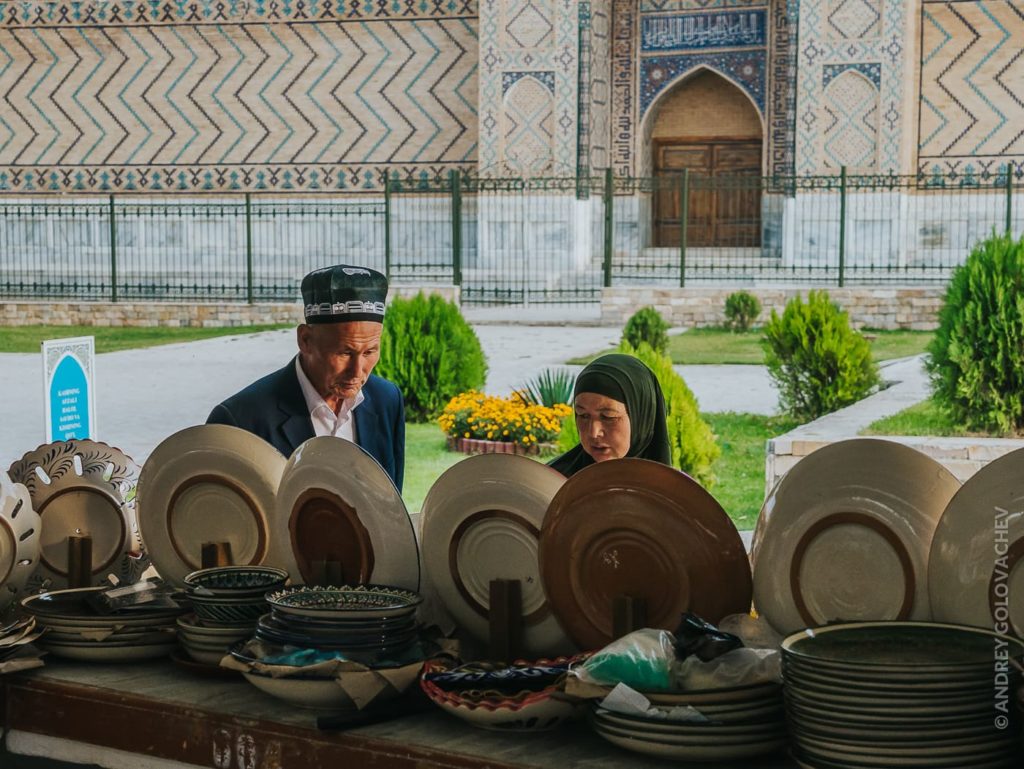
It’s in the tilework of Samarkand’s Registan: one of the most arresting public squares ever built. It’s in the carved wooden doorways of Khiva, where people still live inside walls that once enclosed one of the most notorious slave markets in the world. It’s in Islam’s deep roots across the region, carried here by Arab expansion in the 7th and 8th centuries and woven permanently into the social and cultural architecture.
For a crash course in Silk Road, we highly recommend picking up Peter Frankopan’s History of the Silk Roads, which is one of the most digestible, contemporary reviews of the region’s history that we’ve ever read.
The People
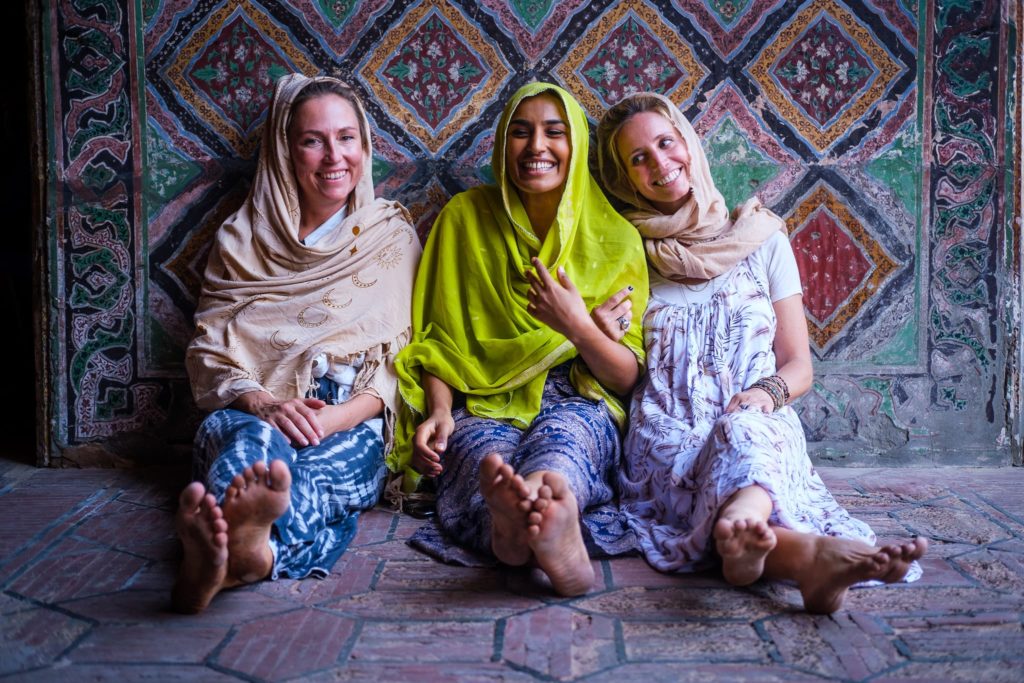
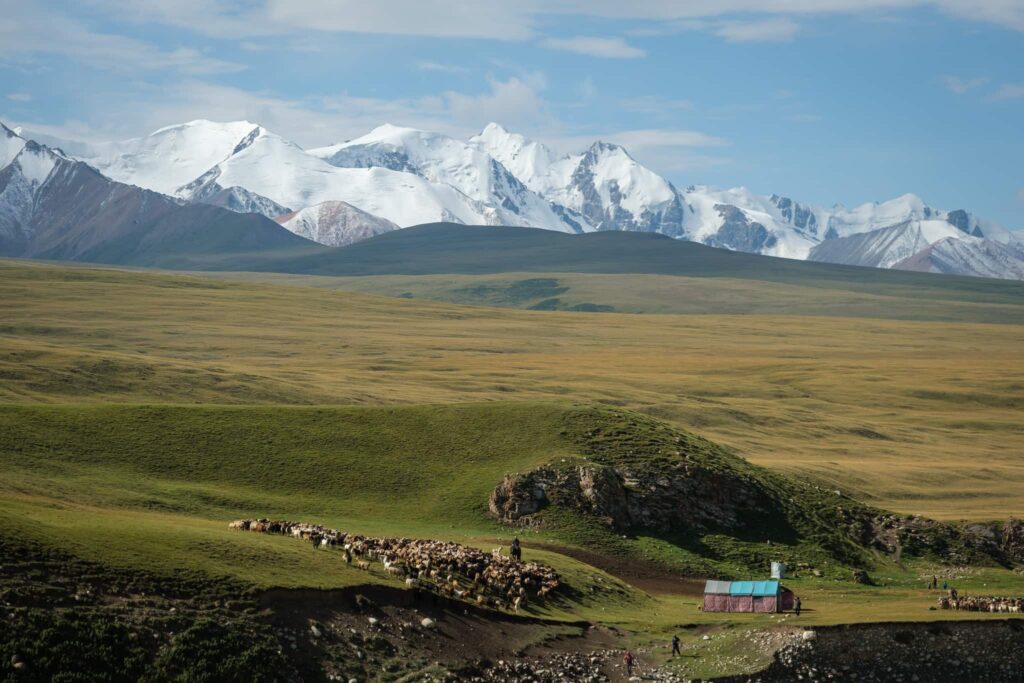
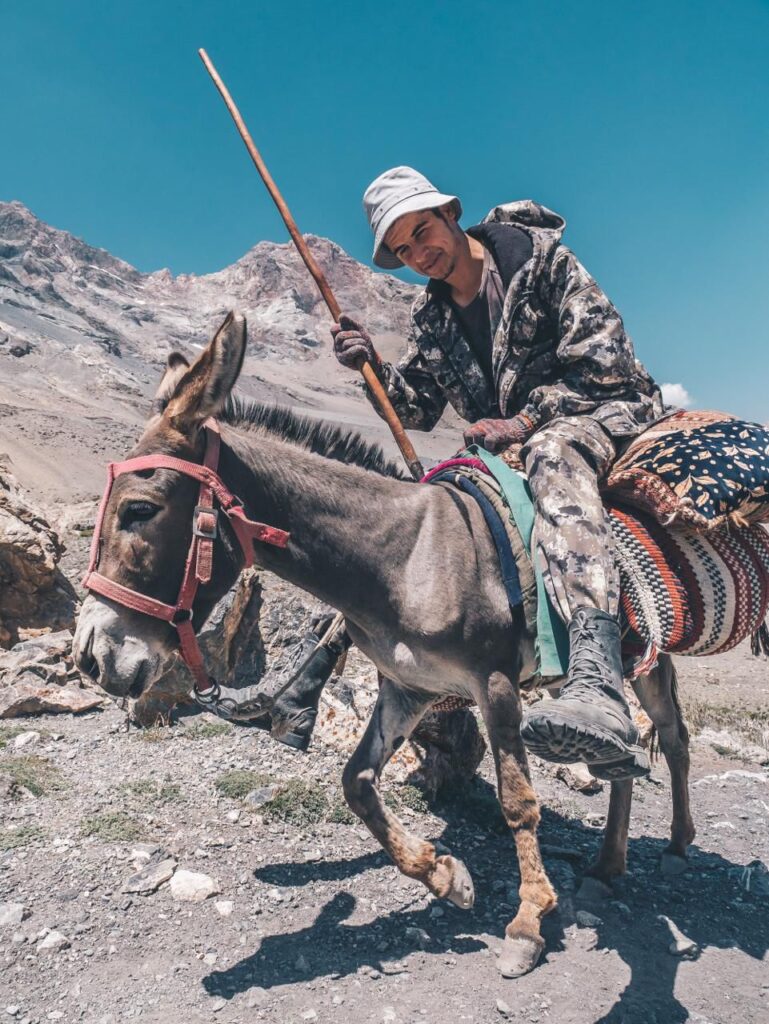
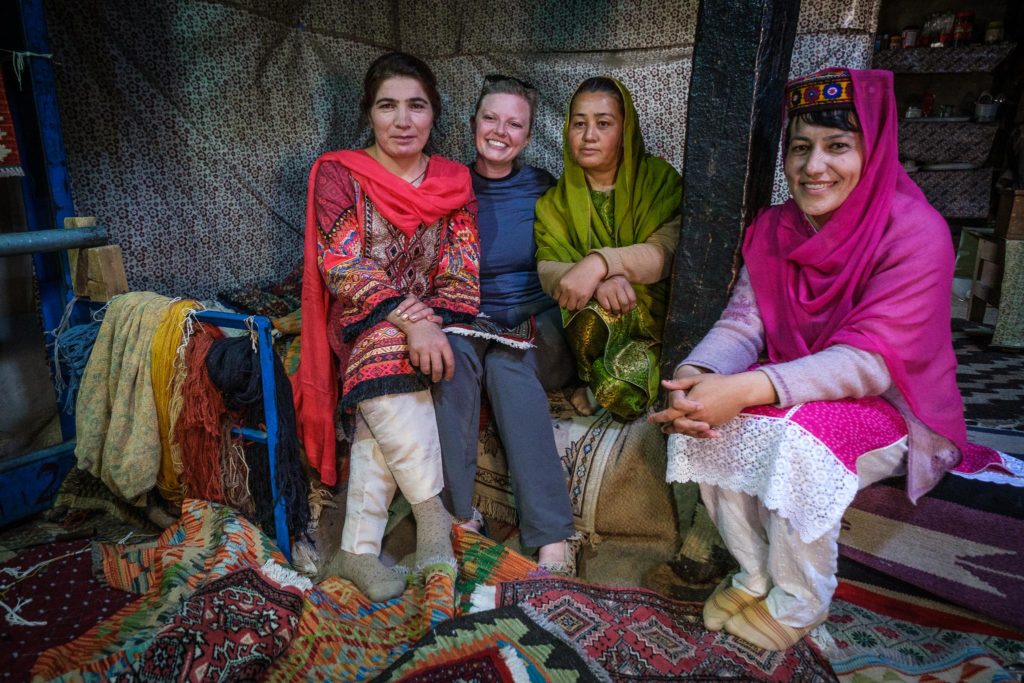
The hospitality of Central Asia is the thing that catches most first-time visitors completely off guard. For the nomadic people of the steppe, especially, welcoming a stranger has always been a matter of survival as much as custom.
When traveling in Central Asia, you’ll likely be waved into a family’s yurt for tea before you’ve managed to introduce yourself. We usually find ourselves with a shared meal appearing from nowhere after a long day on the trail, completely unplanned.
The people of Central Asia still exude an authentic curiosity about who you are and where you’ve come from, hardly surprising in a region that has been exchanging those exact questions with passing strangers for the better part of two thousand years.
The Landscapes
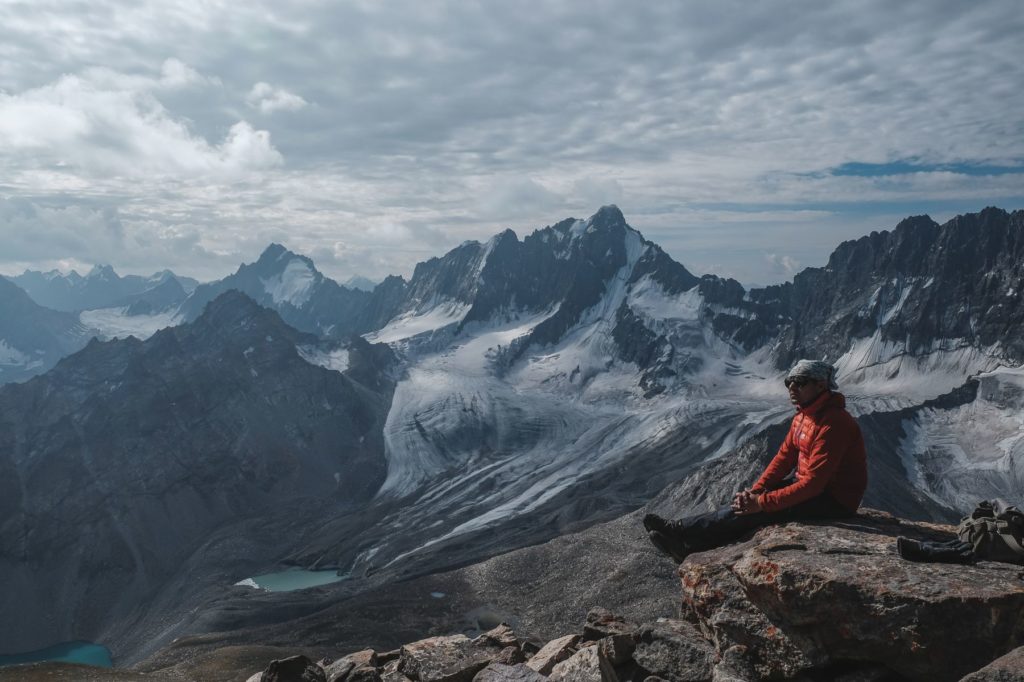
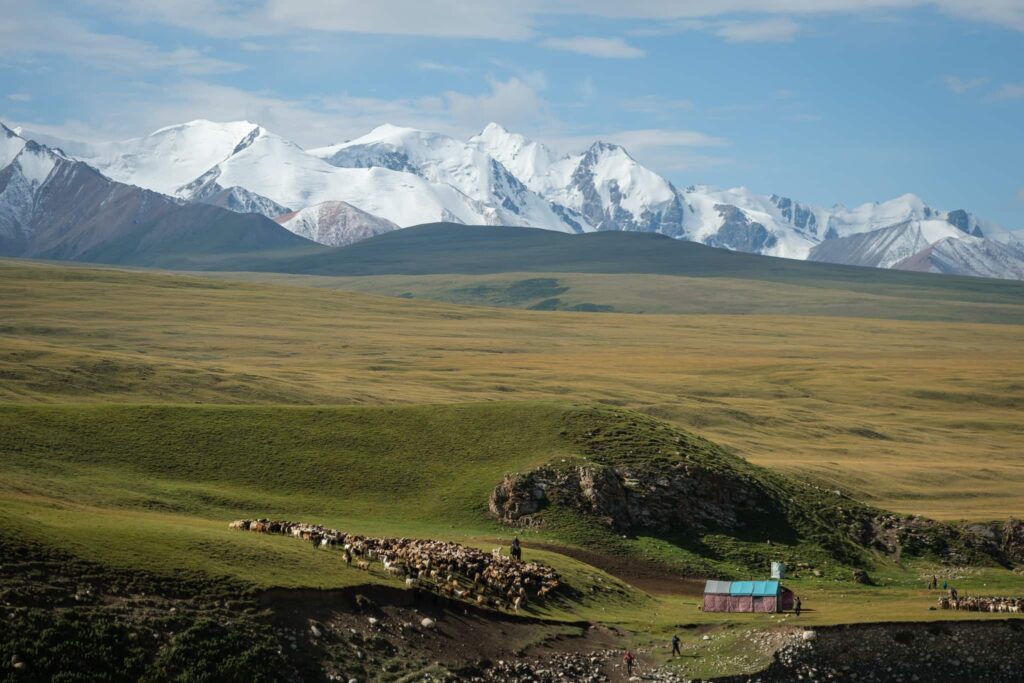
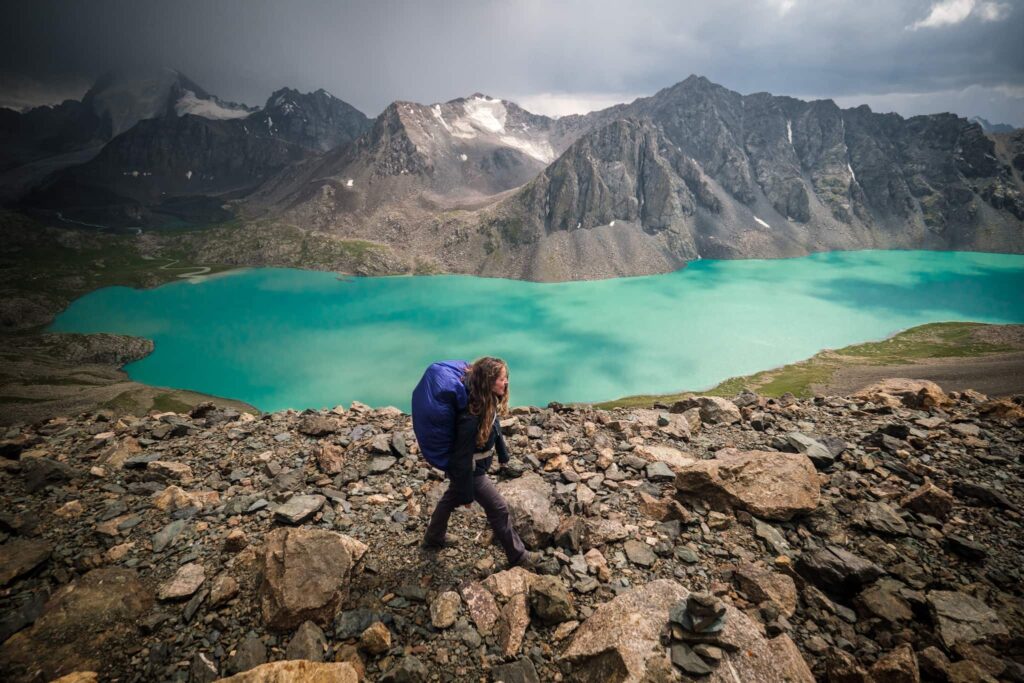
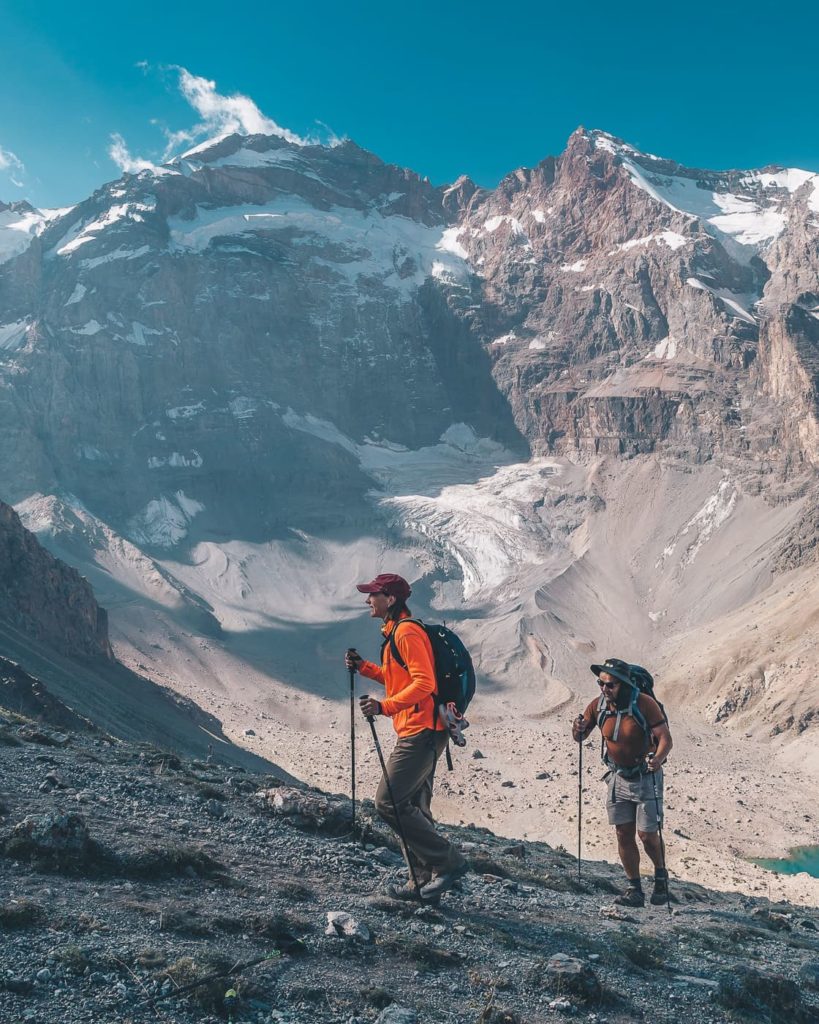
Even without the fascinating history and immersive culture, Central Asia is worth visiting just for its landscapes. The Tian Shan and Pamir mountain systems cover a vast sweep of Kyrgyzstan and Tajikistan, with peaks pushing well above 7,000 meters, dotted with crystal clear alpine lakes, and home to trekking terrain like the Fann Mountains that ranks among the finest on earth.
These are not Swiss national parks with trailhead cafes, and they are far removed from the familiar tea house treks of the Himalayas. Infrastructure in the mountain regions is limited, the terrain is harsh, and distances between settlements can be vast.
But for us, that is precisely why we love traveling to Central Asia.
If you have been dreaming of high-altitude trekking that feels remote and like a true adventure, the kind where you go days without seeing another expedition group, Central Asia is currently one of the last places on earth where that experience is still accessible.
The Best Times to Visit Central Asia
The honest answer is that the window is shorter than most people expect and worth planning around carefully.
The Mountain Regions
For trekking in Kyrgyzstan, Tajikistan, or the broader Pamir and Tian Shan ranges, the viable season runs roughly from (very) late June through to mid-September.
Outside of that, high passes close, snowfall is unpredictable, and the logistics of planning a trekking expedition become quite challenging.
Conditions for trekking in the mountain regions of Central Asia vary even within the ideal times. May and June bring snowmelt, wildflowers across the high meadows, and rivers running full, but some passes may still be snowbound. July and August are the sweet spot for high-altitude treks, with stable weather and the best conditions overall. September offers something different again: cooler temperatures, golden light across the steppe, and valleys that usually quieten down considerably from the summer peak.
A note on the World Nomad Games – If your travel window is flexible, it’s worth checking whether the World Nomad Games fall during your trip. Held every two years, predominantly in Kyrgyzstan, the Games bring together nomadic athletes from over 60 countries to compete in traditional steppe sports including kok-boru, mounted archery, eagle hunting, and more. Beyond the competition, entire ethno-villages are constructed for the event, with felt yurts, live music, and traditional crafts. We run a dedicated tour when the Games are on – check our trip calendar for upcoming dates.
The Silk Road Cities
Uzbekistan’s great cities, Samarkand, Bukhara, Khiva, operate on a different calendar entirely. Spring and autumn are the ideal seasons, bringing mild temperatures and manageable crowds.
Summer in the Uzbek lowlands is brutal, however, with temperatures regularly pushing above 40°C! Locals call the hottest days of summer (ironically) chilla, and it’s usually a time of lower activity. While the cities are accessible year-round, July and August are genuinely uncomfortable for anyone planning to spend serious time on foot. We limit our travels during this period, when possible.
Mongolia
Mongolia operates on its own rhythm and deserves special mention. It is one of the best tangential countries in Central Asia for a well-rounded trip, combining epic horse trekking through the Altai Mountains with cultural experiences that are genuinely hard to find anywhere else.
If your window is flexible, July is worth timing a trip around specifically. Naadam, the national festival celebrating wrestling, horse racing, and archery, takes place across the country in mid-July and offers a window into Mongolian culture that no amount of steppe trekking alone can replicate.
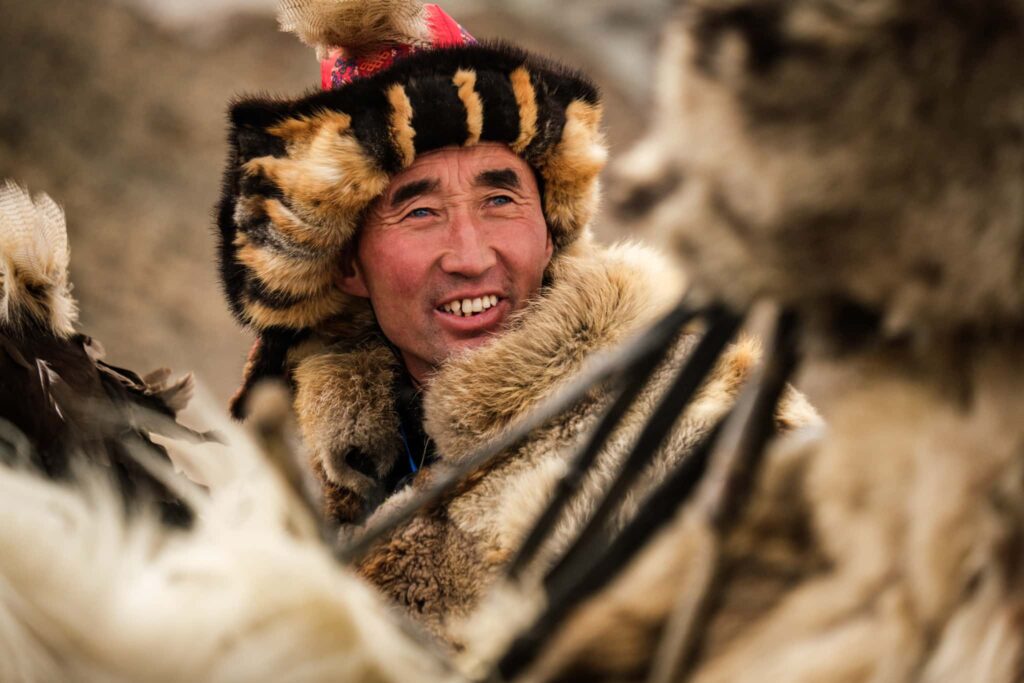
For those drawn to the Kazakh eagle hunters of the Altai, autumn is the season when the hunting tradition comes alive as temperatures drop and the landscape turns.
Is Visiting Central Asia Safe?
This is usually the first question people ask, and the honest answer is: yes, it’s safer than you think. The “Stan” associations that put people off tend to reflect geopolitical anxieties rather than ground-level reality. Internal politics do flare up and cause unrest within regions at times, but these rarely, if ever, affect foreign visitors.
Kyrgyzstan and Kazakhstan consistently rank as the safest countries in Central Asia for independent and group travelers. Both are politically stable, have well-established tourism infrastructure, and see relatively low levels of crime directed at visitors.
Tajikistan and Uzbekistan are close behind, with Uzbekistan in particular having opened up dramatically over the last decade and now welcoming millions of visitors annually without incident.
Turkmenistan is the outlier and is still tightly controlled and requires formal tour operator sponsorship. Though even there, safety for visitors is rarely the concern. Afghanistan’s Wakhan Corridor, which borders Tajikistan, attracts a small number of serious adventure travelers each year, but requires careful planning and is not something to approach casually.
The standard travel precautions apply everywhere: register with your embassy if required, consider travel insurance, and if you are heading into remote mountain regions, go with an operator who knows the area. High-altitude environments carry their own risks regardless of the country, and Central Asia’s backcountry is no place to be underprepared.
In our experience, the biggest safety net in Central Asia is the hospitality of the people themselves. Getting into difficulty here and finding nobody willing to help is something we’ve never experienced or even heard of after years of traveling here.
Our Favorite “Stans” to Visit
Kyrgyzstan is one of the most accessible entry points to the region and arguably the best stan country to visit for first-timers. It’s visa-free for most Western passport holders, and it delivers a comprehensive Central Asian experience in a truly concentrated form. You’ll get high mountains, nomadic culture, extraordinary food, and some of the warmest people we’ve encountered anywhere.
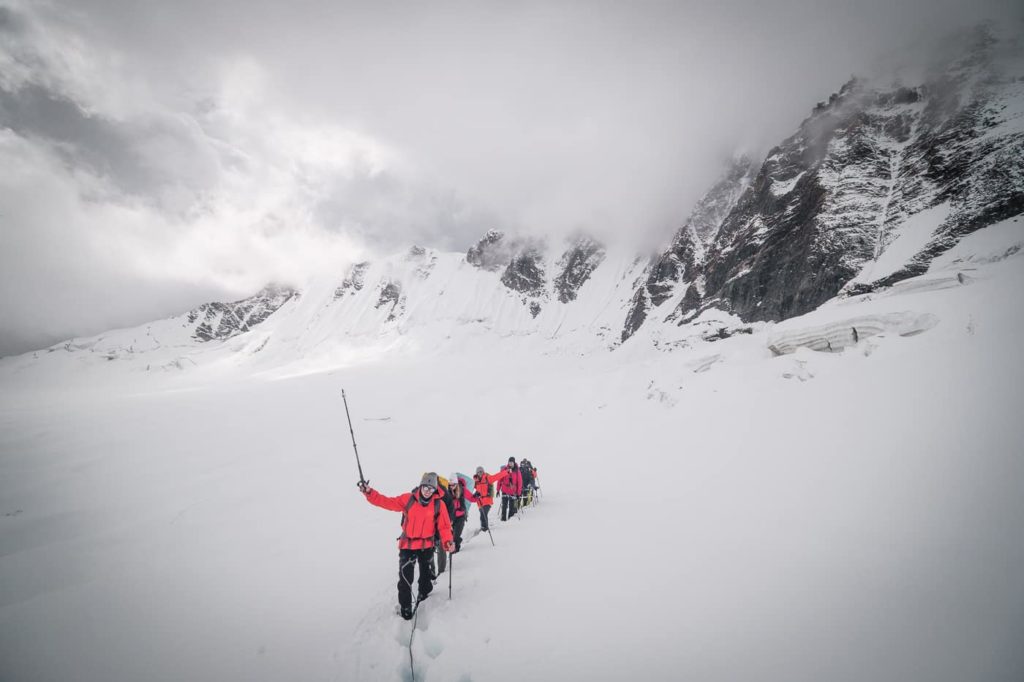
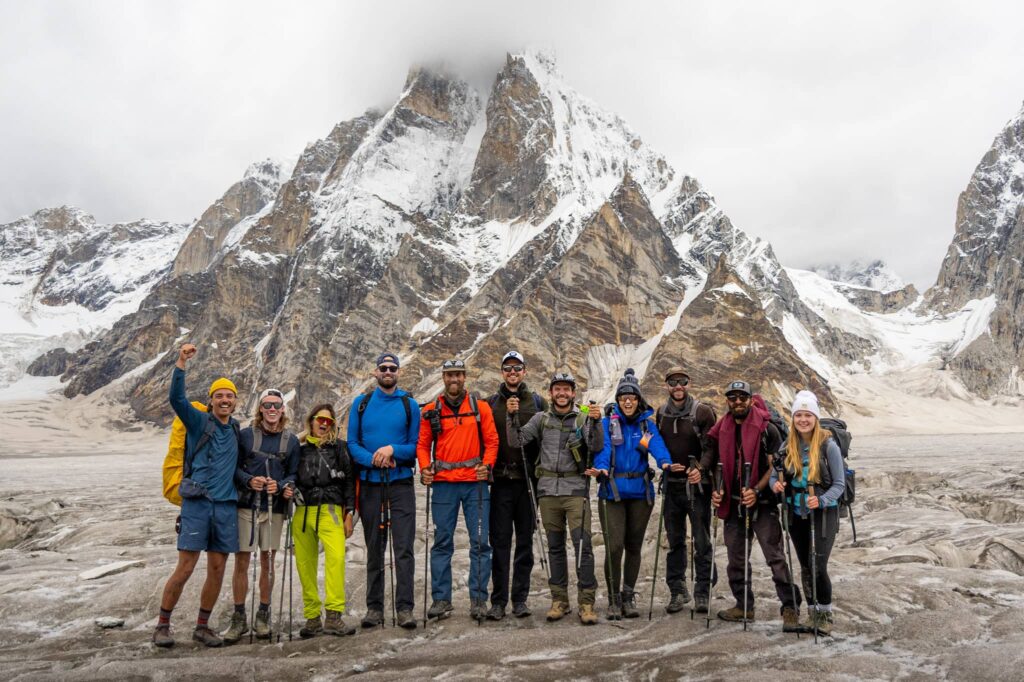
A trip to the Ak-Suu and Karavshin Valley is particularly epic. It is one of the finest high-altitude trekking routes we’ve ever done, crossing glaciated passes and camping beneath towers of granite that have earned this corner of Kyrgyzstan its nickname: Asian Patagonia.
If you want to go deeper on what makes Kyrgyzstan specifically tick before you arrive, we put together a list of facts about the country that surprised even us after years of traveling there. Worth a read before you go.
Tajikistan is where things start to get more arid. Our Fann Mountains expedition visits the crossroads of the Pamirs and routes through some of the most undervisited trekking terrain in Asia. Jagged limestone peaks drop into turquoise lakes, ancient villages occupy narrow valleys, and the trails carry a stillness that is increasingly difficult to find these days.
We combine the mountains of Tajikistan with Samarkand, Bukhara, and Khiva in Uzbekistan as well, given their close proximity, which makes this one of the most well-rounded itineraries we run anywhere in the world. Uzbekistan’s great Silk Road cities deserve mention in their own right for anyone building a longer Central Asian trip.
Beyond the Stans
For those who want to go further, the broader Central Asian world extends well beyond the five republics, and some of its most compelling destinations sit just outside the conventional map.
Mongolia is arguably the best place to visit in Central Asia to experience true nomadic life. Our Altai Mountains expedition is part on foot, part on horseback – taking in the Potanin Glacier, traditional Tuvan nomad ger camps, and the Kazakh Eagle Hunters of western Mongolia’s Bayan-Olgii province. For those drawn to Mongolian culture specifically, we also run a Spring Festivals expedition that gives a rare window into nomadic traditions at their most alive and celebratory.
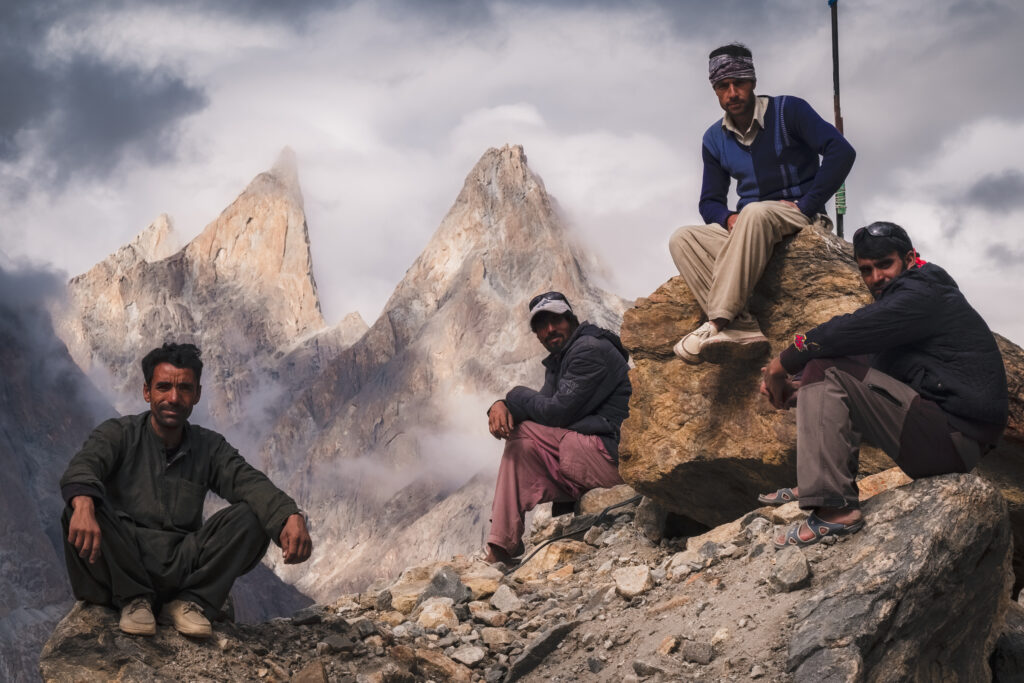
Pakistan’s Gilgit-Baltistan arguably shares more culturally with Central Asia than it does with the rest of Pakistan. The Karakoram Highway (one of the highest paved roads on earth) connects the region directly to Kashgar in western China along a route that was once a significant branch of the original Silk Road. The valleys here are spectacularly beautiful (especially Hunza) and feed into the same mountain systems, the same nomadic traditions, and the same hospitality that define the broader region.
The Wakhan Corridor in northeastern Afghanistan is a different proposition entirely. This is a narrow strip of land wedged between Tajikistan, Pakistan, and China that was drawn deliberately by the British and Russian empires in the 19th century as a buffer zone between their competing interests. Today, it remains one of the most remote and least visited valleys on earth, inhabited by Wakhi and Kyrgyz communities whose way of life has changed remarkably little. For a small number of serious travelers each year, it represents a place that has not yet been touched by the infrastructure of modern tourism in any form.
Additional Tips for Traveling in Central Asia
Pack for real mountain weather
In Central Asia, checking your standard weather app is just not going to cut it. At altitude, temperatures can swing 20 degrees between midday and midnight. Afternoon thunderstorms roll in without much warning, and passes that were clear in the morning can be whited out by early afternoon.
Bring a proper insulating layer, a waterproof shell, and sun protection that takes seriously the fact that you are traveling at elevation.
Learn ten words of Russian
You won’t become fluent between now and your departure date, and nobody expects you to.
But a handful of Russian words, which is the lingua franca following Soviet occupation, will shift how people respond to you in ways that are disproportionate to the effort involved. In Kyrgyzstan and Tajikistan, especially, making any attempt in the local language signals respect and curiosity rather than the passive tourist expectation that someone will sort it out for you.
Carry cash, and more of it than you think
ATMs outside of major cities in Central Asia are unreliable at best and nonexistent at worst. USD is widely accepted alongside local currencies throughout the region, and many guesthouses, local guides, and market vendors operate entirely in cash. Work out your daily budget before you leave, add a comfortable buffer, and bring it in small denominations.
A crisp $100 bill is good when exchanging money at official offices; a handful of $5 and $10 bills is almost always more so in day-to-day transactions.
Recalibrate your relationship with time
The majority of roads in Central Asia are long, unpaved, and suffer from questionable conditions. When planning a Central Asian itinerary, you should know that a four-hour drive on paper can become much longer when you mix in a river crossing, a flat tire, or a flock of stubborn sheep. Leave a day or two of buffer in your flights as unexpected delays are common, but in Central Asia, sometimes the most memorable parts of the trip!
Go with someone who knows the ground
Central Asia is not a region that truly rewards superficial visits, particularly in the mountains. Permits, restricted zones, military checkpoints, and rapidly changing weather are logistical considerations. And that’s before you factor in the language barrier in remote areas where Russian gives way to Kyrgyz, Tajik, or Mongolian dialects.
A good local operator opens doors that are usually closed to independent travelers: think the family homestay that isn’t on a booking platform, the valley that requires a border zone permit, the guide who grew up three villages over and is greeted like a returning son.
Choose Central Asia for Your Next Adventure
The opportunity of visiting Central Asia is at a rare moment. The infrastructure has improved, the visas have loosened, and word is slowly getting out – but the trails are still empty, the valleys are still quiet, and you can still go days in the Tian Shan or the Pamirs without seeing another group.
That window won’t stay open forever.
If you’ve read this far, you probably already know that Central Asia is beyond worth visiting; it’s a must for anyone who prefers experience and adventure over a poolside cocktail. If that sounds like your sort of trip, check out our calendar and get in touch; we’d love to take you there!