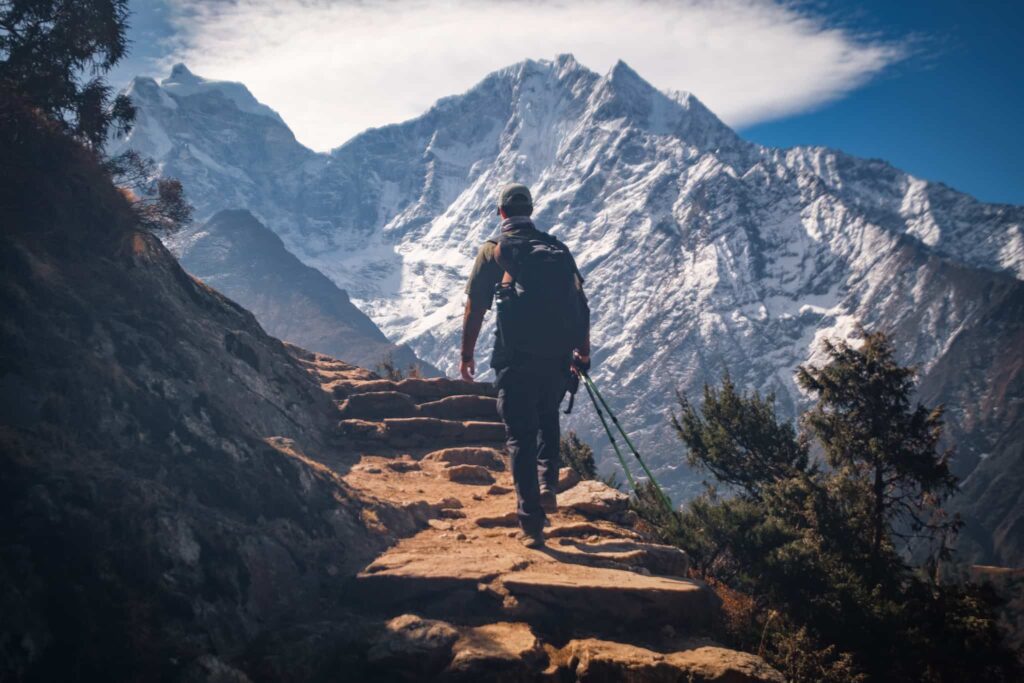
We’ve been running expeditions to remote corners of the planet for years including to the Karakoram, the Altai, the Andes and more. On those trips, if you forget something, you just don’t have it. But the first thing to know when planning what to pack for a trek in Nepal is that it is much more forgiving.
Nepal has some of the best trekking infrastructure on earth. Every major trekking route in the Khumbu, Annapurna, Langtang, and Manaslu region provide teahouse accommodation offering warm meals, comfortable beds, and even sometimes hot towels!
This means your Nepal trekking packing list is going to look quite different from what we’d send clients into western Mongolia with.
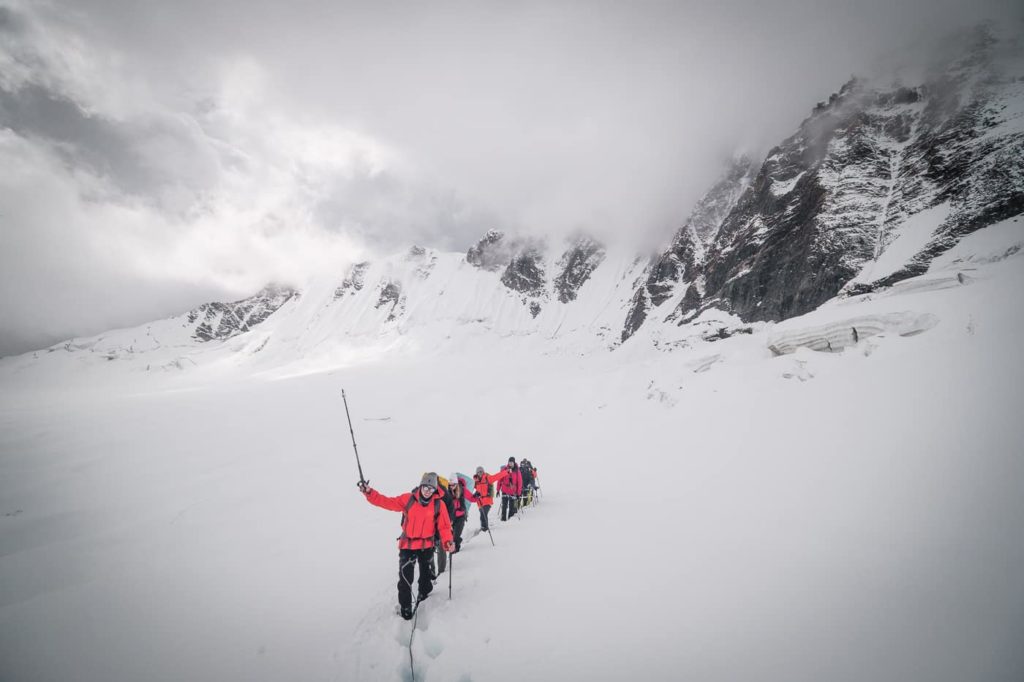
Most of Epic’s Nepal expeditions are peak climbing trips though, and as soon as you leave the last teahouse for base camp, you’re back in full expedition mode. But whether you’re coming to Nepal to enjoy a pure trekking season in the Khumbu or to bag your first 6,000m summit, below is a gear list we give our own clients, with speciality climbing gear separated if you’re pursuing the latter.
Packs & Baggage
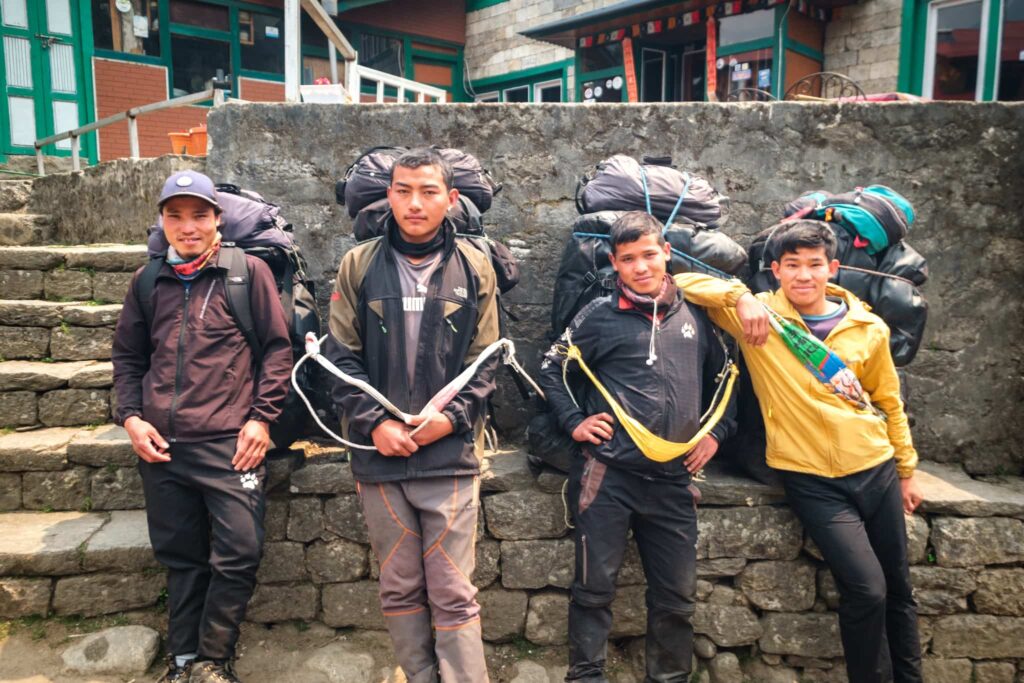
Nepal’s trekking routes all come with porters, and your duffel is what they carry. This is where the bulk of your gear lives: sleeping bag, clothing layers, camp shoes, and anything you won’t need on the trail that day. Go with a large expedition duffel in the 95–120 liter range (the 120L XL if you are on a climbing expedition) which is enough room so you’re not cramming everything each morning. These are built to handle the strapping and hauling that comes with daily porter transport.
Keep it under 20kg. If it goes over, you pay more.
Epic’s recommendation: NorthFace Base Camp Duffel XL
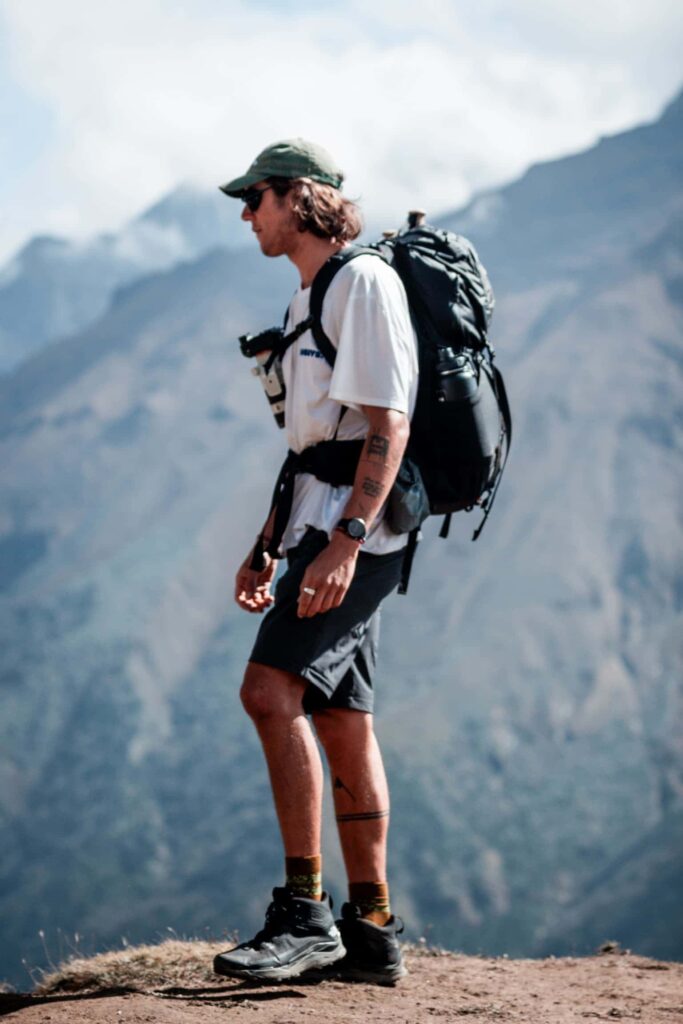
Note: backpacking in Nepal along most of the main trails can no longer be done without a guide. While it’s still up in the air in the Khumbu, the general consensus is that you’ll likely be trekking with a guide. However, you still have the option of carrying your own larger pack if you don’t want to user a porter. If so, go for a 55-65L pack.
Your daypack only needs to carry what you’ll use on the trail that day: water, layers, snacks, sunscreen, camera, passport, and a few extras. A 25–36 liter pack is the sweet spot. Don’t go bigger. It’ll just become a dumping ground for stuff that should be in your duffel. Make sure the pack comes with a rain cover, or pick one up separately (easy to find in Thamel).
And wear it on an actual trek before you arrive to ensure it’s a good fit.
Epic’s recommendation: Osprey Talon
Boots & Footwear
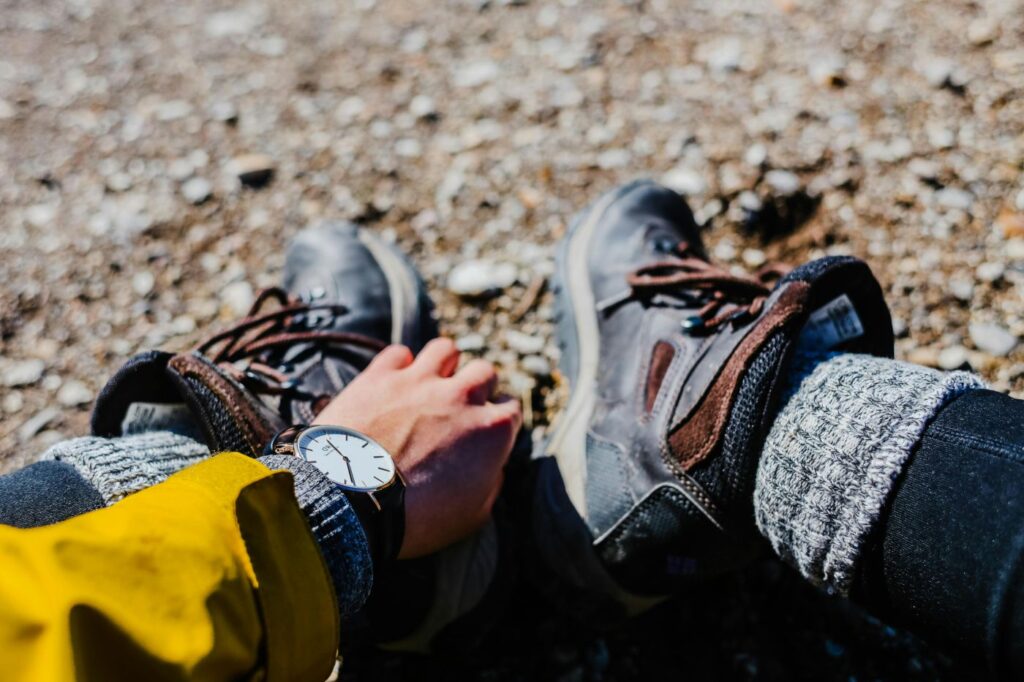
Your boots are the single most important item you’ll pack for trekking in Nepal. The trails across the Khumbu and most Himalayan routes are rocky, uneven, and regularly wet. You need something that can handle all of that without turning your feet into blisters or having them break apart on you a few days in. Go with a waterproof, mid-cut hiking boot with solid ankle support. Avoid trail runners for anything above 4,000m.
And break them in. Without fail, someone will show up to every trip with a fresh pair and by the end of day one, they’re our guides’ best friend since they’ll be waking up early to help put bandaids on your feet every morning. Epic’s founder Chris Lininger has been using the Lowa Renegade GTX in Nepal, the Karakoram, and beyond for years and swears by them for all approach trails.
Epic’s recommendation: Lowa Renegade GTX Mid
After a long day on the trail, getting out of your boots matters more than people expect. A pair of lightweight sandals or slip-ons is what you change into at the teahouse in the evening and what you’ll be glad to have at base camp too. They don’t need to be fancy and even a pair of crocs work great and are light.
Oh, and if you want to splurge, pack a warm pair of down slippers like the North Face Thermoballs and we guarantee you’ll be the envy of the teahouse.
Epic’s recommendation: Teva Hurricane XLT2
- Alpine Boots (B1/B2) (Optional)
Not required for most trekking in Nepal. If you’re doing Everest Base Camp, Gokyo Ri, the Three Passes, or any of the major trekking routes, your regular hiking boots will get you there and back.
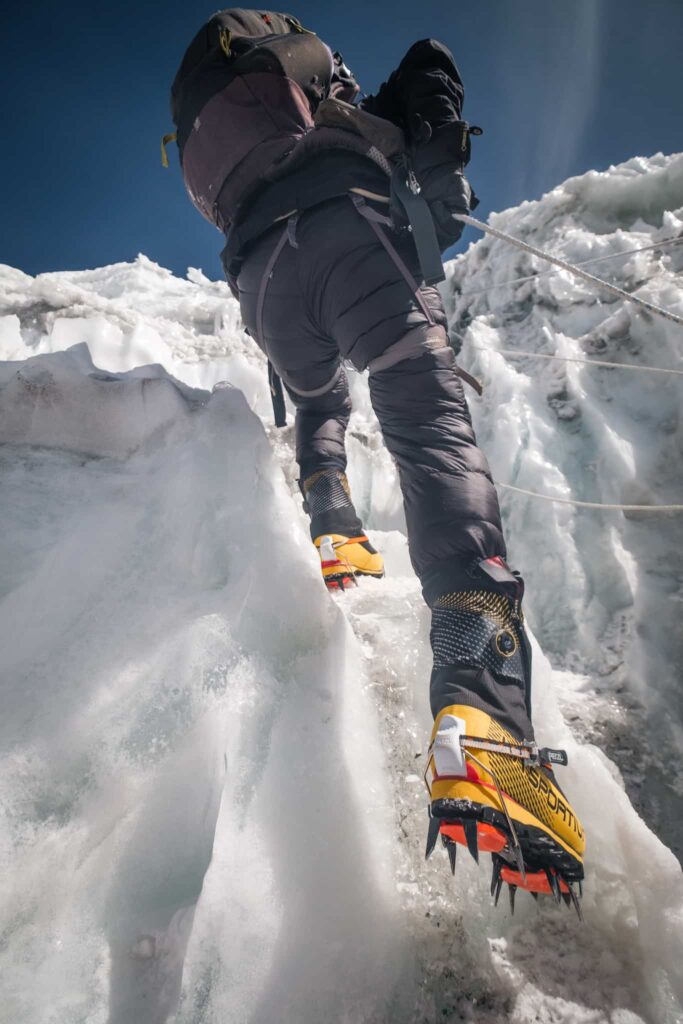
Where these become necessary is on trekking peaks like Island Peak, Lobuche East, and Mera Peak where you’ll be using crampons and encountering serious snow. A B1/B2 boot handles heavy snow conditions and, crucially, has the rear welt your crampons need to attach properly. For anything above 6,000m you’ll need something more technical, but that’s outside the scope of a general Nepal trekking packing list.
Epic’s recommendation: La Sportiva G2 Evo
Speciality Items
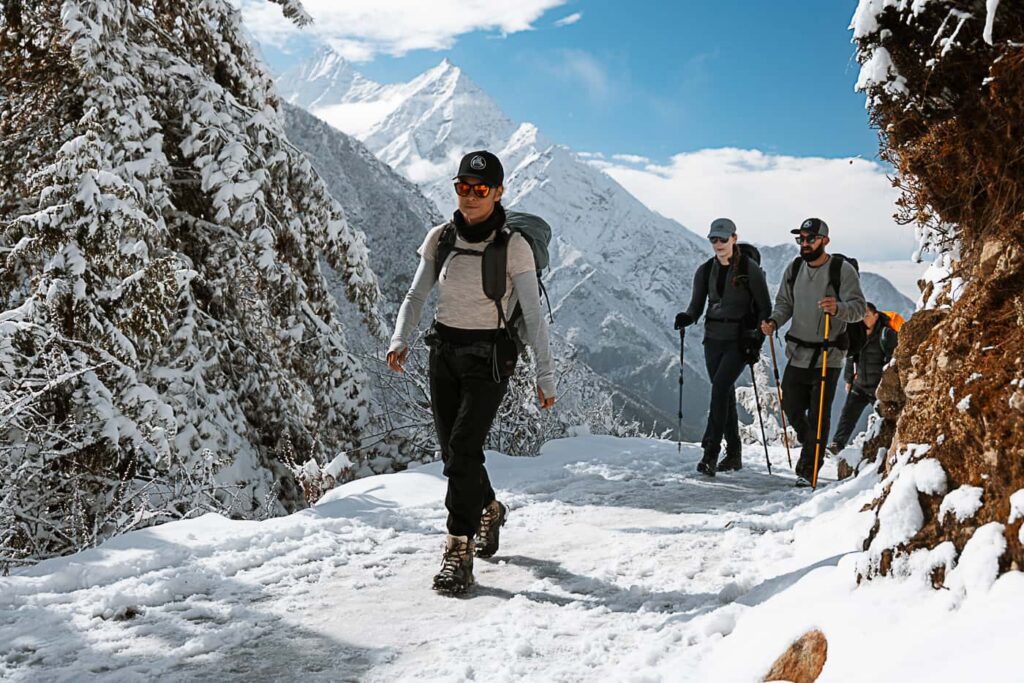
You’ll want trekking poles for Nepal’s trails. Long descents on rocky terrain put real stress on your knees over a multi-week trip, and poles make river crossings and loose scree significantly more manageable. Not mandatory, but in our experience leading trips in Nepal, most people who bring them are glad they did.
Epic’s recommendation: BD Pursuit Shock
An essential for camp and teahouses in Nepal. Early morning starts are common whether you’re pushing for a summit or early morning viewpoint like Kala Patthar. While teahouses typically have solar power, they usually turn lights off at night to conserve power. So a headlamp is essential to find the toilet or for some nighttime reading. We always recommend getting a rechargeable model and packing spare batteries.
Epic’s recommendation: Petzl Actik Core
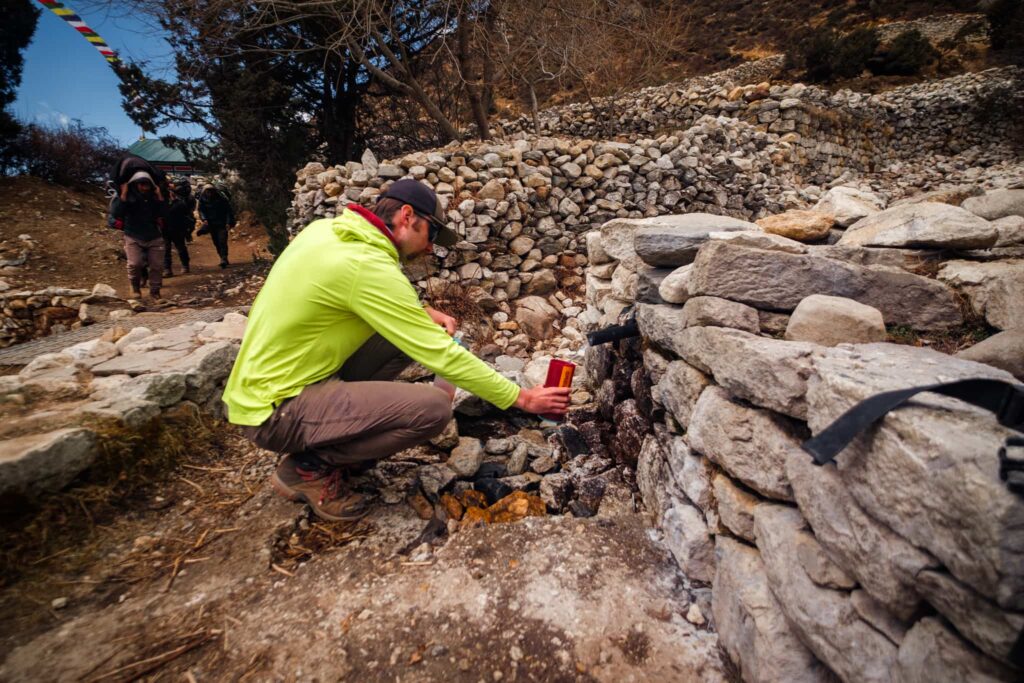
Teahouses along most Nepal trekking routes sell drinking water, but the costs add up over a long trip and single-use plastic is a real and growing problem in the Himalayas. A Grayl GeoPress filters any Himalayan water source including streams, taps, and rivers in seconds, and unlike Sawyer or Lifestraw options, it purifies viruses too and lets you carry your clean water. We’ve used it across every Epic expedition and won’t recommend anything else. Read our full Grayl GeoPress review here.
Epic’s recommendation: Grayl GeoPress
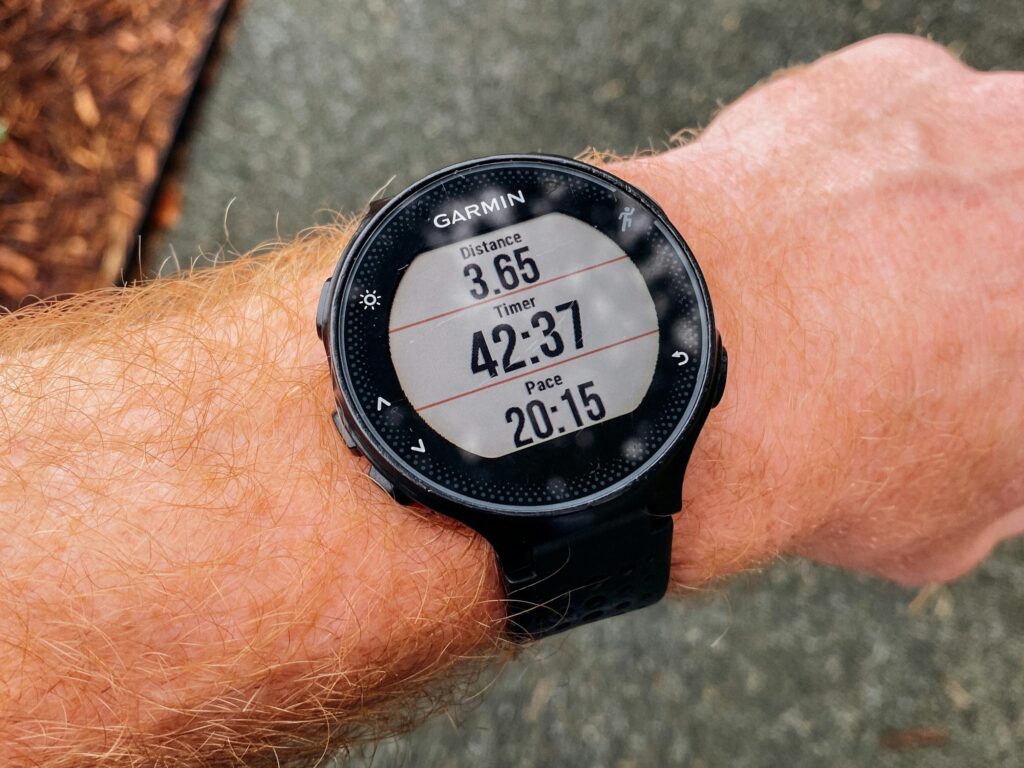
- GPS Watch (Optional)
A GPS altimeter watch tracks altitude, heart rate, and navigation in a tiny package. Modern versions are also great at keeping track of acclimatization data. They’re not essential but are a really useful hiking gadgets if you’re getting more serious about trips like these in Nepal or beyond.
Epic’s recommendation: Garmin Fenix or Forerunner series
- Gaiters — (Optional)
Worth packing if you’re heading out in shoulder season when snow is possible above 4,500m, or if you’re on one of the trekking peaks where you’ll hit snow before the technical sections begin. Not an essential packing item for most trekking routes in Nepal but can be especially useful if you are going in the winter off-season.
Epic’s recommendation: Outdoor Research Crocodile gaiters
- Camera – (Optional)
The Himalayas are one of the most spectacular trekking regions in the world. And an iPhone’ camera likely just won’t do these peaks justice. If you’re bringing camera gear for hiking, try to make sure it’s lightweight and weather sealed.
Clothing and Layering
Arguably your most-used layer on any Nepal trek. Temperatures swing dramatically between elevations. Expect warm and humid weather in the lower valleys and extremely cold and dry temps above 4,000m. A good mid-weight down jacket serves as an essential layering piece for all of it.
The instinct for many first-timers is to pack one very heavy jacket and rely on it for everything. That’s a mistake. A versatile mid-weight layer you can combine with a shell and a fleece will serve you across a far wider range of conditions. We’ve broken down fill power and insulation if you want to understand what to look for before you buy.
Epic’s recommendation: Patagonia Down Sweater Hoodie
- Heavyweight / Hi-Loft Down Jacket (Optional)
If you’re heading to base camp on a trekking peak, pack this too. Not essential for pure trekking routes, but at base camp and above, a high-loft down jacket earns its weight fast.
Epic’s recommendation: Rab Batura Jacket
Nepal’s weather moves fast and at altitude, wet and cold together is a serious combination. Your rain jacket seals in warmth, blocks wind, and protects everything underneath. On the Annapurna Circuit in particular, afternoon rain is almost a daily occurrence and you’ll put this on every day.
Epic’s recommendation: Arc’teryx Beta AR Jacket
- Base Layers – Top and Bottom
Merino wool is the clear choice for trekking in Nepal. It manages moisture, regulates temperature, and resists odor far better than synthetics over a multi-week trip. Avoid cotton for active clothing. Cotton holds moisture against your skin. That becomes a real problem once it gets cold.
Epic’s recommendation: Icebreaker 200
- Trekking Shirts — 2-3
Go synthetic or merino. A thin, hooded sun shirt is useful at lower elevations where UV is intense and temperatures are still warm. Bring 2-3 and rotate. You can usually wash your shirts in a stream or bucket at the teahouses.
Epic’s recommendation: Free Fly Shade Hoodie
Bring pants that are comfortable, durable, and have enough movement for steep terrain. The ones with zip off lower sections can be useful if it gets hot.
Epic’s recommendation: Kuhl Renegade Rock Pant
- Sun Hat and Beanie
Bring both. The sun above 3,000m is stronger than it feels. A wide-brim hat or decent cap that keeps your face shaded for the trail and a beanie for cold mornings and at the teahouses/camp.
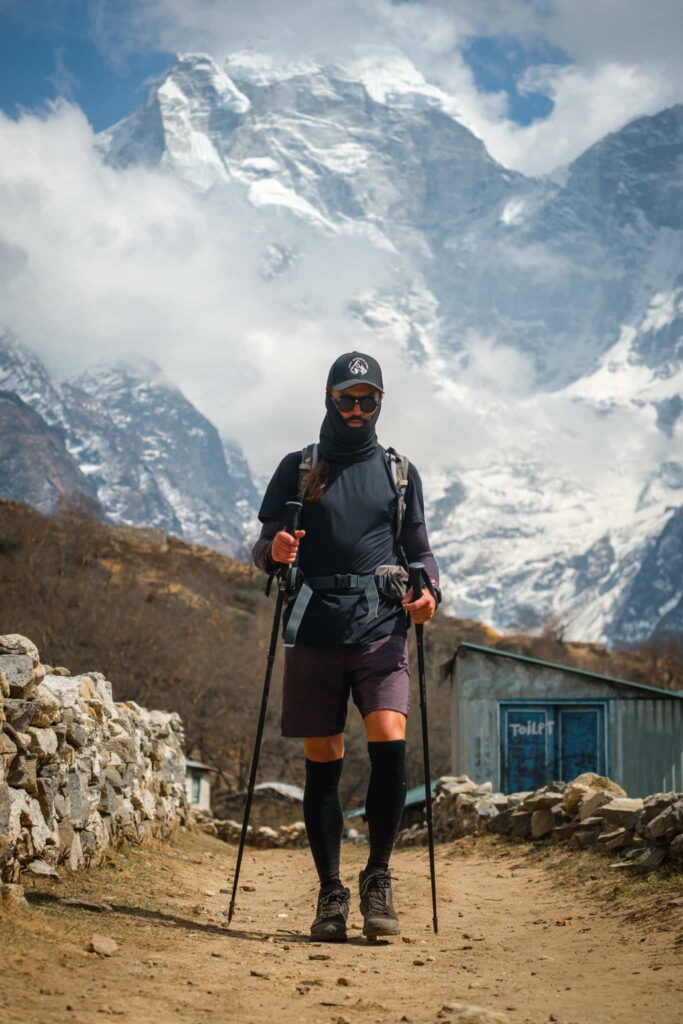
A hiking buff is perhaps the most useful trekking item to take to Nepal. The trusty neck gaiter works as a dust mask, sun cover, or ear warmer depending on conditions.
Epic’s recommendation: Buff Merino
Your hands get cold on early morning starts and at altitude. A lightweight liner glove covers most of the trek. If you’re heading to a trekking peak, bring a warmer pair too.
Epic’s recommendation: Black Diamond Lightweight Screen Tap Gloves
- Merino Trekking Socks – 5-6 pairs
Don’t cut corners and choose proper sock material. Merino manages moisture and temperature better than anything else and holds up over a long trip. Quality pairs run over $20 each but are worth every cent.
Epic’s recommendation: Darn Tough Hiker Boot
- Underwear – 4-6 pairs
Merino or synthetic. Pack more than you think you’ll need.
Other Personal Gear
Teahouse bedrooms are essentially uninsulated plywood boxes, and once the sun drops behind the peaks, the temperature drops fast. You’ll want a very warm sleeping bag for teahouses A 0F/-17C sleeping bag might seem overkill and it may be for the lower treks, but we get asked this a lot and always recommend going for the warmer bag as it’ll save you from buying another one if you ever plan to go somewhere colder.
Epic’s recommendation: Mountain Hardwear Phantom 0F
- Inflating Sleeping Pad (Optional)
If you are pushing up to base camps for Island Peak or Lobuche East, an inflating sleeping pad is required. Pay attention to the R-value; the ground on a Himalayan glacier will suck the heat right out of you. For pure teahouse trekking, you can leave this at home since beds are provided.
Epic’s recommendation: Therm-a-Rest NeoAir XTherm
The UV index at high altitude is brutal. You need polarized sunglasses with solid side coverage to prevent snow blindness. A cheap pair from a gas station won’t cut it when you are staring at a blinding white glacier all morning.
Epic’s recommendation: Vallon Ventures
- Power Bank and Chargers
Cold weather destroys battery life. Teahouses will let you plug in your chargers and phone cables, but they usually charge by the hour to use their solar. Bring a high-capacity power bank and sleep with it inside your sleeping bag to keep the internal battery warm.
Epic’s recommendation: Charge 80 PD Power Bank
Our guides carry comprehensive medical kits, but you need your own personal first aid kit for the basics. Pack Ibuprofen, aggressive blister treatments like moleskin, and throat drops for the dry Khumbu air. Speak to your doctor about altitude sickness and plan accordingly.
Epic’s recommendation: Adventure Medical Kits Ultralight / Watertight
- Dry Bags (Optional)
We always stuffing our critical gear and clothing into various lightweight dry bags before they go into our porter duffels. This way, even if your duffel gets soaked, your gear will still be dry
Epic’s recommendation: Sea to Summit Ultra-Sil Dry Sacks
You need the capacity to carry your drinking water on the trail every day. Hard-sided Nalgene bottles are our favorite. Bladders can freeze at the hose, but a Nalgene is bulletproof. Plus, you can ask the teahouse staff to fill them with boiling water at night and throw them in your sleeping bag to stay warm.
Epic’s recommendation: Nalgene Wide Mouth 1L
- Personal Snacks
You will be eating a lot of local food in the teahouses which is great, but appetite fatigue is a very real symptom of altitude. Bring a stash of your personal snacks from home for morale and to share with your trekking friends at the end of the day or at a viewpoint.
Toiletries and Personal Hygiene
- Sun Cream (50 spf+) and SPF Lip Balm
The sun above 4,000m is absolutely ruthless. Pack a heavy-duty, sweat-resistant sun cream of at least 50 SPF. Pair that with a dedicated SPF lip balm. Cracked, sunburned lips will make eating and breathing miserable. You will be applying both of these multiple times a day, so keep them accessible in your daypack.
Epic’s recommendation: Dermatone SPF 50 Tin / Dermatone Lip Balm
- Wet Wipes
When you are trekking in Nepal you aren’t showering every day. Yes, you may have heard that hot showers are available but the reality is that higher-elevation teahouses charge a lot and they are often just a lukewarm trickle. You’ll want to pack a hefty supply of wet wipes for your daily “mountain shower”.
- Biodegradable Soap
There are no opportunities on the trip to get a reliable machine wash for your clothing. However, you will usually have enough downtime at hotels and at camp to do laundry by hand. Most camps along the trek have flowing water sources, making washing pretty straightforward. Bring biodegradable or organic soap, and always wash well away from the actual water source.
For the days you actually manage to score a hot shower, or just for drying off your face after a cold morning wash. A standard cotton towel takes forever to dry and will smell awful after a few days stuffed in your duffel. Bring a quick-drying microfiber travel towel.
Epic’s recommendation: PackTowl Personal Microfiber Towel
- Basic Toiletries (Deodorant, Toothbrush, Toothpaste)
Bring a travel-sized deodorant , alongside your toothbrush and toothpaste. Keep it simple.
Specialty Climbing Gear
If your itinerary involves pushing past base camp onto a summit like Lobuche East or Island Peak, your basic Nepal teahouse trekking gear list won’t cut it. Below is a basic technical packing list to get you started, but keep in mind that every peak is different and demands specific preparation.
- 6000-Meter Boots
Mentioned above but it’s important to note you that while you can rent these, we highly recommend bringing your own 6000-meter boots if you have them so you know they fit perfectly.
Essential for gripping the steep, icy headwalls and traversing glaciers. Make sure whatever pair you use is fully compatible with the rear welt of your mountaineering boots. We recommend buying these with your mountaineering boots before you arrive to ensure a fit.
Epic’s recommendation: Grivel G12
Moving around a crowded glacier or ascending a fixed rope means falling ice chunks and loose rock are a constant, objective hazard. Quality helmets are also available to purchase in Thamel.
Epic’s recommendation: Black Diamond Half Dome
A standard alpine harness is required to tie into the rope team and navigate crevasses safely. You want a harness that is relatively lightweight and easily adjusts to fit over your bulky down layers.
Epic’s recommendation: Petzl Altitude
- Climbing Hardware (Ascender, ATC, Carabiners, Slings)
To move up and down the fixed ropes efficiently, you need specific hardware. Pack a handled ascender (Jumar), a standard belay device like an ATC , and exactly three locking carabiners. You will also need two 60cm climbing slings or a safety cord to tie the whole system together.
Epic’s recommendation: Petzl Ascension (Jumar) and Petzl Reverso
And that’s it for our full list of Nepal essential items to pack for a trek in the Himalayas. If you have any questions, drop a comment below, or check out our trip page for upcoming treks to Nepal and beyond!