The following is a video recording and transcript from a webinar hosted on March 21, 2026, by Epic Expeditions.
Video Recording

Transcript
Good to see everybody on this fine Saturday. Thanks for taking the time to be here. It’s going to be me primarily leading this call for the next hour. We do have the director of Epic Expeditions also on this call, Ralph Cope, and he is going to be managing the chat. Feel free to drop any questions you want answered at the end of this webinar in the chat.
I’m not going to be speaking directly to questions until the very end of this, but as I go through the various topics, feel free to note anything you want me to go over. It’s not going to be an unlimited amount of Q&A time, but we’ll do our best to get it all in there.
We got a pretty good number of people on the call. I say we get right into it.
For those of you who just joined us, I’ll introduce myself one more time. My name is Chris Leininger, founder of Epic Expeditions, and you are tuning into our K2 Base Camp Trek preparation webinar.
You’re stuck with me guys for the next hour. Let’s get into it. During the next hour, this is what we’re going to be going over. You’re going to learn a little bit about us. You’re going to get a quick overview of the trek and Gondagora La. And the pinnacle topic of this webinar is going to be fitness and training and then going over the gear stuff. A little bit about daily life along the trek, and then we will handle your questions. Let’s go.
For those of you who are not familiar with Epic Expeditions, we got our start in Pakistan in 2018. 2026 marks our ninth season working in Pakistan, and Pakistan is still, I would consider, our specialty, even though now we are working across four different continents in 15 different countries and counting, soon to be more.
We specialize in unique, remote destinations. We are also doing things in Mongolia and South America, various parts of Central Asia as well. But Pakistan is super special for me personally, and for the company director, Ralph. We came up in Pakistan, and over the years, we have developed some incredible partnerships there. We also have our own company in Pakistan. So, whereas Epic Expeditions is an American company, we also have our own Pakistani company of the same name. Our entire team there is people we’ve been working with for years, and we do everything in-house. That’s a little bit about us.
For those of you who have never been to Pakistan and have heard about K2 and the Karakoram range — where is K2? Pakistan is a massive country, and the Karakoram range is a sub-range of the Himalaya. The Himalayan range is made up of the Himalayan range proper, the Hindu Kush range, and the Karakoram range. Within the Karakoram range in Pakistan, there are five of the 14 highest mountains in the world, four of which you see on this trek. And actually five, if the weather’s clear for the flight from Islamabad to Skadi — you see the fifth, which is Nangal Parbat. There are no permanent settlements or roads or anything to get out to K2, which makes it extra challenging and remote — one of the most dramatic mountain landscapes you can visit anywhere on earth and one of the main reasons why we love it. The majority of this trek takes place in Central Karakoram National Park, on the border with China.
China’s on the north side of K2. What makes this trek special? Well, I could probably do an entire webinar on that. But for two weeks, you are out in a truly wild place for a full expedition style camping trek. There are no tea houses. There are no permanent villages. We are out there in the mountains. I like to equate it to maybe being 30 years behind Nepal in the sense that it’s not commercialized at all in the same way Nepal is. I love Nepal — I think maybe I’ve been to Nepal 10 times. We also lead trips there. But it’s a different thing in Pakistan. The magic that we have come to appreciate so much about Pakistan is largely related to the fact that it’s not commercialized. It’s a wild environment. It’s walking along some of the longest glacial systems outside of the polar regions on Earth. All of those things come together to make it super special.
Guys, this coming section is going to be the focus of this whole webinar. We put a lot of time and energy thinking about these things for all of our trips, and because you’re here, you also want to be thinking about those things. Whether you’ve been climbing, trekking, doing big adventures for the last 30 years, or you’re relatively new to this — maybe you’ve done a trek in Nepal or in Peru — I think the message here has something for everybody. I’m not going to get super granular on basic level stuff, but what I’m going to go into can be applied not just for the K2 trek, but for any multi-day big trip. Specifically, what I’m going to cover — we’ve found it really works for people. Let’s get into it.
First of all, understanding how difficult this trek is. Over the course of two weeks, you are walking pretty much every day with a few rest days sprinkled in there. The total distance depends on the exact route, but let’s say it’s roughly 160 kilometers or 100 miles. The daily trekking amount varies — some days it’s five hours, some days it’s eight hours. But it’s never a perfect, well-maintained path all the time. That adds difficulty, as does the many days at altitude, camping every night, and topped off with Gondagoro La, which is, in my opinion, the hardest day of the whole trip. If I had to rate this trip on a scale of 1 to 10 for difficulty, I’d say it falls into the 7 or 8 category for the average person. It’s not a Sunday stroll in your local park, to be sure, but with the right preparation — thus the point of this call — it is very attainable to get yourself ready for what’s coming.
This goes without saying, but the K2 Base Camp trek should not be your first ever trek. If it is, you have time to go get some experience immediately. The ideal candidate for this trip has done some multi-day trekking before, ideally spent some time at altitude before, though that’s not entirely a requirement. And generally, be interested in the culture of Pakistan and the raw adventure of this trip. This trip is a social program. Of course, you have time to hike your own hike, as I say, and have plenty of solo time. But at the end of the day, it is a team oriented trip. So you need to bring a bit of a social mindset. And start preparing now for discomfort. With any big adventure, it’s important to be mentally tough. This is also going to be a theme of today. Being mentally resilient, comfortable being uncomfortable — that is the kind of person that will be successful on this trip.
We’ve broken down the total preparation for this trip into three categories: physical, mental, and gear. This training program and this whole webinar is focused around the K2 track, but the concept of training for this track — yes, but also training for life — the goal for everybody should be wanting to play the long game of doing adventures and of life. That means we are always working and training toward maintaining a general fitness and keeping ourselves ready for whatever life throws at us. The preparation for something like K2 starts with doing anything in your life that is hard. Even if that’s not physical — if it’s doing your taxes or a difficult gardening task or something — whatever is difficult, it’s actually good for us to do hard things because it sets the stage for all of the challenges that life throws at us, not just when we’re on holiday trekking. The more we train for endurance, the more we’re able to endure. These might sound like cliches, but they’re true, and this is part of a mindset that I have and that we want to bestow upon people who come with us — that the work starts up here, all of the training. Solid mind, solid body equals a solid adventure experience. And squaring away and testing your gear is super important. We’re going to talk about gear in a little bit, but this is how we encourage you to approach your preparation for this trek: physical, mental, and thinking about your gear.
I’m going to have a sip of coffee here. Any coffee drinkers in the house? Oh, that’s the stuff. Physical preparation, guys. You should be preparing now for the summer season that’s coming, but an ideal window to prepare is two to three months in advance. If you’re a bit intimidated on getting started, the only way to start preparing is jumping right into it. Here are some of the things that we recommend to start with. On the next slide, you will see we’re going to go into a training regimen. In general, the things that you should be thinking about are going for hikes with your backpack on, carrying weight, doing stair training for sustained elevation gain, doing back-to-back long hiking days to build endurance, not speed. Training for endurance is key. Injury prevention is a big one that I must emphasize.
When I say injury prevention, I’m speaking about the things that you are doing in the lead up to the trek. Without fail, every year, we get an email two or three weeks out that somebody has had an injury mountain biking or something, or they were trail running, fell and broke their hand, and they can’t come. I want you to continue doing what you enjoy doing in terms of physical activities, sport, whatever, but you need to be smart about it as the time draws nearer. That means probably not going out mountain biking, probably not trail running in the rain on a super steep, muddy, dangerous path a week or even two or three weeks out. Because if you suffer a big injury in the weeks before the trip starts, you obviously can’t join. I want to put that on everybody’s radar — really take care of yourself in the coming months. And especially as the trip draws nearer, keep training, but be mindful about the type of activities. Maybe no bare knuckle boxing competitions with your friends. That’s a good place to start.
I do encourage you guys also to log your progress, either on your phone or in a notebook. Write down what you do, keep yourself accountable, turn this into a fun new project for yourself where you are dialed into your training and keeping track of what you’re doing. And my last point — become accustomed to doing hard things. The K2 track is going to be hard at times, and that’s fine. A lot of people are so much more capable than they think, and stepping out of the comfort zone is tough for a lot of people, but that can start at home, that can start now, so that when you arrive in Pakistan and you get out there and you’re trekking every day, you’ve already been doing hard stuff. A majority of you have already been doing hard stuff for your whole life. It’s something to keep in the back of your mind as you train — every little thing you do in the training is hardening you up a little bit and will prepare you for success on the trek.
This is a typical training week, something that I do in my civilian life or some version of that. Again, you might already have your training program. Feel free to take a screenshot of this. We also have an article on our blog where we go over various training programs and things. But there is no way to get yourself in trail shape completely other than, you guessed it, hitting the trails. That doesn’t really matter where you live. You can live on the flat plains of Victoria in Australia and there are still places around you to go for walks and hikes. Even if you don’t have mountains or hiking paths around you, you still need to be doing some form of walking. Ideally, you’re hiking in a place that has incline, but doing your neighborhood one or two kilometer walk a day is not going to cut it for this. You need to set some bigger goals to get in the habit of walking often. And then what you can do in the gym to compound those things is a full body strength and cardio program anywhere from three to four times a week. It’s important to give yourself rest days mixed in there, but common sense stuff — focus on your legs, your core, your back, your cardio. If you start a new training regimen now, in two or three weeks you start increasing the weight. There is a ton of information on YouTube. If you’ve never been a gym person or you want to learn how to train specifically for treks, there are a lot of videos and resources out there to show you what to do. You can also consider getting a personal trainer to get you going. I do think that a hybrid training program of actually hiking and walking combined with the gym is the way to go. And I think this approach is underestimated generally with trekking. From our position, if you follow these steps, you’re going to show up ready to go.
Again, if you want to take a screenshot of this, this is a little example. We also have the blog on our website. You can also email us if you’d like a more detailed plan. I’m always happy to jump on a call and talk about stuff.
Another sip of coffee time. This is going to get me in the right space to talk about the mental game. Half of the preparation and experience of the K2 Base Camp track is the mental game. The battles of life are fought and won here, guys. And real adventure does come with curveballs. We need to be adaptable. The weather gets tough. You’re tired. The sun is beating down on you. We’re out there for multiple days. All of this stuff wears on your mental state. Preparing for that mentally, having your expectations around the difficulty, around the curveballs, and coming into it with an open mind so that in the inevitable event that something changes — we have to change up the itinerary, it’s an exceptionally hot day, it snows, whatever — we’re building in the flexibility preloaded into our heads before we even get out there. And also knowing in advance that you have to prepare yourself for the fatigue of it all mentally.
I have a point in here about life without Wi-Fi, no distractions. This is one of my favorite aspects of doing epic trips for the last nine years. I love my block of time when I’m out leading a trip and there’s no Wi-Fi and no distractions. But that can also be a mental challenge in its own way when you feel disconnected, when you feel far from your family or your friends. But it’s something to prepare for and, something to fully embrace. We are bombarded with content, with news, with our phone constantly going off. And there are actually quite a few scientific studies now about what your brain chemistry and how it changes when you go a week, two weeks without the Internet, without social media. I’m all about it. It’s very good for us. Fully embrace that. And you need to be thinking about — I’m going offline. Tie up your loose ends before you leave home, so that you can go offline in peace and be very present with yourself and with the mountains.
Your mindset matters as much as your fitness — doing mental pushups, getting comfortable being uncomfortable. It’s all connected. And to best prepare for this trip, you need to also put in the effort on your mentality around doing hard things, fitness, hiking, being around people, being in a remote environment. All of these things are moving parts that work together. Just some things to be thinking about.
The gear. This is a very important topic, obviously. And I’m not going to go into minute detail here because I recorded a 25-minute YouTube video where I break down all of the gear that I use. If you’re not familiar with that, please ask us — maybe Ralph can find it and put it in the group chat. If you have any specific questions about gear, feel free to drop it in the chat. These are the things that I want to talk about because they’re super important. I could probably do a whole webinar on gear and about layering systems because learning how to use layers is an art form. But you want to plan your day and organize your bag so you’re not constantly taking your layers on and off, and you want clothing that is versatile — that serves multiple purposes. I think Ralph just dropped the packing list YouTube video there.
You need to think carefully about your layers and your layering systems. A very important thing that you’ll be using every night is a quality sleeping bag. We recommend having a zero Fahrenheit or minus 17 Celsius sleeping bag. That doesn’t mean it’s going to get that cold, but it could get to minus five at night Celsius — that’s in the mid-20s Fahrenheit — and possibly snow a bit. And an important thing to check is understanding the difference between your limit and comfort rating of your sleeping bag. If the comfort rating is zero Fahrenheit, that’s obviously good to know.
Your footwear choice for this trek is huge. Personally, I use a mix of Hoka Trail Runners and the higher ankle proper leather hiking boot from Loa that have a Gore-Tex membrane. I use the Trail Runners lower down and then switch up to my hiking boots when it’s more rocky. This is a personal preference, and I talk about that in the packing list video. But the very important thing is that you do not show up in Pakistan having never worn your boots. That is a recipe for disaster — you will quickly become your trip leader’s favorite client, taping up your blisters every single day if you show up with brand new shoes.
Trekking poles is also something that I highly recommend, even if you’re not used to using them. You should bring them. They will really come in handy. For me, I tend to not do a hike anywhere without trekking poles, but even if you’re not a trekking pole person, bring them and learn how to use them, because they will really help you on the uneven rocky terrain.
Glacier sunglasses or polarized sunglasses are also non-negotiable. There’s a lot of glare. There’s a lot of reflection. There’s a lot of high UV rays happening at high altitude. I always suggest carrying two pairs of sunglasses in case one breaks or you lose a pair. Have two high-quality pairs of sunglasses. You wouldn’t go skiing without proper sunglasses or even goggles. You don’t need goggles for this trip, but do not skimp on the sunglasses. They’re super, super important.
Sun layers. Maybe a lot of photos you’ve seen of this trek look cold. And that’s not always the case. The first three to four days of this trek can be pretty hot — it can feel like around 30 degrees Celsius or in the high 80s Fahrenheit. That doesn’t mean it’s actually that temperature, but with the altitude and the UVs, it can be hot. Be sure to have thin layers that you can cover up with and bring multiple tubes of lip balm and good quality sunscreen — people underestimate the sun layers a lot. Don’t underestimate the sun. It comes pretty fierce at the beginning of the trip, unless you’re lucky and it’s cloudy or rainy. That’s actually what we want in the first few days. But more often than not, it’s clear and sunny and warm. And we do adapt to the timings of the day — when it’s super hot, we might leave early.
It is okay for women to wear shorts. I would say not super short shorts or a shirt with a lot of cleavage showing, but I understand that sometimes it’s more comfortable wearing shorts. I go back and forth, personally — sometimes I don’t wear shorts only because I don’t want my legs sunburned. But it’s generally okay to wear shorts.
To wrap up here, guys, for ladies’ specific questions, some past Epic clients from a few seasons back came together with me to write an article with essentially essential gear for women for the K2 Trek. Maybe Ralph can drop that in the chat, but you can find that on our blog.
Guys, the next section is about preparing for altitude and Gondogoro La. Let’s get into it. If some of you have been to Kilimanjaro and did not feel great at the altitude, that’s pretty normal. That’s because the average itinerary for something like Kili or the Inca Trek or something in Peru has you jumping altitude way too quickly to feel good. The elevation profile along this trek is designed so that we are never going up too high too fast. If you have experienced problems with altitude before, more than likely you’ll feel better doing a slower acclimatization program. With the altitude, with the cumulative days and camping every night, the best way to cope with the altitude is managing your hydration, managing your trail pace, not going too fast, managing your sleep. All of these things add up. Nobody is going to feel 100% at altitude — even myself, I spend weeks out of the year at high altitude, and everybody feels it to one degree or another. There’s no avoiding it. It’s part of the game when you’re doing high altitude trekking, but there are ways to feel your best — drinking enough, eating enough, taking time to rest, going slow — all of those things are huge in helping you feel your best every day.
I’m going to emphasize again the lip balm and skin management during the trek. Bring more lip balms and sun cream than you think you need, because the UVs are strong, it can be windy, your skin gets very dry at high altitude, and we want everybody to end the trek not winning the most sunburned of the whole team award. I’ll keep emphasizing the moisturizer stuff for your lips — really important.
A big question in the altitude trekking world is, do you take Diamox or do you not take Diamox? I do not think that Diamox is necessary for this trip. My experience in Nepal has been that guides there tend to give out Diamox like they want everybody to take it. I don’t think that’s necessary, either. The best way to acclimatize and feel your best is to acclimatize slowly. But I’m also of the opinion that anything that helps you feel better is fine. Diamox is a personal choice. Personally, I haven’t had a great experience with Diamox — I get weird side effects and it doesn’t help me. But what didn’t work for me might work for you. That’s a conversation to have with your doctor, doing your own research online. But from my personal experience and perspective, it’s not needed. I would encourage you to do your own research and make the call for yourself, knowing that you should be fine without it.
How to prepare for the altitude if you live at or near sea level? Well, that’s me as well — I live near the ocean here in Portugal. The quick answer is there is no way to prepare for altitude when you live at sea level, and that’s okay. You don’t have to fixate on acclimatizing before you come. We can’t all live in the Rocky Mountains or be in Nepal right before we come to this trek. There are things like hypoxic tents that you can get for home — this is taking it too far. I wouldn’t worry about the altitude too much. You can get in your head about how to acclimatize before, but you really can’t, and most people can’t. Most people do not live at high altitude. You are not alone in that. Our acclimatization program is pretty slow, and we do take a rest day at 4,000 meters as well.
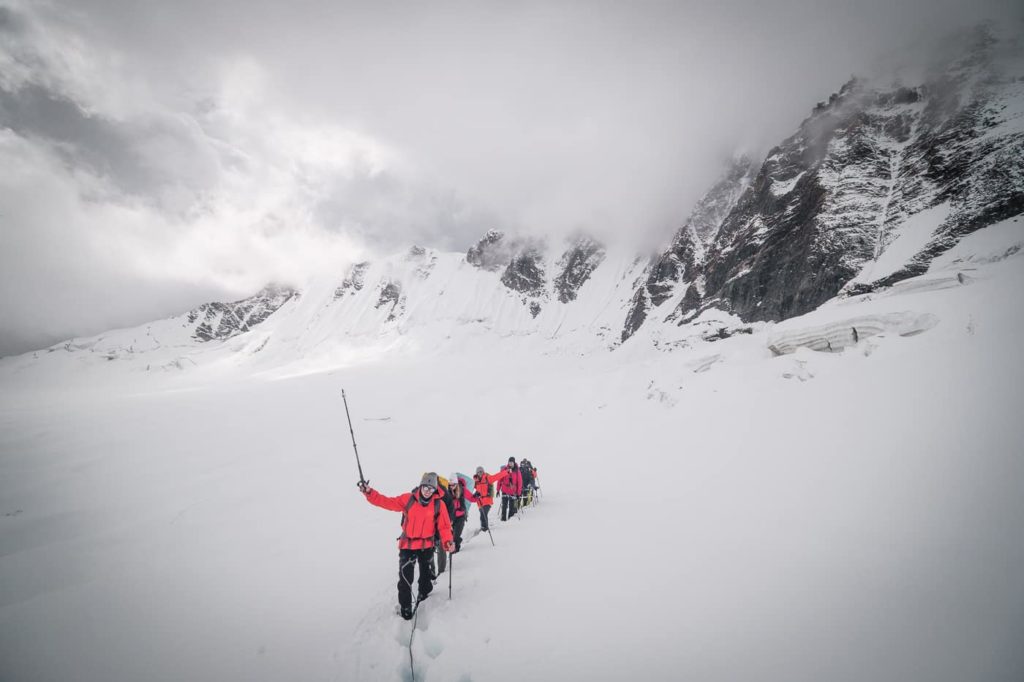
Gondogoro La Preparation. This is a big one, guys. Point number one is understanding what Gondogoro La is. We made a YouTube video about this that goes over what Gondogoro La entails. If you are unfamiliar with what it is, the short answer is that it’s a high altitude mountain pass — around 18,000 feet, 5,600 meters. It’s probably the hardest day of the whole trip. It probably takes us around 10 to 12 hours to complete. Most people who show up to do this trek don’t have a ton of experience or any experience with mountaineering, with using crampons. That’s okay, but whatever you can do to prepare yourself in advance — it’s highly suggested that you try out your crampons on your boots, make sure they’re compatible, and then go out and walk around somewhere in them. I know it’s tough if you don’t live in a place with snow — it might be the case that you go find a grassy hill and practice. I do suggest looking for a basic mountaineering or winter skills course in your area. People have reported those being helpful to get a basic foundation of crampon technique and alpine environments. There’s also a ton of YouTube and blog resources out there, including on our website.
It’s really important to invest the time in understanding the day of Gondogoro La, also not overthinking it, and knowing that — as you can see in this photo — this is showing a training day that we do at Concordia. Every itinerary that we do that includes Gondogoro La, we take a morning and practice going up and down a slope. It won’t be your first time wearing crampons on the pass. We found that this is usually enough to get people feeling comfortable enough to do the pass and get some solid experience in. We also teach you basic crampon technique, et cetera. But whatever you can do in advance is only going to benefit you. Do your research, do your due diligence. And if possible, go out and test your crampons in snow or in steep terrain. If that’s not possible, go find a grassy patch and spend some time going up and down the slope. I’m sure you’ll get some passersby thinking you’ve completely lost your mind cramponing up a grassy slope, but that’s okay. The main thing is we want you to get some experience and feel comfortable putting them on your boots and walking with them.
Okay, guys, a few more sections here. Preparing for daily life on the track. One of the biggest questions we get is about what the toilets and showers are like on this trip. That photo you see there is an example of some of the permanent toilets — the drop toilets that are there at camp. Not every campsite has these. These days, 80% of the campsites along the way have these drop toilets. There’s somebody there that, in theory, should be maintaining them. Sometimes they do a better job than others. Other times, when needed, we set up a toilet tent. But most of the time, we actually have access to these fixed toilets, which is very nice. Every camp pretty much has running water or some sort of a stream, especially in the days lower down. It’s nice when we get into camp, it’s still warm out, you can do a little river shower. It’s all good.
On the rest day that we do at the Ertikos Camp, it’s possible to have a full hot water bucket shower. There is a little cabin like you see in this photo, but it doesn’t have a toilet in it — it’s dedicated to showers. We provide that for you on that day. And then as we go up higher, you’re sweating less, it’s colder, and you don’t generally feel like you need a shower after that. We don’t offer up showers after the 4,000 meter range, mostly because it’s cold and we don’t want you to get sick by being wet when it’s cold. But on the crucial days when it’s hot, and when we have a rest day, there’s always time at camp to clean yourself up and shower. I think it’s day four or so when we have the rest day — you have a chance for a proper bucket shower, shampoo, all the things.
We do provide you guys with toilet paper. You should bring your own wet wipes and your own little bottle of hand sanitizer. We do have it in the mess tent as well, but it’s good for you to have in your tent to always be using that.
Food and hydration. Guys, we have a cook team with us, and they are preparing food for us every day. I’m not going to go too much into the food program right now. I am going to talk about hydration. We ask everybody to bring a water purifying bottle like the one you see there in the photo. It’s your responsibility every day to be purifying and filtering your own water along the way. This is true for every company operating this trek. We’re not providing you with bottled water every day, because there’s nowhere to buy it or to bring it in. We do provide you with boiled water at camp for your coffee, your tea, or filling your Nalgene bottle at night that you can take in your tent with you. But for your day-to-day drinking water, you will be purifying your own water. We recommend the Grail bottle that you see there in the video. If you’ve been using chlorine tablets forever and want to use that, or you love your LifeStraw, okay — we just know that this bottle really works, and it’s what our staff have been using all over the world for nearly a decade. It’s a very important piece of gear.
Stuff for you to bring and prepare at home is your electrolyte program. You should be having electrolytes and supplements to keep your salt levels up and your hydration maximized every day. There’s a ton of different electrolyte packets and options out there, but definitely everybody should bring some of those. And while we do give you three meals every day, plus snacks, plus other stuff, we really encourage everybody to bring their own snacks — whether that’s protein bars or even sugary fun stuff like gummy bears, beef jerky, nuts, chocolate, whatever it is that you like that is also calorie dense and maybe some sort of a bar that has caffeine in it or something that will help you on a tough day. Don’t skimp on the snacks. In Skardu, it’s possible to buy Snickers bars or other chocolates like that, so you don’t necessarily need to bring that from home. But things that you can’t get in Pakistan, like energy gels, energy gummies, high end protein bars — this stuff you will not find there. We give you a lot of really good food options, but we ask you to bring your own electrolytes and snacks to make sure that you always have enough in your day pack to keep you going. And crucially, stuff that you like, stuff that you’ve tested, stuff that you like to eat, because your appetite will go down at high altitude. It’s important that you choose flavors that you like and plan on drinking more water than you would at home to feel your best at altitude.
Guys, the weather conditions. This is toward the end of our presentation here — the last slide, more or less, before we go into our final thoughts summary. The weather, as I’ve mentioned before, from June to August, really from May until August now — this is a trek where you will have all four seasons along the way. It can be quite warm early on, anywhere from feeling like 30 degrees Celsius to 85 degrees Fahrenheit. And then at the cold end of the spectrum, the coldest temperature I think I’ve ever had along the trek is maybe around minus 10 Celsius or in the 22 degree range Fahrenheit. I would say that’s quite uncommon — even at Concordia, even at K2 Basecamp, it’s maybe around freezing every night, like 32 Fahrenheit, zero Celsius, but not much colder than that. And it can go up and down, but I emphasize the heat because I think it does take people off guard how warm it can be earlier on.
Another way that you can prepare for managing the heat is to go out and hike or walk when it’s hot outside — start preparing yourself. Heat acclimatization is absolutely a real thing. If you have the opportunity and access to warm temperatures wherever you live, look for the hottest part of the day and go hike in it. I think it will help you in the long run. It also gives you a chance to test your gear, see what you like, and dial in your gear system. And then, of course, it could rain, it could snow. This is a trek to prepare for all the seasons. But it’s never extremely cold, in my opinion. I’ve certainly been on other climbing expeditions or even other trips of ours where it gets colder than the K2 Base Camp trek — probably similar to the Everest Base Camp trek in terms of cold. But the heat is more intense on days one through three. It’s something to prepare your gear around, and also mentally preparing for a wide range of temperatures along the way.
Guys, final thoughts. We have been going for almost an hour now, and that is the quick version of all of our suggestions for how to prepare properly for this trek. To this day, the K2 Base Camp trek remains one of my absolute favorite trips we run, and it’s something I really look forward to every year. Whether you’re signed up for it with us already, or you’re considering going there this year, or eventually — absolutely do it. It is an amazing trip, unlike anything else that you will probably do in life. The juice is worth the squeeze. The more that you prepare for this trip — and it’s everybody’s individual responsibility to prepare as much as you can — you will get the most out of the experience the more that you put into it. Guys, with that, thank you for listening to me going over all this stuff for the last hour. I hope you found it helpful. Let’s get into some of your questions here. I have not been looking at any of the questions yet, because otherwise I was going to get derailed. I’m going to let Ralph share some of the questions with me, and then I will speak to as many as I can here.
Just give me one second here, guys. Let me read some of these questions.
I’m going to start off this Q&A by quickly speaking to the U.S.-Iran Middle East war situation. I’m not going to go into a lot of detail about our position around it right now or the thought process into our risk assessment stuff, because that’s another topic I could do an entire webinar on. But I will say that for now, our trips are still going ahead as planned and we are keeping a close eye on the situation. We will be, especially if you’re signed up with us, addressing that in an email soon. We are urging people to stay patient. And we have adopted a wait and see attitude in terms of how things develop. I’ll leave it there. I’m not going to answer any specific questions about different scenarios right now.
I think somebody asked about our refund policy. When it comes to this current situation and this trip, we’re going to be as flexible as possible. We’re also going to try to give people as much reasonable notice as possible. If worst case scenario we can’t run the trip, everybody’s payment will be fully protected for a future trip. I’ll leave it there. We understand this is a unique circumstance. And on our end, we’re going to do our best to be as flexible as possible.
Okay, more questions. Has the visa process been affected by recent events? No, it has not. Not at all. It still takes four to seven weeks, more or less, to get approval, but that is in the best of times. Even right now, with the current news, it’s happening completely unaffected. Some of you have already started the visa process, for those of you who have earlier trips in the season, and we intend to also start the remaining visa applications in the coming weeks. If you’re signed up with us, please stay tuned. In the coming weeks, we’ll be in touch about all of this.
Okay, how does the K2 Trek compare to other popular treks around the world? The question mentions Kilimanjaro, Manaslu Circuit, Annapurna, EBC. On one hand, there are similarities with the altitude, a bit with the landscape, a bit with the physical difficulty, but I think that’s where the similarities end. I think the K2 tends to be a level above in the difficulty category, one, because you’re camping every night — you don’t have the apple pie and espresso vibe of the tea house every night, or the movie theater or the Irish pub. All of these things allow you to relax. You might have a really hard day along the Everest Base Camp Trek, but then the level of comfort you have at night makes the EBC Trek a fair bit easier, in my opinion. That’s not to say the EBC Trek is easy or the Annapurna Circuit is easy — anything when you’re hiking above 5,000 meters is going to be challenging. Let’s say the Everest Base Camp Trek is a 6 out of 10 or a 7 out of 10. I’m going to rate the K2 an 8 out of 10. And this is compared to treks — this isn’t putting in mountaineering expeditions. It is a bit more challenging. But I think it’s related to Kilimanjaro. People find Kili difficult because of how fast you go up and how quickly you’re thrust into the altitude. If you had a slower acclimatization process, you might have found Kili easier.
I see the comment — EBC is not that comfortable. Well, in Namche Bazar, it is very comfortable. For sure, Kalapatar, around there, it’s very basic tea houses, and it’s cold. But my reference point is — if you can go get a cinnamon roll and then a pint of locally brewed beer and then play pool, that’s a different level of comfort than what you’ll experience on the Baltoro.
Okay, guys, I already talked about the appropriate dress for women. Shorter sleeves is okay. Again, nothing with an open cleavage situation. Maybe not super short shorts as well. It’s more about respect for the porters and our local staff. Not that you wearing shorts is going to be disrespectful, but it’s something culturally they’re not used to seeing. I think it’s finding a balance of you being comfortable. We want you to be comfortable, but maybe be smart about the type of shorts that you get. Shorts that barely cover your bum and are super tight and revealing — maybe not the best choice for Pakistan. But normal shorts and a short-sleeved shirt, absolutely fine. No worries.
All right, next question. Is the global glacial shrinking trend a significant factor when we do the trek? Not really for us doing the trek. The only point of concern can be landslides that can happen or small bridges that can get taken out on the road to get out there, which can delay us. There’s always a way to go around or something, but along the trek, it’s not a big deal. It’s more that the road to get out there is also an adventure unto itself, which is very susceptible to — not so much the glacial melt — but the hotter temperatures and conditions that we’re having every year. The roads can be affected, but it’s never meant we can’t go. It just means that it delays us and we have to take an extra hour or two to walk around or change the Jeeps or whatever.
How prevalent is food poisoning and what do we do to mitigate it? Real food poisoning entails very acute symptoms of vomiting and diarrhea for eight or nine hours straight. You’re totally spent, you have nothing left, and then you’re done — versus an upset stomach or even the occasional diarrhea. Real food poisoning is pretty rare along the track. Our staff is well trained in hygiene practices, and it’s something that myself and our management in Pakistan have worked hard on over the years, trying to keep the food situation as clean as possible in an extremely remote and rugged environment. People can get upset stomachs because of the heat, because of the altitude, because of the physical exertion, also because of new foods, like spices and things that you might not be used to. Our chefs try to make the food accessible to international palates — they’re not giving you fire Pakistani chilies every single meal; they understand that we don’t want super spicy food all the time. To mitigate upset stomachs, you could bring some stomach medicine, like Pepto-Bismol or antacid stuff to help you. But it’s something to accept that at some stage you might have your stomach being a little upset or unhappy. Getting proper food poisoning would be pretty uncommon. Most of the foods in terms of our food program are whole foods — potatoes, pasta, rice, vegetables, fruits. It’s not ultra-processed, ultra-spiced food all the time. If you have a sensitive stomach, bring some medicines to deal with an upset stomach. But don’t come in being terrified you’re going to get sick. It does happen, but it’s usually not debilitating.
Is it possible to find Diamox in Pakistan? Sometimes it is. You don’t need a prescription. Sometimes it isn’t. I would bring your own.
Who is the most medically qualified on trips and responsible for first aid? That’s usually your Epic trip leader. If you’re on my trip, it will be me. All of our trip leaders have basic wilderness first aid training, but we’re not doctors. Typically we deal with a lot of the same injuries and ailments over the years, so for sure we can treat basic stuff. Anything serious — say a broken ankle as an example, which has never happened on any of our trips — we can stabilize you, but then it’s the helicopter express out. Your trip leader is generally equipped with a pretty massive first aid kit and knowledge of how to treat superficial wounds, blisters, and a variety of different illnesses that we see out there. We’re not doctors, but we’re confident and comfortable treating the types of classic trekking injuries and ailments we see out there. Anything serious, we call the helicopter.
I’m going to wait for my comment manager, Ralph, to send me some more questions because the chat is going too fast for me to see them.
How do hiking boots compare to hiking shoes? I like having trail running shoes toward the start of the trip, because they’re lighter, they’re cooler, and they tend to have a lot of nice grip. But then I switch to a hiking boot that has a Gore-Tex membrane. The difference between a hiking shoe and a boot is the support and the quality of waterproofing. If you have a Gore-Tex that is a bit thinner, not made of leather, it’s not as sturdy — it’s not going to have the level of support, you’re going to feel the rocks more, and it’s not going to be as waterproof. That’s the main difference. I suggest both options — getting a trail runner for the early days and a proper hiking boot. You can see our suggestion in the packing list. I use a boot called the Loa Renegade GTX — a boot that I think I’ve purchased maybe 10 times in the last few years. I keep buying it because it’s a great boot. That’s the breakdown of the boot to shoe question.
What is the standard evacuation plan at high altitude? The short answer is that it really depends on the scenario. Let me describe something that has actually happened in the past. We had somebody who had a combination ear and coughing infection. They started a round of antibiotics. It didn’t really help. This was at K2 Base Camp. We came back to Concordia. They weren’t improving. So we made the call to get them a heli rescue. Why do we recommend an insurance company like Global Rescue? It’s because they have the one and only service in Pakistan that manages the heli rescues — they have them on retainer. In the event that we need to initiate a heli rescue, your trip leader is equipped with a sat phone and a Garmin inReach, and we make contact with Global Rescue. We give them your policy number, we explain the situation. Sometimes they call the sat phone and want to talk to the person in question, or it’s handled by message. Usually, they’re very responsive — it can be as soon as within an hour that a heli is already flying. That is weather dependent. It’s been the case where we have to wait a night, and then they come in the morning. But that’s pretty much it. If we determine that you are in need of an evacuation, we initiate the call. We make contact with your insurance company, who then sets off another chain of communications with the heli service. We coordinate everything, we send them our coordinates, and you are on your way back out. It’s uncommon that it happens, but it does happen. That’s the protocol.
Just one more question here — you don’t need the security add-on from Global Rescue, just the high altitude evac is enough. And we suggest that you get it for the 14 days that we’re going to be out there. It’s a bit cheaper than getting the whole month. You can look at your itinerary, look at your dates, and select the exact dates of when we will be out on the trek.
Guys, I think that is it for now. I hope you found this useful. I know that this won’t be the last webinar that we do. If you found this helpful, please email us and let us know. I’d love to hear how it all went. The K2 trek has a lot of things going on. There’s a lot of moving pieces and it’s our job to prepare you the best way that we can. This was a big general overview and presentation. We hope you found this useful and I really enjoyed it, guys. Thanks for all your questions. We’ll be in touch via email. If you have any other questions, feel free to fire us an email. Let us know how we did, and looking forward to seeing some of you guys in Pakistan this year. Take care, guys. Flood of messages now — cheers, guys. Yes, we’re going to send around a recorded copy, no worries. All good. Thanks, everybody. Have a good weekend. Take care.